
Recreating Opening Night For Abigail Thorn’s Acclaimed Play “The Prince”
Recreating opening night for “The Prince” through a curated compilation of reviews for trans playwright Abigail Thorn’s acclaimed stage production
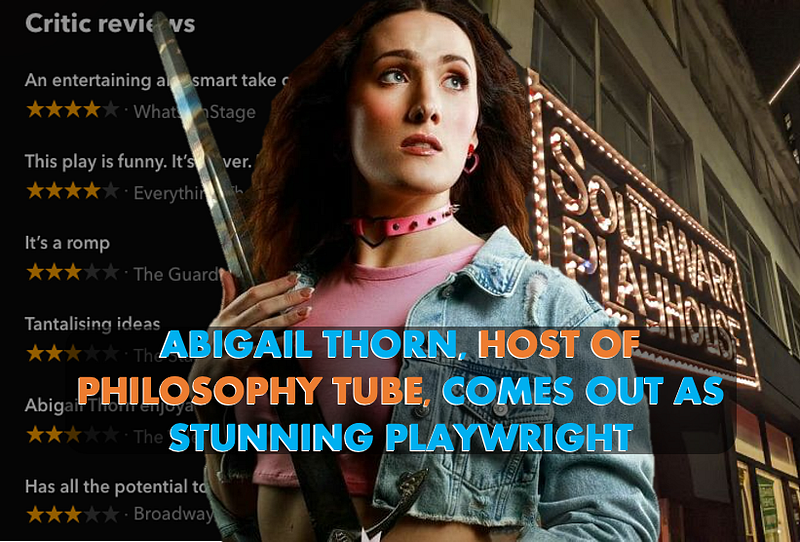
If you missed getting to see the acclaimed stage production for Abgail Thorn’s The Prince, you can watch it online soon (more on that at the end of the article).
Until then? This curated compilation of reviews will give you the next best thing. Quotes have been assembled so that if you read them straight through, it’s like listening to your best friend tell you what you missed out on.
And after that? Praise from critics, what they say just didn’t work, and a whole lot more.
Table of Contents
- Overview
- Cast and Crew
- Recreating the premiere for Abigail Thorn’s “The Prince”
- Praise
- Criticisms
- The Writing/Creativity
- The Production Design
- Comments on the Cast
- The Queerly Trans Experience
- Abigail Thorn discusses the anticipated backlash
- Behind the scenes footage of rehearsals PLUS Abs describing the thing before the thing
- Fan Art
- Further Reading
- Sourced Review Publications
- Easter eggs, influences, and homages
- How to watch “The Prince”
Overview
Have you ever been trapped in a bad relationship, playing a role that doesn’t suit you? Jen and Sam are also trapped…in a multiverse of Shakespeare’s complete works.
“Think of it like Doctor Strange and the Multiverse of Madness meets Bill & Ted’s Excellent Adventure but with a lot of Shakespeare. And if you think that sounds weird, well…it is. But it’s weirdly wonderful.” — All That Dazzles
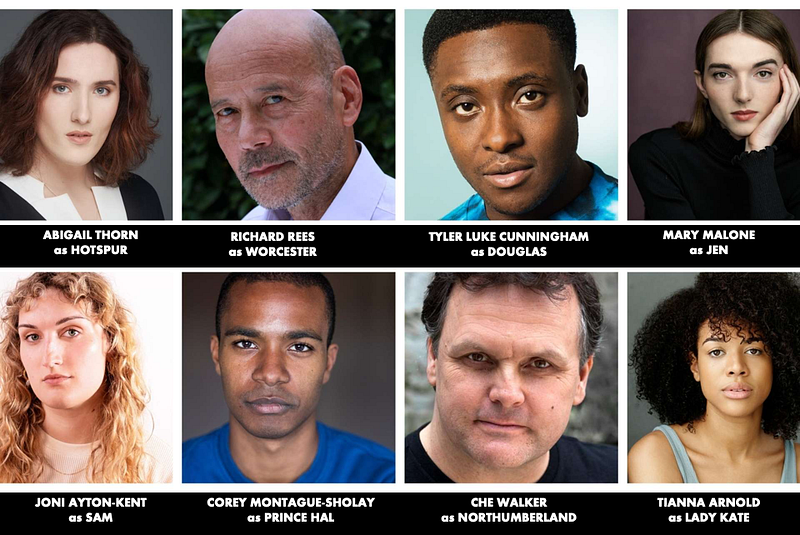
The Cast
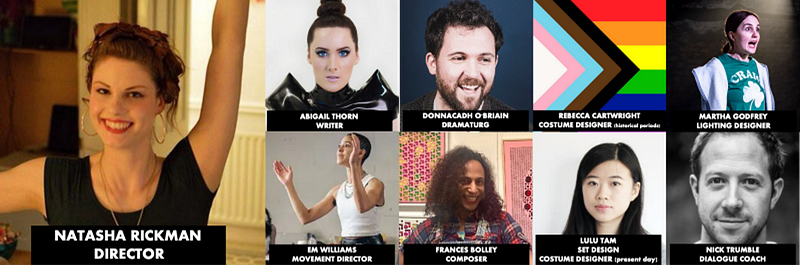
The Crew
Recreating the premiere for Abigail Thorn’s “The Prince”
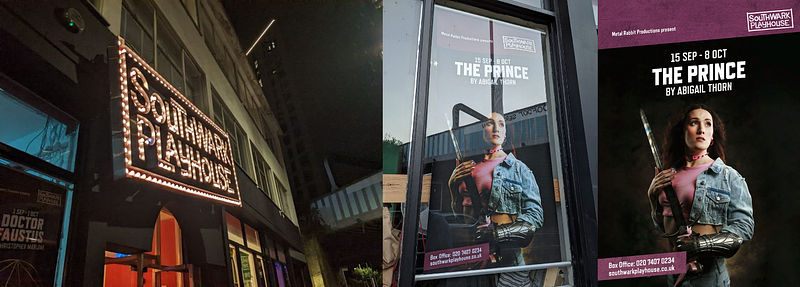
Southwark playhouse
“Like many people in London on Thursday evening I put on a shawl, braced for bad weather, and joined The Queue… outside the Southwark Playhouse for the opening night of Abigail Thorn’s debut play The Prince.” — Trans Writes
“The crowd spilled out of the theatre: an eclectic mix of queer people noticeably cooler than me, from their fresh clothes down to the effortless way they spoke to strangers and smoked cigarettes.” — London Theatre
“If seeing a show called The Prince on the day of the Queens funeral may have felt a bit near to the knuckle (especially given what a ghost town London was like on the way to the theatre), a line asking why we have a hereditary monarchy took that awkwardness and kicked it out of our minds, to a pretty huge response… I personally didn’t have the highest expectations for it. Let me tell you, I couldn’t have been more wrong.” — All That Dazzles
“Luckily, on my approach to the theatre, I didn’t spot any protesters like those who targeted Drag Queen Story Hour. The scenes from Reading — of adults screaming, calling parents and performers groomers, simply for reading stories to children in a costume — sent chills down my spine.” — London Theatre
Enter the trans dragon
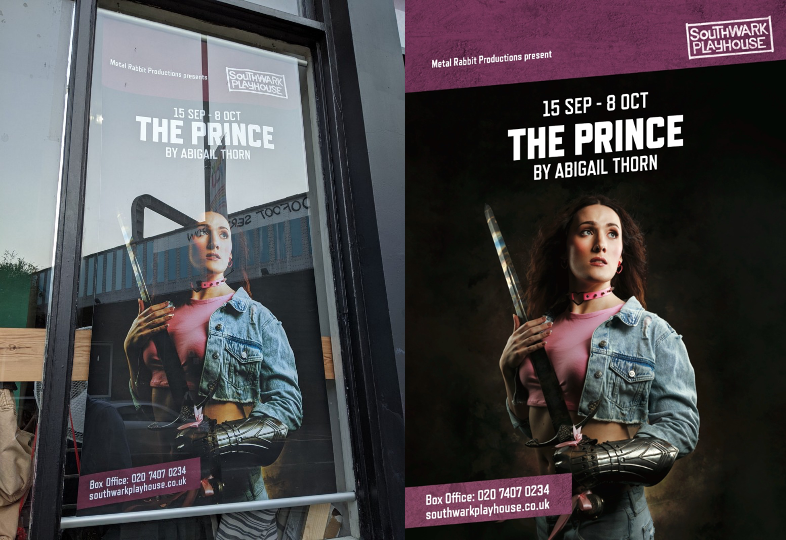
“Eventually the ushers funnelled the crowds into the theatre itself. The Prince is performed in the centre of the room, surrounded by seats with dozens of eyes staring down. In this case, dozens of queer people — people like my flat mate and I. In this blanket of non-heterosexuality, the security issues felt like a distant dream. Instead, Abi’s breathlessness about the play came to mind.” — London Theatre
“As I enter there’s an image of Thorn on a large poster, wearing a combination of casualwear and medieval garb. This juxtaposition would go on to define the rest of my evening, on a road full of old buildings from the late 1800s, sat in a much-moved theatre, containing one of the freshest, most inclusive new plays I’ve seen in recent years.” — Trans Writes
“In amongst the arty crowd stood a man so gigantic I could hear the fibres of his casual jumper stretched over his arms scream. He checked the area, puffed on a vape, and disappeared inside; her security. [Abigail] joked to me that having a security officer was, “like being in a Bond film, having some enormous man in a suit at the back of the stage.” Underneath her jokes, there’s the same worry I’ve noticed in the voices of my queer friends and loved ones.” — London Theatre
The play begins
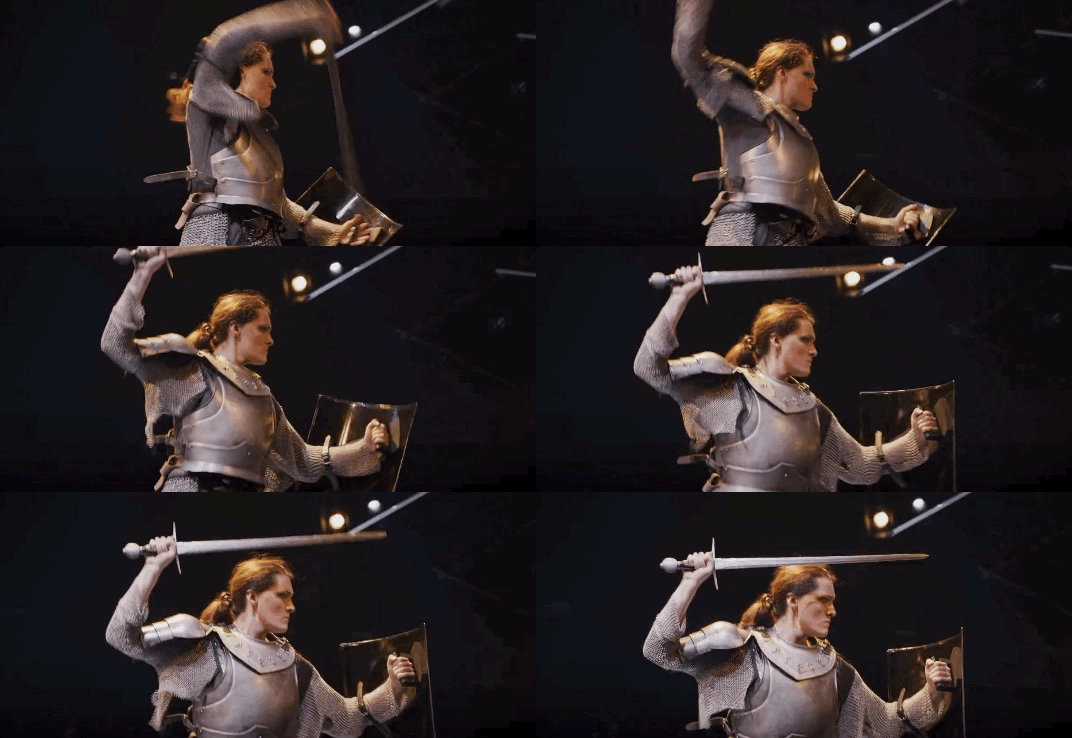
“The play was set in theatre in the round but like square. The theatre is also not that huge, making there little room to work with and the only immovable set pieces being two large boxes onstage that were openable.” — myparadaystuff
“There’s a cool aura to the production. Designer Lulu Tam hosts the action on a postmodern stage surrounded by the audience on all sides. Unusually, the costume design credits are shared between Tam and Rebecca Cartwright with the former taking care of present-day designs and the latter tending to the historical clothing. The result is an interesting-looking concoction of chainmail and sheer mesh tops.” — Broadway World
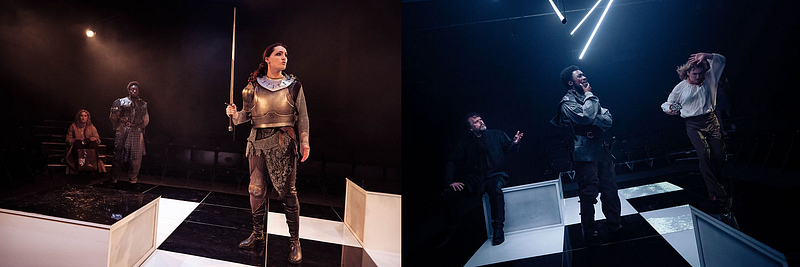
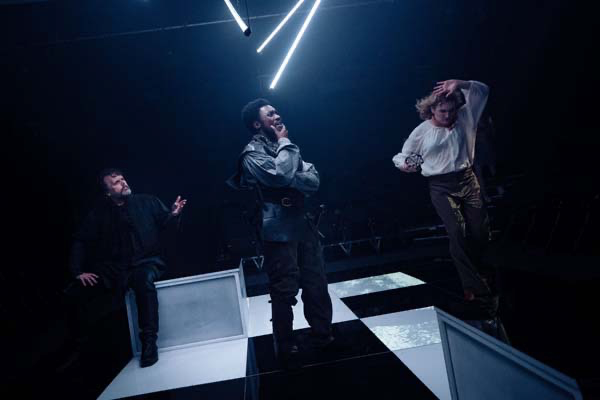
“The stage for The Prince has a simple black and white chequered floor and is completely in the round. There are two large boxes on the performance area and that’s it. No more, no less. I love this simplicity by set designer Lulu Tam. Whether it represents a chess board and the intricate moves individuals are forced to play in real life, or just the feigned simplicity of identity that is inadequate for so many, it works.” — Everything Theatre
“Actors enter and exit from all corners and often sit at the side, silently observing.” — Everything Theatre
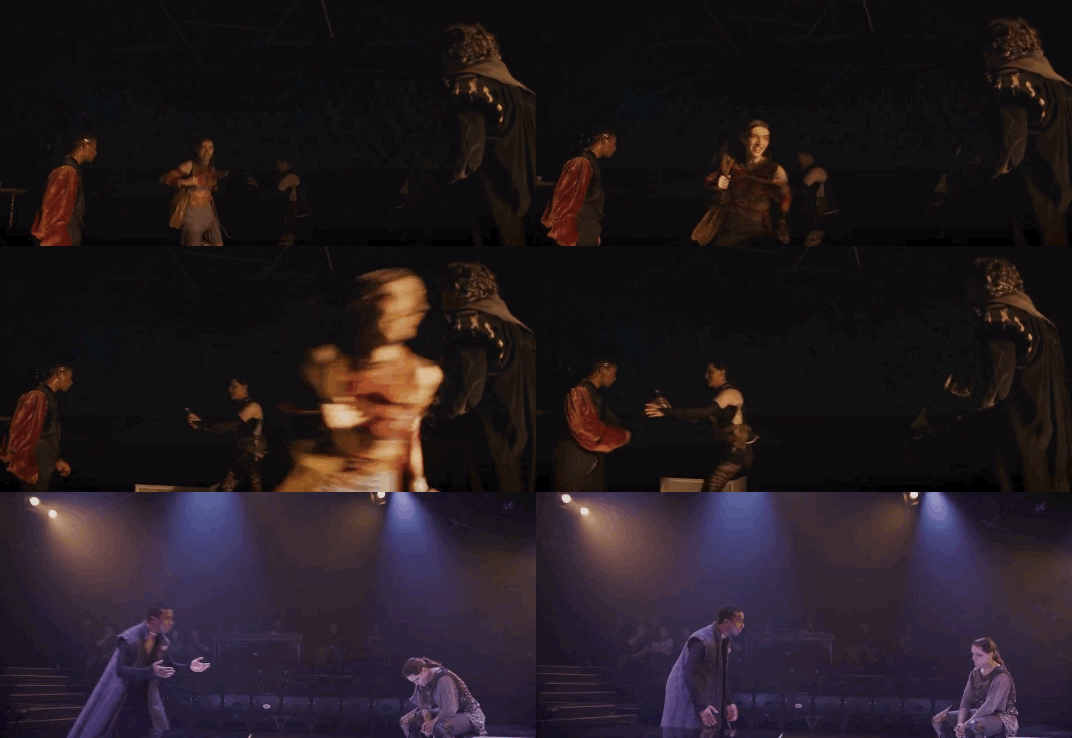
“[There is] a warm atmosphere in the auditorium with an audience swift to pick up on jokes about pronouns and transitions and very evidently enjoying the superb comic performance.” — TheReviewsHub
“The next 90 minutes, split into two 45-minute acts, are a whirlwind of relatable characters, sci-fi level mystery, and enough Shakespeare to entertain even the most enthusiastic of GCSE English students.” — Trans Writes
“It’s both incredibly funny and touching, and features a rendition of a famous Shakespeare moment, performed by Abi, so good I would call it definitive. But at its heart the play is about how we help each other — we, as queer people, come together, whether it’s coming out as trans or gay or bi, or even when we face the darkness lurking in the corner of our minds. A community.” — Everything Theatre
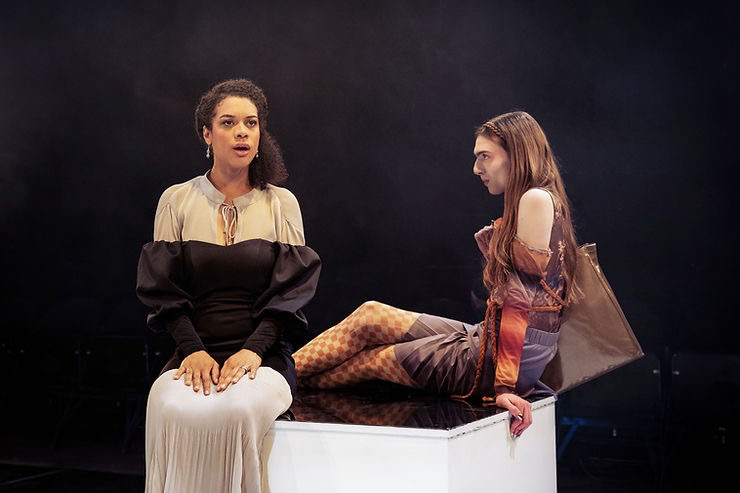
“The rebel Henry ‘Hotspur’ Percy (Thorn), whom Shakespeare presents as such a perfected image of manhood that King Henry openly wishes he were his son instead of his feckless heir Prince Hal, is here a trans woman, or at least would be if she knew it were an option. In what Thorn implies would remain a very modern dilemma, poor Hal balks at his monarchial duty to marry, all too aware that he is gay. Then there’s Lady Kate, Hotspur’s long-suffering spouse, who is very cross indeed at the limitations afforded her as a woman by both the play and her position as a wife.” — The Telegraph
“Meanwhile, two present-day trans women, Jen and Sam, have somehow found themselves trapped in the Shakespeare metaverse, able to hop in and out of different works.” — The Telegraph
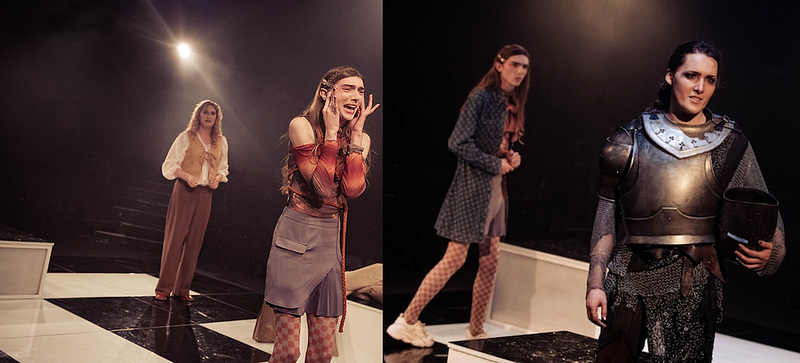
“After the first 15 minutes or so of traditional masculine Shakespearean fighting and speech, Jen erupts onto the scene declaring, “Well, I have no idea what any of that meant!” to a roar of laughter, and thus the relationship with the audience is cemented; a significant number accord with her.” — Everything Theatre
“At first, Jen (Mary Malone), who is really the manager of a Liverpool care home, claims she is Brutus’s wife Portia while Sam (Joni Ayton-Kent) seems to think she is Cleopatra, but now they are thrust into an episode from Henry IV (Part One) with the King played by Che Walker and Prince Hal by Corey Montague Sholay in which they face rebellion by those who helped make him king: the Earl of Northumberland (Che Walker again), his brother the Earl of Worcester (Richard Rees) and his son Harry Percy (Abigail Thorn), nicknamed Hotspur, who is refusing to surrender his Scots prisoner the Earl of Douglas (Tyler Luke Cunningham).” — British Theatre Guide
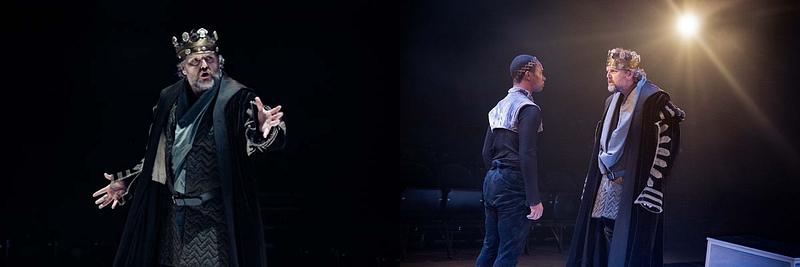
“Sam (Joni Ayton-Kent) and Jen (Mary Malone) are torn over whether they can awaken Hotspur to her real, trans identity and still escape back to their own lives outside the play.” — The Stage
“Now Jen and Sam must decide; do they risk losing their way home to help someone who might just be like them — who does not yet know who they truly are?” — Theatre Weekly
“[The] show plays out like the best kind of school English lesson — one where creativity knew no bounds and at least half the class had no idea what was going on at any given time.” — PinkNews
“The beauty of this show is its ability to make you laugh at a witty one-liner one moment and then stop to think at a more serious line the very next second.” — All That Dazzles
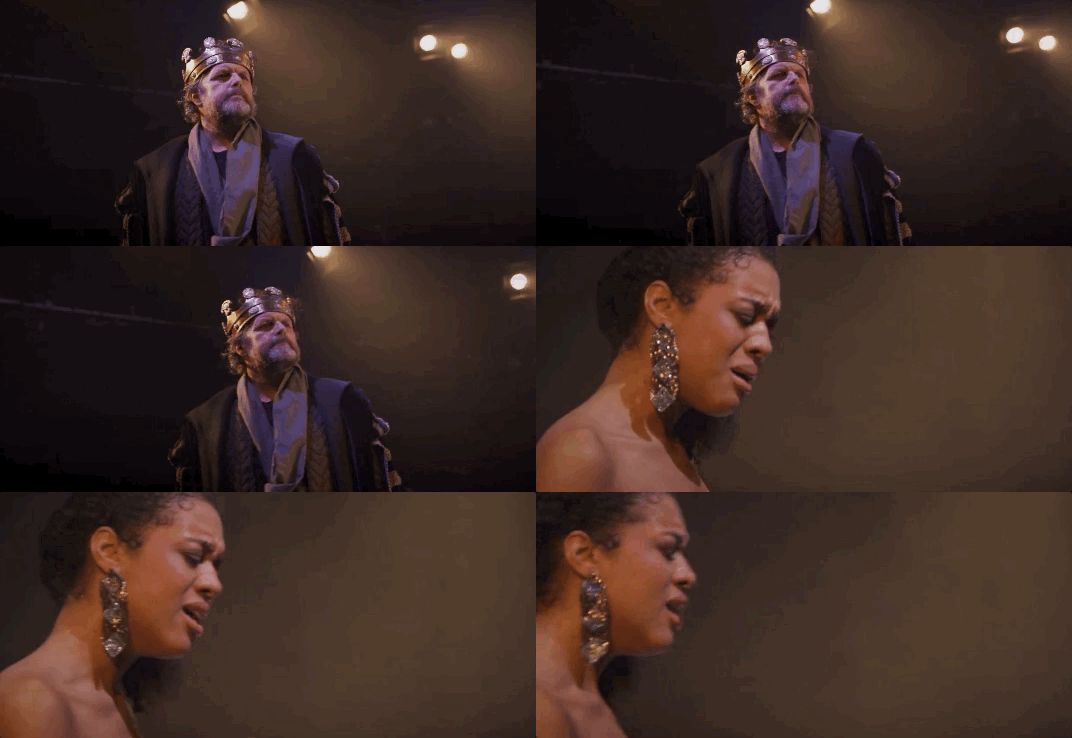
“As Jen starts to meddle and becomes a chaotic hero seemingly destabilising Jen’s escape plans, the world around them starts to fall apart — quite literally — thanks to the clever use of minimal space by lighting and sound designers Rodent and Martha Godfrey.” — Trans Writes
“I must mention the lights. Showstopping, Incredible, actually got me to gasp and made the whole theatre feel like it was a part of the show (which we technically were because plot, go watch the play if you can get tickets).” — myparadaystuff
“Thorn’s writing cleverly weaves the Bard’s text with modern dialogue and original verse — though the play undoubtedly shines the most when it is unpicking Shakespearean conventions.” — What’sOnStage
“Recognising Hotspur as trans, at odds with the male role she is playing, Jen begins interrupting the action. This is when the fun really starts, as she encourages the characters to question their written roles, and the matrix starts to crumble.” — The Guardian
“Should [Jen] stay back to help Hotspur and Prince Hal, risking her only chance to escape, or shall she leave them to their own literary devices and follow Sam back to reality?” — Broadway World
“The second act opens not with Hal but the Danish prince, Hamlet (Abigail Thorn), with Claudius (Che Walker) in the first court scene from that play. It seems largely there to give the writer the opportunity to play Hamlet, but also provides a third father-like figure along with King Henry and Northumberland to whom the action returns.” — British Theatre Guide
“In one scene, almost all the cast cycle through multiple changes whilst on stage together, each switching body language and speech patterns entirely as they go.” — Trans Writes
“As the play draws to a close, we find ourselves laughing, crying, cheering, and applauding almost constantly.” — Trans Writes
“The ending — which I won’t spoil — was poignant and emotional. There was genuine comedy, air-punching honesty, and enough plot twists to keep me enthralled and, quite literally, on the edge of my tiny theatre seat.” — Trans Writes
“The three-minute ovation hardly felt like enough.” — Trans Writes
“Leaving the theatre, I felt the weight of the play hanging on me. After the final words, thunderous applause rang through, before people who could jumped to their feet for a standing ovation.” — Everything Theatre
Praise
“My god, if the terfs saw this…” — WhatTheTrans!?
“Abigail Thorn deserves particular credit for her Lin-Manuel-Miranda-like way of creating a character that in many ways only she could do justice to.” — Trans Writes
“A sharply and passionately written story about the roles we play for other people. The script is an exciting blend of verse and prose.” — ATV Today
“Perhaps the most admirable aspect of the play is how easily Thorn proves that you can make jokes about — and for — the LGBTQ+ community without throwing them under the bus.” — PinkNews
“Shakespeare’s vernacular relating to femininity, valiancy, and valour is re-read under queer lights and ultimately spun into a way to save the characters from themselves.” — Broadway World
“You may be sick of multiverses by now, but this new play, ‘The Prince’, unveils yet another: a Shakespearean multiverse. But unlike Marvel, there is an escape!” — WhatTheTrans!?
“An exceptional lure into Shakespeare’s own world for the skeptics and uninitiated.” — Broadway World
“Arnold, Montague Sholay, and Thorn all master this tightrope-walk of multiplicity in a way that shows a cast in complete sync, giving an already excellent script the professional debut outing that it deserves.” — Trans Writes
“[The] tone of the dialogue shifts and changes just enough to keep the audience hooked.” — PinkNews
“Absolutely heart-wrenching.” — WhatTheTrans!?
“With sensational writing and a fantastic cast, The Prince is an absolute revelation — a true King among plays.” — All That Dazzles
“All the potential to be a subversive sensation.” — Broadway World
“An entertaining and smart take on a history play. Not merely an adaptation, it is a bold, new and thought-provoking piece of writing.” — What’sOnStage
“A majority-trans cast deliver a masterclass in genre-bending, fourth-wall breaking Shakespearean drama and what it means to live on the margins.” — PinkNews
“The way the actors danced around the age-old Shakespearean verse (or lines) to make sure the audience know what the fuck was going on, was especially brilliant, particularly how, at points, it was worked into the play’s plot, as it seemed some of the main cast were just as confused as us, and that was awesome.” — WhatTheTrans!?
“[Thorn] effortlessly conveys Hotspur’s anguish, fear, and confusion — and creates a character the entire audience is rooting for.” — PinkNews
“A flurry of gender theory and top-notch queerness enveloped by sword fights and iambic pentameter, it’s a refreshingly sacrilegious approach to Shakespeare.” — Broadway World
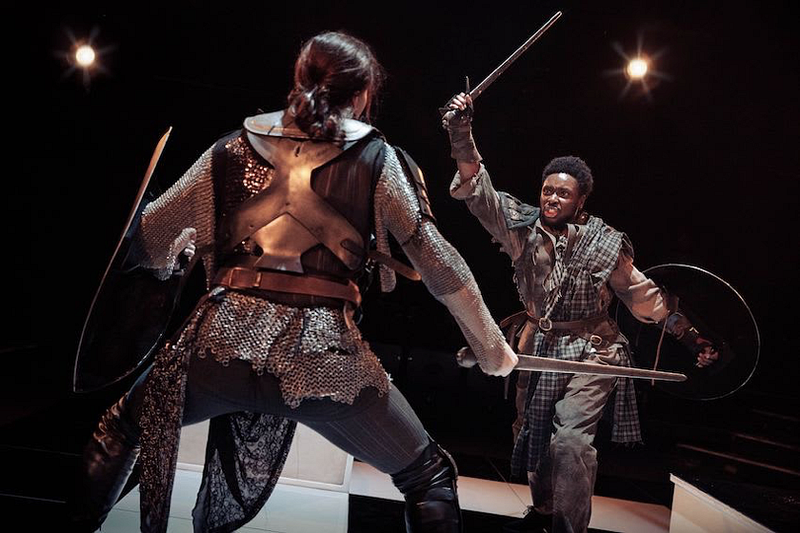
“The script is enhanced by the stellar physical aspect of the show; from slow-motion sword fighting to more tender moments of love and affection.” — PinkNews
“Abigail Thorn moves offline and on to the stage with an ambitious exploration of identities and the performance of gender.” — The Guardian
“Thorn’s mastery over rhythm, pacing, mediaeval literature and comedic wordplay shine on the stage.” — PinkNews
“A romp. At once a recognition of the fear of change and rejection and a celebration of open-armed community.” — The Guardian
“I saw the play I was wondering if I needed to be clued up in Shakespeare. Luckily this play was done in a way that you don’t need to be.” — WhatTheTrans!?
“Examines Shakespearean roles under the lens of gender theory, delivering a piece that has all the potential to be a subversive sensation.” — Broadway World
“Ambitious if slightly feverish exploration of transgression and transition within Shakespeare’s plays.” — The Guardian
“The production is amusing and enthralling.” — Broadway World
“A larkily self-aware rewrite of Henry IV Part I with added eye roll from the trans writer Abigail Thorn, who employs largely original cod-Shakespearean dialogue.” — The Telegraph
“Played out with a sense of sensitivity and authenticity.” — All That Dazzles
“The histories are perhaps a little trickier, but Abigail Thorn’s debut play sophisticatedly explores gender and identity within Henry IV part 1 along with all the hilarity of finding yourself in the Shakespeare multiverse.” — What’sOnStage
“…the jokes on the Shakespearean language were brilliant. It was hilarious, and often satisfying, to hear these big, grand lines being projected throughout the theatre, only to be interrupted by something, and that character subsequently uttering a swear word.” — WhatTheTrans!?
“Embraces this idea as a logical extension of the Bard’s own metatheatrical gaming around ideas of gender, performance and socially conditioned role play.” — The Telegraph
“The humour and the commentary are so well balanced and whilst they do tell you the subtext out loud, they also have moments that leave you with a thought and lets you figure things out and point the dots yourself so you can get your own little aha moment. Beautifully written, beautifully staged, with some amazing talents and a diverse cast that preformed excellently.” — myparadaystuff
“Abigail can say “Fuck” more satisfyingly than Henry Caville in The Witcher.” — WhatTheTrans!?
“An admirably ambitious play, with tantalising ideas about the performance of gender and duty.” — The Stage
“Addresses that urgent need to bring wider understanding of trans experiences.” — TheReviewsHub
“…builds on the capacious identity complexes at the heart of Shakespeare while offering a more inclusive and constructive conversation than I, Joan.” — The Telegraph
“Che Walker and Richard Rees set an example in clear delivery.” — British Theatre Guide
“[It’s] a pleasure to watch a piece that is not only explicit about trans readings of Shakespearean characters but that actually has more than one trans person on stage at once.” — The Stage
“The Prince is a sharply and passionately written story about the roles we play for other people. The script is an exciting blend of verse and prose.” — Theatre Weekly
“[Does much to] humanise queerness and perhaps help other people come out.” — TheReviewsHub
“Really felt organic, and honestly, didn’t feel forced, and at times elicited a few claps from the audience and raucous laughter.” — WhatTheTrans!?
““Fun for both Shakespeare scholars and verse virgins.” — Theatre Weekly
“Swordfighting, lesbianism, denial, disappointed parents, and a magical doorway.” — Theatre Weekly
“A sparkling and nuanced interrogation of identity and gender.” — Everything Theatre
“Provides a lot of laughs.” — British Theatre Guide
“The calling out of the misogyny often displayed by Shakespeare plays was amazing, and the homophobia was often called out, and there were plenty of moments like that sprinkled throughout the play discussing this misogyny.” — WhatTheTrans!?
“The assimilation of the dual themes of gender and identity into the plot is complete and manages to normalise difference whilst questioning traditional masculine hierarchies.” — Everything Theatre
“The dexterity of dialogue and fluidity of plot structure which develops the narrative remind me of Tom Stoppard [note from Stephenie: ironically, Stoppard is who TheReviewsHub said the play needed to be more like].” — Everything Theatre
“The vivid and clever interrogation of identity and gender against social expectations makes it doubly impressive.” — Everything Theatre
“Abigail Thorn in the role dominates this play; though gender may have fluidity, there is no loss of strength in this Hotspur.” — British Theatre Guide
“This play is funny. It’s clever. It delivers on all levels.” — Everything Theatre
“It’s literally quite different from any shows that I’ve seen on a London stage in a while.” — Abigail Thorn
“All performances are strong, with the actors comfortable in such an intimate space, although it is Thorn (again!) who is impressive as a female Hotspur.” — Everything Theatre
“The theatricality of Natasha Rickman’s production, especially its clashing sword fights and moments when contact between characters has them pulling in different directions, creates an inexplicable frisson to ensure that it holds the attention.” — British Theatre Guide
“The gay aspect [of Henry the IV Part 1] had been quite obvious to me when I first read it because Shakespeare always has a gay/bi leaning character in his plays. But the toxic masculinity aspect and familial expectation aspect had completely flown over my head at the time. And in this play these themes are beautifully addressed and highlighted.” — myparadaystuff
“A rapturous reception from an enthusiastic audience.” — British Theatre Guide
“Definitely made me want to reread the play with fresh eyes as there is definitely a lot of things I didn’t pick up that the play helped me notice and appreciate.” — myparadaystuff
“Thank fuck for Nebula for filming this.” — WhatTheTrans!?
Criticisms
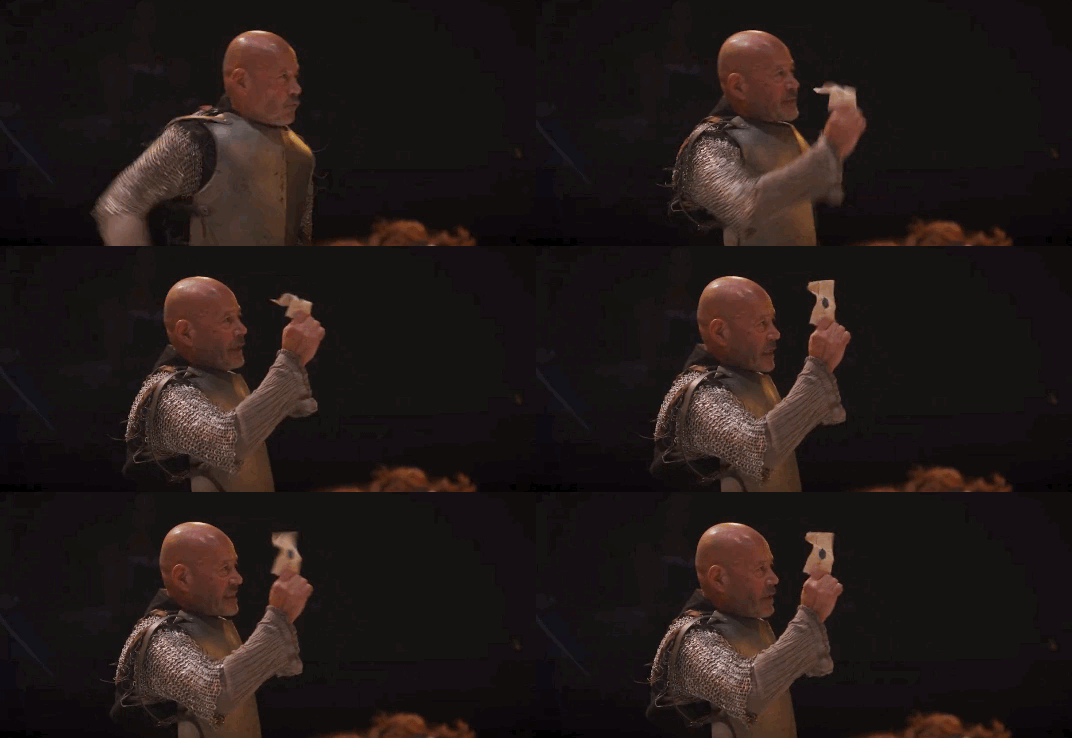
“There are bits that I didn’t necessarily follow, which made me want to study the text, and actually the opening section is a touch too long.” — Everything Theatre
“The risk pays off until about three-quarters into the show.” — Broadway World
“The scripted ending stands on wobbly feet and the framing never gets the explanation it needs to be satisfyingly convincing.” — Broadway World
“The internal gears of the universe work well, but they’re not propped up and supported by enough (if at all) context.” — Broadway World
“We trust the process, expecting a positive resolution, but, when faced with it, it doesn’t shed any light on the initial cause.” — Broadway World
“[The payoff is not] as immediate as it should be and requires some analytical effort to fully appreciate Thorn’s work.” — Broadway World
“The Prince questions gender roles and relationships but offers no strong narrative outside that of the original play scenes or explore the reasons for the choices people make.” — British Theatre Guide
“Not everyone can handle the difficult acoustic of this in-the-round staging.” — British Theatre Guide
“[There] are times when one side of the audience is laughing and those facing them aren’t reacting.” — British Theatre Guide
“There is some intelligent questioning here, but The Prince is an exploration that doesn’t offer reasons or resolution.” — British Theatre Guide
“But the concept at times lacks clarity. A sidestep into the world of Hamlet builds on the deliberate feeling of chaos but also adds frustrating confusion about the mechanics of the world-building.” — The Guardian
“Best seen as a theatrical video-essay on what it feels like to step out of the role you’ve been performing for as long as you can remember.” — The Guardian
“Perhaps if you’re looking for an over-explanation of the how and why, then the ending may not be satisfying enough.” — What’sOnStage
“It’s not remotely surprising to see writers rushing to claim characters from the canon as likewise trans.” — The Telegraph
“Thorn, who highlights Hotspur’s attempts to be aggressively masculine, even while flaunting a black eyeshadow fetish (the problem with trying to visually represent gender is that you immediately run into stereotype)…” — The Telegraph
“[The Prince] has the untidy energy of a production you suspect would feel more at home on the Edinburgh Fringe; it’s basically a raucous younger sister to the similarly themed West End musical & Juliet.” — The Telegraph
“Tianna Arnold’s clear-voiced Kate, Hotspur’s wife, gets a rather rushed interrogation of her lot, but their marriage is under-explored.” — The Stage
“Likewise, while there’s plenty of comedy in Jen’s struggle to acclimatise to the Hundred Years War tumult, her relationship with Sam is thinly sketched, and the dynamics of their row about their involvement are tricky to follow.” — The Stage
“The time spent in Shakespeare mode feels long in the second act, and the rules that govern how and when they break out of it remain fuzzy.” — The Stage
“The analogy strains under all the pressure imposed on it, its creaking plot mechanics an unwelcome distraction.” — The Stage
“The play is centred mostly around one of my least favourite Shakespeare plays (mostly because it had 2 parts, and I found the characters boring) Henry the IV Part 1.” — myparadaystuff
“The sci-fi concepts of interdimensional travel and manipulating reality with an artefact are familiar enough to be easily accepted, although as a device they could be less prominent in the script and something more original than slo-mo would have been welcomed at these moments.” — TheReviewsHub
“Sadly the play’s central premise of performing Shakespeare roles (Thorn herself acts as a closeted trans woman locked into embodying the hyper-masculine Hotspur) as a metaphor for being trapped in gender identities dictated by society is fairly facile.” — TheReviewsHub
“…the performative nature of life now such a well-established idea as to need more complex treatment.” — TheReviewsHub
“It is none too subtle.” — TheReviewsHub
“…the script does not really give [Thorn] adequate opportunity to explore with depth her growing realisation that she is a trans woman — there are glimmers such as in a clever use of Hamlet’s most famous soliloquy — but ultimately the sci-fi device demands a lightning-fast coming out.” — TheReviewsHub
“However, the wit seen in Thorn’s description of her play as Rosencrantz and Guildenstern are Deadnamed is seldom found on-stage. There are some excellent jokes about Titus Andronicus and Andrew Lloyd Webber, but all too often the humour depends on the incongruity of blunt modern slang as a response to elaborate archaic language.” — TheReviewsHub
“It can amuse but becomes repetitive, especially in its dependency on expletives, and it has been done before in everything from Bill and Ted to Doctor Who. The script would do greater justice to its important themes by reaching for the sort of wit Stoppard excels at.” — TheReviewsHub
“[It] feels like the script needs a further rewrite to realise its full potential.” — TheReviewsHub
The Writing/Creativity: swordplay vs wordplay
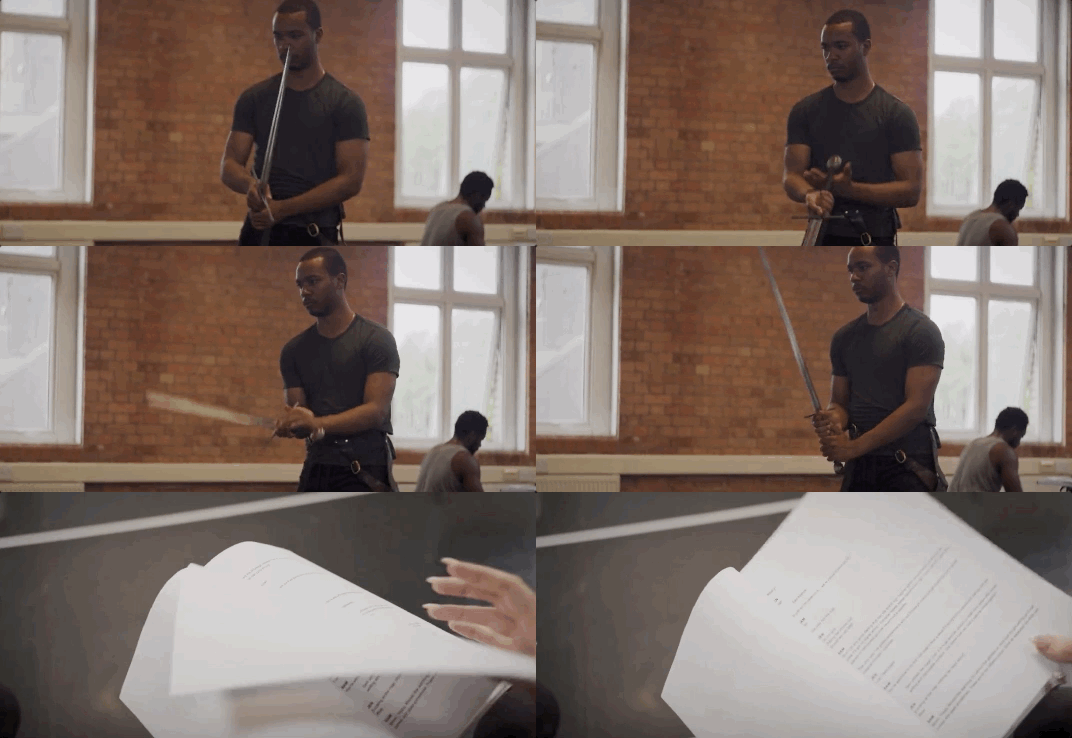
“The fact it is hard to tell what is Shakespeare and what is new at certain moments is the testament to how fantastic the writing really is.” — All That Dazzles
“It’s an interesting choice for Henry IV to be the basis of an exploration of gender and sexuality — plays such as Twelfth Night or As You Like It spring to mind as top contenders but are perhaps too on the nose.” — What’sOnStage
“[Yet] if you watch The Prince, [a] narrative of isolation isn’t the one Abi, the writer, the actress, is bound by. The contrast within her rages, bursting onto the stage, rewriting not just Shakespeare but her own history. A community in a piece of art that will inspire those to build communities, to help and protect each other, to not let others fall because of fear we have been taught to feel. It does what art is supposed to do: it provides the framework for us to understand our lives and through it, build them better.” — London Theatre
“The text is a mixture of genuine Shakespeare and (mainly) faux-Shakespearean verse, often identified by its modernisms but delivered with style, plus the contemporary dialogue between its trapped modern characters who get access to some kind of magic that allows them to jump from scene to scene or even into a different play.” — London Theatre
The Production Design
“Softer, free-wheeling voices replace the stoic verse, and queer punk aesthetic rips apart the period clothing.” — The Guardian
“Set on a black and white chess board / dance floor with beams of white light hung above (design by Lulu Tam, with lighting by Martha Godfrey), Rodent’s compositions accompany the piece perfectly — you don’t necessarily notice it while it’s there, but you feel the silence when it’s gone.” — What’sOnStage
“Thorn also challenges the language that surrounds toxic masculinity and a man’s honour.” — Broadway World
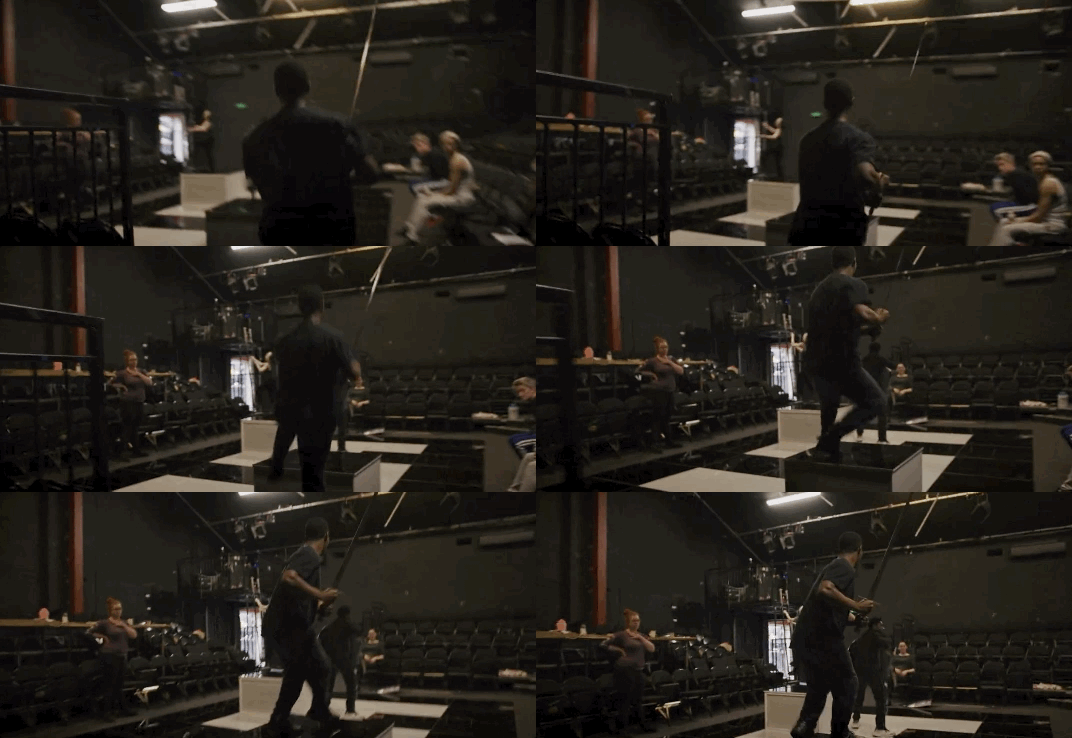
“Lulu Tam’s set, redolent of a chessboard with shiny black and white squares, is suitably abstract for Jen and Sam’s multiverse-traversing.” — The Stage
“This is a production with a great deal going for it: a simple but aesthetically pleasing set, striking fluorescent-effect tubes for lighting, an excellent comic turn from Corey Montague-Sholay and great work on the pseudo-Shakespearean verse from Ché Walker.” — TheReviewsHub
“It is Hotspur who seems to gain the most self knowledge from Jen’s interference, as we see a change in gender identification that designer Rebecca Cartwright echoes in the shedding of armour and costume changes.” — London Theatre
“The actors did a great job despite the space, using areas beyond the middle area, going up into the audience and obviously knowing how to act in that sort of stage. Height was used expertly, making the staging dynamic and overall, the use of space despite the lack of space was admirable.” — myparadaystuff
“The use of lights added so much to the atmosphere, aided with tension and created tension as well. SO big up to the crew for being able to pull that off, because there were so many technical stuff to do, that could have easily gone wrong.” — myparadaystuff
Comments on the Cast

“All the cast switch with relish in and out of Shakespearean verse and regional accents.” — The Stage
“Thorn brings a brittle, uneasy energy to Hotspur (and dips a toe into some of Hamlet’s speeches) and though she can command, her need for liberation is achingly clear.” — The Stage
“Malone’s bemused, lackadaisical facial expressions are a delight, as she counts out her iambic pentameter to fit in.” — The Stage
“Ayton-Kent’s world-weary Sam is a sadder, softer presence; she’s intriguingly burdened with somehow knowing all the rules of navigating them out of the mess, yet the script seems oddly uninterested in her.” — The Stage
“Corey Montague-Sholay’s gay, sarcastic Prince Hal [is] particularly fun.” — The Stage
“Malone, in particular, is a master of facial expressions and offhand comments… One of the biggest laughs of the night comes from her poignant observation that cis people are fine with pronouns switching when it’s ‘thou’ and ‘you’.” — What’s On Stage
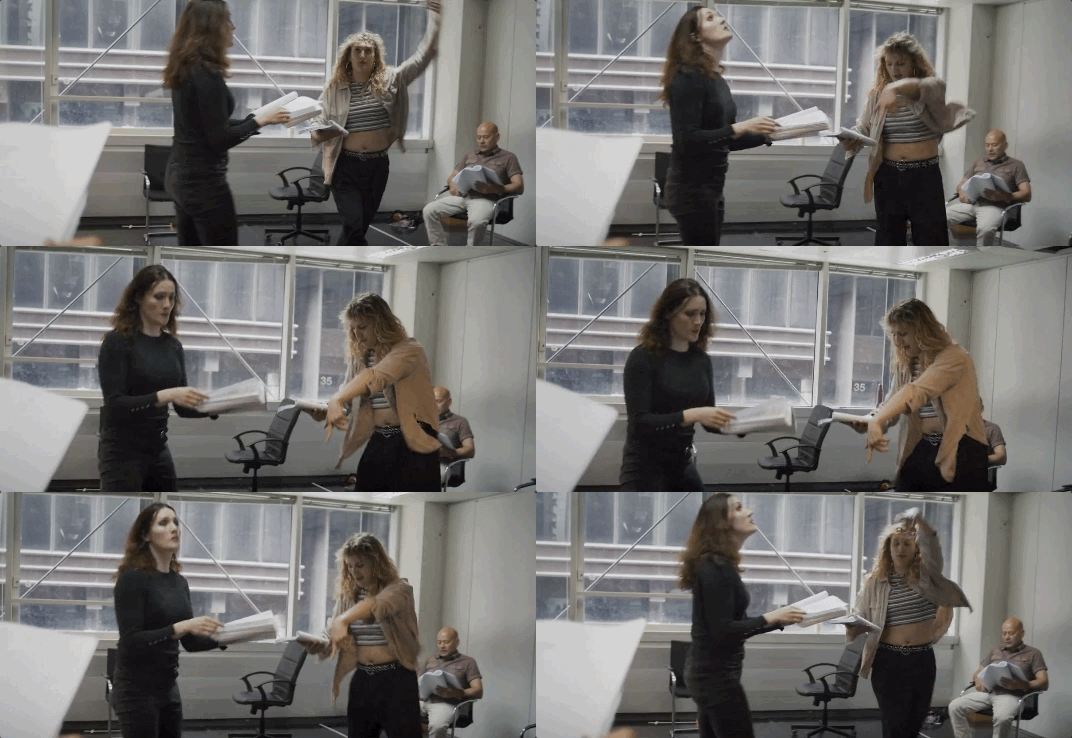
“Playing alongside Thorn, Malone and Ayton-Kent are a strong ensemble.” — What’sOnStage
“Following his star performance in Bacon at the Finborough earlier this year, Corey Montague-Sholay makes his mark as young Prince Hal.” — What’sOnStage
“Tianna Arnold as Katherine magically transforms their speech between restrained Shakesperean and a 21st century woman who will voice her opinions (with costume edits to match by Tam and Rebecca Cartwright).” — What’sOnStage
The Queerly Trans Experience
“Jen kick-starts a reflection on the cages we choose and those we are thrust into.” — Broadway World
“Hotspur is a hot-tempered, proud soldier clad in an armour that slowly falls off him.” — Broadway World
“[Hotspur] clings to his assigned role but is drawn to Jen, who sees through the societal curtain into Hotspur’s real gender identity.” — Broadway World
“[Jen] also accidentally outs Hotspur as trans to her own wife.” — Broadway World
“Hotspur is exploring that they may be trans whilst Hal explores his sexuality, and Katherine questions her role in society as a woman.” — What’sOnStage
“All the audiences laughed at a particular moment. You can tell how many trans people or how many queer people are in the audience, because the more there are, the bigger the laugh.” — Abigail Thorn/London Theatre
Abigail Thorn discusses the anticipated backlash
“I can tell it gets to [Abigail] over the phone — I’ve watched Abi perform to millions for years on YouTube and normally she’s note-perfect; a powerful performer with the admirable elocution a state school kid like me could only dream about.” — London Theatre
“The backlash I, Joan [rewriting of the Joan of Arc story featuring a non-binary protagonist at The Globe] got was really about transphobia. It was pretending to be about historical accuracy and rewriting the history of Joan of Arc. My play rewrites both history and Shakespeare, Britain’s national poet. So we’ve had to be realistic about what it’s like to be a queer artist and a queer public figure in this country.” — Abigail Thorn/London Theatre
“It sucks and it’s isolating. It’s painful. Between the matinee and evening show, some of the castmembers are like, ‘Oh, we’re just going to go Nando’s,’ and I can’t go with them. I have to stay there with my security officer, just in case my stalker is outside. And I can’t come out and have a drink in the bar after the show every night because it puts me and the rest of the cast at risk.” — Abigail Thorn/London Theatre
“It’s not a price I should have to pay, but I accept that is part of my job. And I wish the world was better and I didn’t have to do that. I can either sit around saying woe is me, or I can get on with it.” — Abigail Thorn/London Theatre
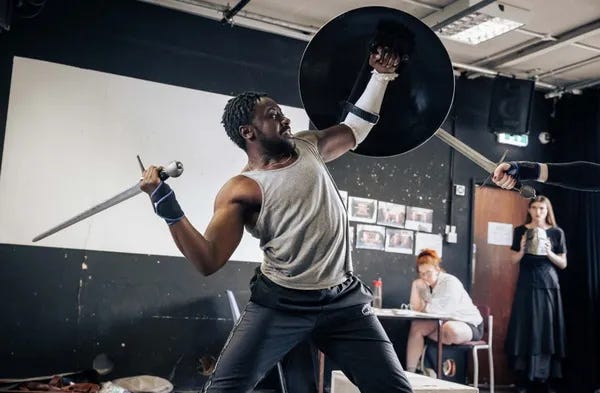
Behind the scenes footage of rehearsals PLUS Abs describing the thing before the thing

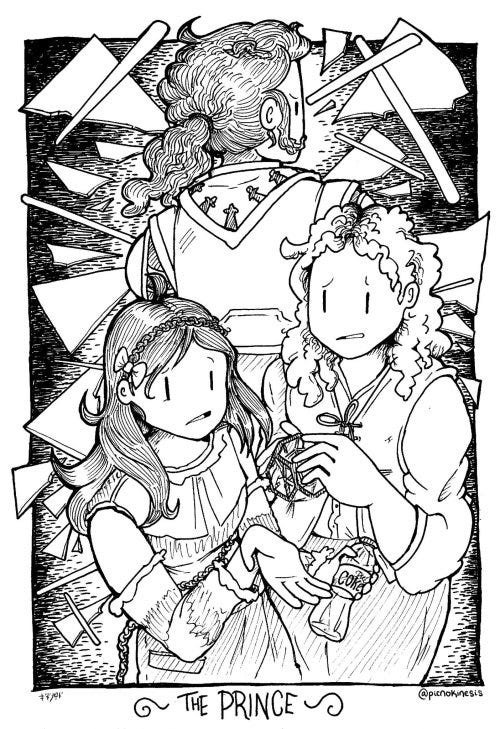
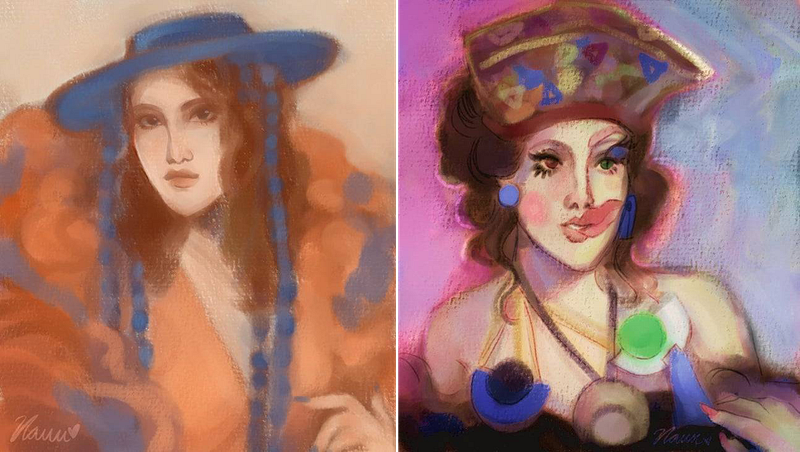
Fan Art
Further reading
Review by Diana Craciun for “The Prince” — A play by Abigail Thorn aka Philosophy Tube
Video essay: The Prince Review — Top-Not Analysis (YouTube)
Video essay: What The Trans?! made a video version of their review (YouTube)
The world according to Abigail Thorn (Xtra)
Kill James Bond podcast (Hosted by trans folks Abigail Thorn, Alice Caldwell-Kelly, and Devon, takes a critical eye on films about masculinity)
YouTuber and playwright Abigail Thorn explains why Shakespeare has “so much trans potential” (UK Daily News)
I, Joan as non-binary, featuring the stage debut of non-binary actor Isobel Thom (The Week)
The Guardian review for I, Joan
Claire Allfree Telegraph review for I, Joan
Sourced publications
The Guardian PinkNews WhatsOnStage The Telegraph The Stage Everything Theater ATV Today British Theatre Guide London Theater Philosophy Thorn Tumblr: myparadaystuff What The Trans!? Trans Writes Southwark Playhouse Twitter 1 Southwark Playhouse Twitter 2 Fan art by Taka and havaskura on Tumblr
Easter eggs, influences, and homages
Where in the world is Lindsey Ellis SanDiego? “As opposed to that of Andrew Lloyd Webber — she’s heard of one poor soul trapped inside Phantom for years without even the option to visit Starlight Express.” — The Telegraph
Hamlet was…a woman?! “When it comes to Shakespeare, though, you could argue the Victorians were ahead of this particular curve — some 19th-century critics argued that Hamlet was in fact a woman.” — The Telegraph
Bill & Ted’s Excellent Trans Adventure “Queer counterparts to Bill and Ted find themselves trapped in a not-so excellent multiverse of Shakespearean madness in Abigail Thorn’s wacky new play, The Prince.” — TheReviewsHub
Rosencrant and Guildenstern are Trans “In her programme notes Thorn tries to eject the elephant from the room by acknowledging the influence of Rosencrantz and Guildenstern are Dead, and The Prince gives a welcome redress to the comedy generated through Alfred in Stoppard’s play.” — TheReviewsHub
How to watch “The Prince”

“Thank fuck for Nebula for filming this.” — WhatTheTrans!?
The whole thing was professionally recorded and will be streaming for Nebula subscribers soon.
PLUS! Nebula subscribers will get access to a behind-the-scenes documentary about the making of the play (as well as thousands of other documentaries).
Go here to subscribe to Nebula. Make sure to use code “philosophytube” at checkout to receive 26% off. That’s only $14.79 for an entire year.
Note: I have no affiliation with Nebula and receive no compensation. I’m just a fan. But I do work for tips (see the button below).


