
Recognition and Appreciation Aren’t The Same
Leaders Need to Understand the Distinction Between Them and Know What Their Employees Want
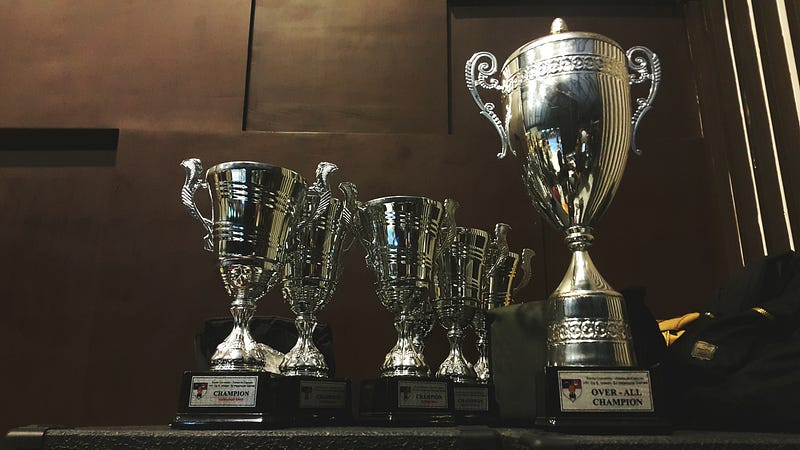
“Hey Matt, great job you did there with the sales meeting. Your confidence was fantastic.”
Matt nodded and smiled at his manager. What he didn’t know was that he was beaming. His face was lit up. He goes back to his desk, ecstatic and motivated for the upcoming project. He opens up his Google calendar, scanning the little notes he made on each date. Then, his fingers got to work, frantically typing away.
“I overheard what our manager said,” his colleague said as he walked past him. “Good job! Sure feels good to be appreciated.”
Matt gave a shrug. “Well, definitely feels good to be recognized for the work you did. Don’t know about appreciated though.”
Employee experience has been the key focus for many organizations around the world—and rightly so. In 2017, Gallup’s research discovered that 89% of employers believe that employees leave because of better remuneration. In reality, only 12% of them do leave for money, which meant that employers were largely incorrect about their assumptions.
Fortunately, we do know about the other 88% that leave for other reasons. It all boils down to employee experience.
Like user experience, the employee experience is what an employee feels and internalizes during his/her time in the company. Using that logic, it can be said that HR professionals and leaders are designers by default. A poorly designed employee experience will only lead to turnover and dismal engagement, both of which are causing companies hundreds of billions in hidden costs.
Though companies can start by upgrading their remuneration packages and provide better employee perks, those will never create long-lasting benefits. Instead, most of the problems come from culture: specifically, things that leaders do in their day-to-day. Regardless of how small it is, the potential impact they can have is always infinite.
Studies have proven this: every action you do—dubbed as “micro-moves”—is capable of determining the form of a relationship.
Leaders often get their micro-moves wrong, usually due to action-employee mismatch.
That simply means the employee doesn’t like what the leader is doing.
Often, asking what the employee wants is good enough. For instance, if the employee prefers to be recognized for his work, a leader must keep a lookout for great performance and recognize them as such.
However, there are times when the action is misconstrued for another—for most, it is appreciation in contrast to recognition.
Most leaders often use the terms interchangeably but get their definition wrong. What are the differences between appreciation and recognition, then?
Recognition is on What They Did
Burning, bright and focused, recognition is based on past performance. It is about giving positive feedback based on results or performance. For instance, the leader can do it the formal way using an award, bonus, promotion or raise. They can even give a public speech or a handwritten note if they want to be informal.
Done in a timely and genuine way, any of those actions can be meaningful, motivating and exciting. Unfortunately, what many do not know is that there are limitations to such a method:
- Recognition needs performance, and thus by default, is conditional. Without fulfilling a certain condition, no recognition can be given
- It is based on past performance
- It cannot be given liberally. Not everyone can get a nice public speech for everything great they’ve done. That lessens the impact of recognition and turns it into an extrinsic motivator
- Major forms of recognition like promotions, raises, and so on are typically given by senior leaders, which means that most recognition will come from the top
Extrinsic motivators are already shown to be less effective than intrinsic motivators and recognition often makes people happier, but not more engaged. By focusing solely on achievements, leaders miss out a chance to do something really different.
Appreciation is on Who They Are
The more watts a lightbulb can take, the brighter it shines. Keep the power switch on and the light keeps on shining.
Appreciation is as such. A long-term strategy, it involves continuous steps to build a strong foundation where an employee feels valued and respected. It is about supporting them within the organization. While recognition is on positive results and great performance, appreciation speaks about a different thing.
Suppose Harry was an intern and he started working on a new project with his colleagues that his manager tasked him to. One night, when Harry was in the office with his colleagues four hours past his usual knock-off timing, his manager turned to him and said: “Thanks for staying late and building this together.”
The nuances are there: it is not about how much Harry had contributed or whether his contribution was significant. It was about his willingness to go beyond his working hours—in other words, the manager was appreciating his diligence.
One key to note is that while generally, studies have shown that appreciation and recognition are great, not everyone wants it. Not everyone has the same perspective and due to many external circumstances, it might backfire. For instance, a manager might think that giving public recognition to an employee during a meeting would be a great motivator for him.
Little did he know that the employee was mortified. Even though the gesture was positive in nature, he did not like public recognition.
By default, all of the employee appreciation tools have great potential to make a positive impact. However, without understanding what the employee values, leaders run the risk of not making an impact.
It takes more than just experimentation here. Leaders can also try to understand their employees through deeper conversations and respect their choices. It is very possible that there are employees who do not appreciate any sort of employee recognition.
Employee recognition and employee appreciation are great but ultimately, they are part of a leader’s toolbox. The key is to always understand when and where to use them—that’s a hallmark trait of a top leader.


