avatarAllison Cecile

Free AI web copilot to create summaries, insights and extended knowledge, download it at here

4042

Abstract

that really, this isn’t so bad. We’ll come back another day to visit Bolivia.</p><p id="ca0c">At least we’ll make it to Peru and thankfully <i>that </i>flight hasn’t been canceled.</p><p id="a7f7">This bus tour will take the same number of days as our original salt flats trip and we’ll still make it to Cusco for our Machu Picchu hike. It’s all going to be okay.</p><h1 id="c697">Paracas — Home to the Poor Man’s Galapagos</h1><p id="3721">First, there was Paracas — a small town on Peru’s western coast known for its beaches, the Paracas National Reserve, and the Ballestas Islands.</p><p id="5a3b">In sharp contrast to our pre-departure panic, we were now idly and peacefully strolling along the sleepy beachside. We observed the locals meandering about and we enjoyed the tranquil sunset. Our feeling of being cut off from the rest of the world was enhanced by the lack of stores that sold international SIM cards.</p><p id="722e">And yet, like so many other small towns, Paracas has its hidden gems.</p><p id="8de8">The <a href="https://en.wikipedia.org/wiki/Paracas_National_Reserve">Paracas National Reserve</a> — a protected area of desert, ocean, and island spanning 335-kilo hectares with over 400 species of flora and fauna. Within the Paracas National Reserve are the <a href="https://en.wikipedia.org/wiki/Ballestas_Islands">Ballestas Islands</a> — commonly known as Peru’s Galapagos or the Poor Man’s Galapagos.</p><p id="0239">Taking a speed boat tour out to these islands was like stepping into a <a href="https://www.imdb.com/title/tt0795176/"><i>Planet Earth</i></a> film.</p><p id="b10c">Wildlife was teaming on these islands. The islands were cover by Humbold penguins, the shores were claimed by sea lions, and birds were everywhere — flying overhead, diving into the water, and perched on nearby rocks.</p><p id="0de8">It was breathtaking — both for this amazing up-close encounter with wildlife and also for the stench that assailed our nostrils. That part isn’t featured in <i>Planet Earth</i>.</p><figure id="b5df"><img src="https://cdn-images-1.readmedium.com/v2/resize:fit:800/1*OlgLDh5QfueLo8KOOwnKjA.jpeg"><figcaption>By Leon Petrosyan — Own work, CC BY-SA 3.0, <a href="https://commons.wikimedia.org/w/index.php?curid=25446605">https://commons.wikimedia.org/w/index.php?curid=25446605</a></figcaption></figure><h1 id="1cea">Huacachina— A Desert Oasis</h1><p id="b9ef">Then came <a href="https://en.wikipedia.org/wiki/Huacachina">Huacachina </a>— a beautiful desert oasis. It’s a small village built around the blue waters of the Huacachina lagoon and its palm trees, surrounded by sand dunes.</p><figure id="10d6"><img src="https://cdn-images-1.readmedium.com/v2/resize:fit:800/1*oSUZezILd7Wp0bCP0fwHCA.jpeg"><figcaption>By Havardtl — Own work, CC BY 4.0, <a href="https://commons.wikimedia.org/w/index.php?curid=66638554">https://commons.wikimedia.org/w/index.php?curid=66638554</a></figcaption></figure><p id="ca59">With only 100 residents, it’s mostly a tourist destination. There are a lot of hostels and bars tailoring to a younger crowd, and we found ourselves awkwardly out of place in a party hostel.</p><p id="bdee">As I said, we aren’t really the last-minute type of people normally. But alas, when in Huacachina, party like Huacachina tourists?</p><p id="3847">Nevertheless, we enjoyed our time here and embraced the “desert life” by trying our hand at some thrill-seeking dune buggy rides and sand boarding.</p><p id="0a78">If you enjoy rollercoasters, you’ll definitely enjoy the dune buggy rides.</p><p id="2444">It was like being on a rollercoaster while not quite sure if the appropriate safety standards have been met. You cross your fingers and hope the vehicle doesn’t crash or rollover, all while screaming at the top of your lungs and being jerked violently every which way. It was fun.</p><p id="186f">And as for sand boarding, well, as a Canadian who has spent some time skiing on the slopes, I was determined to not make a fool of myself.</p><p id="9bf1">Once I got over the initial stom

Options

ach-dropping feeling of barreling headfirst down a massive sand dune on my stomach without safety gear while balanced on a rickety wooden board, it was also loads of fun. Nothing high-tech; just some good ol’ fashioned adrenaline fun.</p><h1 id="8166">Nazca Lines— An Unsolved Mystery</h1><p id="9208">And the last stop on our tour was the <a href="https://en.wikipedia.org/wiki/Nazca_Lines">Nazca Lines</a> — a set of mysterious lines in the Nazca desert that depict various figures such as a monkey, a hummingbird, a spider, and a tree.</p><figure id="58b6"><img src="https://cdn-images-1.readmedium.com/v2/resize:fit:800/1*amBEHqWvNjDLadxu-A5_Qg.jpeg"><figcaption>By Diego Delso, CC BY-SA 4.0, <a href="https://commons.wikimedia.org/w/index.php?curid=42787825">https://commons.wikimedia.org/w/index.php?curid=42787825</a></figcaption></figure><p id="7c6a">Declared a <a href="https://en.wikipedia.org/wiki/UNESCO_World_Heritage_Site">UNESCO World Heritage Site</a> in 1994, these geoglyphs can only be clearly viewed from above. Some of these are estimated to be 2000 years old — long before modern technology allowed for a bird’s eye view. Yet these figures were created proportionally.</p><p id="fdcb">It’s estimated that there are between 80 to 100 figures and some of these are as large as the Empire State Building. Despite their size, they’re quite difficult to spot from the ground level, which led to the accidental building of a highway in the 1920s through a lizard. Oops.</p><p id="67fb">Yet, for all their fame, an aura of mystery surrounds these lines as it is still unclear why they were built or what their original purpose was. Some believe these were created by the ancient Nazca people for their deities and others thought there was an astronomical explanation — either as an observatory or as a reflection of constellations.</p><h1 id="068a">A Blessing in Disguise</h1><p id="8b2b">Though I still haven’t been able to visit Bolivia’s Uyuni salt flats, I’m happy to have spent a few extra days exploring Peru.</p><p id="3fae">In hindsight, I wouldn’t have done Peru justice with my original Machu Picchu/Amazon-focused itinerary. There’s a lot more to the country of Peru than just its main attractions and it was well worth the extra days exploring its southwestern towns.</p><p id="7aa0">Though I initially may have taken this path begrudgingly because of some canceled flights, it has indeed turned into a blessing in disguise.</p><h2 id="0021">#unplannedadventures</h2><figure id="6f51"><img src="https://cdn-images-1.readmedium.com/v2/resize:fit:800/0*tbCdXBJLrFr5xOYU"><figcaption></figcaption></figure><p id="1de3"><b><i>Sign up for our newsletter to stay informed with up-to-date curations from our editors:👇</i></b></p><div id="b84f" class="link-block"> <a href="https://codyjameshowellphd.substack.com/"> <div> <div> <h2>World Traveler's Blog</h2> <div><h3>Digital nomad tips and travel stories from around the world</h3></div> <div><p>codyjameshowellphd.substack.com</p></div> </div> <div> <div style="background-image: url(https://miro.readmedium.com/v2/resize:fit:320/0*WJBo3XTpkRYCkSoh)"></div> </div> </div> </a> </div><div id="192f" class="link-block"> <a href="https://www.patreon.com/WorldTravelersBlog"> <div> <div> <h2>World Traveler's Blog is creating a community for travelers and digital nomads to share the world |…</h2> <div><h3>You will receive professional line-editing services on up to 3 articles per month. We will also assure that your…</h3></div> <div><p>www.patreon.com</p></div> </div> <div> <div style="background-image: url(https://miro.readmedium.com/v2/resize:fit:320/0*ef7lQFyeG9ILwwlK)"></div> </div> </div> </a> </div></article></body>

WRITING PROMPT RESPONSE

Receiving the Dreaded “Your Flight Has Been Cancelled” Email 36 Hours Before Departure

Trading in Bolivia’s salt flats for Peru’s southwestern coast

Photo by Andy Beales on Unsplash

The Initial Panic

I was sitting in my hotel room wrapping up a couple of loose ends at work and doing a final review of my packing when I got the dreaded email: Your flight from Lima, Peru to La Paz, Bolivia has now been canceled.”

Immediately, my breath caught in my throat and panic started to settle in.

I blinked once — then twice — hoping that I’d somehow misread this email. Throw in a pinch to make sure I’m awake.

By now, panic had more than settled in and with shaky hands, I called the girl friend I had planned this trip with. She too had just received the cancellation email.

The Denial and Anger

First came the denial.

“Maybe this is a mistake. I can still see this flight on Google Flights and the airline’s website is still letting us book flights directly from Lima to La Paz.”

“Our trip hasn’t even started yet! How can it derail now?!”

Then came more bad news as we found a news article outlining how after too many accidents at the La Paz airport, all flights into and out of the airport would be canceled for the foreseeable future.

But even with this discovery, we were determined.

“Maybe we can find alternative flights to a nearby city. Or maybe we can drive! No, we shouldn’t drive …”

Then came the anger.

“This is absolutely unacceptable! How could they have not notified us sooner? The airport’s been shut down for TWO WHOLE MONTHS and they’re only letting us know 36 hours before our flight?!”

“I’m going to call the airline and the booking agency and my travel insurance. There has to be something that can be done!”

The Acceptance With Some More Panic

Eventually, we settled into acceptance that was equal parts action mode and panic mode.

“Oh my gosh! I can’t believe this is happening to us! What are we going to do?!”

“You focus on cancelling whatever we can cancel in Bolivia and I’ll focus on finding us something to do during these extra days in Peru.”

“Oh my gosh! I packed in preparation for camping in freezing temperatures on the salt flats! I’m on a business trip right now! I can’t even go home and repack!”

“You won’t even know what to repack for if you don’t stop panicking and let me figure out what we should do instead!”

“Oh my gosh! We’re going to get on our plane to Lima and arrive at 4 a.m. with no plans, no hotel, and no clue what to do!”

The Real Acceptance

Eventually, we got ourselves sorted.

As avid planners, neither of us were well suited to “winging it.” But once we truly accepted that Bolivia wasn’t going to happen, we figured we might as well make the best of the situation.

Instead of camping in the Uyuni salt flats of Bolivia, we signed up for a bus tour through the southwestern coast of Peru. We told ourselves that really, this isn’t so bad. We’ll come back another day to visit Bolivia.

At least we’ll make it to Peru and thankfully that flight hasn’t been canceled.

This bus tour will take the same number of days as our original salt flats trip and we’ll still make it to Cusco for our Machu Picchu hike. It’s all going to be okay.

Paracas — Home to the Poor Man’s Galapagos

First, there was Paracas — a small town on Peru’s western coast known for its beaches, the Paracas National Reserve, and the Ballestas Islands.

In sharp contrast to our pre-departure panic, we were now idly and peacefully strolling along the sleepy beachside. We observed the locals meandering about and we enjoyed the tranquil sunset. Our feeling of being cut off from the rest of the world was enhanced by the lack of stores that sold international SIM cards.

And yet, like so many other small towns, Paracas has its hidden gems.

The Paracas National Reserve — a protected area of desert, ocean, and island spanning 335-kilo hectares with over 400 species of flora and fauna. Within the Paracas National Reserve are the Ballestas Islands — commonly known as Peru’s Galapagos or the Poor Man’s Galapagos.

Taking a speed boat tour out to these islands was like stepping into a Planet Earth film.

Wildlife was teaming on these islands. The islands were cover by Humbold penguins, the shores were claimed by sea lions, and birds were everywhere — flying overhead, diving into the water, and perched on nearby rocks.

It was breathtaking — both for this amazing up-close encounter with wildlife and also for the stench that assailed our nostrils. That part isn’t featured in Planet Earth.
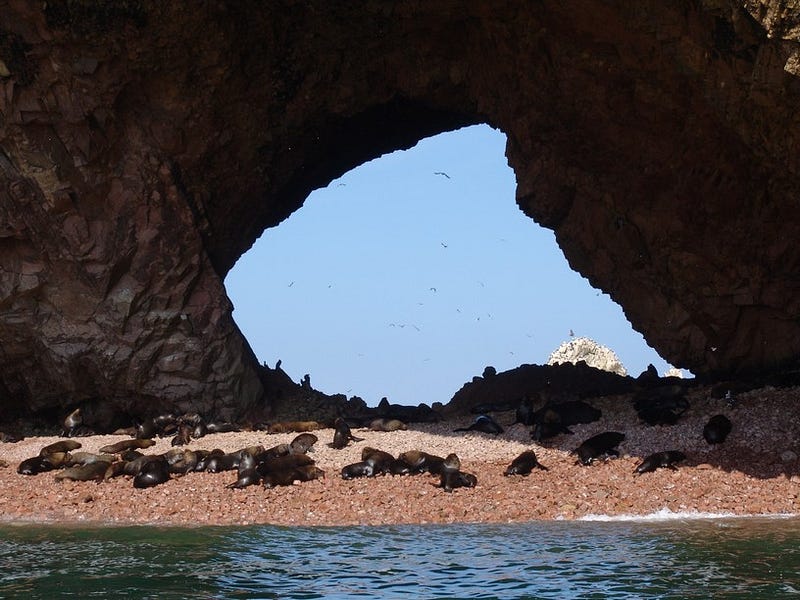
By Leon Petrosyan — Own work, CC BY-SA 3.0, https://commons.wikimedia.org/w/index.php?curid=25446605

Huacachina— A Desert Oasis

Then came Huacachina — a beautiful desert oasis. It’s a small village built around the blue waters of the Huacachina lagoon and its palm trees, surrounded by sand dunes.
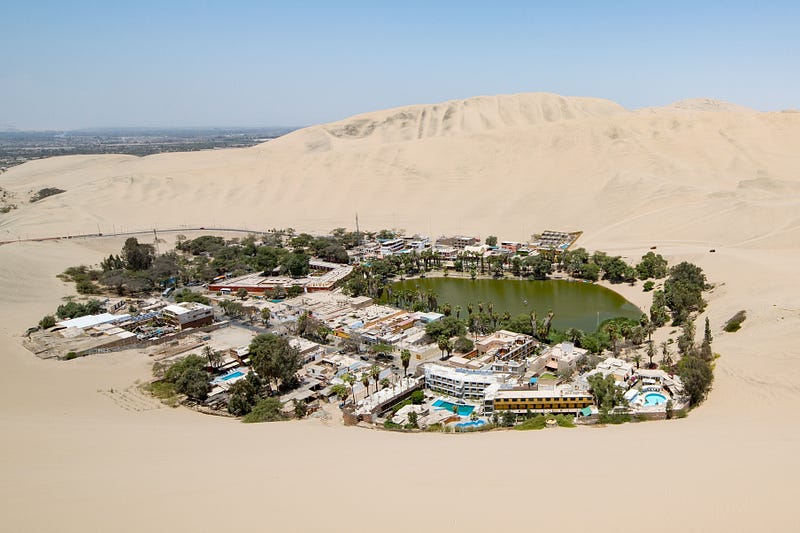
By Havardtl — Own work, CC BY 4.0, https://commons.wikimedia.org/w/index.php?curid=66638554

With only 100 residents, it’s mostly a tourist destination. There are a lot of hostels and bars tailoring to a younger crowd, and we found ourselves awkwardly out of place in a party hostel.

As I said, we aren’t really the last-minute type of people normally. But alas, when in Huacachina, party like Huacachina tourists?

Nevertheless, we enjoyed our time here and embraced the “desert life” by trying our hand at some thrill-seeking dune buggy rides and sand boarding.

If you enjoy rollercoasters, you’ll definitely enjoy the dune buggy rides.

It was like being on a rollercoaster while not quite sure if the appropriate safety standards have been met. You cross your fingers and hope the vehicle doesn’t crash or rollover, all while screaming at the top of your lungs and being jerked violently every which way. It was fun.

And as for sand boarding, well, as a Canadian who has spent some time skiing on the slopes, I was determined to not make a fool of myself.

Once I got over the initial stomach-dropping feeling of barreling headfirst down a massive sand dune on my stomach without safety gear while balanced on a rickety wooden board, it was also loads of fun. Nothing high-tech; just some good ol’ fashioned adrenaline fun.

Nazca Lines— An Unsolved Mystery

And the last stop on our tour was the Nazca Lines — a set of mysterious lines in the Nazca desert that depict various figures such as a monkey, a hummingbird, a spider, and a tree.
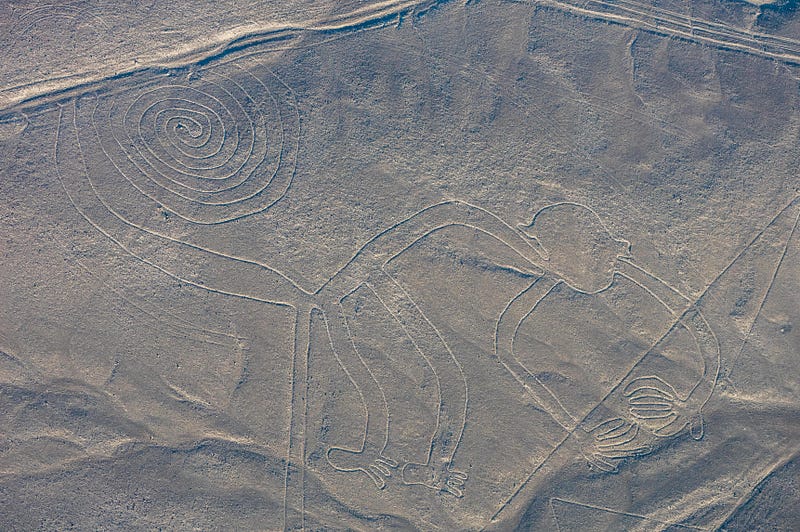
By Diego Delso, CC BY-SA 4.0, https://commons.wikimedia.org/w/index.php?curid=42787825

Declared a UNESCO World Heritage Site in 1994, these geoglyphs can only be clearly viewed from above. Some of these are estimated to be 2000 years old — long before modern technology allowed for a bird’s eye view. Yet these figures were created proportionally.

It’s estimated that there are between 80 to 100 figures and some of these are as large as the Empire State Building. Despite their size, they’re quite difficult to spot from the ground level, which led to the accidental building of a highway in the 1920s through a lizard. Oops.

Yet, for all their fame, an aura of mystery surrounds these lines as it is still unclear why they were built or what their original purpose was. Some believe these were created by the ancient Nazca people for their deities and others thought there was an astronomical explanation — either as an observatory or as a reflection of constellations.

A Blessing in Disguise

Though I still haven’t been able to visit Bolivia’s Uyuni salt flats, I’m happy to have spent a few extra days exploring Peru.

In hindsight, I wouldn’t have done Peru justice with my original Machu Picchu/Amazon-focused itinerary. There’s a lot more to the country of Peru than just its main attractions and it was well worth the extra days exploring its southwestern towns.

Though I initially may have taken this path begrudgingly because of some canceled flights, it has indeed turned into a blessing in disguise.

#unplannedadventures

Sign up for our newsletter to stay informed with up-to-date curations from our editors:👇

Travel
Culture
This Happened To Me
Life
Travel Writing Prompt
Recommended from ReadMedium