
Reassessing Europe’s China Policy: Towards Decoupling or De-risking?
Balancing Economic Interests and Security Concerns in the Era of Increasing Global Interdependencies
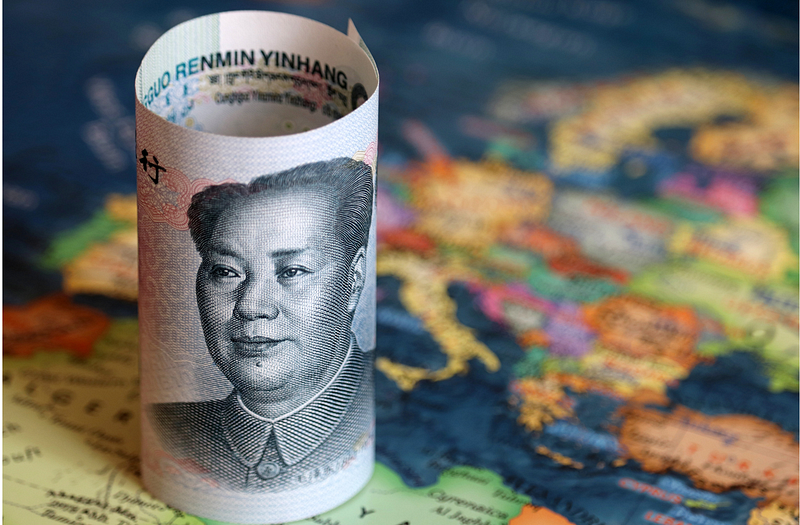
The prolonged history of trade and diplomatic interaction between European nations and China, encompassing several decades, is currently under scrutiny.
As the economic and geopolitical landscape evolves, the question has shifted from how to engage more deeply with China, to pondering the extent to which decoupling should occur.
Yet, this shift in perspective is not uniformly embraced, presenting a formidable challenge.
The diverse viewpoints and interests among European nations themselves contribute to the complexity of the situation.
In addition to this internal discord, the question of alignment with their closest ally, the United States, further complicates matters.
The US itself has fluctuated between stern rhetoric against China, bordering on war talk, and gestures towards de-escalation and limited détente.
This inconsistency makes finding a coherent European stance all the more difficult.
The State of Play — Current European Interactions with China
Recent travels of European leaders to China underscore the complexities and disparities underlying Europe’s China strategy. Emblematic of these nuances is French President Emmanuel Macron’s recent return from Beijing, which has caused quite the stir on both sides of the Atlantic.
Macron’s comments post his China visit, particularly his statement that Europe cannot follow the United States’ lead without question and should steer clear of “getting dragged into crises that are not our own,” have been perceived by many as a breach in the transatlantic front against China.
Such assertions are given weight by his further remarks suggesting that Europe lacks credibility to intervene in Asian affairs, including Taiwan, when it can’t manage security issues in its immediate vicinity (i.e. the Ukraine crisis).
Yet, these statements should not come as a surprise. They reflect Macron’s ongoing campaign for “strategic autonomy,” indicating his desire for the European Union to carve its own path in global politics, independent of the influence exerted by powers like Washington and Beijing.
While these forthright views may not sit well with all, they expose an underlying sentiment quietly resonating with many European leaders.
There is a genuine concern about following the United States into an outright conflict with China, and a growing recognition that Europe needs to define its own approach towards Beijing — one that takes into account its specific interests and misgivings.
Despite numerous reservations about China’s behaviour, from its controversial trade practices to human rights abuses, many in Europe are wary of adopting an aggressive stance.
While there is an understanding that China is a “systemic rival promoting alternative models of governance,” as stated by the European Commission in 2019, there is also a widespread reluctance to get dragged into a confrontational stance that might echo US’s fears of losing its global dominance more than it reflects sound policy.
This nuanced reality is something that the United States must come to terms with as it looks to build a common strategy with Europe to address the China question.
Success in countering Beijing will hinge as much on crafting a joint economic strategy as it will on resolving military issues.
It is also important for the US to recognise and appreciate the nuances and interests of its European counterparts — the leaders of one of the world’s largest trading blocs — if it is to devise an effective approach.
The US Position and Its Impact on Europe
As global power dynamics shift, the United States’ stance on China remains a significant factor in Europe’s diplomatic and economic engagements with Beijing.
Under President Biden’s administration, the recent approach has been largely characterised by an emphasis on ‘de-risking,’ as opposed to the more aggressive ‘decoupling.’
This perspective has found endorsement from prominent European leaders such as Ursula von der Leyen, head of the European Commission.
However, with the upcoming 2024 US elections, the potential for a fundamental shift in US-China relations looms large.
If a more combative Republican candidate secures the presidency, the geopolitical landscape could rapidly change, escalating tensions between the US and China.
Given these potential shifts, the urgency for Europe to establish a comprehensive and coherent China policy becomes more acute.
The threat of increased competition and confrontation between the US and China could potentially alter Europe’s relations with both nations significantly, underscoring the need for Europe to define its role in this shifting global dynamic independently and proactively.
It is clear that the continent can no longer afford to simply react to the policies of others but must establish a strategic stance that serves its own geopolitical and economic interests.
Towards a Coherent European China Policy
As Europe navigates the complexities of its relationship with China, the need for a consistent and strategic approach becomes increasingly imperative.
One key aspect of this policy will involve reevaluating the level of dependency on Chinese markets and resources.
European leaders face tough decisions regarding their intertwined economic relationship with China, especially in the context of potentially redirecting their billions of investments into America’s burgeoning green industry.
Additionally, contingency planning should be a fundamental component of the European China policy. The prospect of heightened tensions or even potential conflict over Taiwan, coupled with anticipated increases in US demands, necessitates proactive preparations.
Such foresight will be important in preserving Europe’s economic stability and strategic autonomy amidst these global uncertainties.
Yet, the ‘de-risking’ strategy, despite its appeal as a more moderate alternative to decoupling, has not been received without apprehension.
There are concerns regarding the practicality and effectiveness of this approach, especially in light of rapidly evolving technological advancements and the shifting geopolitical landscape.
Europe must ensure its policy keeps pace with these changes and critically assess the potential pitfalls and benefits of the ‘de-risking’ strategy.
Ultimately, the path towards a coherent European China policy will require a balancing act: safeguarding its economic interests, maintaining strategic autonomy, and negotiating the pressures of its relationships with the US and China.
European leaders must make careful and strategic decisions that consider both immediate necessities and long-term implications.
Past and Emerging Trade Trends
The historical trajectory of trade between China and the European Union presents a picture of exponential growth.
Over the span of 17 years from 2002 to 2019, trade activity skyrocketed by 428%, marking an era of considerable economic intertwining and interdependency.
This dynamic, however, is not without its significant shifts. As economic relationships evolved, so too did the perceptions of China within Europe.
The Asian superpower has come to be seen not only as a valuable trade partner and formidable economic competitor but also, increasingly, as a systemic rival.
This nuanced understanding of China’s role has led to enhanced scrutiny, regulation, and a reshaping of European trade policy.
In response to this shift and the challenges brought forth by global crises including the pandemic, European businesses have begun diversifying their supply chains.
This shift represents not only a strategic mitigation of risk but also a reassessment of the principles underlying trade relationships.
The move towards diversification underscores the necessity for balance, resilience, and agility in Europe’s economic engagements, setting the stage for the next chapter in EU-China trade dynamics.
The Implications of De-risking
The term ‘de-risking’ has emerged as a key term in the lexicon of international trade, denoting a calibrated reduction in economic ties with China.
It represents a paradigm shift from the open-door policy prevalent a decade ago, indicating a more measured approach to trade interactions with the Asian superpower.
This transition is not only governmental; it extends to the corporate world as well.
European multinational companies have started to rethink their modus operandi within the Chinese market, trending towards the development of more self-sufficient subsidiaries.
This strategy is part of a broader goal to minimise potential vulnerabilities and maximise autonomy in a changing global economic landscape.
The de-risking strategy has also been mirrored in the increasing rigour applied to investment screening. Checks on Chinese investments into Europe have tightened significantly.
In particular, strategic infrastructure has become a zone of caution, with Chinese investors largely restricted from access.
This policy shift underscores the heightened awareness of economic security in an era of geopolitical tension and evolving global power dynamics.
Challenges and Critiques of the De-risking Policy
The de-risking policy, while beneficial in theory, faces considerable resistance, particularly from corporations. These entities often view China as an indispensable growth engine for their businesses.
For instance, auto manufacturers, luxury brands, and technology giants have vested interests and substantial market shares in China, and may therefore resist initiatives to de-risk or reduce their operations.
The balance between long-term strategic risk management and short-term profit opportunities presents a dichotomy for corporate Europe, potentially leading to tensions between business interests and political decisions.
On the technological front, the challenges become even more intricate. Technology is a deeply interconnected sector where hardware, software, data, and intellectual property often cross multiple borders before a finished product or service emerges.
Take, for example, the case of 5G technology. De-risking in this area would not only require complex shifts in supply chains, but also restructuring of global telecommunication networks and potential re-negotiation of contracts.
The quest for technological supremacy in areas like artificial intelligence, quantum computing, and biotechnology further intertwine the EU and China.
De-risking in these areas would require a careful assessment of where Europe can afford to lessen its links with China without hampering its own technological progress.
This issue brings to light the challenge of balancing national security concerns with the desire to remain at the forefront of technological innovation.
In terms of crisis preparation, the potential for a significant geopolitical event such as China asserting control over Taiwan creates another challenge for the de-risking strategy.
The economic shockwaves from such an event could be vast and unpredictable.
Given Europe’s interconnectedness with both China and Taiwan — a major hub for the production of semiconductors — the ramifications of a conflict would significantly impact the European economy.
These potential crises illustrate the need for the de-risking policy to be aligned with comprehensive contingency planning.
This includes considering potential sanctions, preparing responses to possible cyberattacks, planning for interruptions to supply chains, and potentially stockpiling key resources.
Ensuring the resilience of the European economy in the face of such scenarios is a complex, multifaceted task that goes beyond mere risk reduction.
Internal European Politics and Debates
Within Europe’s political arena, differing perspectives and priorities on the China issue have been a recurring theme. The comments by French President Emmanuel Macron on Taiwan sparked a debate that exposed varying sentiments among European nations.
While some supported his call for European strategic autonomy, others were concerned that it could strain the transatlantic alliance with the United States.
This event underscored the importance of finding a balanced and collective approach to addressing China within European political circles.
Simultaneously, there is a need for a dialogue that acknowledges the different levels of economic exposure and geopolitical vulnerabilities among EU members.
For example, Eastern European nations, which have felt the brunt of Russia’s assertiveness and harbour apprehensions about China’s growing influence, may favour a more cautionary approach.
In contrast, nations with significant economic ties with China may be more inclined towards engagement and negotiation.
France and Germany, as the two largest economies in the EU, will be pivotal in shaping the bloc’s approach towards China.
Germany’s substantial trade relations with China have historically inclined it towards a more conciliatory stance. However, human rights issues and concerns about market access could push Berlin towards a more assertive position.
France, under Macron’s leadership, has been a vocal advocate for strategic autonomy, a stance that implies a more nuanced relationship with China.
Navigating the challenge of upholding European values and interests while maintaining productive relations with China will be important in shaping their strategies.
As the EU moves to formulate a coherent and unified stance on China, the dialogues within and between member states — particularly the influential roles of France and Germany — will be critical.
The task ahead is one of negotiation and consensus-building, striving to marry national interests with the collective European agenda.
This endeavour will be important in shaping the future trajectory of EU-China relations.
The Path Forward: Defining De-risking
The direction of European-China relations has entered a decisive stage, where the term ‘de-risking’ has gained prominence.
Ursula von der Leyen, the head of the European Commission, sees de-risking as an integral step forward.
However, the precise contours of this strategy are yet to be clearly defined, leaving room for extensive deliberation on what this process entails and how it should be implemented.
Despite the ambiguity, certain key objectives of de-risking have emerged, creating a blueprint that European nations can align with.
Primarily, de-risking aims to enhance economic security by diversifying trade and investment relationships.
By lessening reliance on any one nation, particularly China, Europe hopes to protect its economies from potential shocks or coercive measures.
Additionally, the de-risking strategy intends to eradicate forced labor from supply chains, a commitment that demonstrates Europe’s efforts to integrate its human rights concerns into its economic policies.
This goal is a direct response to widespread reports of forced labour in regions like Xinjiang, which have prompted global condemnation and calls for action.
De-risking also aspires to prevent China’s access to security-sensitive technology. This objective is closely tied to concerns about potential espionage, cyber threats, and the influence of Chinese technology firms, particularly in the realm of 5G infrastructure.
Despite these clearly outlined goals, the path to effectively achieve them requires detailed strategising and political consensus.
The execution of de-risking will demand meticulous planning, comprehensive policy tools, and robust enforcement mechanisms.
Consequently, the defining of ‘de-risking’ will be a dynamic process, evolving with the changing landscapes of geopolitical realities, technological advancements, and economic interdependencies.
Europe’s Critical Dependence on China
Europe’s intricate relationship with China extends far beyond commercial goods and encompasses a deep-rooted dependence on crucial supplies, particularly in areas such as technology and healthcare.
This dependence, while economically pragmatic, has raised concerns about vulnerability and security that European policymakers are now striving to address.
In the realm of technology, China’s dominance over certain markets is unmistakable. They have significant control over the global supply of rare-earth elements, lithium, and cobalt.
These commodities are not just ordinary market products; they are vital components for the burgeoning electronics industry and indispensable for battery production.
Lithium and cobalt are integral to the manufacturing of electric vehicle batteries, a sector Europe has been investing heavily in, as part of its commitment to mitigating climate change.
As Europe’s green industries continue to grow, the dependence on these elements will only increase, making the continent’s vulnerability to supply disruptions a potential Achilles heel.
The healthcare sector, too, reveals Europe’s susceptibility. Europe heavily relies on China for the supply of chloramphenicol, a key ingredient used in the manufacture of antibiotics.
This dependence has magnified in the wake of the COVID-19 pandemic, which stressed the importance of robust and reliable healthcare supply chains.
Any disruption in the supply of chloramphenicol could pose serious risks to Europe’s healthcare system, potentially affecting the production of essential medicines and the treatment of various infections.
These examples underscore the extent of Europe’s dependence on China and the inherent vulnerabilities it presents.
As policymakers consider the move towards de-risking, acknowledging and addressing these dependencies will be a critical part of creating a sustainable and resilient strategy.
The complexities inherent to the relationship between Europe and China necessitate open dialogue and unity among European nations.
The variation in perspectives and interests of different countries within the European Union only underscores the importance of this discourse.
A consensus must be reached not only in acknowledging China as a partner, competitor, and systemic rival but also in formulating a response that adequately addresses all three facets of this intricate relationship.
In the delicate act of policy formulation, Europe must navigate a path that maintains advantageous economic ties with China while simultaneously ensuring their economic and national security.
This is no easy feat, considering the multifaceted aspects of their engagement with China.
An approach that too heavily leans towards economic security might stifle potential economic growth and benefits.
Conversely, an overemphasis on maintaining trade ties can compromise national security, privacy, and human rights issues, and may risk international reputation and partnerships.
Striking this balance requires a thorough and nuanced understanding of China, its global ambitions, and its modus operandi.
It also requires a clear-eyed assessment of Europe’s strengths, vulnerabilities, and strategic interests.
The ability to leverage the economic opportunities provided by China while safeguarding Europe’s values and security will be a testament to Europe’s diplomatic acumen and strategic planning.
Given these complexities, Europe’s path forward will require flexibility, vigilance, and continuous adaptation.
An effective policy towards China is not a fixed endpoint but an ongoing process of negotiation, assessment, and adjustment.
As global dynamics shift and new realities emerge, Europe must remain committed to fostering unity among its nations, promoting dialogue, and persistently recalibrating its approach.