avatarCody Collins

Free AI web copilot to create summaries, insights and extended knowledge, download it at here

2881

Abstract

xtremely high.</p><h2 id="7754">Reason 83: Share Repurchases</h2><p id="8f7d">A share repurchase, or buyback, is when a company buys back its own shares from the marketplace. Companies might buy back shares for a variety of reasons, but the main reason is to increase the value of the stock.</p><p id="700b">A 2020 <a href="https://www.spglobal.com/spdji/en//documents/research/research-sp-examining-share-repurchases-and-the-sp-buyback-indices.pdf">study from S&P Global</a> found that since 1997, the total amount of buybacks has exceeded the cash dividends paid by U.S. firms. From 1980 to 2018, companies with share buybacks increased while companies paying dividends decreased.</p><figure id="3291"><img src="https://cdn-images-1.readmedium.com/v2/resize:fit:800/1*_jwQNpQDZd1s13W9ycrbqw.png"><figcaption>Data from S&P Global</figcaption></figure><p id="95d7">Another interesting piece of information from the study revolved around the S&P 500 Buyback Index. The index tracks the 100 companies in the S&P 500 with the highest buyback ratio in the trailing 12-month period. In the past 20 years that ended Dec. 31, 2019, the S&P 500 Buyback Index had outperformed the S&P 500 in 16 out of 20 years.</p><p id="d703">Simply put, buybacks lead to a greater price increase of the stock. And the supply and demand theory behind this is simple to follow. If supply decreases, price increases. So when a company announces they are buying back shares, there will now be fewer shares (supply) available to the public.</p><p id="7fe8">In 2018, the <a href="https://www.cnbc.com/2019/03/25/share-buybacks-soar-to-a-record-topping-800-billion-bigger-than-a-facebook-or-exxon-mobil.html">total value of shares repurchased</a> by companies was $806.4 billion, up 55% from 2017.</p><p id="151f">Share buybacks are considered for a variety of reasons, but the increase in their occurrences in recent years has been a small part of why the market has offered great returns recently.</p><p id="edab">Some <a href="https://www.fool.com/investing/2017/07/20/4-companies-that-have-repurchased-the-most-stock-o.aspx">companies that bought back</a> billions in shares the past decade-plus: Exxon Mobil, Apple, Microsoft, and IBM.</p><h2 id="1fe6">Reason 84: Publicly Listed Companies</h2><p id="721e">There are fewer publically traded US companies now than two decades ago. This may or may not come as a surprise to most.</p><p id="1b93">The <a href="https://www.wsj.com/articles/where-have-all-the-public-companies-gone-1510869125">Wall Street Journal reported</a> the number of domestic companies listed on U.S. stock exchanges peaked in 1996 at 7,322. In 2017 there were only 3,671.</p><p id="c016">Other sources have different numbers and criteria, but the trend is clear. Since the mid-90s, the number of companies publicly listed on U.S. stock exchanges has decreased su

Options

stainably. Unsurprisingly, 1996 saw a record <a href="https://www.investors.com/news/publicly-traded-companies-fewer-winners-huge-despite-stock-market-trend/">677 companies go public</a>. In a whole decade, the 2010s, 1,174 companies went public.</p><p id="a31c">The Federal Reserve Bank of St. Louis has a creative graph showing the <a href="https://fred.stlouisfed.org/series/DDOM01USA644NWDB">number of listed companies in the US</a> per million people.</p><figure id="6a9c"><img src="https://cdn-images-1.readmedium.com/v2/resize:fit:800/1*g8kXunTwEiYKJsL4-XaNWA.png"><figcaption>Image from FRED, St. Louis Fed</figcaption></figure><p id="347e">Obviously, the two numbers are going in the opposite direction. Our population is increasing while the number of listed companies is decreasing.</p><p id="d8b4">But it leads me to the supply and demand impact. If the supply (# of companies) is decreasing and the demand (population, presumably interested in investing) is increasing that will lead to an increase in price.</p><figure id="8395"><img src="https://cdn-images-1.readmedium.com/v2/resize:fit:800/1*m31Nlqg5jdZFVZ2OSUxqIg.png"><figcaption>Increase in price as a result of decreased supply and increased demand | <a href="https://readmedium.com/economics-of-ridesharing-simultaneous-shifts-in-demand-and-supply-curves-3a089c67b90c">Mohan Krishnamurthy</a></figcaption></figure><p id="40b3">It’s worth discussing that with the number of companies to invest in decreasing, the companies still available to invest in will benefit, <i>especially</i> those that are large. The larger a company is, the less likely they are to be delisted. This was observed the past year as the <a href="https://readmedium.com/faang-stocks-havent-moved-in-a-month-what-that-means-cf91f79d16e6">largest companies by market cap</a> gained the most and recovered from the March bottom faster than most.</p><h2 id="cd74">Final Thoughts</h2><p id="8058">There are now hundreds of millions of fewer shares in the markets than before, whether it be a result of share buybacks or less publically listed companies. This has partly contributed to the above-average returns investors have witnessed in the past decade.</p><p id="bd20">With all the “easy money” produced from the current economic environment, Federal Reserve policies, and government stimulus, many companies have been going public recently. Specifically, <a href="https://readmedium.com/a-beginners-understanding-and-explanation-of-spacs-fa56fc43d4a1">SPACs have taken 2020 and 2021</a> by storm, setting record numbers.</p><p id="12a3">While the number of shares to invest in may be increasing for the short term, it likely will not catch up to the numbers that have disappeared in the past two decades.</p><p id="8683">For my sake, and many others, hopefully these above-average returns continue for a while longer.</p></article></body>

Reasons 83 and 84 To Expect Greater Stock Market Returns

The law of supply and demand

Image from Canva

No, I haven't written about 82 previous reasons why stocks will offer solid returns for the foreseeable future. But I have written about enough reasons to lose count.

When I wrote “Why You Should Expect More Than 8% a Year From Stocks” I showed how the S&P 500 returned 11.56% the previous decade. And why this trend can continue. There were a variety of reasons then that are still relevant and new reasons have developed to propel the market to above-average returns in coming years.

Some of these reasons include low interest rates, lack of high yielding alternative investments, and large amounts of government spending, among other things.

There are two more reasons why the stock market can produce returns greater than 8% a year. And both are tied to one of the oldest business concepts: supply and demand.

So without further ado,

  • Reason 83 — the increase in corporate buybacks and share repurchases
  • Reason 84 — the decrease in publicly listed US companies

Supply and Demand

Supply and demand are two of the first principles they teach in Econ 101. And for good reason; they are essential theories anyone in business should understand. Even those not in business would be better off understanding how supply and demand impact their daily lives.

No one wants an econ lecture, but in short, supply and demand impact price and quantity. And vice versa.
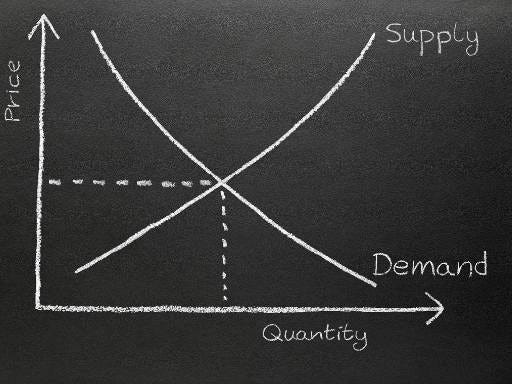
Supply and Demand graph | Image from Canva

There are many real-life examples of supply and demand that don’t involve those boring econ homework problems.

The “American dream” is to own a house. In the last year, home prices have skyrocketed, with a large portion of this price increase explainable by supply and demand.

NFTs have become the hot, new trend. Much has been written about them in recent weeks, even on this publication. There is a lot that can be attributed to their increased popularity and subsequent price explosions. But, put simply, NFTs are verifiable, limited edition items. Because of their very low supply, (sometimes 1 of 1), their prices can be extremely high.

Reason 83: Share Repurchases

A share repurchase, or buyback, is when a company buys back its own shares from the marketplace. Companies might buy back shares for a variety of reasons, but the main reason is to increase the value of the stock.

A 2020 study from S&P Global found that since 1997, the total amount of buybacks has exceeded the cash dividends paid by U.S. firms. From 1980 to 2018, companies with share buybacks increased while companies paying dividends decreased.

Data from S&P Global

Another interesting piece of information from the study revolved around the S&P 500 Buyback Index. The index tracks the 100 companies in the S&P 500 with the highest buyback ratio in the trailing 12-month period. In the past 20 years that ended Dec. 31, 2019, the S&P 500 Buyback Index had outperformed the S&P 500 in 16 out of 20 years.

Simply put, buybacks lead to a greater price increase of the stock. And the supply and demand theory behind this is simple to follow. If supply decreases, price increases. So when a company announces they are buying back shares, there will now be fewer shares (supply) available to the public.

In 2018, the total value of shares repurchased by companies was $806.4 billion, up 55% from 2017.

Share buybacks are considered for a variety of reasons, but the increase in their occurrences in recent years has been a small part of why the market has offered great returns recently.

Some companies that bought back billions in shares the past decade-plus: Exxon Mobil, Apple, Microsoft, and IBM.

Reason 84: Publicly Listed Companies

There are fewer publically traded US companies now than two decades ago. This may or may not come as a surprise to most.

The Wall Street Journal reported the number of domestic companies listed on U.S. stock exchanges peaked in 1996 at 7,322. In 2017 there were only 3,671.

Other sources have different numbers and criteria, but the trend is clear. Since the mid-90s, the number of companies publicly listed on U.S. stock exchanges has decreased sustainably. Unsurprisingly, 1996 saw a record 677 companies go public. In a whole decade, the 2010s, 1,174 companies went public.

The Federal Reserve Bank of St. Louis has a creative graph showing the number of listed companies in the US per million people.
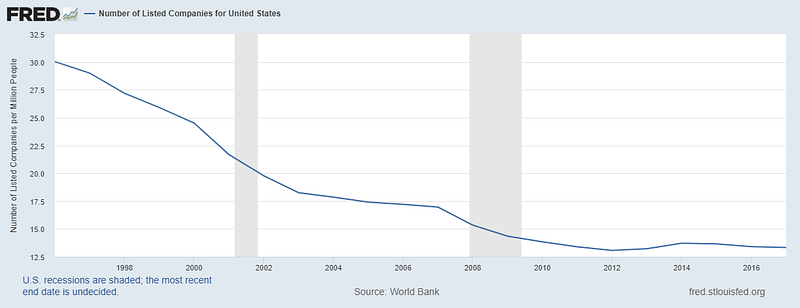
Image from FRED, St. Louis Fed

Obviously, the two numbers are going in the opposite direction. Our population is increasing while the number of listed companies is decreasing.

But it leads me to the supply and demand impact. If the supply (# of companies) is decreasing and the demand (population, presumably interested in investing) is increasing that will lead to an increase in price.

Increase in price as a result of decreased supply and increased demand | Mohan Krishnamurthy

It’s worth discussing that with the number of companies to invest in decreasing, the companies still available to invest in will benefit, especially those that are large. The larger a company is, the less likely they are to be delisted. This was observed the past year as the largest companies by market cap gained the most and recovered from the March bottom faster than most.

Final Thoughts

There are now hundreds of millions of fewer shares in the markets than before, whether it be a result of share buybacks or less publically listed companies. This has partly contributed to the above-average returns investors have witnessed in the past decade.

With all the “easy money” produced from the current economic environment, Federal Reserve policies, and government stimulus, many companies have been going public recently. Specifically, SPACs have taken 2020 and 2021 by storm, setting record numbers.

While the number of shares to invest in may be increasing for the short term, it likely will not catch up to the numbers that have disappeared in the past two decades.

For my sake, and many others, hopefully these above-average returns continue for a while longer.

Economics
Stocks
Money
Investing
Business
Recommended from ReadMedium
avatarMichelle Scorziello
The limitless Wealth Within

We all possess

4 min read