Reality-Learning™ actually Works
Read the Voices of Reality Learners
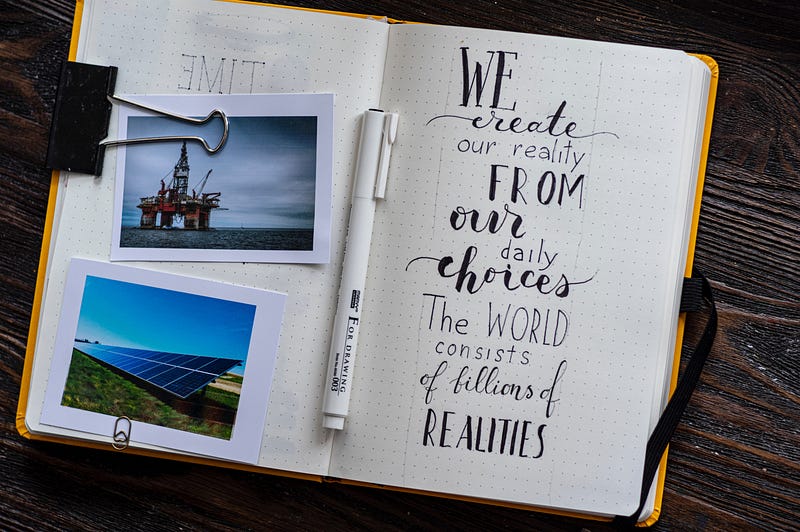
Reality-Learning is a unique variant of experiential learning that focuses on changing the perception of reality. It deploys a constructivist, andragogical approach to bring about actual changes in behavior made sustainable by the perceptions of a fresh social reality. Reality-learning is a learning experience that exposes students to authentic, real-world experiences for a classroom-based curriculum.
Reality-Learning as sociocultural interaction is a dynamic process where reality is continuously being re-created as it is interpreted and renegotiated by team members using an innovative thinking process. As the students internalize the activity worldview of the “Blue Ocean” frame, it becomes for them the mean for interpreting and refreshing the social reality by communicating using the language of Blue Ocean Strategy (BOS). The time frame for the Reality-Learning Project activities spans only a 2-month period. Like so many change efforts, this experimental initiative has no conclusive or definite outcomes.
The Reality-Learning™ Experience
In the feedback on their Reality-Learning, students articulate great experiences and speculate on the long-term outcomes of the Reality-Learning impact; just like any authentic learning in real life!
It is reasonable to expect the shared multiple perspectives of freshly constructed social realities to deepen their understanding of meaningful reality lessons and the significance for their life. As a communal activity, Reality-Learning is also a sharing of the culture. Knowledge, from the Reality-Learning perspective, does not reside solely in the head of each individual, but is distributed across individuals as co-learners whose joint interactions and negotiations determine decisions and the solutions to real problems using the “sense-making” thinking framework.
Students are required to submit their learning feedback electronically on the Blackboard eLearning platform through the following channels:
· Keeping of a journal and their reflections
· Submission of a project report with key lessons and ‘failure’ milestones
· Online submission of overall learning at the end of the course
Every student brings to the classroom certain experiences, ways of thinking, predispositions, habits, and interpretive frameworks. Their select business organization has its own historically developed features: cultural patterns, tools and symbols, and social relations. As the students engage in the Project activities as a team, they collaborate in interpreting the situation, using tools, and thinking about what is going on and what needs to be done. They try to make sense of what’s going on based on their previous experiences, individually and collectively. The emergent knowledge created is thus shared, as diverse as they are, within themselves and other respective communities of learners whom they also share a sense of belonging to the common Reality-Learning culture.
Students begin to learn according to the extent of their respective participation in their learning “community” over the 8-weeks duration of the Reality-Learning Project. As the Project progresses, they take part in the use of more (in terms of quantity, complexity, and importance) situated knowledge as they prepare for the regular scheduled reporting and discussions.
Finally, the Reality-Learning communities in the classroom co-create learning as they construct, organize, distribute and use the different knowledge of the learners to produce for all a fresh, collective “sense” of the real world out there.
The IMPACT Outcomes of Reality-Learning™
The Final Lessons are articulated online by 100% of the 1,225 students in the program over 2 semesters. They described the diverse Reality-Learning outcomes attained and pointed to the existence of different cognitive learning styles which would have varying degrees of impact on their respective personal development for real-life readiness.
Voices from Reality Leaners
Below are representative excerpts from Reality-Learning feedback:
“I can describe in just one word, which is “WOW!” It is a subject totally different from any other subjects that I have taken. This will be one of the subjects that I will remember for my whole life, because it gives me the attitude and courage to walk out of the comfort zone. It trained me in strategic thinking. These will benefit me forever.” – Tian Yafei
“Afterall, aren’t all lectures in university ought to be liked that? So provoking, so unimaginable and breathless! From the start, the course has made me see, feel, sense, taste and hear and do things in a different perspective in a different light.”
– Chen Jianming Edwin.
“The “reality” learning is indeed useful for us students to tap on our different abilities and potentials to the fullest, even though it’s quite ‘tiring’ to be honest. It definitely gave us the space to express our ideas, our thoughts in “out of the box” style and empower us young people to speak up what’s in our mind. Very often, some of us usually at our ages tend to be caught ‘lost’ in purpose of life, thereby resulting in a state whereby we could be afraid of expressing our inner views and thoughts. Good learning journey and experience in overall! Prof Michael had made me a more “ready” person.” – Choo Yue Lang, Preston
“The course enabled students to experience the realities and demands of actual working life, ranging from frustrating team members to slave-driving bosses. Prof Heng’s efforts are commendable as no other modules in NTU can offer us such real-life lessons and also getting me to expand my comfort zone and mental boundaries.” - Ng Him Yick
“The project has also made me more inquisitive. It has fueled my passion for learning after making me aware that my knowledge of the world is severely inadequate. Previously, the spoon-feeding way of education have stunted my personal growth, as there wasn’t a need for me to think to obtain solutions and I have been living like a frog in the well. This course took me out of my comfort zone (being spoon-fed and in an engineering field) to make me understand education is beyond institution, beyond specialization.” — Li Guowei
“This particular module was very interesting and unusual as compared to the other modules. The professors had structured the course in such a manner to push ourselves beyond limits unknown to us. The lectures were more like a thinking journey than educational, making me actually think a step ahead about the matters discussed. It was more to challenge the comfortable thought and opinion on how we run our daily life. The flow of the arguments was there because we were prepared and felt confident.” – Jamalulail bin Amin
“The course is a quite different compared with all the engineering subjects and even communication and economic subjects. This subject equipped us from the aspect of how to adapt ourselves to the real world. There are so many things taught in the subject and the way it been taught is fantastic. It is definitely not a boring subject. Prof. Heng conducts it by a vivid way through his own experience. His own experience not only well elaborates the theories but also enlighten us to think more about what a life should be. This is my first time to think about my own life so carefully and realize the meaning of my own life and what I really want for the rest of my life.” – Yao Qing
“The E-Project is more than just a grade on our cert, or at least, part of our grades. I feel that it is a learning experience where we can apply the things we learnt in lecture, about conflict resolution, how to handle groups, and so on and so forth. One doesn’t get to choose one’s work mates (colleagues) when one enters the work force, one simply makes do with what one gets. The keyword, I suppose, is adapation.” – Mun Hon
“I had enjoyed the E-Project because I think it’s one of the projects in NTU that gave us a taste of real life, hands-on experience.” — Wi Leen
“The many experiences and ideas that Michael has shared throughout this course have truly enriched my personal life. He has reshaped my perspective of life. Passivity gets one nowhere in life. No matter what personality an individual has, there is no reason anyone should rest on their laurels. The bottom-line is that the course has been a truly fruitful and enjoyable experience for me!”
- Tham Ying Kiat
“I feel that the project trained me to communicate effectively with stranger and deliver the right message across them. This is a skill that we take it for granted that we already have. Who doesn’t know how to open their mouth and talk but to talk about the right thing at the right time will be challenging. Skills like teamwork, leadership, decision making and presentation help me improve myself greatly as a whole.” — Tok Weicheng
“This is most “exciting” course I always heard from my peers and seniors in EEE. And now that I am experiencing it, oh my, it IS an “exciting” course. The lessons I learnt, especially those that make us go out and talk to people, network and interact, proved to be very useful. It trains me to have better communication and inter-personal skills, while improving my networking and resourcing abilities. An interviewer from a company I applied for told me this: “All the engineering courses you learnt in NTU will be inapplicable. We will retrain you again here if you are selected for the job”. This makes me think all the more this course is important. The invisible soft skills learnt when dealing with people during the course would still be applicable in the working world, if not even more important then. Also, the course makes me understand myself a little better. I now know my strengths and weaknesses a little better, and there is still time for me to reflect upon them before I start working. Skills were also honed in areas like teamworking ability, leadership, decision making and presentation. These would ultimately prove to be very useful no matter where I go after graduating.”
— Tang De Rong
“The genuine meaning behind this project is really to involve us to foster and build closer relationship with our fellow peers from the same group. Through the long and tiring leg work that we do, we also learnt to appreciate each other even more. We tolerate and give in to all differences and weakness in order to achieve the same objective and goals. This is where the human resource comes into the picture.” — Goh Kee Boon, Alvin
“The BOS technique is quite promising! A lot of companies admit they need that kind of strategy. When I discuss with one of my senior who is now working in software industry, he told me that his CEO mentioned about this BOS. He also told me that you should thank your professor of this subject for teaching the students BOS. I also agree with him. I believe this BOS will play an important role in our future career. Thank my Professor, Michael.” — Myo Min Latt
“In my experience so far in the E-Project, it has been a rocky road, full of ups and downs, just as promised in the E-Project guidelines. My whole impression so far is that our course was created in a way, … to give us, students, going out there into the working world soon, a taste of entrepreneurship. I’ve had the impression that the E-Project is about learning enterpreneurship hands-on….which, for me, is the best way to learn. I mean you can learn and take modules on how to sell and promote products, but at the end of the day, nothing beats going out there to sell. E-Project gave us an opportunity to work together in groups with random makeup. This probably simulates the working environment almost all us undergrads will step into in less than a year’s time. We can’t really choose who we want to work with can we? E-Project is finally something concrete I can bring out of NTU.” – Gerald Tan
“In future in real life when you set up a company, the world isn’t gonna judge you on the “A”s that you have obtained in the HRM paper, but it’s the way you deal with issues. I think the E-Project is a good way of exposing us.” — Lai Jing Yee
“The Entrepreneurship project that we are going through right now is actually a self-directed project which minimal supervisory guidance to promote and cultivate the entrepreneurship spirit in the individuals. Who knows, one day we might become our own bosses.” — Jenny Boh
“This course is a simulation or early trial of how to become an entrepreneur before we really go into the real world. This course has given a completely different insight on how an entrepreneur tackle all of these difficulties. Problems like innovative idea, unrealistic goals, limited budget, lack of motivation are all the difficulty faced by Mr Sim (Wong Hoo) of Creative Tech as well. So from here, our EQ is being trained and tested. How can we motivate the team, how to manage our time, how to face all difficulty out of our technical engineering course, etc.”
- Wiharjo Tanzil
“In my viewpoint, there is only one thing that the course did to students, it is to shut the window before us, and kick everyone out of the door, to experience life, the life-experiences. The rest of the course is self-taught, taught by our very own life-experiences. It is through these encounters I began to understand the person inside me. For instance, I once thought I could control my temper well, but I actually raised my voice on one of my group members in public. It is from these incidents that made me think through on my own actions which I do not see normally and eventually leading me to make adjustments on myself.”
- Tang Junwen
The evaluation of Reality-Learning uses both formative and summative assessments. The Reality-Learning project activities/tasks are developed as formative or summative tools to engage students and provide the teacher with measurable criteria from which to evaluate student understanding and progress.
In their Final Project Reports, and during Presentations, students articulate their understanding and engagement of the Project objectives for a summative assessment. During frequent and regular, at times daily, interactions with project teams, formative assessments are used to evaluate the Reality-Learning process to monitor developmental progress status and inform instructional adjustments appropriate to their further learning needs.
REALITY-LEARNING™ — The Next Level
Reality-Learning depends on the complex interaction between Reality-Learning Facilitators with the students and their Reality-Learning activities. Knowledge and understanding reside in the mind of the knower. Multiple perspectives deepen our understanding of meaningful reality lessons and develop sustainable flexible adaptability skills in a turbulent world undergoing rapid globalisation.
Further research could include evaluating the nature and intensity of learning outcomes attained in Reality-Learning; relating Reality-Learning to specific cognitive preferences and assessing/tracking Reality-Learning impact on personal development over time. The understanding and delivery of Reality-Learning clearly crisscross many other disciplines such as philosophy, psychology, economics, sociology, and political science. Using other sensemaking frames for Reality-Learning should also yield interesting learning outcomes.
The urgent imperative of education in the present era of turbulent change and uncertainties is to set the students on the path of seeking, discovering, and unpacking answers to the right set of questions. Education is essentially about equipping our children with the ability to act responsibly in a complex society.
The key Talent Management focus in education and learning is to foster and grow in students the skills of learning without being taught. In fact, the traditional purpose and function of education are never so much to provide answers, as it is to nurture and equip young minds to ask the right questions when confronting the complex cues of the real world. Reality-learning empowers students through authentic learning contexts to engage the emergent dynamic global realities more effectively and victoriously.
Related Readings
Please enjoy my recent Articles.
You can also subscribe to my stories and social media posts via your email.
Enjoy more interesting Articles by signing up to Medium here: https://thefuturistoracle.medium.com/membership