
Reality and a Joke
People are not simple and labels are toxic
Do words matter? Do the ones you use impact your thoughts in any way? Do the ones you hear influence your thoughts? Maybe. So what?
Let me ask you an easy question: are you a real person? You know, somebody that lives a life; has challenges, finds ways through some difficulties, succeeds, fails, remembers experiences, and has a viewpoint from a personal perspective. You know… a unicorn?
What did you call me?
According to the second definition in the Merriam-Webster online dictionary a Unicorn is the following: something unusual, rare, or unique
You are probably something special. My friend Gia agrees. She and I have had a few discussions about how interesting people can be.
Why are you labeling me?
Let’s come back to calling people names later, you unicorn. First lets talk about the need for labeling things.
Labeling Things
We need to label stuff. The fact that you are able to get some semblance of ideas an author tries to convey is because we have labels for ideas. We call these labels “words”.
In the ultimate utilitarian sense, a clear word effectively conveys a complete idea so you “get it”. In contrast, an ineffective word would be so ambiguous or worse, misleading, such that a reader or listener gets the wrong idea or has no idea what is being said.
When we call something a chair there is a good chance that word conjures up images of things you can sit on while you tie your shoes. You would be right to think that. If you are confused by the word chair, or believe this word is describing a color or flavor or unit of mass then perhaps you are a student of English who has not yet started their studies. Point is, a chair is a chair. Useful label for all purposes chair related.
Labels we need
There are lots of things with clear labels. The label captures what matters about that thing so we can understand each other. We don’t feel the need to ask conceptual questions about that thing: we know we can sit on it. A step-ladder? We know we can stand on it.
Labeling things makes sense. It enables communication between people.
People
Labeling people is a common practice. Smart people and dumb people do it. Look at that, I’m labeling people right now. Is it unavoidable? Does it matter?
Labeling Ourselves
Let’s talk a little about an interesting study by Shih, Pittinsky, and Ambady in 1999 and what it says about the impact of labeling ourselves. Let me paraphrase the experiment and its revelations here.
The Ingredients
Way back in 1999 USA there was a generally common stereotype that women were not as good at math as men. That’s ingredient number one here. There was also a heavily repeated and believed stereotype that Asians were just intrinsically better at math than other kinds of people. That’s ingredient number two.
The Recipe
Here’s how the researchers conducted their interesting experiment using the two stereotype ingredients that were readily available at that time.
- They enlisted Asian women into a study of math skill.
- Some Asian women were primed beforehand with activities that planted the emphasized identity of them being women.
- Some Asian women were primed beforehand with activities that planted the emphasized identity of them being Asian.
The key effect here is that through a pre-test questioning process the researchers sneakily got the women to “label” themselves in their own minds as first and foremost “women” or first and foremost “Asian”. Guess at the test results. Go ahead, no one is going to hear you think and judge you for it.
Women that went into the test subliminally anchored on themselves being women (fitting the negative math skill stereotype) scored lower than women that went into the test anchored on themselves being Asian (fitting the positive math skill stereotype).
Shrink to fit
This, and other studies since then, show us that people seem to behave in ways that conform to whatever label they accept for themselves. It’s a subconscious thing we seem to do when we identify ourselves as fitting into a stereotyped group. The label changes us.
Are you good? Are you bad? Are you smart? Are you dumb? Are there people you label that way? Do they somewhere in their minds accept that the label fits?
Labeling Others
Us and them. Research shows we have more empathy for anyone we see as one of “us” and little to none for people we see as “not us” or in the extreme as “not people.”
Sometimes the grouping and categorizing into “us” and “them” is done on visible characteristics (e.g., think classic racism), notable behavior, or something thought-related like a real or imagined opinion.
So we have groups of people labeled by gender, race, by religion, by nation of origin, by region of origin, by neighborhood, by hobby, by job, by sports club, food preference; people are good at coming up with boxes to put other people into. Boxes that then imply some meaning to the person applying the label. You know, all the people in that box are similar in some “obvious ways.” Stereotypes float around the boxes.
And in truth, when people in a box accept that label, research shows they might actually start to exhibit some of the characteristics associated with that box in their minds. This crazy fact makes the people promoting labels almost right because some population of the labeled people will subconsciously start to fit their understanding of it. Crazy. And poisonous.
Killing Dialog
Let me tell you a joke: A conservative and a liberal walk into a bar and have a chat. They have no reason to talk to each other. Because they are so different. Because they have nothing in common. Especially if they self identify with these labels. This is no joke.
If you are an American in the USA you may have a strong idea that conservative and liberal meaningfully describe each of the people walking into that bar.
In my limited experience chatting with friends of various political opinions, exactly how these labels describe people vary but the general theme is that the labels tell you what you need to know about what they want or think. Do they?
Pick one for yourself; or some other label. Double check the definition so you pick the right one.
Rosetta Stone of Political Labels
There is no Rosetta stone with immutable definitions carved into it for liberal, conservative, or any number of other generously plastered political grouping labels. The meanings vary by time and place. For example, the conventional definitions of liberal and conservative are substantially different in the USA than they are outside.
And inside the USA, the definitions are kinda murky and generally ambiguous or misleading.
Which ONE label are you? Choose.
If there is no clear definition, how much do you really know about the people that carry those labels? How much can you know without conversation?
The research tells us there is a good chance people might start to subconsciously conform to the label they wear in whatever way they think fits their version of the stereotype. You know, the poison thing. Becoming the stereotype. Losing the unicorn.
Does anyone benefit by encouraging anyone to proudly tattoo a loud label on their forehead? How about hidden by a shirt but still there?
This does not just apply to political boxes. We are talking about any label. Any label.
Religion? Race? Ethnicity? Gender?
Any label.
Any kind of label for you?
Are you possibly more complex than any one label can describe? Can someone know you by hearing one word? Could anyone else be more complex than a single label too?
Unicorns are Complex
I’ve never met a thinking person that fits only one label. And I’ve met plenty of people that have changed and evolved their opinions as they have grown in their understanding of a subject. You know, growth. It’s something people do that things cannot.
And sometimes that growth happens by sharing laughs and ideas with people that have different ideas and life perspectives than we do. Authentic interaction in trusting relationships invariably leads to the discovery that we are all unique and yet more the same than different.
Reality
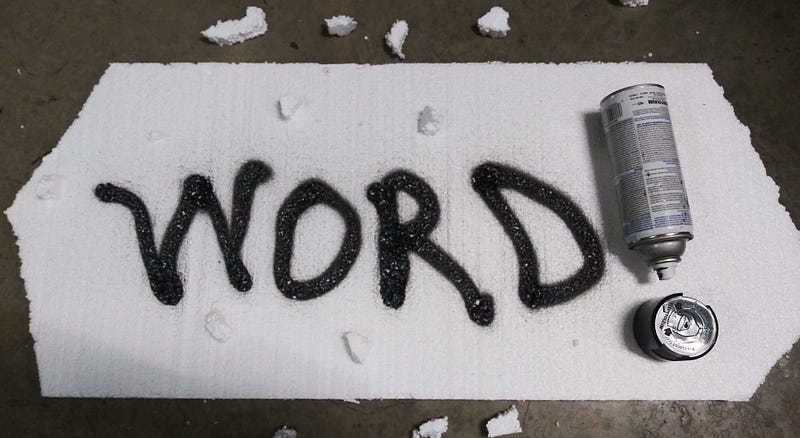
There’s an old joke that says “You are special and unique just like everyone else.” Thing is, it’s true. Everyone is a unicorn. So why pretend that we know everything we need to know about another unicorn by the label someone spray-paints on their side?
Why paint ourselves as anything less complex than the unicorn we are?
And perhaps we should be wary of folks using labels that intuitively lump swaths of people into boxes that block meaningful interaction and reflection. Perhaps they are oversimplifying.
Perhaps nobody is simple. Perhaps we are all better than that. Perhaps everyone is complex.
Perhaps everyone is somehow, us.


