
Real-Time Communication: Implementing WebSockets in Angular Applications
By : Mustapha AIT IGUNAOUN

Real-time communication has become an essential component of today’s dynamic web environment, allowing for smooth user and application interactions. Real-time functionality is mostly dependent on WebSockets, a protocol that allows persistent bi-directional communication between a client and a server. WebSockets and Angular, a well-liked JavaScript framework, work together effortlessly to enable developers to create reliable real-time apps.Understanding WebSockets and Their Significance
WebSockets differ from traditional HTTP requests in their ability to maintain an open connection between the client and the server. This persistent connection allows for continuous data exchange, enabling features like real-time chat, collaborative editing, and live data streaming.
Integrating WebSockets into Angular Applications
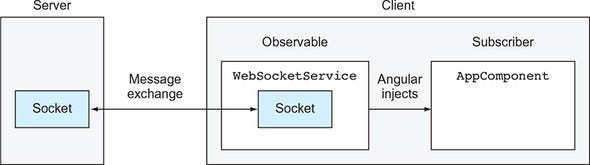
Angular provides a straightforward approach to incorporating WebSockets into applications, leveraging the RxJS library to handle real-time data streams. The RxJS WebSocketSubject class provides an Observable-based interface for establishing and managing WebSocket connections.
Step-by-Step Guide to Using WebSockets in Angular
To illustrate the process of using WebSockets in Angular, let's consider a real-time chat application scenario.
Establish a WebSocket Connection:
TypeScript
import { webSocket } from 'rxjs/webSocket';

const socket = webSocket('ws://localhost:8080/chat');
Utilisez le code avec précaution. En savoir plus
content_copy
Handle Incoming Messages:
TypeScript
socket.subscribe(message => {
  // Process incoming chat messages
});
Utilisez le code avec précaution. En savoir plus
content_copy
Send Messages to the Server:
TypeScript
socket.next(message);Utilisez le code avec précaution. En savoir plus
content_copy
Encapsulate WebSocket Logic in a Service:
Create a service to encapsulate the WebSocket logic, providing a simplified interface for components to interact with the WebSocket connection.
Utilize the WebSocket Service in Components:
Inject the WebSocket service into components that require real-time communication. Use the service methods to send and receive messages.
- Update the UI Based on Incoming Messages:
Implement component logic to update the user interface based on incoming messages from the WebSocket connection.
Conclusion
By leveraging WebSockets in Angular applications, developers can create dynamic and engaging real-time experiences for their users. Angular's integration with RxJS simplifies the process of managing WebSocket connections, enabling developers to focus on building the core functionalities of their applications.
Follow Me For More!


