
“Real People” of Maine
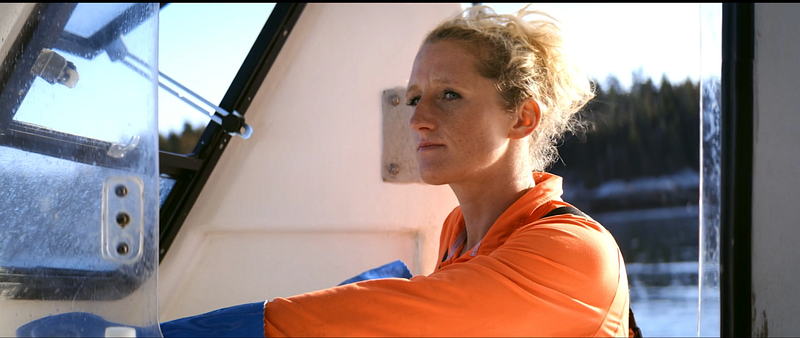
It’s a chilly fall morning in 2019. Krista Tripp’s 36-foot lobster boat, Shearwater, rumbles out of Spruce Head harbor into the lapis blue waters of Penobscot Bay. The shearwater is a shorebird that flies low along the water’s surface and far out to sea. Her boat sits low in the water, and she is heading out to her fishing grounds around Criehaven, a low-lying island off Maine’s coastline.
The cold wind blows through her long, curly, blond hair, and her dazzling blue eyes search the sea for unexpected trap buoys or the odd floating ocean detritus. In a departure from the conventional attire for Maine lobstermen, she wears a baseball cap, not a red bandana headband like her father often wore. She has her own style and ambition, and yet, in devoting herself to such arduous work on capricious coastal waters, she upholds traditions long held by Maine’s lobstermen.
Like those who came before her, Krista lives according to Maine’s rules of survival: keep moving, adapt, be resourceful.
Krista talks about her life as a lobster fisherman along the waters of Midcoast Maine. Generations of Tripp family lobster fishermen thread through her story, which starts when her grandfather, John Tripp, moved to Maine after the Korean War. He had studied at the University of Maine before serving in the war and returned afterward to marry and start a family.
Two generations later, when Krista was a child, John Tripp showed her the ropes around Spruce Head Island and nearby Tommy’s Island, a one-acre island that’s closer to the mainland than rugged Criehaven. She worked in the stern of his boat filling bait bags — oily, tedious work.
By the time Krista came along, John had launched a succession of Tripp lobster fishing boats. Each generation took lessons from the previous ones, passing on fishing grounds, bait sources, and the locations of hidden granite ledges that would sometimes wreck the sturdy hulls of lobster boats. Each Tripp fisherman brought their own character to their boats, adding a little color and texture to their fishing stories. When John passed away in 2016, Krista decided to keep his boat in the water, buying it for herself. Shearwater, with its 375 horsepower John Deere diesel engine, is a solid boat for inshore lobster fishing.
When she got around to applying for her own lobster fishing license, she had to wait for twelve years. The wait was largely due to Maine’s efforts to manage its lobster fishery. The state requires aspiring lobster fishermen to complete two years of an apprenticeship before joining the waiting list. Now, she finally holds one of over 7,000 licenses granted by the Maine Department of Resources.
As we filmed The Long Coast, our crew listened to similar stories from others who, like Krista, work and live in Maine’s fishing communities. Each fisherman told of how their talent for survival in a place of continual change had led them through tough times in the past and prepared them well for the even tougher times brought on by the arrival of an unexpected, novel challenge: the pandemic. Each shared how they were adapting to yet more change, working around obstacles like the disappearance of traditional customers, unknown market prices, and workers who didn’t show up for work.
Each story confirmed what we learned from the others. These Maine fishermen are survivors, accustomed to change, and adept at being resourceful in an industry and in a place that is known for its constraints and hardships. They have developed mental muscles and resolve that enable them to recalibrate and find a way around new constraints.
Maine fishermen know how to live in a world of uncertainty. The raw character of these Mainers in the face of significant hardship throughout the state can show us how to prepare for our futures as rapid and unexpected change just keeps coming, encouraging us not to panic or think of change as catastrophic but to take it in stride. As one Maine fisherman, Bimbo Look, said, “We are working over the long haul, quietly, in remote villages, in rough weather, in spite of an unsettled future.”
Bad weather, poverty, a declining population, and a remote location haven’t interrupted their willingness to roll with the natural and sometimes unnatural rhythms of life along the Maine coast. They recognize that, when change compromises one way of doing things, the old way can always be replaced by a new way. That’s the surprise here. Contrary to the image of a Maine fisherman as hopelessly independent, stubborn, and hostile to change, these fishermen know how to change, bend, and invent, and they are relentlessly curious. They need to be. It’s the only way to survive.
Bimbo and his fellow fishermen harvest their annual catch from fisheries that come and go. Compounding these changes are interventions from environmentalists who are concerned about what happens along the coastline, and turbulence created by the state and federal governments through tariffs and regulations. As of this writing, whales and windmills are encroaching upon the fisheries, and some Maine lobstermen are joining environmentalists that are protesting a new bill that would limit licenses for aquaculture. After all, many lobstermen, including Krista, are angling for licenses so they can grow scallops, mussels, and oysters as a way to diversify their businesses.
The character of Maine fishermen embodies the same edgy, non-ambivalent nature of the topology of their sharply crenelated coastline. The coastline is rugged, defined by unpolished granite boulders, or, as our family called them, “big sand.” The tidal coastline wanders around secluded coves, tidal pools, rivers, inlets, bays, and recesses, making it longer than California’s coastline. Edging into more superlatives, since 2004, the Gulf of Maine has warmed faster than 99 of the global ocean.
The coastline and all the battles fought for fishing rights are not the only things that make life in Maine tough. More people over the age of 65 live in the state than in any other state. Per capita income ranks 38 out of 50 at $38,921 per year. It’s the coldest state in the US, after Alaska (no surprise) and North Dakota.
Despite all this, Maine’s state motto is, “The Way Life Should Be.” Real life in Maine casts a sardonic meaning to the phrase — though perhaps less sardonic than it cast on the previous motto, which was “Vacationland.” The new motto is complicated, but it’s also far more accurate than one might expect.
I caught up with Krista on Zoom in 2020, a year after our film crew visit, when the pandemic began to subside. Rather than the cold, windy deck of her boat, she was tucked into her Spruce Head Island home, which sits between two lobster companies: Atwood Lobster Company and the Spruce Head Fishermen’s Coop. The island connects to the village of Spruce Head (population 1,500) with a short, low-lying bridge that I bike over every summer during my ride from Owls Head to Spruce Head and back. About 115 people work there on the docks, on the wharves, in warehouses, and as truck drivers, moving tons of fresh Maine lobster to ports in Portland and Boston. Alongside all the bustle are Krista’s cottage and her shop, where she sells her catch to summer tourists.
When COVID first came to Maine, her work on the water stopped as Maine fishermen saw their customers — especially restaurants and other foodservice businesses that were normally reliable buyers — go into lockdown. The outlook for the arrival for summer tourists was bleak, too, and some fishermen hesitated to put more traps into the water, worried that lobster prices would sink to historic lows. After a brief pause, however, Krista resumed putting in her traps. Since many of her fellow lobstermen weren’t fishing, Krista figured she could take advantage of the dwindling competition. Fortunately, she had enough customers to give her a “pretty good” summer in 2020, and prices didn’t stay low for long.
Drawing upon her family’s tradition of fishing along Maine’s rugged coastline, she has kept business up by finding other ways to fish, too, and in new places. And, as she has throughout the rise and fall of the state’s seafood industry and fisheries, she is netting the results of her efforts to diversify and use technology to keep her business moving forward during rocky times. While she already had some online sales of her lobsters and oysters as the pandemic began, she dug in and got a food handler certificate so she could reach out to out-of-state customers who yearned for her fresh lobsters and oysters. With this shift, she found that she could stay afloat through the pandemic, and she even scaled up in ways that were not imaginable before COVID-19 hit.
One of those initiatives is a serious pivot to new products, and now lobsters are no longer Krista’s sole bread and butter, so to speak. Her new aquaculture venture, Aphrodite Oysters, gives her more options for the seafood-hungry market even as her fellow fishermen are buffeted by windmills, quotas, and market realignment. The idea for oyster farming grew slowly, beginning when, years ago, she worked shucking oysters at Francine’s, a now-closed Camden eatery a few miles up the coast. There, she learned that her former high school chemistry teacher owned an oyster farm on the nearby Weskeag River. Later, she started working with her former teacher on the farm, eventually buying it for herself in 2016. Now, she farms oysters there from April until October.
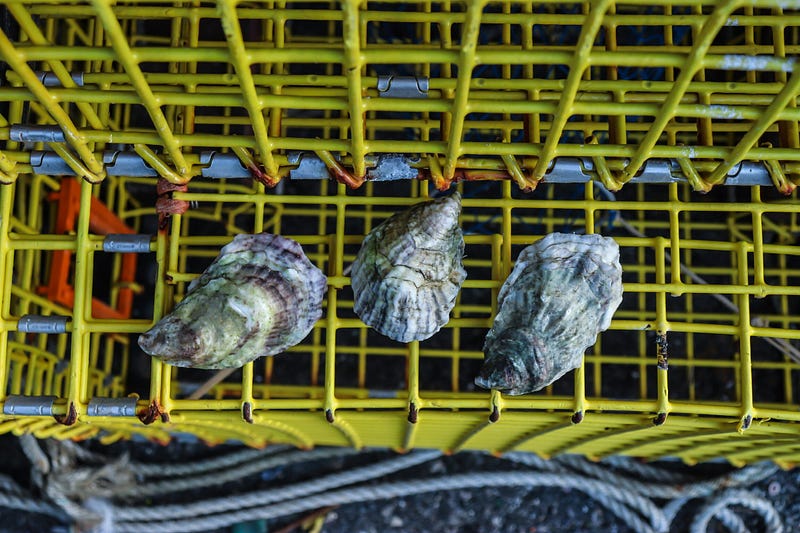
Krista is settling into her newly diversified and growing business, feeling optimistic and a bit more resilient than before COVID. Of course, Krista isn’t the only fisherman working along the Long Coast who’s had to adapt to stay afloat. Susan Lessard, Bimbo Look, and Pat Bryant are three of the other Mainers we spoke to for the documentary, and who we caught up with after a year of surviving in the pandemic. Like Krista, all three of them had found ways to balance tradition with adaptation in order to not only survive, but thrive.
Susan Lessard
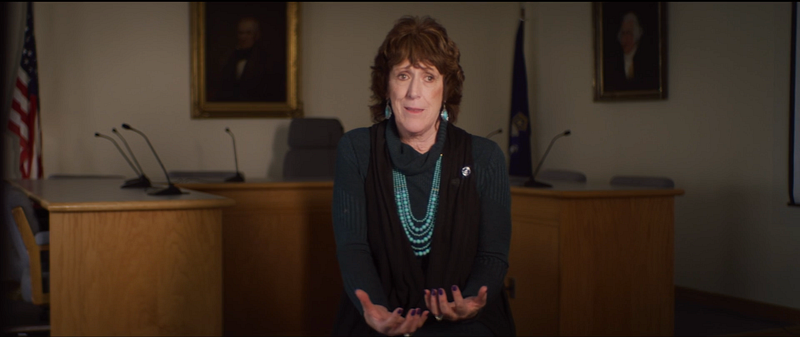
While not a fisherman, Susan Lessard lives along the Maine coast, working another angle of Maine’s fishing industry. The rise and fall of economic development on the landscape reflects what’s happening in the ocean. Krista’s interest in oyster farming appears in Susan’s story, only on an industrial scale.
One afternoon in early February 2021, just before Winter Storm Uri hit Texas, I called Susan to find out how her pandemic year had gone. Lessard is the town manager of Bucksport, a small coastal Maine town that sits along the Penobscot River. The river’s history ebbs and flows with the history of the Penobscot people, colonists, and industrial sites.
Industrial mills, especially paper mills, appeared along its edges throughout the 18th and 19th centuries. But by the 20th century, federal regulations, including the Clean Air Act and Cluster Rule, combined with foreign competition and increased input costs to uproot the forest products industry from the rivers in Maine and to relocate them to Asia and South America. In 2010, Maine had 12 remaining mills; only six were operating in 2017.
The town of Bucksport felt this collapse when an industrial paper mill, Verso, closed in 2014, taking 570 jobs with it. (570 jobs may not seem like much to big-city folk, but for context, the town’s population was just shy of 5,000 at the time.) Bucksport wasn’t alone in these challenges; other small towns across the US also saw older manufacturing industries shuttered, replaced by new technologies. These towns began to leak people, getting smaller and smaller until many of them eventually became ghost towns
Small industrial towns that experience these boom-to-ghost cycles often never get back on their feet. Under Susan Lessard’s leadership, however, Bucksport took a different tack, turning inward to its own community to discover how it would survive in the future. Susan has built her career reviving towns that are drifting into shallow water, so when she took the helm in 2015, Bucksport was in good hands. She worked with the town to find new employment and new sources of tax revenue.
Susan prepared the town for change by turning to Maine EPA’s Brownfields Fund to develop a new industrial application of technology to provide her town with an economic future — in this case, fish farming. By 2018, a Maine-based aquaculture company, Whole Oceans, approached the town and purchased several of the industrial sites formerly occupied by Verso paper mill. The new venture will bring aquaculture to the Maine coast using the Recirculating Aquaculture System (RAS) method.
According to Susan, “This new fishing venture will be providing food in a way that provides good jobs with good benefits for people who want to live here and work here. The more thought we put into what we want for our future, the more we will identify that these kinds of things will still allow us to be a green state, still allow us to have the quality of place that is here. I get quite passionate about this. I’ve been here my whole life and seen things that certainly make me shake my head, but I have great hope for this.” The farm will be located on the edge of the Penobscot River, which has historically been a source for Maine Atlantic salmon. Given its history, it seems fitting that salmon will return with Whole Oceans, even if only in tanks.
But that wasn’t the end of Bucksport’s challenges, of course. Soon after we met Susan for our film, the world locked down as a response to COVID. Towns along the Maine coast, even those with healthy financial reserves, closed shop. Fortunately, Bucksport was in a position to emerge from the pandemic without losing momentum gained by the arrival of Whole Oceans, but that doesn’t mean it was smooth sailing for Susan or her residents.
As the pandemic hit, Susan awoke in the middle of the night with an idea: a pay-it-forward approach to delivering masks and other supplies provided by the state and federal government. She encouraged residents to support their neighbors, delivering food, picking up groceries, and taking on other helpful activities that would keep the town up and running in exchange for PPP supplies. The town kept operating, and although businesses struggled, they used their aptitude for pushing ahead in spite of headwinds. Susan’s pay-it-forward approach spread to other towns as well, carrying her themes of solidarity and goodwill along the coast.
In her book, Grit, Angela Duckworth explains that perseverance and persistence — the key ingredients of grit — matter more than talent. As Susan explains, it was those two ingredients that got them through this past year.
“Negative doesn’t win here,” she says. While her team and the mayor and town council sometimes disagree, she says, “We listen to each other and eventually work things out.” Susan’s stories give you the idea that the kind of reliance that comes from living in a town that knows how to work within constraints is good for both the individuals and the town.
Bimbo Look
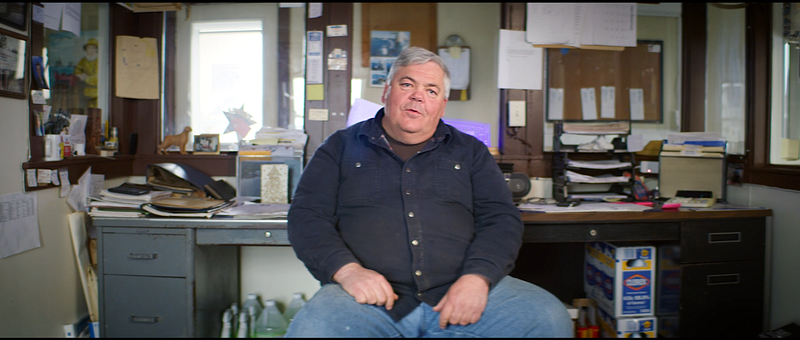
Bimbo Look, another fisherman we interviewed for our film, amplified Susan’s message of resolve. Bimbo runs a family-owned wholesale seafood business called Look Lobster Co in Jonesport, a small coastal community only about 70 miles from the Canadian border. Some call this part of Maine “Down East,” indicating that the coastline where Jonesport sits tilts both eastward and southerly as it continues toward Canada.
The town of Jonesport has been steadily losing its residents since 2010, and its annual median income is about $23,000. With its dependence on seafood, blueberries, and a tourist business located in such a remote location, even before the pandemic, the town’s 1,300 residents had little to look forward to except for the steady increase in bait prices and the lowering of herring quotas.
Bimbo sells lobster to Luke’s Lobster, a seafood business in Maine, and Luke ships to consumers at home, wherever they live through online platforms such as Goldbelly. Before the pandemic, he shipped to restaurants and retail stores. Now, that’s all changed.
In May 2020, a few months after the pandemic began, many Maine lobster fishermen thought the seafood business may be doomed. The hospitality business, including cruise ships that buy tons of lobsters to serve to their guests, collapsed. Fortunately, Bimbo’s worldview is anchored in possibilities, which is unexpected for his part of the planet. Looking for a way to survive, Bimbo watched as people in lockdown discovered how to buy lobsters for their dinners at home. Seafood buyers, shippers, and processors sent more and more seafood directly to their retail customers.
As the pandemic unfolded and he began to adapt, Bimbo remained optimistic, leaning into Jonesport’s history. Its residents remember the cycles of change, and the town is full of reminiscing storytellers who spin long tales of ups and downs. “It’s a cycle, Bimbo says. “Things like global warming happened before.” He acknowledges that he speaks from what he calls “the world of Real People.” He defines Real People as people he works with in Maine — the kind of people who don’t get shaken easily, who know how to keep moving forward whatever changes come their way. “This is the real Maine,” he explains. “From Bar Harbor to the Canadian border is the real Maine. You know, it’s not tourism; it’s working Maine. You know, the working coast.” Real People work with their hands, even in the bitter Downeast Maine winter.
Though Bimbo’s part of Maine can feel isolated, he has friends all over the world — Real and non-Real. Some of those friends live in Florida, where he recently visited and saw that things weren’t in as bad shape as described by the news anchors he saw each night at home. He says that in “Real America,” his community for example, things aren’t as desperate as the news makes it sound. It’s tough to balance relief and even gratitude for that while empathizing with tragedy worldwide. But Bimbo does it with cautious optimism. His people have grappled with the threats to their livelihood and families, and yet they’ve found ways to navigate through all the constraints. Real People, he says, “don’t have time to complain, read the rants on news, and settle into their suffering.” Here in Downeast Maine, one of the poorest counties in the US (18.5 percent of the population lives below the poverty line), he says, “Things are far from perfect, but we’ll see tomorrow. We’re resilient people. We don’t need Washington to get by.”
It’s good they’re resistant because change is constant in this part of Maine. He remarks on the businesses and industries that have cycled through his community. His company was in the oil business and then the insurance business before it became mostly a lobster business. And now it’s moving into seaweed. “Up this end of Maine, you’ve gotta be a jack of all trades to survive. Business is changing every day. This little town doesn’t have a poor class. We’re all working, blue-collar type people. We’ve got a paradise here in Jonesport that other places don’t have. That’s a fact. There’s something here for everybody, and if you want to be successful, you can be.”
Hoping to extend his life in paradise, Bimbo described a new business in town: a land-based aquaculture project proposed by The Kingfish Company in the Netherlands. Similar to Lessard’s description of Bucksport’s new aquaculture project, the Jonesport project promises to breathe new life into a listless town.
In 2019, the Dutch-owned aquaculture company created Kingfish Zeeland and began work on a yellowtail aquaculture project in Jonesport. Permits are still in the approval process, and as part of the company’s $110 million investment, it is working with the University of Maine to grow a breeding stock for the “farm.” The farm will need broodstock — are adult fish selected for their genetic makeup — to form the breeding population in the tanks. The new Jonesport farm’s broodstock will include yellowtail kingfish, Seriola lalandi. The Dutch company will ship over some of its own broodstock to the University of Maine’s Center for Cooperative Aquaculture Research, 50 miles away from the site in Jonesport, to add to Maine’s broodstock in order to create enough fish to get the fish farm started.
While waiting for the pandemic to end, Bimbo reflects on life during 2020. Prices remained high during the pandemic, even though the lobster supply chain flipped toward new customers in new places. And, with the lifting of trade sanctions for lobster exports to China, the Chinese market began gaining momentum again after it had practically collapsed. All in all, he says, “I believe that this COVID has created positive developments from adaptations. People should look at the positive. Things are not as bad as what the news says is happening in the real world.” During tough times, I think you’d like Bimbo at the helm to get you to the other side.
Pat Bryant
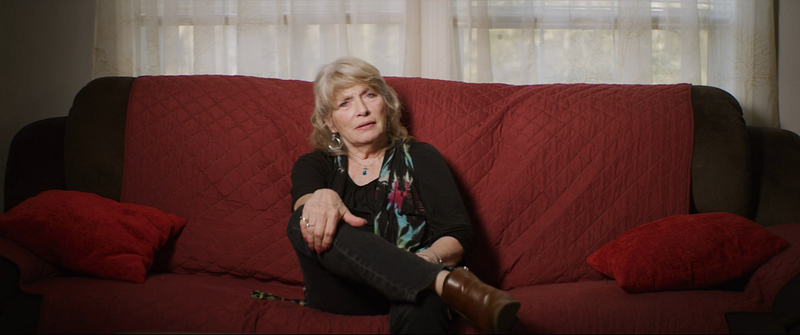
Pat Bryant’s superpower is her chimeric talent for being both a fabulous hairstylist and one of the top eel fishermen in the country. Sitting on her plush red couch in her home near her elver (young eel) business in Nobleboro, Pat recounts her decades in the eel fishing business.
She has been fishing for eels since 1978 when she started fishing with a friend who had arrived from South Carolina to fish for eels in Maine. Pat soon joined the eel fishermen at the same time as she started a hair salon business. Since then, she says, “Every hairdresser that ever worked for me became an eel fisherman. They fished at night and did hair during the day, and that’s just what we did every year for a long time.” For fifty years, actually.
In that time, she recruited over 120 fishermen, who were making good money fishing eel. But that was before eel fishing got competitive. Demand went up, prices went up, and soon “family style” began to feel mafia-style, and the black market for eels appeared. During the period when all you needed was an elver fishing license, fishermen could catch as many elvers as they could and sell them for cash, off the record. This made licensed elver fishermen like Pat furious as they watched their market slip away. But from 2011–2014, the U.S. Fish and Wildlife Office of Law Enforcement began tracking down the elver trackers who had profited from the lucrative market for elvers that sold for up to $2,000 a pound, a windfall for Maine fishermen. Soon after a wave of arrests, elver fishermen were given catch limits. What’s more, they were now required to account for all sales and to operate legitimate businesses. Stealth cash sales of bootleg elvers still occur, but only in rare cases. The key now is to get a generous catch limit and to stay in the game so you don’t lose your position in the queue for eel quotas that dictate how many eels you can catch each season. While quotas may be unpopular among fishermen, they do help manage the fishery and aim to discourage overfishing.
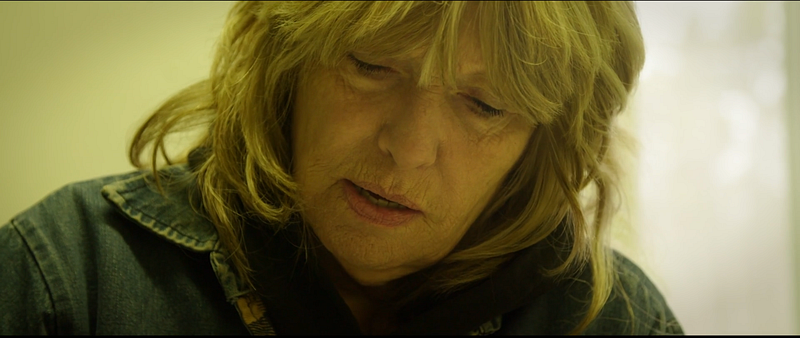
Eel fishing is a complex system, as eels travel all over the world before they reach our plates. And Pat follows those lifecycles all the way, from birth to sushi. Adult eels swim from Europe to the Sargasso Sea, where they lay eggs that develop into larvae. After spawning, the female eels die. As the larvae mature into glass eels, they end up in Pat’s neighborhood in Maine, swimming up the freshwater rivers where eel fishermen set up their fyke nets or use dip nets. This is where Pat comes in. Her business includes eel fishing, but she’s also a buyer, meaning she takes other fishermen’s catches down to New York to send them on to the next leg of their journey. There, they are loaded onto airplanes that take the slippery cargo to China — and Malaysia, and Korea, but mostly to China. There, they are grown and then shipped back to international markets like New York, where they eventually arrive on your unagi sushi.
Pat’s style, including her panache when it comes to hair, jewelry, and other accessories, comes with a fierce determination to solve problems. When the pandemic arrived, she kept her head down, working her nets and convincing fishermen who preferred to stay home, locked away from their fishing equipment. Their reluctance only added to the ordinary challenges of fishing for elvers, such as the ever-changing regulations. But Pat’s no stranger to extraordinary challenges. In the time she’s been running her business, she’s survived both open-heart surgery and a broken foot while managing to hang on to her quotas.
Pat’s fisheries are still productive, but she’s also preparing for her next move, thinking ahead to anticipate more changes. She’s working with a new eel farm, an aquaculture project called American Unagi, founded by Sara Rademaker, who has been around aquaculture since she got a degree in the subject from Auburn University. Sara has grown all sorts of seafood, including tilapia in places as far away as Africa. In 2014, she launched her idea in her Thomaston basement. Later, she moved her operation to the University of Maine’s Darling Marine Center in Walpole, and now she is scaling up in a new site in the Waldoboro business park, not far from Pat and her eel fishing community.
Pat advises Sara and provides a link to her community of eel fishermen, who can provide glass eel elvers for Sara to grow in her land-based tanks. Rather than shipping these eels off in the belly of a Korean Air cargo plane to China, the two women want to grow them here in the US, in Maine.
By providing her knowledge and practical experience and relationships with fishermen, Pat is nurturing the next round of aquaculture entrepreneurs in Maine. Together, she and Sara will spin up a new generation of shellfish fisheries and fish farmers. To gather needed expertise, they are collaborating with a Dutch aquaculture company. Primitive Dutch aquaculture began in the Middle Ages, but more intentional farming began in the Netherlands in the early 20th century, both with shellfish and finfish. Now, these companies are showing up in Maine, bringing with them their long history of fish farming. So it’s not surprising that both Sara and the folks in Bimbo’s town of Jonesport are working with Dutch firms on their aquaculture endeavors.
Sara and Pat will follow this new drift towards technology, adding to the other changes along Maine’s coast. They will sell their eels to new customers, no longer trucking them to ships that make multiple crossings across the Atlantic Ocean. American buyers are already buying the US-grown eels, eating food made closer to home, and shortening the ebb and flow of glass eels to Asia and back. This new initiative, taking off in the face of global crisis, will be just one of many that helps the Maine seafood industry weather this storm — and whichever one comes next.
All along the coast, people like Krista, Sue, Bimbo, and Pat live according to their own version of Maine’s motto, “The Way Life Should Be.” While warming, contested and often troubled currents to continue circulating along Maine’s rocky coastline, the people who live in Maine’s fishing communities seem to stay afloat, consistently finding their way to the next livelihood. Drawing upon decades, even centuries, of constraints and hardships, they soldier on, and even sprint forward, adapting in order to surf through adversity. Those of us who live in other places might learn from them — from their “Real People” philosophy — and see how to develop the muscles needed to get us through turmoil and trying times.
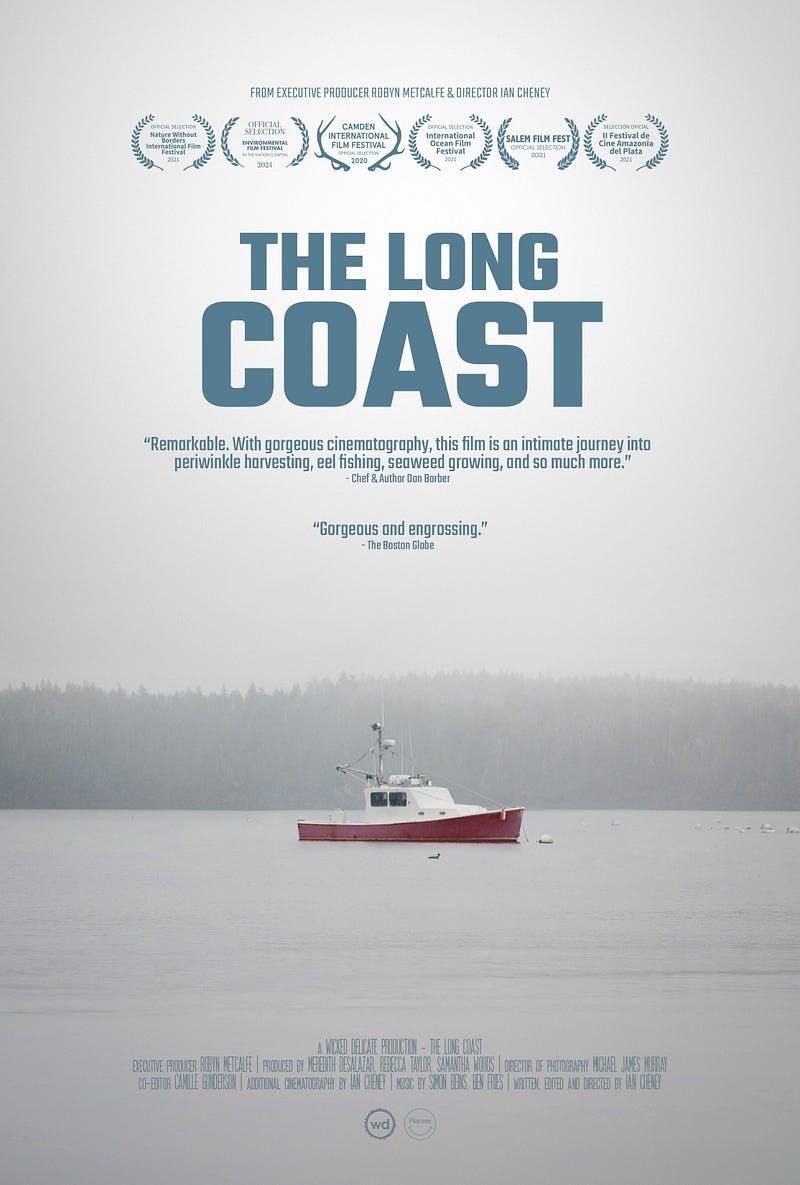
You can learn more about The Long Coast and request a screening here.