
Real People Don’t Smile All The Time
And that’s not just OK. It’s important for sanity’s sake
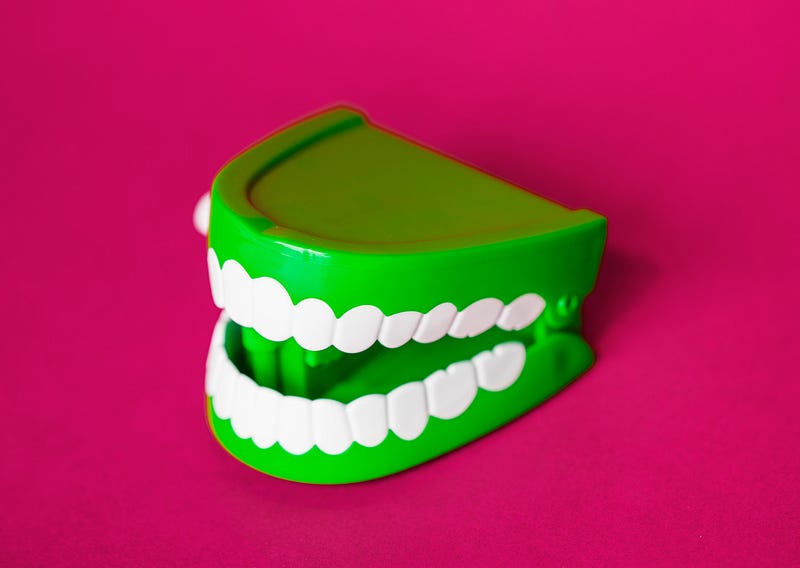
Do you choose to be who you are, or who people think you should be?
I’m a somewhat prominent Bulgarian food blogger turned entrepreneur and certified Eating Psychology coach. Whoever knows me from my food-related gig knows me as this super energetic, super smiley, always positive, and inspired-looking individual.
And I am indeed that person.
Sometimes.
But I’m also a person who’s gone through loss, grieve, deep pain, burnout, depression, and total apathy. Basically, just like the majority of people, who are alive today and have ever lived.
The problem?
When people, who know of you (as opposed to people, who really know you) have mostly seen you in one dimension of your existence, they are usually used to a particular type of demeanor of yours.
So, if those people happen to see you in a different set-up, and, based on their circumstantial perceptions and limited observations, you happen to behave out of character, they automatically assume that you’re a phoney and a fraud.
If we don’t stop curating our lives, we’ll eventually forget how to live
We’ve become so used to people we know or care about sharing with us only the 10 glamorous percent of what they feel and look like on a daily basis that we’ve come to expect that in 90% of our own lives we must feel similarly or look in a similar way.
If not, we often conclude that something must be terribly wrong with us and that our lives are a failure or much worse than everyone else’s.
Last October I quit my well-paid corporate job and dedicated all my time and energy to transforming my former hobby into a source of living. A hobby that first originated as a self-designed creative therapy for my decade-long eating disorder.
Yes, it’s exactly as it sounds — that indeed has been the toughest thing I’ve ever done in my life but not for the reasons one might imagine.
Do you know how to be weak? It’s not as easy as it sounds
It’s taken me about 3 years to gradually build a loyal and supportive audience. I honestly get sick when people start quoting their Facebook likes and Instagram followers as a measurement of success so I won’t go there. But for context’s sake, let’s just say that I do get recognized occasionally at the street or in the store or on the subway.
The public reception of my decision to make a hard turn professionally and to pursue my dreams has been overwhelmingly positive and supportive. That’s a conclusion I’ve made based on the feedback I’ve received by my friends and the audience of my blog. Officially.
Unofficially, the situation is not exactly as it appears at first glance.
When we go through dramatic personal and professional transformations, a number of shifts take place in our minds.
On the one hand, we can no longer identify ourselves as our former self or, much more accurately, associate our identity with the role we had assumed and used to derive our social meaning out of. On the other hand, we’re still not the person we aspire to be. So, who are we?
We end up in a no man’s land that’s the most emotionally and psychologically challenging place to navigate in one’s life.
This requires us to reevaluate our ego system and to inspect everything we ever associated ourselves with, all in an effort to hold on to something so that we don’t lose our sense of identity.
We used to top a corporate hierarchical structure. Or used to compete in marathons. Or used to give lectures to interested audiences. Or used to be in “perfect” shape. Or used to own a fancy car. Or used to be the hottest catch on campus in college.
What if everything we ever were or had goes away?
But what if all that’s just gone in a second?
What’s then left of you? Where do you look for yourself?
We often look for meaning toward our families. Unfortunately, conditioning our own existence on people, any people, puts huge amounts of pressure on our relationships and they often suffer as a result.
There is always a fundamental problem to be found, when our sense of identity comes from external circumstances that can change in the blink of an eye.
Then we’re seemingly left with nothing. Or rather, with no external validation of who we are and of our fundamental worth as human beings. It’s only then that we’re actually forced to learn who we truly are beyond our ego.
As I went about my inevitable ego evolution (which basically looked like me surrendering to feeling like total failure and just staying patient in the presence of my pain so I can finally realize where it actually came from), people around me started acting totally surprised by my unlikely behavior.
Where were all the smiles?
The positive attitude?
The energetic demeanor?
The inspirational messages?
What was wrong with me?
People expected me to be the version they had gotten to know.
They expected me to emit overwhelming positivism just like they always knew me to do.
All of that was fine by me. I had built a personal brand and the people I had been trying to reach now were getting a mixed message.
What wasn’t fine was that some of the conclusions people were making were not that I was going through a rough patch, but that I was a mean person in general.
It was that simple.
I hadn’t fucked up publicly. I hadn’t embarrassed myself in any way. I was just allowing myself to be who I am. To be weak. To feel pain. To be uncertain and scared. To not pretend that everything was great. Because it wasn’t.
But the logic was that if I wasn’t smiling all the time, the only explanation must be that I’m a mean person, who’s just fake online to deceive her audience.
Master getting unbroken
Very few people knew how broken I was.
Very few people knew that I barely made any money for an entire year and that it was thanks to my amazing boyfriend’s financial and emotional support that I barely made it through.
Very few people cared to ask.
Few actually did. And the ones, who did, were people I know for a fact have been through hell and know exactly how dark it could get. But that it also gets bright and shiny afterwards. And that’s OK.
Normal people don’t smile all the time.
Smiling all the time is deceitful — to the outside world, but, more importantly, to oneself.
Smiling all the time means we’re not paying attention to actual problems, which need our attention and would sooner or later come back to bite us in the ass.
Smiling all the time is emotionally unhealthy as it doesn’t give us the room to work through all kinds of pain that we all experience at a certain point in our lives.
We can’t solve problems we’re not willing to have, even if we use the power of positive thinking. The power of positive thinking is a dangerous fallacy because it masks obstacles that are actually crucial crossroads on our way to becoming true to who we are.
We can spend a lifetime pretending to be everyone the people around us expect us to be and never truly be who we’re meant to be. And if we hide it all behind a decorative smile, our problems won’t disappear, our dissatisfactions won’t dissolve, our disappointments won’t stop aching.
The only way to actually work through all of it is by actually intentionally paying attention to it, staying present with it, and being appreciative of the lessons all those inconveniences and discomforts are trying to teach us.


