
How People Reacted When I Quit Alcohol
What to expect, and what not to take personally
Giving up booze?
First of all, I applaud you. This hard decision is going to have an immensely positive impact on your health, your decision-making, and your productivity.
Your world is about to become a more intentional space.
If you are still a little unsure, that’s totally okay. Just know you won’t actually miss out on much. You’ll still be part of your social group just as before. The only difference is you’ll be happy with yourself the next day.
Nothing beats the freedom of zero hangovers.
However, there is something you do need to get ready for, at least in the beginning:
Make sure you can digest social awkwardness.
Does sobriety freak us out?
Alcohol is the only widely accepted drug at this point. Cigarettes have long left their prominent position at the top of the tolerated drug pyramid. And people are starting to wonder: is alcohol the only thing we have left?
Our life today is so fast-paced we feel like we need a drink at the end of the day just to slow down. It’s normal to skip dinner in favour of team-bonding drinks after work. We build entire relationships and sustain them for years over a glass of booze.
Our favourite pretext? It’s always been this way.
Since the medieval times, alcohol has become a firmly established special guest at family gatherings, weddings and parties; a comforting companion on long journeys; and a third wheel on dates and cozy nights in.
Our travel through human history wouldn’t be the same without the liquor. We’ve cherished it and groomed it and used it as a crutch, as a tool, as an indulgence.
So when someone voluntarily gives up all its perks, it leaves us puzzled.
We take it personally. What can possibly be so bad about beer? Why is this person detaching themselves? Are they detaching from me? Are they about to turn into a water-bottle-clutching, rounds-running, celery-juicing fanatic?
Which actually isn’t too bad. I run laps in the park, and I celery-juice, and it’s great!
So when we peel off all the layers, we realize most people are simply just afraid of losing their friends.
Silly as it may seem, they are scared that a glass full of apple juice instead of wine will crack open a gaping hole in the ground between the two of you. And that you’ll lose your connection.
As if what you actually said was in fact: “I’ve decided to ditch English, and from now on I’m only going to speak Japanese.”
Plus, most of us can’t figure out how anyone could have a good time out without booze. We cannot dance without booze. We need it to help us be open and honest. We don’t know what to do with our hands if not holding a glass.
Where do I stand personally? My baseline is that I, too, love alcohol. But I’ve also been bitterly betrayed by it. And that’s how I got to know both sides of the vodka pond.
The good, the bad, and the ugly
In 2019, after wrestling the idea for a long time, the Reasonable me finally put a strong foot down, and I ventured on a long booze-free summer foray.
The decision was strongly helped by the fact I happened to have caught Lyme disease from a tick bite. I knew if my body was to fight effectively, it needed to be supported, instead of further poisoned.
Naturally, the summer turned out to be an extremely busy time. I travelled through 3 countries, visited Amsterdam for the first time in my life. I was seeing lots of friends and family. I camped at a notorious zero-rules, maximum-freedom underground festival. And somewhere amongst it all, it also happened to be my birthday.
Through all of it, I remained sober. Not a drop. And I had a fantastic time.
I didn’t need sambuca shots to do crazy things.
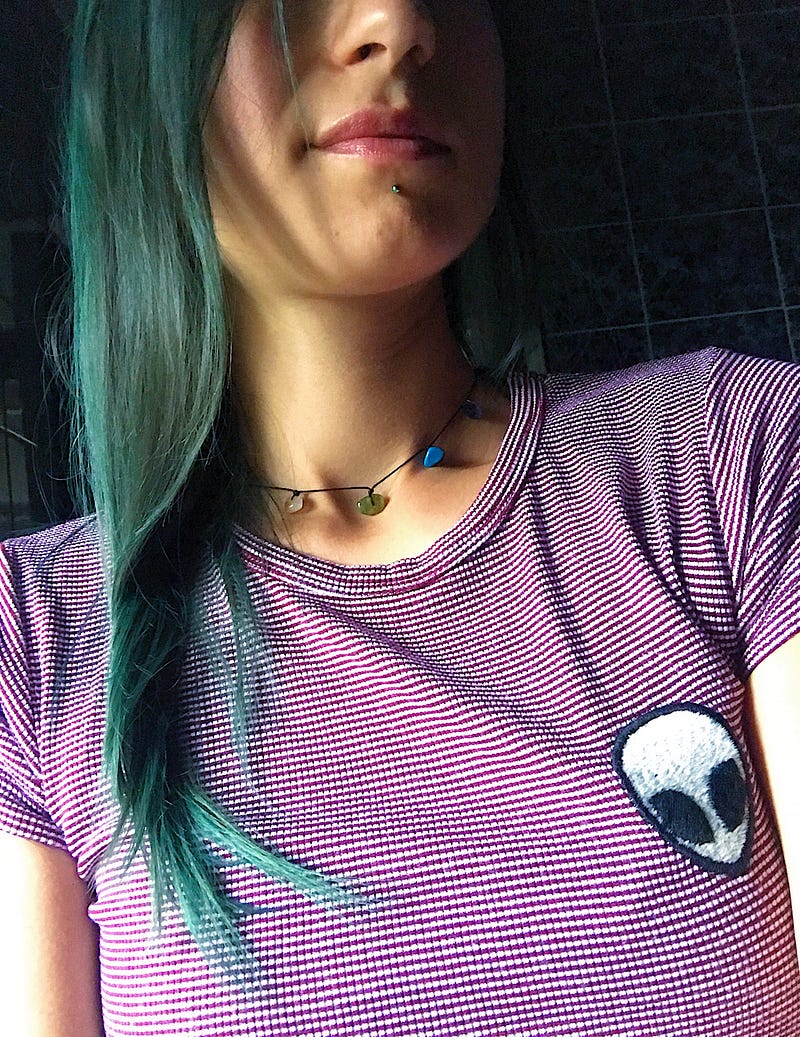
I dyed my hair teal green. I puffed on a spliff in front of a policeman (in Amsterdam). I swam naked in a freshwater pond, with carps jumping all around me like dolphins.
Others, however, still weren’t convinced. Friends turned into instant psychology experts. Complete strangers threw all sorts of personal questions in the air. I realized how deep-rooted and uncompromising the human — liquor relationship really was.
Turns out an innocent “Thanks, I don’t drink” can send people into all kinds of frenzy.
Strangers:
“Why?”
Fair enough question. But for someone like me who has trouble opening up to strangers, exposing your wine-stained laundry within 5 minutes of meeting someone, can indeed feel a little daunting.
Go with a generic answer like ‘It makes me sick’. It’s relatable. It makes the stranger picture you in a vulnerable state, and instantly feel closer to you. And so it’s likely to result in a benevolent pat on your back and no further questioning.
“What’s wrong with you — are you ill?”
This one is tough on so many levels. Would you ever ask someone this in any other situation? Like if they refused a cigar, a chewing gum, a caffeine pill?
The expectation that someone has to be ill to want to avoid alcohol is where the absurdity of our perception truly hits home.
Yes, I happened to be on antibiotics for Lyme, and I realized this question is even worse if you actually are ill.
Chances are you’re already feeling pretty vulnerable as it is. And this question is how the vulnerability gets exposed. And becomes scary.
“Yes, something is wrong with me,” you think. “Thanks for the reminder.”
“That’s hilarious.”
Admitting to the lack of alcohol in your blood is probably the only social scenario where strangers feel entitled to openly laugh in your face.
At the festival, a giant snake of a queue leading to the bar made me skip to the front and check what they had, to save me waiting in case they only sold alcohol.
A couple standing there clearly thought I was trying to jump in front of them. I attempted to explain in a friendly manner: ‘Oh I’m just checking if they have anything non-alcoholic. Do you reckon the homemade lemonade is any good?’
Their answer? An explosion of seizure-like laughter. “I don’t know,” the girl managed, holding her bent stomach. “None of us ever drink that soft crap!” And another hysterical outburst.
I left. Sometimes I think they’re stood there laughing, to this day.
“Are you broke?”
Sure. A lack of resources is precisely why I’m drinking a £4 homemade lemonade instead of a £2 can of beer.
“Why did you drive if you knew you were going out?”
Apparently driving is the only legit reason anyone would ever say no to that oh-so-temptingly juicy tequila shot.
Make it easier for yourself. Feel free to indulge in a story of how hard it was to find a parking space for your imaginary car. And go wild! Make it at least a Bentley.
Friends:
“Are you sure you don’t want any?”
Having to say no to someone who cares about you is hard enough.
Having to repeatedly say no to someone who keeps offering, is a massive headache.
You know they mean well. But it leaves the air heavy. They feel rejected and you feel like you just refused to drink from some miraculous, cure-all fountain of youth.
“We all go through that, so deal with it.”
In many areas of life, this is a typical way of undermining someone else’s issues. Yep, we all have fallen asleep on the floor hugging the toilet at some point, no biggie!
And just like that, the vulnerable part of yourself you just shared, is swept off the table like breadcrumbs.
Just because thousands of other people get cold sores too, doesn’t make it any less of a personal issue for you.
Don’t ever let others undermine your concerns in such a way. Your feelings are valid and they do matter.
“I don’t know how to talk to you anymore.”
This one’s painful.
I’m still me! I just don’t think that throwing up is a sign of a night well spent anymore.
But what’s worse about this statement is the suggestion you might judge your friends when they’re drunk. And that they cannot feel like themselves around you anymore.
If I had to mark any of the reactions as heartbreaking, this would be it.
“The problem is not the booze, but your inability to handle it.”
Sure, this one’s probably true. It’s not exactly easy to figure out how to handle ourselves once we have lost control over our actual brain. Most of us will never succeed.
But isn’t not drinking the ultimate precaution to that kind of disaster?
If someone tends to overdo their drinking on a regular basis and it, therefore, proves harmful, shouldn’t the decision to stop altogether be praised instead of bashed?
“You like to miss out on fun?”
“Poor Martina, missing out on all the fun!”
Erm, I’m sitting right here, literally laughing with you.
“I’m having an amazing time,” I say, which causes a collective roar. How on earth could anyone have fun while still being able to articulate?
It surely doesn’t take much to earn the Joke of the year award in this group!
“Care for a good morning kick?”
If on the morning of your birthday someone offers you a wake-up tumbler of rum before you’ve even fully emerged from your tent, quickly refer to another addiction instead: ‘Happy to binge on strong coffee first, thanks very much!’
Who to hang out with when sober
Want the short answer? Anyone capable to carry out a normal conversation after you’ve dropped the S-bomb.
In general, I felt the best around unassuming people who knew how to respect my personal space and appreciated it when I was ready to open up.
People who were sweet and accommodating, and never ran short of encouraging words.
People who loved themselves enough not to take my decisions personally.
People who were real enough to recognize my decision as beneficial to my existence, and who even went as far as admiring it. People who were open-minded enough to join me in my fate even if just for one night.
Stick to people who see you for you.
Real friends will love you regardless of the contents of your glass.
Main takeaways
- I might have said the soda & lime in my hand was, in fact, a vodka & tonic far too many times.
- I quickly realized there’s no point in seeking external approval. No one else can give you what you can’t give yourself first.
- Be compassionate with yourself. Only you know how you feel. Be your own best friend for a while.
It’s not your duty to justify your decision to anyone.
- No scary commitments. Set a realistic goal that won’t make you wig out. One day at a time.
If people are mean to you because of your choices, let them be. You’re not the victim. They are.
More from me on The Ascent:


