
Read This Now, Not Later.
The psychology behind procrastination and how to manage it.
My To-Do is my current favourite mobile app.
It’s helped me stay organised, feel productive and get things done.
But two nights ago, I noticed something.
You see, because of its inbuilt “move to next day” feature, there was one particular task I’d been shifting.
One week.
Two.
Three.
Till the deadline rolled around, dangerously close.
What beats me is how important this task is, for my future.
Then, I realised where the real problem lay.
Procrastination who?
etymology: from the verb procrastinare, from pro- ‘forward’ + crastinus ‘belonging to tomorrow’ (from cras ‘tomorrow’).
Perhaps I should begin with this bold statement.
Procrastination is not laziness.
The truth is more nuanced.
For example, I could be due for an essay soon but decide to go for a quick run, load up the washing machine, do the dishes plus ‘warm’ up my car instead.
Procrastination is knowing what to do yet doing anything else but that.
But what does it matter anyway? At least, we got it done. Even if it’s down to the last nanosecond.
“Procrastination is any delay that has a negative consequence,” — Dr Timothy Pychyl
We might end up altogether neglecting to fix that faulty garage door handle or have that talk with a friend who has been acting funny lately.
“Think of your many years of procrastination; how the gods have repeatedly granted you further periods of grace, of which you have taken no advantage.” — Marcus Aurelius
Yikes.
The basic neuroscience of procrastination
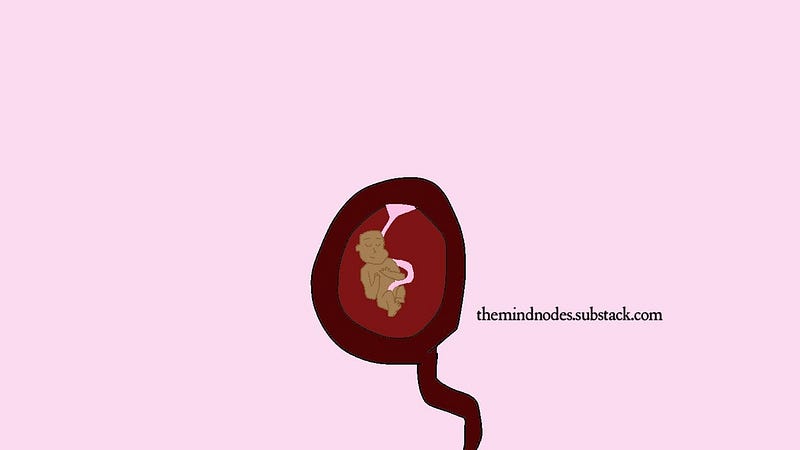
When we form in the womb, areas such as the limbic system are believed to first develop before the neocortex (literally, the new-er cortex). This continues to translate to the pattern the brain uses to develop even as adults.
But here’s the catch:
The limbic system (LS) is associated with behavioural and emotional responses, especially with (immediate) survival instincts — eating, regulating sleep, escaping danger. Its functions are automatic and usually not in our control.
The neocortex, on the other hand, is involved in higher functions like thinking, judgement and making meaningful decisions.
Put these two in a tug-of-war and guess who wins?
The older, more experienced guy.
It’s why we know what to do logically, but somehow still don’t do it.
Then there’s also some of us (me inclusive) who believe we “work better closer to deadlines”.
Tsk.
I mean, can’t you see the appeal? After all, our flight-or-fight response is activated as a deadline looms, releasing adrenaline but also, the stress hormone.
The problem with constantly activating the stress hormone? We can fall into the state of chronic stress.
Several other biological theories abound.
The basic psychology of procrastination
According to Graham Allcott, the acronym DUST can be used to identify why we procrastinate. Most likely, the task is:
- Difficult
- Unclear
- Scary
- Tedious
Like I’ve said, it’s not because we don’t know what we need to get done or even the 1001 benefits. Sometimes it’s not even about how, because in a time of access to Google, is there even an excuse?
So what is it then?
Here’s a different perspective I came across and found interesting:
Psychologists are looking in a different direction altogether.
“(It) really has nothing to do with time-management. To tell the chronic procrastinator to just do it would be like saying to a clinically depressed person, cheer up,” — Prof Joseph Ferrari
It appears procrastination is an emotion-based coping response.
Some psychologists believe “I can’t deal with this right now” is related to emotions rather than an actual physical inability, as opposed to formerly-held beliefs.
Thus, we push things further, hoping our future self will be in a better mood.
As we know, this is hardly ever true.
So, what can we do?
Can we trick the limbic system or our emotional response?
Yes, you know finishing that book now will mean good grades later, but how do we shift from the future to the present?
One major tip is breaking things down to the most micro-level task that can be done in the now and doesn’t sound like it sucks.
For me, this has looked like watching a 2-minute (baby steps, okay?) YouTube tutorial on this task I’d considered unclear and tedious.
Before I knew it, I got into the flow state.
Other useful tips include:
- Utilising automation. Thanks to the privilege of living in a digital age, tasks such as making important payments can be automated with apps. Take that, LS. Procrastination may just be a sign you actually hate a task and you should consider outsourcing if you can.
- Closely related to motivation, offering incentives for completion.
Now go smash that To-Do list.
Rooting for you!


