Read The Latest Agriculture & Energy News From Areas & Producers!
Follow the publication Areas & Producers for more content about global energy and commodities markets.
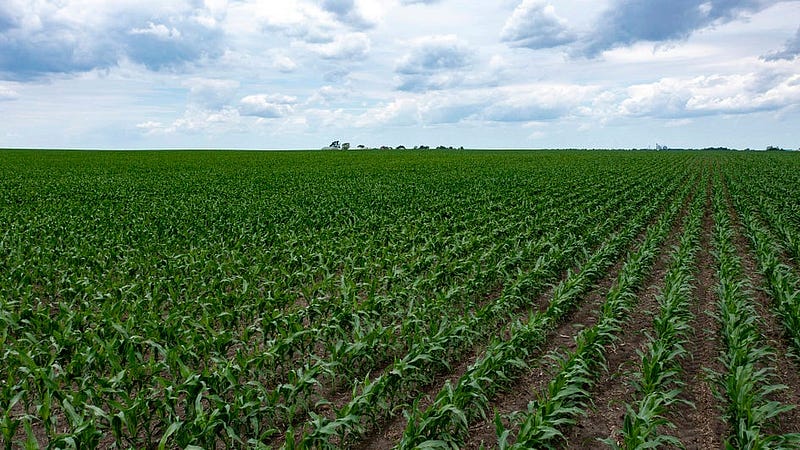
USDA Announces $1.5 Billion in Funding for the Regional Conservation Partnership Program
For those of you who are not aware of the US Farm Bill debacle in Congress, there’s a lot of controversy about US agriculture policies stirring on both sides of the aisle in US politics right now. Today, it was just announced that US Agriculture Secretary Tom Vilsack made $1.5 billion available for farmers and groups that have signed on to the Regional Conservation Partnership Program (RCPP).
In the article by Progressive Farmer it was noted that this is the largest funding amount in the program’s history and is tailored to meet the needs of “partner-driven conservation and climate solutions” in US agriculture.
This tagline falls under the Biden Administration’s “Investing in America agenda”. You can find more information about the current issues facing this program on the Invest In Our Land website.
The US Farm Bill is a complicated monster. I’ve tried to keep up with it, only to fail in understanding some of its most complicated parts. It wasn’t made to be carried out in a holistic approach, as the parts of this Farm Bill appear to be more important than its sum.
Here’s what US Agriculture Secretary Vilsack said about the latest funding announcement:
“We had unprecedented demand for the Regional Conservation Partnership Program last year, showing the robust interest in conservation from farmers and ranchers. Through the increase in funding from President Biden’s Inflation Reduction Act, we’re able to invest even more this year in this important program, increasing our impact across the landscape. We’re looking forward to seeing what the more streamlined and customer-oriented Regional Conservation Partnership Program can do to get more conservation on the ground in the coming months and years.”
From the quote above, it appears that the Biden Administration’s Inflation Reduction Act (IRA) is key to the success of the RCPP. However, the IRA is clearly taking on the US’ immediate problems from a holistic approach — to incentivize onshoring and prioritize clean energy projects at industrial scale — while the US Farm Bill appears to be broken down into various parts that do not apply to all farming interests in the US.
This is the key problem. The American farmers in the Southeast do not necessarily needs to solve issues for the Midwest farmers. Likewise, West Coast and East Coast farmers could care less about what happens in Middle America. Farmers in the US are anything but united around the cause of collective problems for US agriculture interests.
Plus, giant US agriculture companies, often referred to as “Big Ag”, have taken an enormous slice of the American Dream away from independent farmers in recent years, of which the global Covid-19 pandemic hastened to a dramatic effect. Many American farmers could not even afford fertilizers during the 2021–2023 price surge. And now, certain fertilizer products are likely to rise in prices again due to port issues in Baltimore.
It’s important to know how the world’s largest agriculture companies are playing a role in food systems of the future. Read more about the global agriculture trends in Areas & Producers.

A Carbon Majors Report Reveals Key Findings About CO2 Emissions Since 2016
InfluenceMap is an influential NGO producing reports about carbon emissions from industrial production on a global scale. According to a Reuters report, the latest Carbon Majors report produced by InfluenceMap found that a total of 57 producers are responsible for some 80% of the world’s CO2 emissions from industrial production.
Notably, the report stated that three entities — Saudi Aramco, Gazprom and Coal India — recorded the highest number of CO2 emissions compared with the rest of the entities in the company’s dataset.
Of course these three entities will stand out to climate observers; they already have a target on their back merely by the name of their companies. Saudi Aramco became the most valuable company in the world after climbing past Apple as the largest company by market value on the New York Stock Exchange. Gazprom is the major gas producer and exporter controlled by the Kremlin, with Russia holding some of the world’s largest reserves of natural gas. Coal India is, well, a large coal-producing state-owned company in India — one of the world’s largest energy consumers.
But reports like this one, relying on a database that spits out facts for a target purpose — not to mention the fact that it required a lot of energy to produce — are not likely to solve the problem of climate change. It’s critical that organizations like InfluenceMap work together with global energy producers and distributors. All stakeholders must strive to find a common goal, by a certain timeline, as the Paris Climate Accords sought to do, instead of feeding into a blame-game frenzy whereby someone should be responsible for climate change.
Combatting climate change is a collective effort by humanity — one that needs products and food for survival. Energy security should not be gambled away by results from databases and reports. Communities and entities alike need to face the energy problem head-on, and come up with mutual solutions that make a real difference in the near-term.
Read more updates about the global energy markets, geopolitical trends and energy transition strategies in the publication Areas & Producers.