Summary
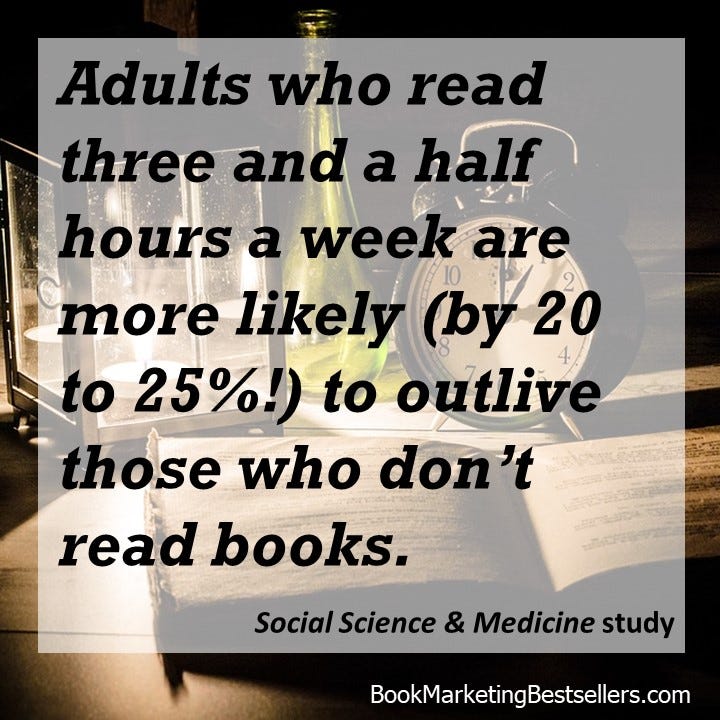
Reading books for at least three and a half hours a week is associated with a 20-25% increased likelihood of living longer compared to non-readers, potentially adding two to three years to one's life, as supported by a study published in Social Science & Medicine.
Abstract
A recent study highlighted in the article suggests that regular reading can significantly extend life expectancy. Adults who dedicate three and a half hours per week to reading books are 20-25% more likely to live longer than those who do not engage in reading. This habit could translate into an additional two to three years of life, emphasizing the health benefits of reading. The article underscores the value of reading not only for personal enjoyment but also for its potential impact on longevity. It also references a graphic created by John Kremer, illustrating the correlation between reading and longevity. Furthermore, the article includes links to related content, such as a piece on the happiness derived from buying books and a section titled "Reader's Delight," which discusses the prevalence of reading and its underestimated benefits.
Opinions
- Reading books is portrayed as a beneficial activity for extending one's lifespan.
- The article implies that reading could be as pleasurable as buying happiness, suggesting a strong positive correlation between reading and personal well-being.
- The opinion that not reading is a mistake is indirectly conveyed by citing that more than one in four adults have not read a book in the past year, contrasting with the benefits that readers experience.
- The inclusion of a graphic and additional linked articles suggests a strong endorsement of reading as a valuable and life-enhancing habit.