
Rereading “Letter from Birmingham Jail”
The MLK masterpiece on protest and human rights
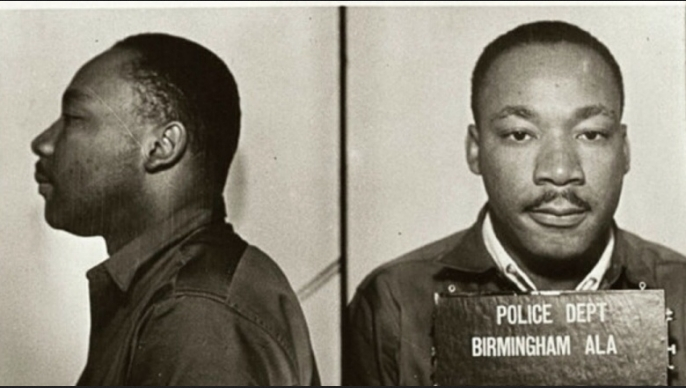
People always want to bring up the “I Have a Dream” speech on Martin Luther King Jr. Day, but I’ve never been able to read that one through. More eloquent to my mind is the open letter he wrote to white church leaders from Birmingham Jail, where he’d been imprisoned for marching for civil rights. The local white pastors in Birmingham called the protests “unwise and untimely” and labeled Dr. King an outsider and troublemaker, since he’d come over from Atlanta to help lead the march.
He wasn’t having it.
I think I should indicate why I am here in Birmingham, since you have been influenced by the view which argues against “outsiders coming in.” I have the honor of serving as president of the Southern Christian Leadership Conference, an organization operating in every southern state…
He explains that the SCLC chapter in Birmingham asked him to come, “So I, along with several members of my staff, am here because I was invited here. I am here because I have organizational ties here.”
Dr. King’s educated and authoritative tone sends a message. And he mentions more than once that he’s come with his staff. The subtext I hear is that he isn’t someone who can be pushed around. He’s important. He’s somebody. He knows what he’s talking about. And those white pastors better brush up if they want to take him on.
Standing up for others
The most famous line of the letter is that “injustice anywhere is a threat to justice everywhere,” which is deep and true, and reminiscent of pastor Martin Niemöller’s poem about the consequences of inaction during the rise of Hitler. And like any good debater, he backs his claim up. Since he’s a reverend, and they’re pastors, he backs it up with scripture; it’s the language of their profession, and he speaks it well.
Just as the prophets of the eighth century B.C. left their villages and carried their “thus saith the Lord” far beyond the boundaries of their home towns, and just as the Apostle Paul left his village of Tarsus and carried the gospel of Jesus Christ to the far corners of the Greco Roman world, so am I compelled to carry the gospel of freedom beyond my own home town.
But it’s not only the Bible (including Jesus, Amos, and Paul) that he quotes in his letter. He also quotes Socrates, St. Augustine, St. Thomas Aquinas, Martin Buber, Paul Tillich, Martin Luther, John Bunyan, Abraham Lincoln, Thomas Jefferson, and Thurgood Marshall. It was not for nothing that he got a PhD in systematic theology from Boston University.
When protest is necessary
Dr. King goes on to explain why the Black protestors have to do what they are doing in Birmingham — staging peaceful marches which are met with violence by police.
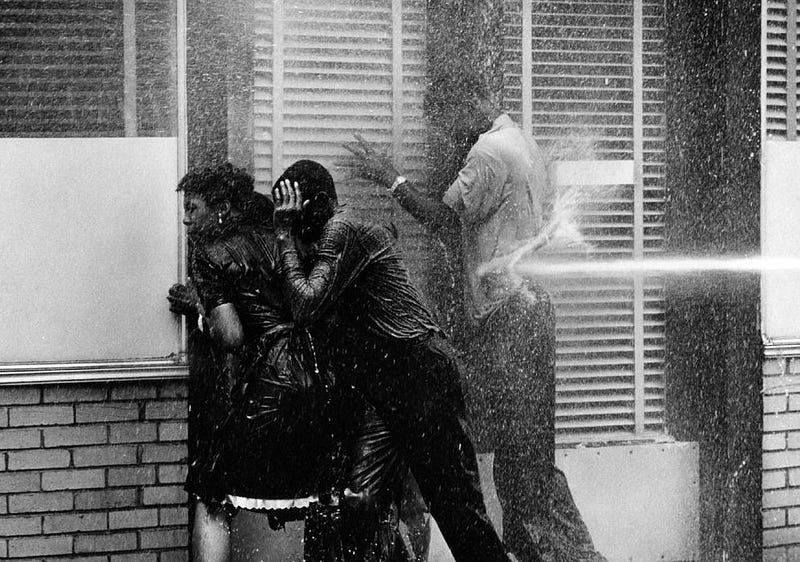
Birmingham is probably the most thoroughly segregated city in the United States. Its ugly record of brutality is widely known. Negroes have experienced grossly unjust treatment in the courts. There have been more unsolved bombings of Negro homes and churches in Birmingham than in any other city in the nation. These are the hard, brutal facts of the case. On the basis of these conditions, Negro leaders sought to negotiate with the city fathers. But the latter consistently refused to engage in good faith negotiation.
The eight white pastors said in their own open letter that it would be better for the protestors to negotiate with newly-elected city leaders than march, and MLK responded that they’d love to!
Only problem is, the last time they negotiated, the promises made by white businessmen — to take down offensive racial signs and dispel with segregation in their shops — were broken. So Black citizens trying to procure their human rights had no choice but to take it to the streets.
The purpose of our direct action program is to create a situation so crisis packed that it will inevitably open the door to negotiation. I therefore concur with you in your call for negotiation. Too long has our beloved Southland been bogged down in a tragic effort to live in monologue rather than dialogue.
Just vs. unjust laws, and what to do about them
A favorite section of mine talks about just vs. unjust laws, and how it’s right to break the law when it’s unjust or evil. That turns Dr. King’s mug shot into the portrait of a hero. He notes that early Christians were fed to hungry lions for breaking the law. Members of the Boston Tea Party broke the law to begin the birth of a new nation. People who sheltered Jews in Germany during WWII were breaking the law. While it’s right to follow just laws, it’s wrong to submit to unjust ones.
But how do you tell the difference between the two? He cites a number of ways, including this foolproof test:
An unjust law is a code that a numerical or power majority group compels a minority group to obey but does not make binding on itself. This is difference made legal. By the same token, a just law is a code that a majority compels a minority to follow and that it is willing to follow itself. This is sameness made legal.
Standing by is not a legitimate option
He also calls out moderates and urges them to grow a backbone. “Shallow understanding from people of good will is more frustrating than absolute misunderstanding from people of ill will. Lukewarm acceptance is much more bewildering than outright rejection,” Dr. King writes.
Also, that a big block to freedom is “the white moderate, who is more devoted to ‘order’ than to justice; who prefers a negative peace which is the absence of tension to a positive peace which is the presence of justice.”
Dr. King’s letter reminds me, as a woman hoping to see women’s lot improved worldwide, that it’s stupid to sit and wait for sexist systems to change. They never will — unless we demand it. Dr. King knew that, and he kept marching for civil rights even when it endangered his family.
During the Montgomery Bus Boycott, his home was bombed, but he kept leading the boycott, which eventually resulted in desegregation of the buses. No more sitting in the back of the bus for Black people, all because he wouldn’t back down. Throughout his career, Dr. King was arrested 29 times while fighting for freedom and justice for himself, his family, his country, and its people. And on April 4, 1968, at the tender age of 39, he paid the ultimate price for his leadership and devotion to our equal rights.
He was a great man and a great leader. We could use a leader like him today.
“Injustice anywhere is a threat to justice everywhere. We are caught in an inescapable network of mutuality, tied in a single garment of destiny. Whatever affects one directly, affects all indirectly. Never again can we afford to live with the narrow, provincial ‘outside agitator’ idea.”
Besides writing stories about movies, books, mental illness, and politics on Medium, I edit the feminist publication Fourth Wave and I’ve published two novels here: Thirsty Work and Count All This. Get an email whenever I publish. And if you’re a writer with a passion for equality, submit to Fourth Wave.