
Re-Entering My Melanated Skin
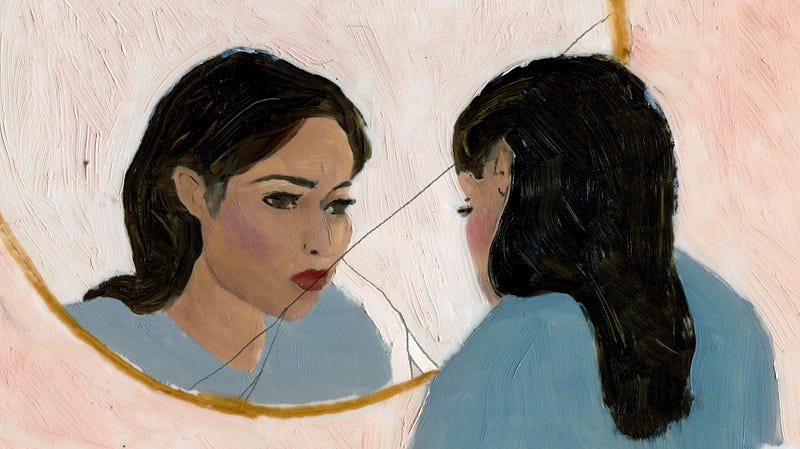
I’ve spent the majority of my life trying to crawl out of my skin. Or at least trying to escape the colour of it.
It started when I was a kid. On hot summer days, when the sun was beating down relentlessly, my mom would urge me to cower in the shade. “You’ll get darker,” she’d say. And I, knowing that this was unacceptable — knowing that no one would want me if I was too dark — would lay my beach blanket on a patch of shaded sand and sit under the cool shelter of a tree.
Maybe if I had played under the sun — if I had run and shouted under its warmth — I would have seen the way it made my brown skin glow. Maybe I would have learned to love the sun. Maybe I would have learned to love my skin.
But instead I grew to be ashamed of it. I would listen to comments made by the people around me, friends and distant relatives, and I pieced together a simple equation that made sense to my small mind. Brown was bad. I was brown, and therefore I must also be bad.
“She would be so pretty if she were a shade or two lighter.”
“Such a beautiful girl. If only she wasn’t so dark.”
This isn’t a new story. It’s one that many of us young brown girls know too well. We’ve grown used to our mothers coming to us with some new natural elixir that’ll lighten our skin tone. We’ve grown used to comments that link our melanin to some inescapable ugliness. We’ve grown used to believing that there’s something inherently wrong with us, something that we’re born with that puts us a step beneath everyone else.
Growing up, this belief manifested in my life in a multitude of ways. It could mostly be seen in the way I interacted with people of my own race — or rather, the way I refused to interact with them. I wanted to set myself apart from the thing that made me ugly and inferior, and, because I couldn’t exactly shed my skin like a snake, I settled for the next best thing. I responded to people othering me by othering myself from my race and my culture.
Curry? Oh no, I don’t really like to eat that. Arranged marriages? Oh no, I’m not one of those brown people. I would tell people I didn’t really hang out with other brown folk, as if that somehow made me superior.
Over time, I grew to understand these behaviours and responses for what they were — internalized racism. It was the product of my small mind grabbing at microaggressions and racist comments uttered by society and internalizing them to mean something about myself.
It never occurred to me that these belief systems that I had created were not my own. They were a product of something greater. Something I had been force-fed until I was tricked into believing that maybe I didn’t mind the taste of what I was eating.
I remember the day the realization of my truth came barrelling at me. I’d been reading Brené Brown’s, The Gifts of Imperfection, and had for the first time allowed myself to be honest and vulnerable with myself about my greatest insecurities. Up until that point, I hadn’t thought that I was insecure at all. I loved myself, at least that was what I would always say. I could poke fun at my big brown girl nose and my frizzy nest of black hair and still feel completely confident in my skin.
Or could I?
When I realized the shame that I had associated with the colour of my skin, I was baffled. How could I have gone my whole life holding onto this awful feeling? How had I used light-hearted and humorous comments to fool myself into believing that I was fully confident in who I was?
The first thing I did upon coming to this earth-shattering realization was text a close friend who had just so happened to be reading the same book by Brené Brown. We went for a walk by the lake to discuss the book and stopped to sit with our legs dangling over the walkway, staring out over the calm waters. The whole walk, my realization had been clattering around in my head, and I was searching for the right time to speak it aloud. In her book, Brené Brown had said giving shame a voice would lessen the impact of it, and I was so ready to rid myself of this race-associated shame.
I felt numb when I told my friend I felt ashamed of the colour of my skin, as if I had had to disassociate myself from the realization in order to speak it into the air. My friend listened quietly, tears filling her eyes as I tried to put words to this deeply rooted feeling of shame and insecurity. I saw her tears and it was my first external indication that something was wrong. That something needed to change.
I went home that day with a single intention — to refuse to take on the racist belief system that I had seen presented in the world around me. I thought of my future daughter and of all the other little brown girls in the world, and I vowed to view myself with the same compassion I would want them to view themselves with.
I had thought that maybe if I had silently made this promise to myself, the bad feelings would go away. The insecurity would disappear. The shame would crumble into dust.
Unfortunately, that was not the case. Because as time went on, I forgot this promise I had made myself. I found myself slipping back into thought patterns that were fueled by internalized racism. Thoughts like, I’m not into brown guys, or, brown people are so annoying, started sneaking back into my brain. I would catch some of these thoughts and try to shoo them away when they came, but I’m sure others nestled deep in my mind without my knowing, solidifying beliefs that I did not want to hold.
Later on, I realized there is no one-shot cure for internalized racism. I couldn’t just flick a switch and have all the shame I had carried throughout the majority of my life vanish. No, dealing with this racial shame was a practice. It meant consciously moving through the world as if I was meant to be there and as if I was enough. It meant a daily exercise of re-entering my skin with a renewed outlook on what being brown meant for me. It meant doing this until this confidence became automatic and replaced that old belief system that did not serve me.
I can say now that I am in the process of re-entering my beautiful, brown skin, and I will continue this process until it is effortless. I know that this story is not new. But it is a story that still resonates with many of us with darker complexions, and it is a story that is a part of my larger story. And I will not be ashamed of it.