
%22%3E)
Ray Dalio's Fund (World's Largest) Bought Huge Positions in 10 Stocks & Dumped Alibaba
Is the “China Bull” shifting away from China?
.jpg)
Confused about what the markets will do next?
Don't worry; you're not alone.
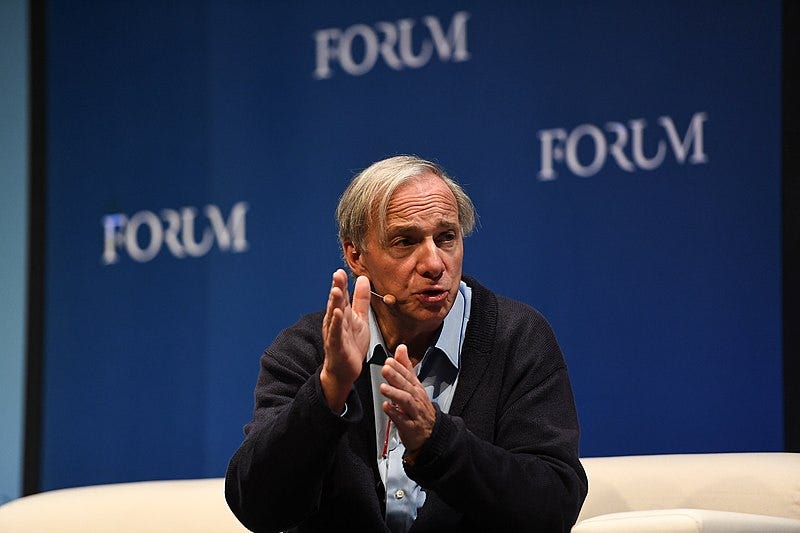
Legendary investor Ray Dalio is seeing significant market changes and is adjusting. According to Bridgewater Associates' 13F filings, Bridgewater Associates has made substantial changes to its portfolio in the most recent quarter.
He is one of the world's most successful investors, so it's worth paying attention to his recent moves. You can make informed decisions about your portfolio by understanding his actions.
This article will look at the 13F filings to understand the shift in his strategy and gain insights into the rationale behind his actions.
What is Bridgewater Associates?
First, for readers unfamiliar with Bridgewater Associates, I will give a brief introduction.
Bridgewater Associates is a legendary hedge fund well-known for its unique approach to investing. Founded in 1975 by Ray Dalio, the firm uses a quantitative risk-management approach based on observing market trends and identifying opportunities.
Dalio is often described as a "genius" and a "guru" and his investment philosophy has been highly successful.
Currently, Bridgewater Associates is the largest hedge fund in the world and manages over $235 billion in assets. It is also one of the most profitable hedge funds in history.
Top 10 Holdings of Bridgewater Associates
Currently, Bridgewater Associates is diversified, with their largest position only being 4% of their portfolio. This is a sharp contrast to more concentrated funds such as Warren Buffet’s Berkshire Hathaway or the Saudi Wealth Fund (PMF), where the largest position accounts for 40% of the entire portfolio.
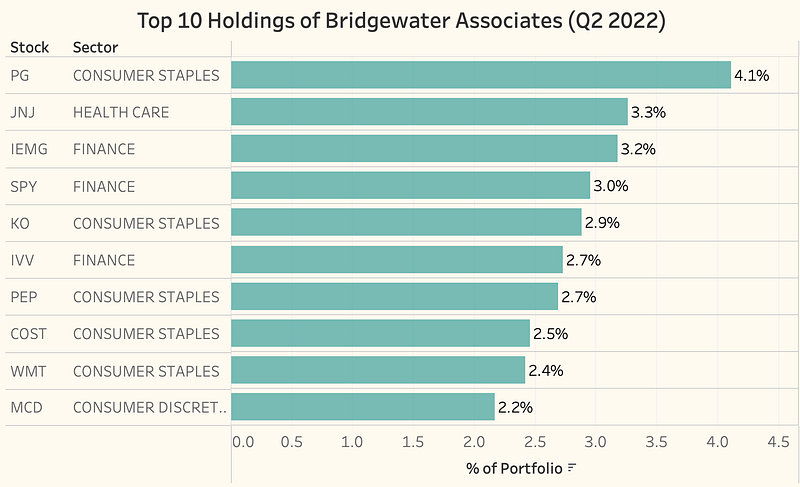
You can see that Ray Dalio tends to favor "value stocks," unlike Cathie Woods or the Saudi Wealth Fund (read the below article).
He has significant positions in the "consumer staples" & "consumer discretionary" sectors, including companies such as P&G, Coca-Cola, Pepsi, Costco, Walmart, and McDonald's.
The other significant positions, such as SPY and IVV (iShares Core S&P500 ETF), are gigantic and highly diversified baskets.
We can already gather that he keeps his risk profile extremely low during these turbulent times.
Greg Jensen, Co-CIO of Bridgewater Associates, expects a further crash of 25~30% in the market, according to an interview with Bloomberg on August 25th, 2022.
“There is a significant decline to come to match the real economy with the financial system. We are still in the midst of that”. — Greg Jensen, Co-CIO
Top Purchases in Q2 2022: Shift to Discount & Tech Stocks
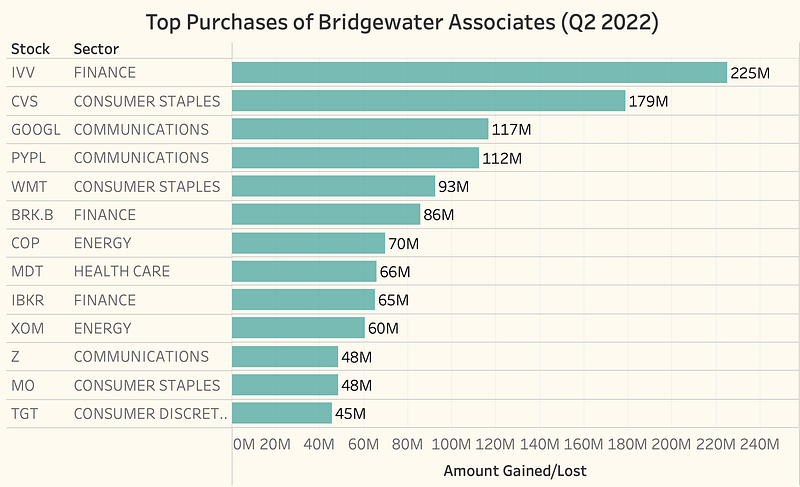
Please note that this chart shows approximate values of each purchase, as the exact share price is unknown.
As expected, you can see a few "Consumer Staples" and "Consumer Discretionary" companies, such as CVS ($179M), Walmart ($93M), and Target ($45M).
These companies offer low-discount prices to everyday consumers, which is crucial in this inflationary environment.
This position has already paid off well, as Walmart reported good earnings in mid-August, and the stock surged to the highest amount since 2020.
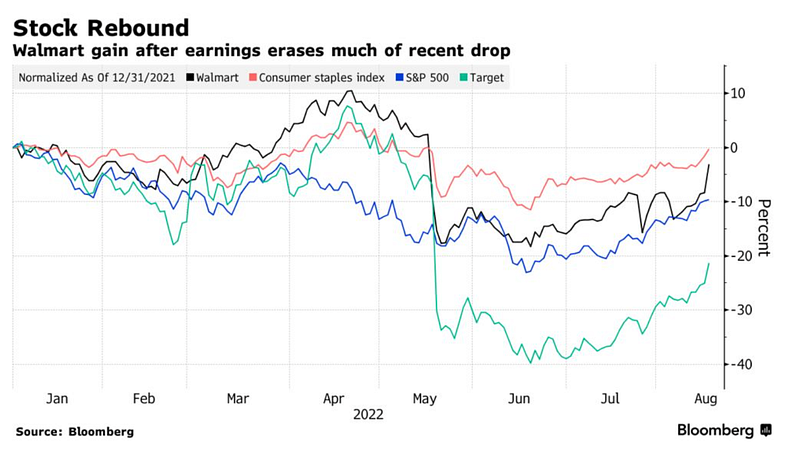
Great back-to-school sales, reduction in fuel prices, and higher purchases from wealthier customers seeking bargains have all led to good earnings.
Likewise, Target (in the green line above) has also rebounded significantly during the 2nd quarter of 2022.
In addition to retail, surprisingly, Ray Dalio seems to have doubled down on some technology stocks such as Paypal, Zoom, and Alphabet. It seems like an unconventional move from his hedge fund, but he may think the companies are all at a discount.
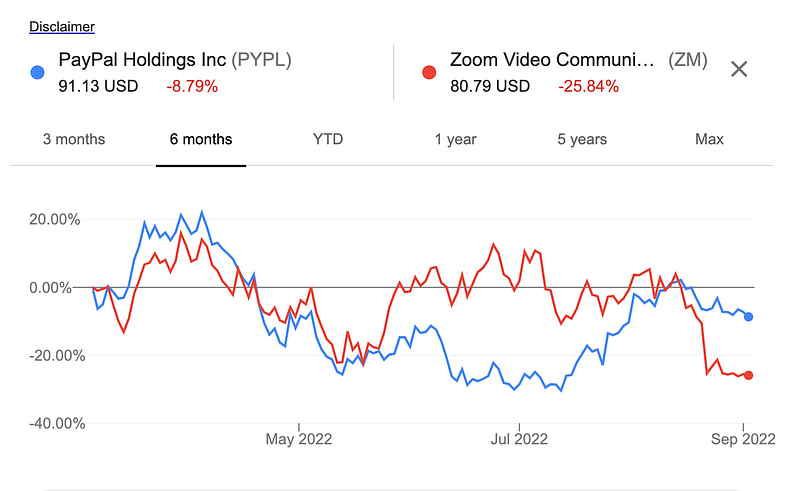
Paypal has already risen significantly from its July lows, while Zoom has had a hard time with its recent earnings.
Top Exists in Q2 2022: Exiting Alibaba and JD.Com
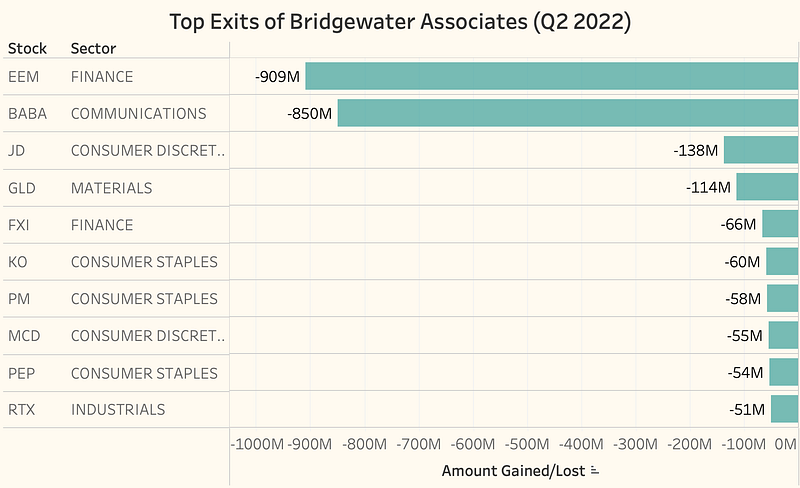
Looking at the positions sold, we can see two things.
He has trimmed down a bit off his largest positions such as Emerging Markets, Mcdonald's, Pepsi, and Coca-Cola. However, all of these positions are still top 10 in his portfolio, so it can be inferred that he is merely trying to diversify his positions.
The more surprising moves are the exits of Alibaba and JD.Com, where he sold all of his shares.
To give more color to this move, we must understand Ray Dalio's long and complicated relationship with China. Shortly after Deng Xiaoping began liberalizing the economy, Dalio first visited the country in 1985.
He was immediately impressed by the country's dynamism and began investing heavily in Chinese companies. Over the next few years, he made a series of lucrative bets on the Chinese stock market, earning him the nickname "China Bull."
However, if you look at his Chinese positions, as shown in the 13F filings, you can see he has sold significant portions of his Chinese equities.
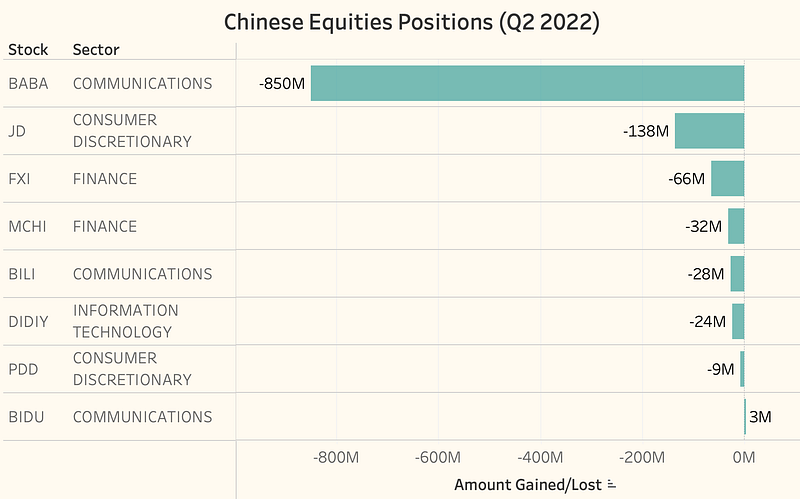
In addition to Alibaba and JD.Com, he has sold positions in Bilibili and Didi.
It is difficult to say whether this is a stance against China, as he has bought a small position in Baidu.
In my opinion, I still think Ray Dalio is bullish on the country's long-term prospects but is cautious of the short-term with all the issues China is facing: real estate market crash, regulatory issues, zero covid policy, aging demographic, etc.
Ray Dalio is a legendary investor with a proven track record of success. His latest moves show that he is cautious about the current market conditions and is diversifying his investments to protect against a potential market crash.
Retail stocks (and some tech stocks) have become one of his top investment choices, as he believes they will be less affected by a downturn.
As we enter into more turbulent conditions, it is helpful to understand the mindset behind one of the greatest investors, to make more informed decisions.
Good luck with your investments and safe trading!
This is not financial advice. I am not a financial advisor, and you should do your own research and not just listen to anyone on the internet. Nothing contained in this publication should be construed as investment advice.