Summary
The text describes an intimate and emotionally charged evening between two people, marked by a blend of conflict, reconciliation, and shared melancholy, soundtracked by classical music, specifically Ravel's Kaddish.
Abstract
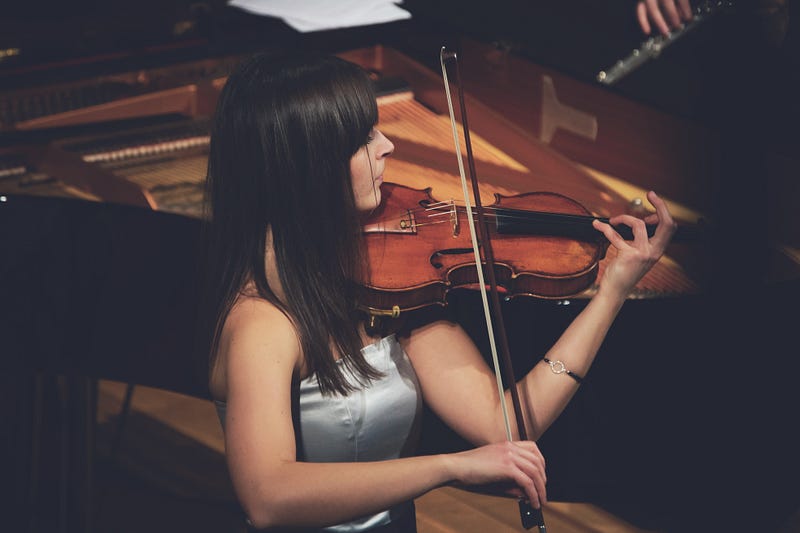
The narrative unfolds in an Italian restaurant where a couple's argument is interrupted by a violinist's love ballad, setting the scene for a complex interplay of emotions. Post-dinner, they navigate the cold outside, their bodies leaning into the wind, devoid of the distraction of window shopping. At home, they engage in individual solaces—whiskey and a joint—while the music plays, transforming their jarring anger into a smoother, yet sarcastically resentful, exchange. The scene shifts to the balcony where one smokes, the city's sirens echoing the couple's internal turmoil. Eventually, they find solace on the couch, where the soft strains of Ravel's Kaddish evoke a shared sense of sorrow and impending farewell, their souls resonating with the adagio tempo of the music.
Opinions
- The author suggests a preference for softer, more plaintive music during the restaurant scene, implying that the violinist's ballad could have better matched the mood.
- There is a sense of resignation and weariness as the couple declines to window shop, indicating a focus on their internal dynamics rather than external stimuli.
- The choice of whiskey and a joint as coping mechanisms hints at a search for individual escape from the tension of their relationship.
- The siren's sound is personified, reflecting society's relentless pace and its impact on personal moments of reflection or crisis.
- The final scene on the couch, with the couple embracing and listening to Ravel's Kaddish, conveys a deep emotional connection and a poignant acceptance of their situation, suggesting that music can provide comfort and closure.