avatarSam Sharp

Free AI web copilot to create summaries, insights and extended knowledge, download it at here

1354

Abstract

-dHJ-5bV-Wg:1651091041647&source=lnms&tbm=isch&sa=X&ved=2ahUKEwi9u524ibX3AhXQmOAKHf-_AvoQ_AUoAXoECAIQAw&biw=1280&bih=544&dpr=1.5#imgrc=2MmyWSIvZHwtwM">pictures</a>.</p><p id="203a">Apparently, he did quite well up there, handling 12 Gs of take off force in his cool little space suit. Afterall, he had been spinning for over 30 weeks in a centrifuge before that, so he was prepared. Which begs the question…</p><p id="fe70"><b>What is rastronaut training like? </b>Rats spin for weeks at a time in a centrifuge, hooked to the wall, to simulate space in a satellite. According to a podcast I cannot remember the name of, rats are rightfully panicked for the first day or so, and then start to do all their normal rat things, fighting over food, grooming each other, and hording resources in their little rat homes.</p><p id="280f"><b>What makes a space-ready rat from a land-locked one?</b></p><p id="718d">The ability to handle spinning in circles for long periods of time is one factor. Health, age, weight, and temperament are others.</p><p id="48e8"><b>Why do rats do so well in space?</b></p><p id="87cd">Good question. I have no idea. But both mice and rats adjust quite well in space, according to <a href="https://www.nature.com/articles/s41598-019-40789-y">NASA</a>, better than both dogs and primates who, especially

Options

in the early trials, were prone to seizures and blood clotting and neuroses as a result of being shot hundreds of miles into the air in a closet-sized, tampon-shaped hunk of metal.</p><p id="fd1b"><b>Do they like it? </b>It is unclear if rats would rather be poked in a cage on Earth or in space. This is because nobody cares enough to report it, and because <a href="https://az.research.umich.edu/sites/default/files/media/embedded/ULAM%20Pain%20Assessment%20in%20Rats_0.pdf">rats hide their pain</a> so effectively. One can assume, however, from this next picture of Hector, that they are probably not very comfortable.</p><figure id="41a0"><img src="https://cdn-images-1.readmedium.com/v2/resize:fit:800/1*pAr6lXYoVE6MqfGxOg4RHg.jpeg"><figcaption>Hector suspended from another angle. Credit: Upsplash</figcaption></figure><p id="15df"><b>Will they go back? </b>While humans are cautious to go to space, we don’t hesitate to send other creatures in first. NASA is launching a 35 week experiment involving <a href="https://www.space.com/26877-rats-in-space-nasa-experiment.html">rats in a space station</a>.</p><p id="0b55"><b>Do they come home?</b></p><p id="2402">I am 99% sure that rats have a 100% survival rate in space. It is hard to know for sure because no scientists care enough to report rat safety aboard the SS Sacrifice.</p></article></body>

Ratstronauts: A 500-word Introduction to Rats in Space

And all your questions answered on ratstronaut school, safety, and success rates.
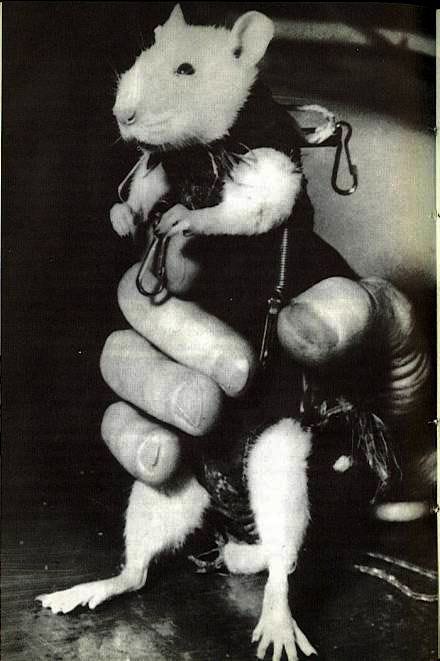
Hector, a French rat, had a custom-tailored space suit fit to his furry little body. Credit: Google Images

Who were the first rats to go to space?

Rats were the first mammals to orbit Earth and return, alive.

In August of 1960, Russian scientists sent a pair of white lab rats on Sputnik 5, joined by 42 mice, some fruit flies, and two dogs. The crew orbited Earth 4 times and fell safely down to earth. All previous missions ended in catastrophic explosions.

Why did Hector, the French rat, get to wear a suit?

During that same year, French scientists had been training six lab rats for space travel. Only one showed real promise, I guess: Hector. The French sewed him a creepy leather suit with metal springs and took a ton of pictures.

Apparently, he did quite well up there, handling 12 Gs of take off force in his cool little space suit. Afterall, he had been spinning for over 30 weeks in a centrifuge before that, so he was prepared. Which begs the question…

What is rastronaut training like? Rats spin for weeks at a time in a centrifuge, hooked to the wall, to simulate space in a satellite. According to a podcast I cannot remember the name of, rats are rightfully panicked for the first day or so, and then start to do all their normal rat things, fighting over food, grooming each other, and hording resources in their little rat homes.

What makes a space-ready rat from a land-locked one?

The ability to handle spinning in circles for long periods of time is one factor. Health, age, weight, and temperament are others.

Why do rats do so well in space?

Good question. I have no idea. But both mice and rats adjust quite well in space, according to NASA, better than both dogs and primates who, especially in the early trials, were prone to seizures and blood clotting and neuroses as a result of being shot hundreds of miles into the air in a closet-sized, tampon-shaped hunk of metal.

Do they like it? It is unclear if rats would rather be poked in a cage on Earth or in space. This is because nobody cares enough to report it, and because rats hide their pain so effectively. One can assume, however, from this next picture of Hector, that they are probably not very comfortable.
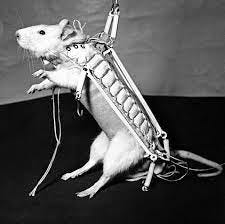
Hector suspended from another angle. Credit: Upsplash

Will they go back? While humans are cautious to go to space, we don’t hesitate to send other creatures in first. NASA is launching a 35 week experiment involving rats in a space station.

Do they come home?

I am 99% sure that rats have a 100% survival rate in space. It is hard to know for sure because no scientists care enough to report rat safety aboard the SS Sacrifice.

Rats
Space Exploration
Nature Writing
Nonfiction
Animal Rights
Recommended from ReadMedium