
Rational borrowing, irrational repaying
There may be more to debt than meets the financial eye.
What characteristics makes humans uniquely human among the animals? Many of the obvious candidates turn out to be a matter of degree, such as our intelligence, our language, or our societal structures, and our propensity to cooperate, as they are apparent in other species too. Others are contentious: some animals appear to exhibit signs of self-awareness, consciousness and emotion. However, one feature seems absent in the animal world, while being ubiquitous in much of human society: debt. Perhaps that explains why it is a concept about which we sometimes find it hard to reason.
Reluctant to borrow
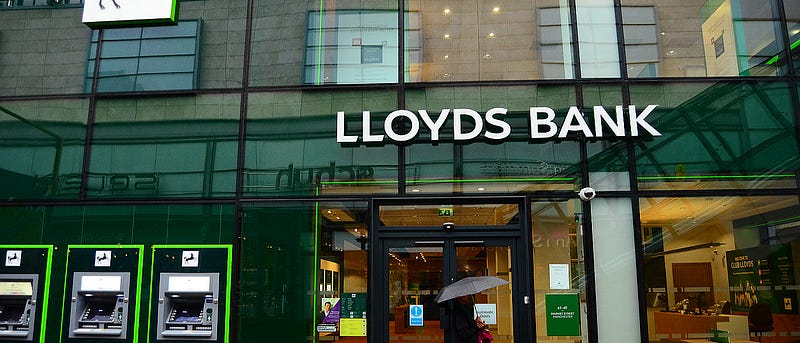
A few years ago, I was involved in a project for a retail bank that operates across many countries. One of the topics was the provision of clear, accurate and helpful information about the benefits and risks of a typical financial products, such as loans, savings and investments. A particular challenge the company faced was how different attitudes to debt were in different countries. Mortgages were the most widely accepted (though not quite the norm in all countries), while unsecured personal loans, and in some countries even business loans, enjoyed remarkably little popularity.
This intriguing reluctance to borrow (or lend) money is perhaps best captured in Shakespeare’s Hamlet, when Polonius advises his son, Laertes, “Neither a borrower nor a lender be”, but warnings about borrowing go way back to early biblical times. In some languages, the word for debt Is even the same as for guilt, which further reinforces its undesirable image. Is reluctance to borrow money then actually irrational?
The term ‘irrational’ is often bandied around, but almost equally often ill-defined. Whether something is rational or not can only be established with a good understanding of what the goal is that is being pursued. For business loans, it is usually about making money. The investment for which the money that is being borrowed — say, a tree surgeon’s chainsaw, a milkman’s van (they do still exist in the UK!), or an entire semiconductor plant — is put to use in order to generate revenue. As long as that exceeds the cost of servicing the debt, borrowing makes sense: there is money left over once the loan repayment has been made.

A personal loan to pay for a new kitchen or a new car, or to fund the Christmas expenses is different. It is not a financial investment, but an instrument to overcome a cashflow shortfall to buy something that delivers convenience or enjoyment. As long as the shortage of money is temporary, this does not have to be a problem. If you have money left over at the end of the month that you could save up for a couple of years and then buy the kitchen or the car with cash, but you’d rather have it now, then a loan may be a good idea. Likewise, if you will receive a bonus in February that you’d use to pay for the Christmas expenses, a loan until that bonus drops into your account can make sense. It will cost you interest, but you can bring the purchase forward.
Yet, for some people, borrowing money for such frivolous expenditure is not right. In their eyes, prudent financial management means saving up for what you want before you buy it. Actual piggybanks may have all but disappeared, now that even 8-year-olds have bank accounts and debit cards, but the principle still seems to hold for many children as they are taught financial discipline: save up first, then spend. This may well play a role in the reasoning of people who are unwilling to take out personal loans to enable them to avoid having to wait until they have saved up enough.
However, it is only by the most draconian definition of the term that this behaviour would be considered irrational. Taking out a loan is a transaction with both a benefit (enjoying the purchase earlier) and a cost (the interest on the amount borrowed). It is perfectly rational to judge the transaction as unattractive if the benefit does not exceed the cost. And even if the benefit did outweigh the cost of the interest, you might prefer not to get the loan and spend what you’d pay in interest on something that provides even more benefit.
Beliefs, always beliefs
There is one kind of loan that seems to defy the reluctance to borrow. Many people strive to own their own home, and few can afford to rent and save at the same time. The solution is to take out a mortgage. Perhaps, the reason that it is the most acceptable form of debt is that, in contrast to loans to finance a new kitchen or a new car, a mortgage is the type of household loan that comes closest to a financial investment.
For most borrowers, this means that they will pay a certain amount every month for typically 20 or 25 years. But occasionally, people might enjoy a windfall, like a sizeable inheritance or maybe even a win on the lottery, and some are quick to repay their mortgage early. Might that be irrational?

A few weeks ago, I came across a tweet in which a property investor berated someone who paid off an outstanding mortgage of $300,000 (€275,000, £235,000) at an interest of 3.25%. His argument was that he could have invested that sum risk-free at a higher rate (in treasuries, currently yielding over 4%), and that this was therefore a dumb, innumerate move. Not only did he leave free money on the table (the difference between the income he would get from treasuries and the interest he paid on his mortgage), he also turned a liquid asset ($300,000 in readily available cash for any sudden emergency) into an illiquid one (his house). A clear-cut case of irrational repayment of a rational loan, it seemed.
Yet, as one commenter on Twitter, the financial analyst Barry Ritholtz, remarked, perhaps it is this perspective itself that is dumb, for it ignores human psychology. People differ in their attitudes to risk, debt and uncertainty. It was a good reminder that we should be careful in judging other people’s choices and decisions as irrational.
Our attitudes to risk, debt and uncertainty — and about anything else, for that matter — are rooted in our beliefs. And no matter how rational we like to think we are, eventually, our choices and decisions will reflect those personal beliefs. The anonymous authors of the Old Testament and Shakespeare were not so much providing instruction, as observing a widespread belief that being debt-free is of great value. If someone considers that value to be greater than the differential between the yield on treasuries and the prevailing mortgage rate, there is nothing foolish or irrational about repaying a mortgage early.
To understand people’s decisions, we need to understand their beliefs, even (or perhaps especially) if the figures suggest an apparently simple and straightforward conclusion.
Originally published at http://koenfucius.wordpress.com on January 26, 2024.
Thanks for reading this article — I hope you enjoyed it. Feel free to share it (the ‘share’ button below or at the top has direct options for Twitter/X, Facebook and LinkedIn) or simply copy and paste this link. See all my other articles featuring observations of odd human behaviour (I have been publishing one every Friday since 2016) here. Thank you!


