
Rather Than Advocating Destruction, Why Not Advocate Creation?
Love doesn’t have a color.
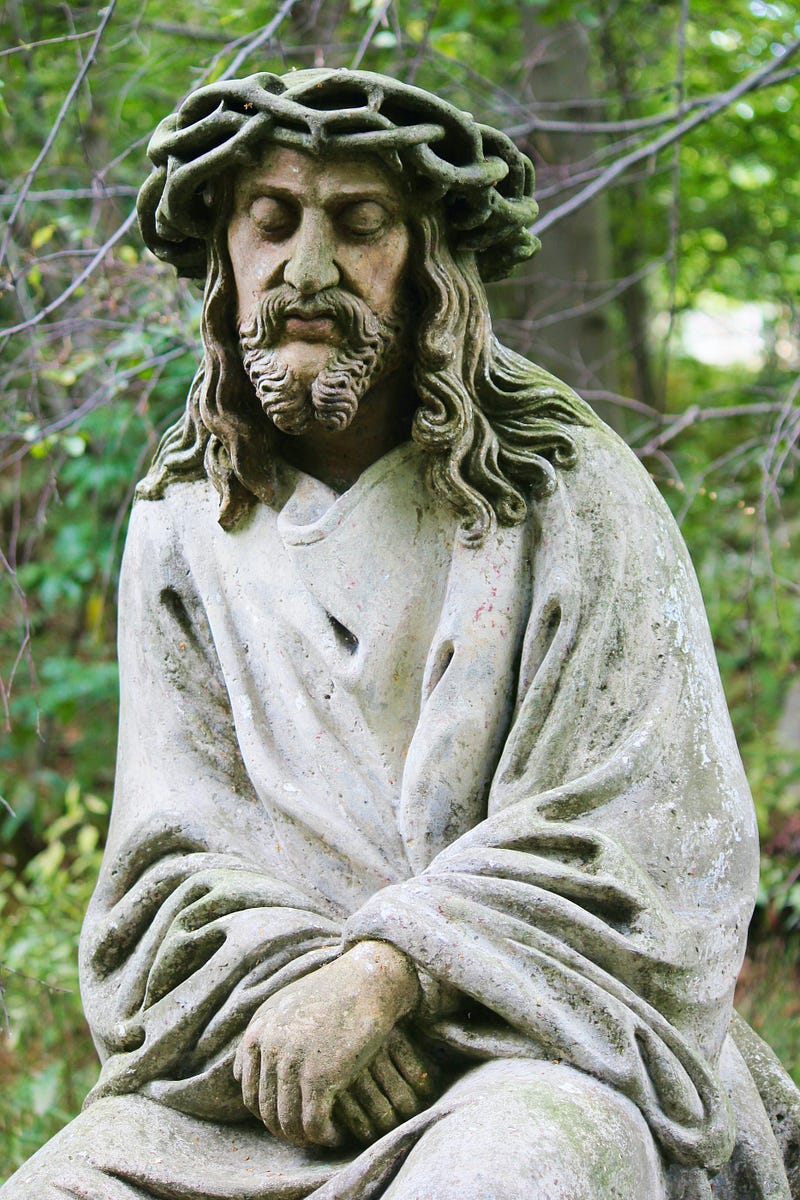
Yesterday on Twitter I read the following remark by Black Lives Matter activist Shaun King: “Anything resembling white Jesus should be expunged from the public square.” He went on to say, “All murals and stained glass windows of white Jesus, his European mother, and their white friends should also come down. They are a gross form of white supremacy, created as tools of oppression.”
There are so many things that are misguided and counterproductive about these statements, it’s hard to know where to begin. But my first thought after reading them was, there are no depictions of Jesus, white or otherwise, in the public square. It would be a violation of our laws requiring separation of church and state. Therefore, the removal of artwork depicting Jesus would have to occur in churches and museums.
My second thought was, how could artistic expression through several centuries be a form of white supremacy created as tools of oppression, when there have been so many different artistic renditions of Jesus through the ages?
In response to Shaun King’s post, Don Feazelle wrote:
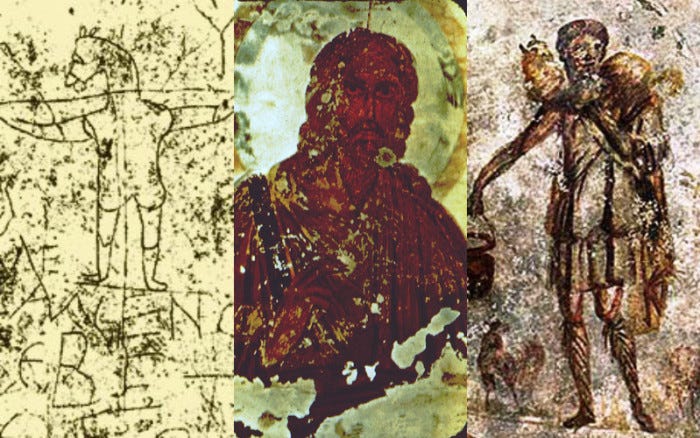
“Jesus often reflects the culture in which Christianity has taken roots. In many respects, humans remake Jesus into their own image. Greek Icons reflect Greek culture. And in recent years, many have adopted an African Jesus.
If we are going to tear down the white Jesus representations then we must tear them all down. The bottom line is that no one knows what Jesus looked like. There were no first-century selfies of him and disciples.”
Many movements start out well-intentioned and go too far, devolving into extremes that alienate former supporters. Shaun King’s words cross over into the “going too far” territory. Black Lives Matter is a movement that has gained wide momentum and support in the wake of recent murders of black men. Whites, Blacks, Christians, and non-Christians have joined an outcry for justice and reform.
But many of these same supporters don’t want to see churches and museums vandalized and property destroyed, which is what could happen if people take Shaun King’s words seriously.
Someone on Twitter responded to King’s post, “You’ll have plenty of pagans like me siding with the Christians.”
Another person wrote, “I can’t get behind you on this one bcuz (sic) now you’re crossing the line into religious freedom and expression. Depictions of Jesus are as different as the country in which he’s represented. This one’s overreach.”
The idea of eliminating European-centric depictions of Jesus reminds me of other times cultural artifacts have been destroyed.
In 2001, the world watched in dismay as news outlets showed the Taliban dynamiting 1700-year-old sandstone statues of Buddha.
China lost much of its cultural heritage during the cultural revolution when Mao Zedong mobilized groups of young people who called themselves the Red Guard. Mao urged them to rid the nation of the “Four Olds;” old customs, old culture, old habits, and old ideas. Red Guard youth rampaged through cities destroying antiques, ancient texts, and Buddhist temples.
Encouraging the removal of murals, stained glass windows, and statues that might resemble a white Jesus is divisive rhetoric that inflames passions and creates hostilities.
Some movements have experienced a measure of success or have seized control through divisiveness and polarization, but they have left in their wake a scarred and ugly landscape of destruction.
Rather than advocating destruction, why not advocate creation? Shaun King and others who object to stained-glass renderings of Jesus can create their own.
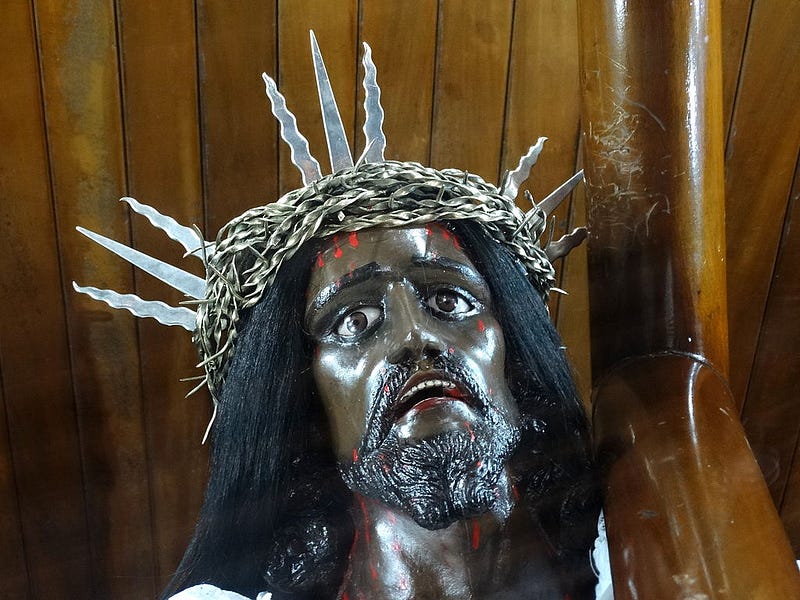
Many people have. If you research black depictions of Jesus you’ll find beautiful ones like Jesus Praying by Vincent Barzoni or Black Christ, a wooden statue in Iglesia de San Felipe, located in Portobelo, Panama. The revered life-size statue is adorned with a robe that is changed twice a year, once during the Festival of the Black Christ and again during Holy Week.
Black lives most definitely do matter. And that message is too important to be hijacked by people who are so ignorant of history and culture that they view a stained glass window as a “tool of oppression.”
But suppose we give Shaun King the benefit of the doubt and try to view Leonardo Da Vinci’s painting of The Last Supper as an example of white supremacy. What then? Get rid of it? Because when you begin to view cultural expression and art from this perspective, there is no logical cutoff point. You start down a long, destructive path to nowhere.
I hope the Black Lives Matter movement becomes an effective vehicle for justice and a positive force for change. But attacking religious icons that have been in place for decades and sometimes centuries has the potential to derail and marginalize the movement.
Non-Christians seem a lot more concerned about Jesus’s color than Christians. Christians know the historical Jesus was Jewish when he walked the earth, which meant he was most likely an olive-skinned, brown-haired Middle Eastern man. We believe the resurrected Jesus is no color, creator of all colors, equally available to all colors, and beyond consideration of color.