Raptor Engines — Starship
SpaceX’s new rocket Starship is destined for mars, but how will it get there? How will this giant monster of steel actually make the months-long trip? That's where the raptor engine comes in!
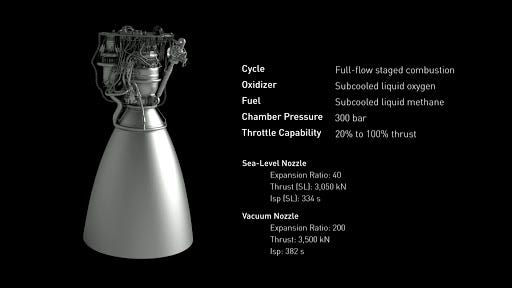
The raptor engines are SpaceX's solution to the thrust and engine problem to get to mars. They run on methane, one of the more present gases on the earth and on mars. This means that they could make more fuel if required on Mars. They are the descendants of the Merlin engine on the Falcon 9.
“Merlin engines use a rocket grade kerosene (RP-1) and liquid oxygen as rocket propellants in a gas-generator power cycle. The Merlin engine was originally designed for recovery and reuse.”
-SpaceX
The Raptor engine made history. By being the first full-flow staged combustion engine that has worked, it solved the physics problem that has plagued rocket scientists for a long time. Wikipedia says that the staged combustion can also be called a pre-burner cycle. The full flow is achieved through multiple combustion chambers one of which being the pre-burn chamber. In an interview by Everyday Astronaut at the Starship unveil, Elon Musk goes into how they solve problems over at SpaceX. When a solution starts getting more complicated they stop and simplify (everyday). This is how they are tackling innovation and moving forward on their mission to Mars. The raptor engine works by having free-flowing oxidizer and fuel from separate areas and passes through their own pipes meeting at a combustion chamber and turning into superheated gas.
The fuel is methane-based which means it makes fewer emissions which is similar to what Blue Origin is using. Methane makes it a more efficient engine (bright). “A methane/LOX combination offers around a five percent performance increase over kerosene,” (bright).
Starship is made of steel because of their early designs becoming too expensive. The base of the rocket has three raptor engines and the booster has a solid 37. Each engine has 2MN or 440 klbf of thrust. If you throw that into a calculator the booster has 16,280 klbf. That is some seriously
References:


