
Ranking the 2021 Disney+ Marvel Series
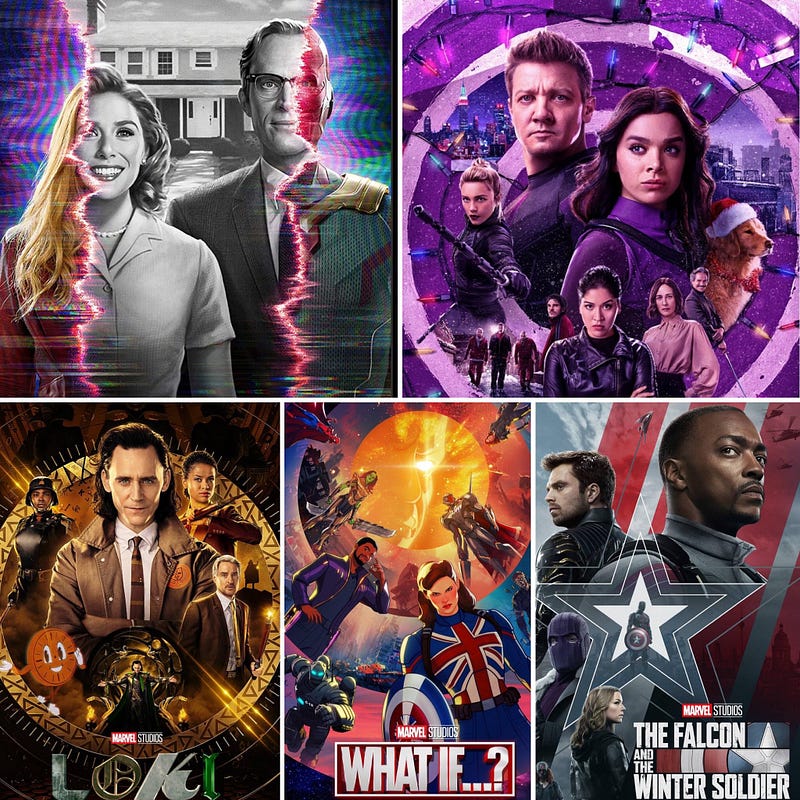
Over the course of 2021, Disney+ dropped 5 new series centered on characters from the Marvel Cinematic Universe (MCU). The result was 36 episodes totaling nearly 26 hours in original entertainment. The five series marked a massive expansion of the MCU, which since the release of Iron Man in 2008 has come to be the most dominant brand in Hollywood but to date had seen most of its success on the big screen.
Cynics and skeptics groaned that the MCU has grown too big and too dominant and that the expansion into streaming series was just a soulless endeavor to get more subscribers to Disney+. However, MCU devotees have countered that the expansion to streaming allows the MCU to focus on lesser-known characters, take more creative risks, and to flesh out the MCU in interesting and exciting ways. I think it’s a little bit of all of the above.
I exist somewhere in the middle of the continuum that has MCU haters at one pole and die-hard MCU fans at the other. I have seen all of the films and have yet to find one to be truly disappointing. However, I also only find a couple of them to be truly memorable. And although I have spent so much time immersed in this universe, I still struggle to retain many of the plot nuances, character backstories, and other intricacies of the universe.
Because of this vantage point, I think I am in a good position to objectively review the MCU series that premiered on Disney+ this year. I don’t find everything that MCU does inherently fascinating nor am I swayed by intense nostalgia for the properties. On the other hand, I go into new MCU offerings with an open mind because I believe it has delivered some truly terrific entertainment over the past 13 years and remain impressed by the consistently high quality of its output.
In this article, I review and rank the five series that premiered this year. I also pick their strongest and weakest episode and my vote for the best five performances from each series.
[Authors’ Note: Mild spoiler for the series are contained in the following reviews. If you are not caught up on the series, I recommend you bookmark this article and return to it once you are.]
5. What If…?
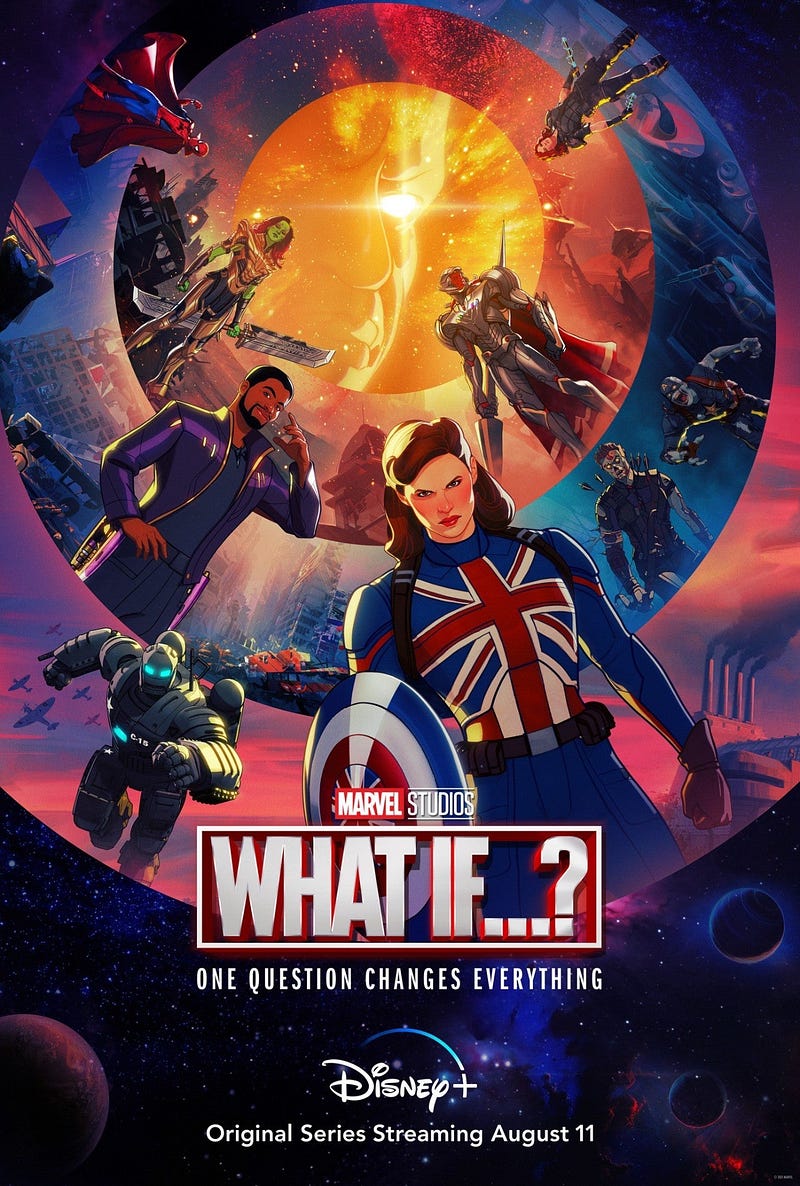
Series Review: The fourth MCU televisions series to premiere on Disney+ in 2021, this also marks the first animated series, the first anthology series, and the first series truly set in the “meta-verse.” The series, created by A.C. Bradley, contains 9 episodes that each explore alternate realities in which different paths unfolded for recognizable MCU characters. It is considerably ambitious, especially when you look at the talent assembled. Over 3 dozen notable MCU characters were reprised by their original voice actors and the cast has amassed 21 Oscar nominations between them. There are, however, several notable characters that are played by different actors than in the films — most notably Iron Man, Black Widow, Captain America, Captain Marvel, Peter Quill, Gamora, and Wanda Maximoff. Thankfully, most of the replacements do commendable work and it is occasionally thrilling to hear the recognizable voices of the megastars who were surprisingly willing to follow MCU to the small screen.
Unfortunately, the show is held back by virtue of two core aspects of its very concept. First, it is hard to get too invested in something that is merely hypothetical or imaginary. Second, like most anthology series some installments are notably better and more compelling than others. For example, the season’s best episode is a heartbreaking, emotionally authentic exploration of grief centering on Dr. Strange that features terrific voice work and thought-provoking themes. Two episodes later, though, we get the show’s worst episode — an asinine, juvenile installment about Thor destroying earth though crazy party animal antics while Jane drools over him like a love-struck ditz. There is a jarring tonal shift from episode to episode, the quality of the animation is only adequate, and it is clear that in several installments the writers clearly think their setup is more interesting than they really are. Ultimately, What If…? is an ambitious experiment that only occasionally becomes something special.
Grade: B-
Strongest Episode: “What If… Doctor Strange Lost His Heart Instead of His Hands?” (Episode 4)
Weakest Episode: “What If…Thor Were an Only Child?” (Episode 7)
The 5 Best Performances:
1. Jeffrey Wright as The Watcher
2. Benedict Cumberbatch as Dr. Strange
3. Hayley Atwell as Peggy Carter
4. Chadwick Boseman as T’Challa/Black Panther
5. Lake Bell as Natasha Romanoff/Black Widow
4. The Falcon and the Winter Soldier
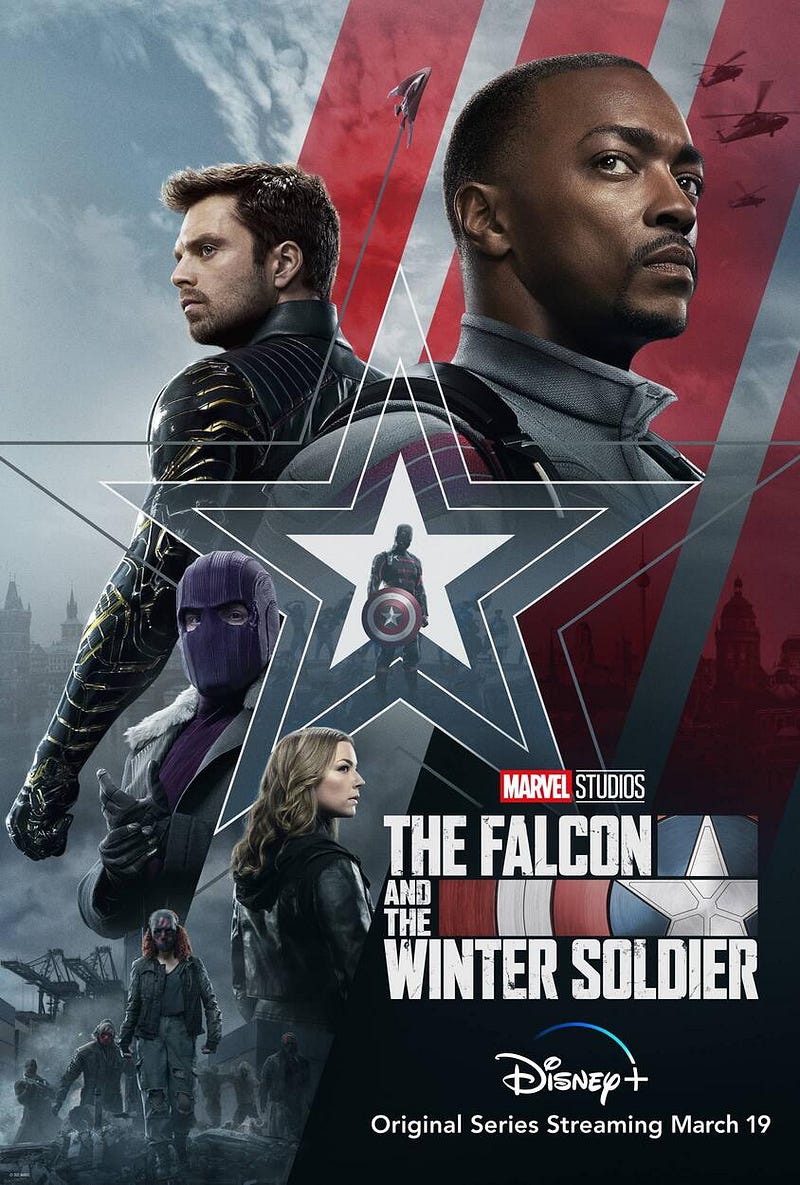
Series Review: The Falcon and the Winter Soldier had some unexpected barriers to overcome due to the recent success of the first Marvel Disney+ series WandaVision. The series premiered just two weeks after WandaVision ended its run, which was problematic because that quirky, surprising, and overall very strong series became something of a cultural phenomenon and was still generating major buzz. Additionally, that series took the MCU in unexpected and unique directions, which set the bar high for the next Marvel series. As a result, when The Falcon and the Winter Soldier turned out to be strong but not spectacular and adhere very closely to the traditional big-screen MCU formula, many people were disappointed. However, that’s not to say it’s a bad show. Quite the contrary, there is nary a truly bad episode in the six-episode run. The production values are on par with a big screen Marvel movie, the ensemble is generally very good, and it touches on some fascinating and thought-provoking themes.
The story follows Sam Wilson/Falcon (Anthony Mackie) who has rejected the chance to become the new Captain America but finds himself struggling to decide what’s next for him. He unexpectedly reunites with Bucky Barnes/The Winter Soldier (Sebastian Stan) who remains deeply traumatized by the atrocities he committed when he was programmed to kill. They team up to stop a terrorist organization called the Flag Smashers, who have an interesting political motive. During the blip — when half the population was erased by Thanos — borders ceased to exist and people moved freely around the world with cultures blending and rebuilding together. But when everyone reappeared, chaos unfolded, leading governments to resort to forced repatriation of everyone. The Flag Smashers seek to reverse this forced repatriation. They are led by Karli Morgenthau (Erin Kellyman), a young Eastern European woman who is becoming radicalized. Along the way, they have to contend with the new Captain America John Walker (Wyatt Russell) who turns out to not have the compassion or cool head necessary to take up the mantle. A number of characters from the MCU films appear throughout the course of the six episodes, including Sokovian criminal Helmut Zemo (Daniel Bruhl), Agent Sharon Carter (Emily Van Camp), and James Rhodes (Don Cheadle). And that’s in addition to a number of new characters that are added beyond Karli and John, including Sam’s sister Sarah Wilson (Aderepo Oduye), former super-soldier Isaiah Bradley (Carl Lumbly), Sam’s colleague Joaquin Torres (Danny Ramirez), and the mysterious baddie Valentina Allegra de Fontaine (television legend Julia Louis-Dreyfus, who shockingly debuts late in the season).
The result is a series that is decidedly overstuffed and unfocused. Although Sam and Bucky have strong and fairly satisfying character arcs, others are a bit of a mess. Most notably, John Walker is a disaster of a character, obnoxiously portrayed and completely irredeemable (despite the show runners’ intentions). Karli is a compelling and empathic villain at first but she becomes increasingly unhinged and callous as the series evolves robbing her of her complexity. The return of Helmut and particularly Sharon Carter seem bizarrely forced in and are never feel overly convincing or necessary. Even the heart-stopping appearance by Louis-Dreyfus as Valentina is a bit confusing given that even after a couple of substantial appearances it remains unclear who she is or what her end-game is. One element of the series that works fairly well is its exploration of racial politics. Sam’s reluctance to take on the Captain America mantle is clarified when he visits Isaiah Bradley, who schools him on the historical mistreatment of black men by the government. Alias veteran Carl Lumbly is superb in the role and gives the best performance of the series.
Ultimately, there is just too much going on here. There are too many characters, too many villains, and too many themes. The result is frustrating pacing and a lack of sufficient development of plots and characters. It is certainly a series where the whole is less than the sum of its parts.
Grade: B
Strongest Episode: “Truth” (Episode 5)
Weakest Episode: “New World Order” (Episode 1)
The 5 Best Performances:
- Carl Lumbly as Isaiah Bradley
- Anthony Mackie as Sam Wilson/Falcon
- Erin Kellyman as Karli Morgenthau
- Sebastian Stan as Bucky Barnes/The Winter Soldier
- Julia Louis-Dreyfus as Valentina Allegra de Fontaine
3. Loki
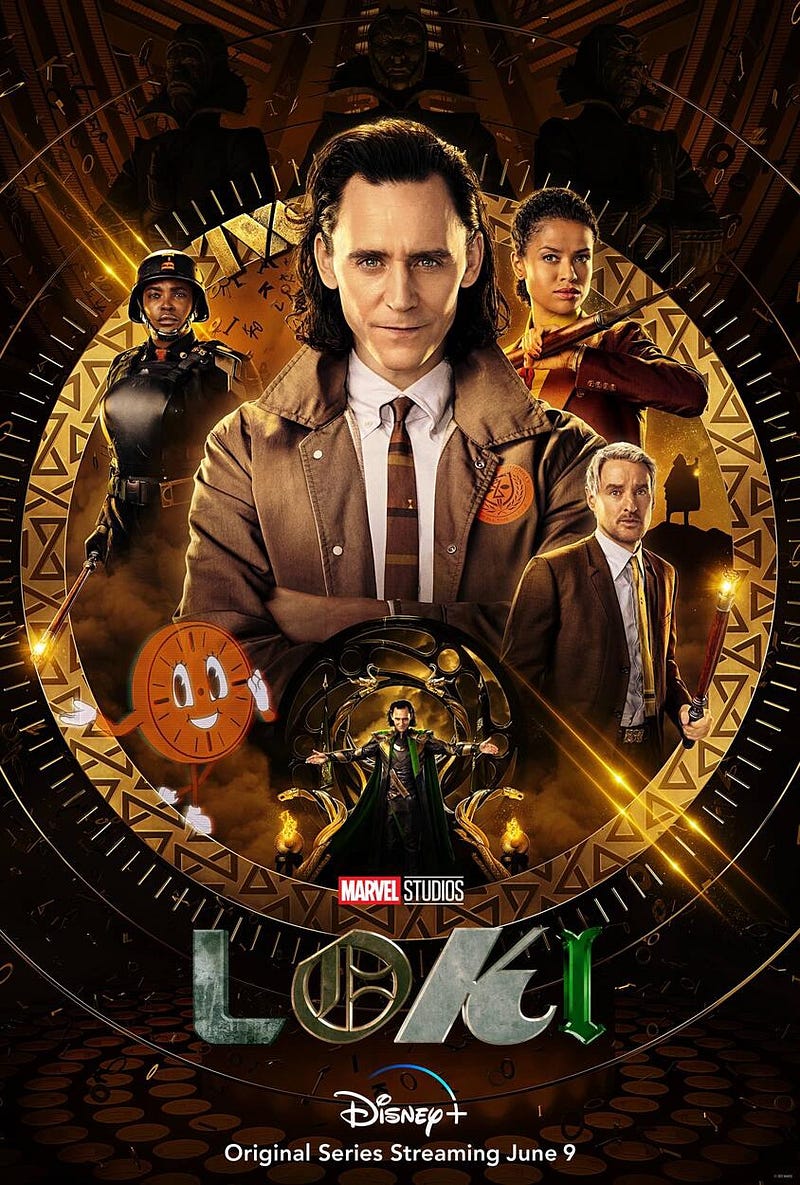
Series Review: The third Disney+ series that the MCU released in the first half of 2021 is in some ways an interesting middle ground between the first two. It relies on traditional MCU action and humorous character dynamics like The Falcon and the Winter Soldier, but also has off-kilter charm and an exceedingly ambitious premise like WandaVision. And, fittingly, its quality also lies somewhere in the middle. The first three episodes are quite ho-hum, being bogged down with excessive exposition. But as things begin to cohere and the stakes become higher for the characters, it leads to a thrilling and affecting finale.
For me, the fact that Loki works as well as it does is a testament to the talent involved. I tend to find that films, television, and books that delve into time travel and alternate timelines as plot devices are more often than not unnecessarily confusing and profoundly convoluted. For the most part, however, Loki sells it. The setup for the series is that after stealing the Tesseract in Avengers: Endgame, a variant of Thor’s adopted brother Loki is brought to the Time Variance Authority (TVA), a mysterious, bureaucratic organization that protects the “Sacred Timeline” and prevents deviations from it. Confusingly, this means that the Loki we have here is an alternate, “time variant” version of Loki who created a new timeline in Endgame beginning in 2012. This means he did not go through the events of the second and third Thor films, which redeemed him leading up to his death in Avengers: Infinity War. (If that description hurts your head, fear not — you don’t truly need to understand it to follow and enjoy the series.)
Loki is interrogated by Mobius M. Mobius, a wisecracking TVA agent played by a perfectly cast Owen Wilson. The clear highlight of the early episodes is Wilson and Loki’s portrayer Tom Hiddleston. Mobius reports to the no-nonsense Ravonna Renslayer, an underdeveloped role nevertheless played well by the gifted Gugu Mbatha-Raw (who has given several extraordinary performances in recent years, including on the first season of The Morning Show). Mobius enlists Loki to hunt down another Loki variant who is wreaking havoc on the timeline and they find her in the form of “Sylvie,” played by the charming Sophie Di Martino. They soon discover that the TVA employees were not, in fact, invented by the TVA as reported, but rather are enslaved variants. The two go on the run, hiding out in apocalypse events where their actions do not affect the timelines.
The final three episodes escalate in numerous ways, with Loki and Sylvie developing a deep romantic bond and a number of memorable characters being introduced, including a host of other Loki variants and “He Who Remains.” This leads to two brilliant guest appearances, one by Richard E. Grant as Classic Loki and one by Jonathan Majors, who dominates the finale as the charismatic and sociopathic overseer of the TVA. It all leads to a thrilling, game changer of a finale that has clear and bold implications for the MCU.
In addition to the strong performances, the series immensely benefits from witty, character-based writing that keeps things from becoming too serious and self-important and also keeps the viewers aren’t following the details of the time travel from getting too bored. The series also contains superb production values, with the rich production design of the TVA is eye-popping and the various apocalypse scenarios that the characters travel to are generally a visual feast. And much praise has also deservingly been lavished onto composer Natalie Holt’s stirring score. Nevertheless, the series does have some significant weaknesses — I found most of Loki and Sylvie’s romance to be cliched and predictable, the early episodes in particular suffocate under the weight of the exposition, several key characters feel underdeveloped, and the revelations about Loki’s bisexuality feels cheap and tagged on. Despite these quibbles, however, I will certainly be back for the show’s recently commissioned second season.
Grade: B+
Strongest Episode: “For All Time. Always” (Episode 6)
Weakest Episode: “Lamentis” (Episode 3)
The 5 Best Performances:
- Tom Hiddleston as Loki
- Jonathan Majors as He Who Remains
- Sophie Di Martino as Sylvie
- Owen Wilson as Mobius M. Mobius
- Gugu Mbatha-Raw as Ravonna Renslayer
2. Hawkeye
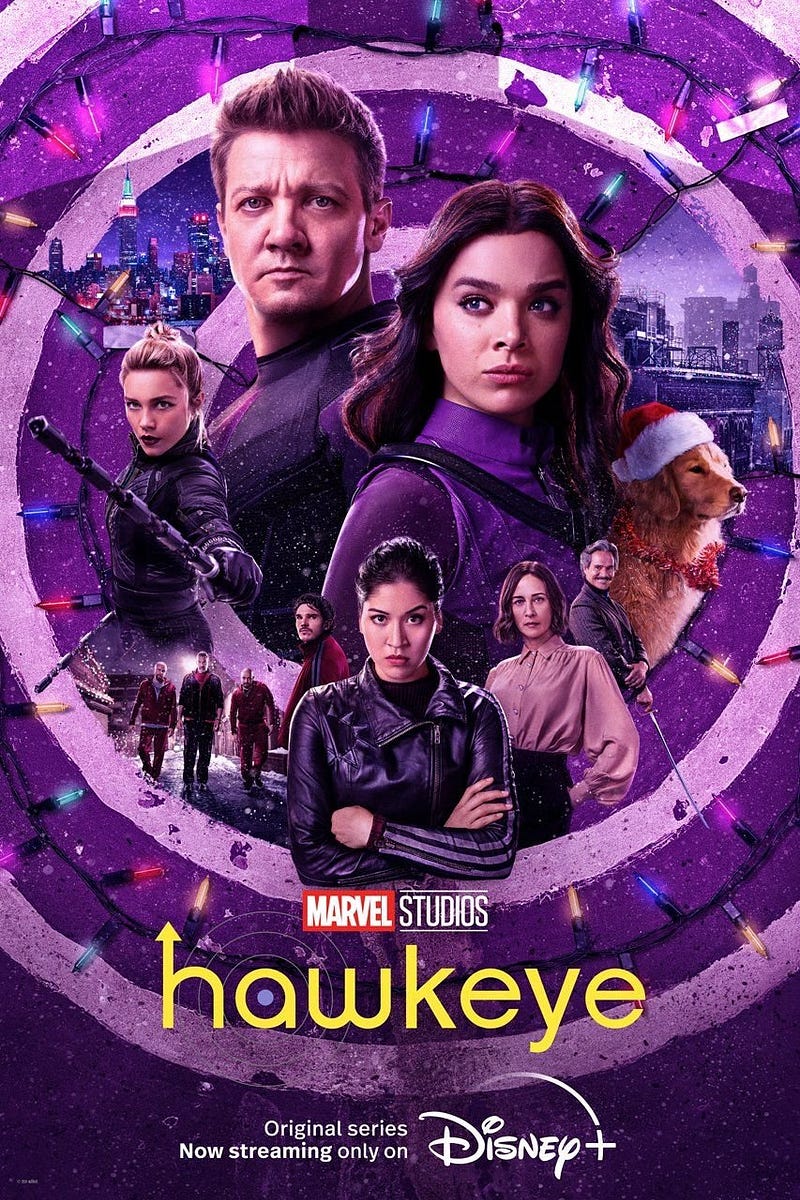
Series Review: The fifth and final MCU series to debut on Disney+ in 2021 was this rousing and very festive six-episode limited series focused on arguably the MCU’s least rousing and festive character — Clint Barton aka Hawkeye. The series starts with the mortal archer and family man still grieving Natasha Romanoff aka Black Widow following the events of Avengers: Endgame but trying to celebrate Christmas with his children in New York City. His plans for a peaceful holiday are disrupted when a college student named Kate Bishop stumbles upon to a black-market auction of items recovered from the remains of the Avengers Compound. When the auction is attacked by the Tracksuit Mafia, she dons the Ronin suit she found and defeats them. Clint, realizing that whoever is wearing the Ronin suit will be hunted down because of his previous actions, goes to save her.
Although the setup is considerably more contrived than most of the other entries in the MCU, it really doesn’t matter because it’s such rollicking good fun. As Clint and Kate, Jeremy Renner and Hailie Steinfeld are fantastic. They nail their comic and dramatic scenes, have great chemistry with one another, and prove to be very believable action stars. The series also features two other exceptional performances. The first comes from Oscar-nominated actress Florence Pugh, reprising the role of Natasha Romanoff’s sister Yelena Belova that she originated in the 2021 prequel Black Widow. As promised by that film’s end credits sequence, she arrives to kill Hawkeye due to the belief that he was responsible for her sister’s death. She bursts in at the end of the fourth episode and becomes a dominant presence in the show’s final third. Although her accent is significantly over-the-top, she is a commanding, charming, and wildly charismatic presence. The other excellent performance comes from Alaqua Cox, who plays the hearing-impaired assassin Maya aka Echo. She makes a strong enough impression even in her first scenes that I can see why a spinoff following her character is in the works at Disney+. Several of the other performances are, shall we say, less convincing. Particularly egregious are Tony Dalton’s one-note caricature of a performance as Jack Duquesne and Vincent D’Onofrio’s uninspired work as Kingpin.
But this series really isn’t about nuanced acting or dramatic twists. It’s about charming characters and spectacular set pieces. And it has both of those in spades. It is by far the funniest of the series to premiere in 2021 and it has jokes that really land and a playful sense of humor that is missing from many entries in the MCU. Nowhere is this more evidence than in the elaborate Broadway musical about the Avengers that is featured in the first and last episode that hilariously skewers the MCU. In addition to its terrific action sequences, the show is chocked to the brim with Christmas cheer, with a spectacularly curated soundtrack, stunning New York City-set Christmas scenes, and a race to make everything right before the arrival of Christmas day. I do think this could have worked just as well — or even better — as a 2.5-hour movie as opposed to a 6-part limited series, but despite its flaws it is a wildly entertaining ride.
Grade: B+
Strongest Episode: “So This is Christmas” (Episode 6)
Weakest Episode: “Hide and Seek” (Episode 2)
The 5 Best Performances:
1. Hailie Steinfeld as Kate Bishop
2. Florence Pugh as Yelena Belova
3. Jeremy Renner as Clint Barton/Hawkeye
4. Alaqua Cox as Maya/Echo
5. Vera Farmiga as Eleanor Bishop
1. WandaVision
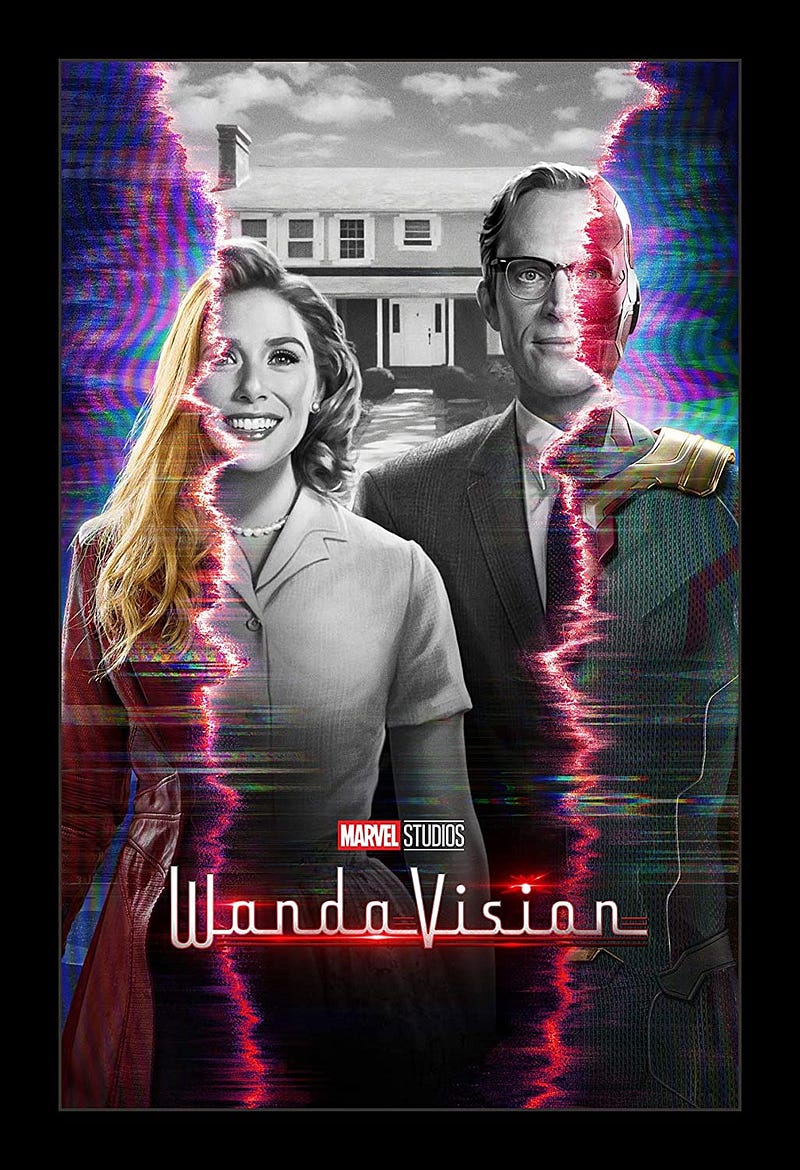
Series Review: The launch of the 4th phase of the MCU got significantly delayed by COVID, with the much-hyped MCU streaming series not arriving until over a year after the launch of Disney+. But boy was their first offering worth the wait. The nine-episode limited series WandaVision was created by Jac Schaeffer (who co-wrote Captain Marvel and Black Widow in the MCU) and focuses on two relatively minor MCU characters who were introduced in Avengers: Age of Ultron and played significant roles in Avengers: Endgame — Wanda Maximoff (Elizabeth Olsen) aka the Scarlet Witch, the Soviet refugee with superpowers, and Vision (Paul Bettany) an android with superpowers and empathy that Wanda came to love.
It was hard to know what to expect given the quirky advertisements that found the two characters dolled up in 1950s clothing and enacting I Love Lucy-esque hijinks, but many were undoubtedly intrigued. It turns out that this classic sitcom aesthetic was part of an ambitious and fully developed arc that instantly became one of the most unique and acclaimed additions to the MCU. Over the course of the episodes it is revealed that Wanda, deeply traumatized from the events of Endgame, has created her own reality in which Vision is still alive and they are happily married and starting a family in the suburbs. She has created this reality through an extension of her magical powers that she fails to understand, but comes to realize has essentially enslaved an American town. Wanda, who grew up in the Soviet Union coping with trauma by escaping into American sitcoms that her dad imported on DVD, again uses classic television to cope. As the season unfolds, Wanda progresses through the ’50s (I Love Lucy), ’60s (The Dick Van Dyke Show), ’70s (Three’s Company), ’80s (Family Ties), ‘90s/’00s (Malcolm in the Middle), and ‘00s/’10s (Modern Family). Most of the episodes serve as a brilliant homage to iconic sitcoms, complete with era-appropriate sets, costumes, filming styles, themes, humor, and even theme songs (composed by EGOT winners Kristen Anderson-Lopez and Robert Lopez). And all the while a dark plotline is developing that slowly is revealed to be deeply entrenched in the MCU.
In the fourth episode, the action switches to outside of Wanda’s reality where Director Hayward (Josh Stamberg) tries to infiltrate the bubble and defeat Wanda at all costs, despite the objections of returning MCU characters Monica Rambeau (Teyonah Parris), Darcy Lewis (Kat Dennings), and Jimmy Woo (Randall Park). The latter three suspect (correctly) that brute force won’t work and they will have to better understand both the magic that Wanda has unleashed and the trauma that is motivating it in order to end the suffering. The series is strong throughout but hits a new high at the end of episode 7, when amusing bit player Agnes (Kathryn Hahn), who has been the one-dimensional nosy neighbor throughout the series, is revealed to be a witch herself who goes toe to toe with Wanda (“It was Agatha all along!”).
The series is wildly ambitious and feels tonally, aesthetically, and thematically distinct from the MCU while also weaving into it successfully. The acting is uniformly superb with Bettany and especially Olsen getting infinitely more substantive material than they were ever allowed in the films, and Parris and Hahn providing exquisite support (and prove their worthiness of having Disney+ series of their own). Unfortunately, the series does fail to “stick the landing.” Its final episode is a bloated, bombastic, plot-light, and action-heavy episode that drastically veers the show into bland, standard-issue MCU territory. Not even a couple of intriguing mid- and post-credits sequences can make up for the disappointment. Although the ending disappoints, WandaVision is ultimately a fascinating and successful foray onto the small screen for MCU that shows that the possibilities are literally endless.
Grade: A-
Strongest Episode: “Breaking the Fourth Wall” (Episode 7)
Weakest Episode: “The Series Finale” (Episode 9)
The 5 Best Performances:
- Elizabeth Olsen as Wanda Maximoff
- Paul Bettany as Vision
- Kathryn Hahn as Agnes
- Teyonah Parris as Monica Rambeau
- Randall Park as Jimmy Woo
Follow the author of this article on Medium and Twitter.
Read recent articles by this author about streaming and television series:


