
Ranked: Top Ten Louise Fletcher Movies (According to Rotten Tomatoes And…Quentin Tarantino?!)
Remembering Nurse Ratched through the words of her strongest critics (Tarantino almost gets the last word)
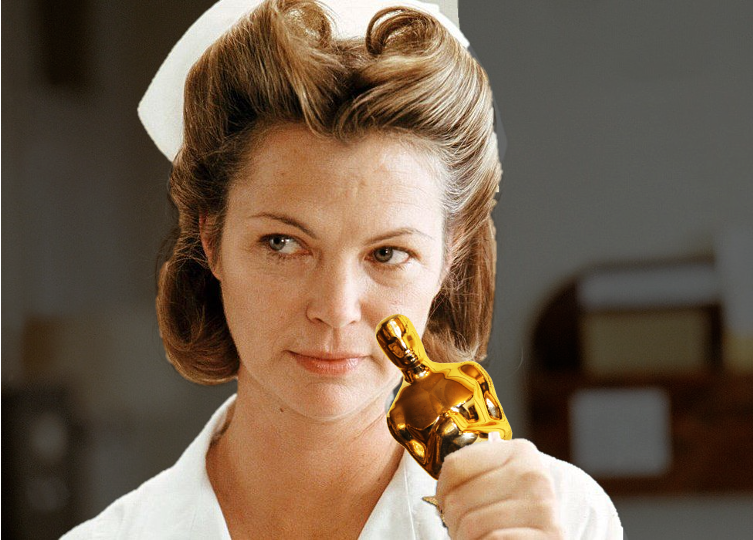
Get ready for so many “WTF she was in that?!” experiences, you may need to call your own therapist. And if you need something to read while you wait for your appointment, Quentin Tarantino’s review reveals the key difference between the book and movie versions of One Flew Over the Cuckoo’s Nest.
“Let me be the judge of whether you’re a whacko.”
Nurse Ratched is such an iconic performance that I swore Louise Fletcher said those words in One Flew Over the Cuckoo’s Nest. And yet when I remembered those words, I didn’t feel the menace of a mental institution that would never let me go. I felt the well-intentioned concern of a woman who just didn’t know what else to do.
Was I really remembering the right movie?
You know, Stephenie, what worries me is how your mother is going to take this
Apologists reading this would say obviously it’s the right movie. They’d point to the almost too-subtle moments of softness and humanity in Fletcher’s performance as Ratched. They’d point to what Fletcher said she injected into the character.
Louise Fletcher (The Guardian): We watched the patients in their daily routine and went to group therapy. Jack and I watched electroconvulsive shock therapy one morning at 6am — that was heavy. Making Ratched a human being was no small feat. You know nothing about her history, unlike McMurphy. I didn’t want to make her a monster — I wanted to make her believable as a real person in those circumstances. I drew on the misuse of power, a prominent issue in those times with Nixon having been forced to resign. I saw very clearly how people can believe that they’re doing good and they know best.
They’d point to yet another instant hit from Ryan Murphy, the titular TV series Ratched, which repositions a character time has judged as a beloved villain instead into the medical profession’s version of Walter White. The iconic nurse starts off well-intentioned but is ultimately broken bad by one jaded outcome after another. Her experiences corrupt her into the monster we remember and, let’s be honest, somewhat revere.
(Tarantino would point to the key difference between the movie and the book, but you’ll have to wait till the end to find out what that is)
At that point, is a Top Ten list necessary? Possible? Desirable?
Those are very challenging observations, Stephenie
Yes. Yes they are.
Because as soon as you start reading this list, you’ll remember that Louise Fletcher was in more movies than One Flew Over the Cuckoo’s Nest.
She was probably in at least one or two of your other favorite movies. The ones that will make you scream “No way!”
Louise Fletcher: Jack asked me early on what Ratched’s first name was. I told him Mildred, which is what I’d made up. A few weeks later, we were filming McMurphy coming back from electroconvulsive shock therapy and pretending to be a zombie. Then he looks at me and says: “Hello, Mildred.” I was so shocked that my face turned red. It’s my favourite moment.
Get ready for so many “WTF she was in that?!” experiences, you may need to call your own therapist. And if you need something to read while you wait for your appointment, Quentin Tarantino’s review reveals the key difference between the book and movie versions of One Flew Over the Cuckoo’s Nest.
PS. Make sure to scroll to the end for Louise Fletcher’s 1976 Oscar acceptance speech ❤
10. The Boy Who Could Fly | Dr. Granada, Psychiatrist (Character) | $6.3M | 1986 Critics: 63% | Audience: 69%
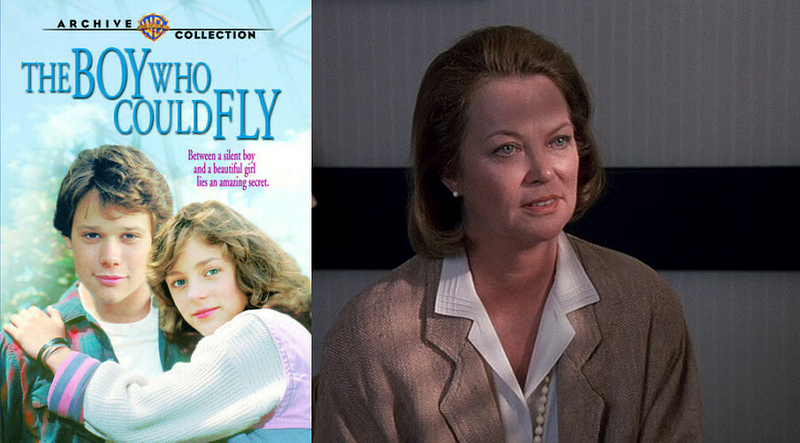
Rotten Tomatoes description: Kindly adolescent Milly (Lucy Deakins) moves in next door to autistic teen Eric Gibb (Jay Underwood). The mute Eric, whose parents were killed when he was 5 years old, lives with his hard-drinking uncle, Hugo (Fred Gwynne), and is obsessed with birds. His tendency to stand on rooftops and window ledges posed as if he’s flying alarms his social workers, but when Eric saves Milly from a potentially deadly fall, she begins to believe that the boy really can take flight.
Roger Ebert: “Movies like this can be insufferable if they lay it on too thick. ‘The Boy Who Can Fly’ finds just about the right balance between its sunny message and the heartbreak that’s always threatening to prevail.”
Note: Guess where that quote I couldn’t figure out came from?
Dr. Granada/Psychiatrist : You told your mother something about a boy who rescued you.
Milly : What are you, a shrink?
Psychiatrist : Yes.
Milly : Great, now I’m wacko.
Psychiatrist : It’s important that you tell me everything you remember about this. Let me be the judge of whether you’re wacko or not, okay?
9. Big Eden | Grace Cornwell (Character) | $511.2K | 2000 Critics: 64% | Audience: 79%
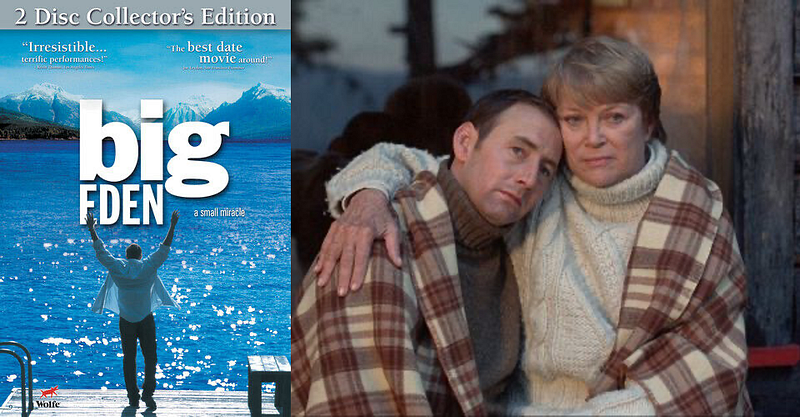
Rotten Tomatoes description: Henry Hart (Arye Gross) is a young gay artist living in New York City. When his grandfather has a stroke, Henry puts his career on hold and returns home to the small town of Big Eden, Montana, to care for him. While there, Henry hopes to strike up a romance with Dean Stewart (Tim DeKay), his high-school best friend for whom he still has feelings. But he’s surprised when he finds that Pike (Eric Schweig), a quiet Native American who owns the local general store, may have a crush on him.
John Leonard: “What’s subversive about it is that it looks just like any other romantic comedy except that some men love other men. Imagine that: social justice, racial harmony, peaceable kingdoms, and a cup of cappuccino at the general store.”
8. A Map of the World | Nellie Goodwin (Character) | $593.6K | 1999 Critics: 66% | Audience: 55%
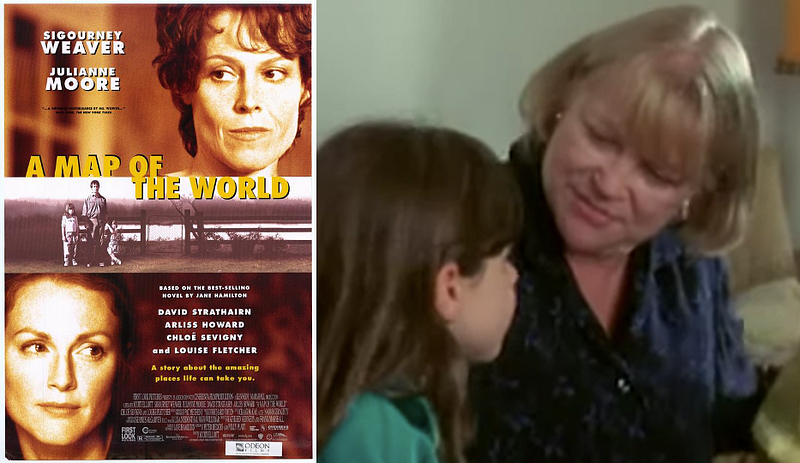
RT description: After a friend’s (Julianne Moore) child dies while in her care, a woman (Sigourney Weaver) suffers severe depression and is later accused of sexual abusing a neighbor’s son.
Janet Maslin: “The film overflows with the studied ordinariness that prevails in Mom movies, where glamorous Hollywood stars muck about in pajamas and a little epiphany may be signalled by a broken cereal bowl on the kitchen floor.”
7. Strange Invaders | Mrs. Benjamin (Character) | 1983 Critics: 67% | Audience: 33%
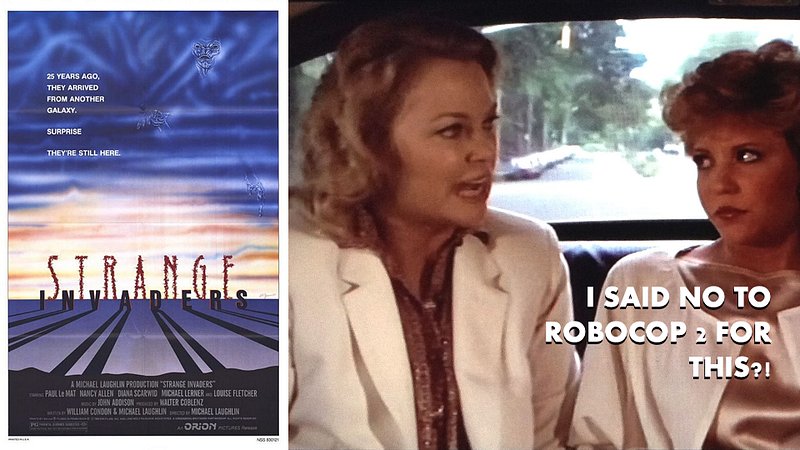
RT description: In 1958 alien invaders abduct the residents of Centerville, Ill., usurping the townspeople’s bodies as their earthbound manifestations. Decades later, on a family visit to Centerville, New Yorker Margaret Newman (Diana Scarwid) mysteriously goes missing. Margaret’s ex-husband, professor Charles Bigelow (Paul Le Mat), suspects there is more afoot than mere foul play, and he partners with intrepid tabloid reporter Betty Walker (Nancy Allen) to investigate.
Matt Brunson: “The zippy script by Michael Laughlin and future Oscar winner Bill Condon (Gods and Monsters) is better than Laughlin’s often lethargic direction.”
Stephenie: “Personally? My favorite Louise Fletcher is an alien movie is the horrifying Invaders From Mars (1986).”
6. Aurora Borealis | Ruth (Character) | $60.6K | 2005 Critics: 68% | Audience: 64%
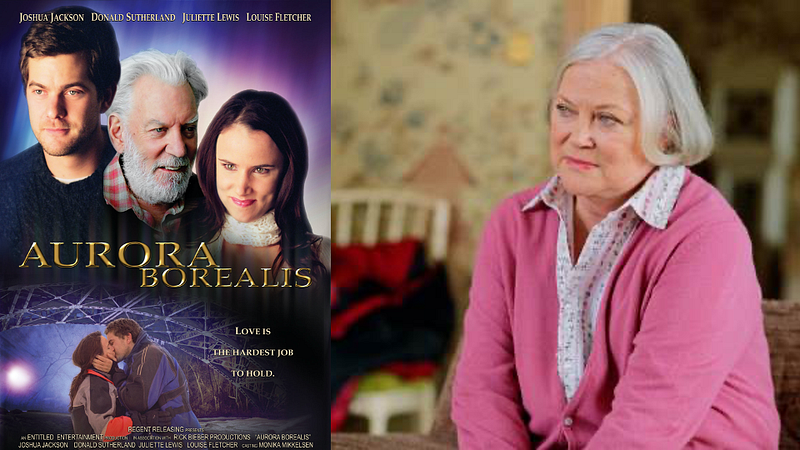
RT description: In his mid-20s, Minneapolis native Duncan Shorter (Joshua Jackson) still lacks direction in life, so when his grandfather (Donald Sutherland) falls ill, he takes a job as a handyman in his grandparents’ residence so he can be near them. While there, he falls into a relationship with a free-spirited home-health nurse (Juliette Lewis) who can help him move toward self-realization.
Wesley Morris: “Good Will Hunting but in the Midwest and minus the tortured math genius, psychological breakthroughs, and convincing local color.”
5. Blue Steel Shirley Turner (Character) | $7.7M | 1990 Critics: 73% | Audience: 36%
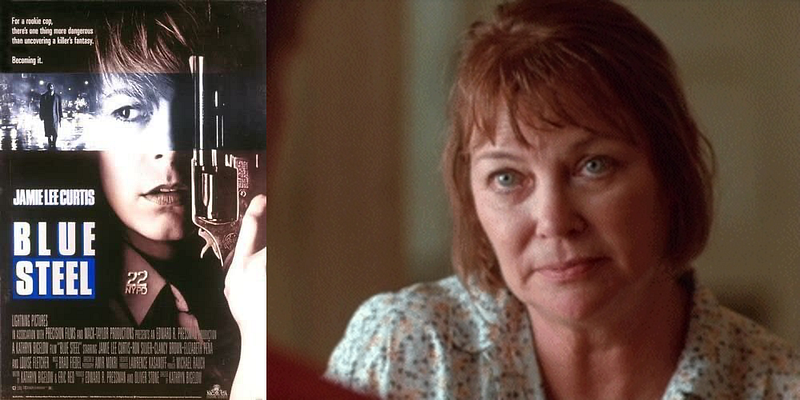
RT description: When rookie cop Megan Turner (Jamie Lee Curtis) kills a convenience store robber, she does not notice when psychopathic commodities trader Eugene Hunt (Ron Silver) takes the dead man’s gun. With no weapon at the crime scene, the police hold Turner accountable for killing an unarmed man. Meanwhile, Hunt uses the stolen weapon to go on a killing spree. Turner teams up with detective Nick Mann (Clancy Brown) to clear her name and catch the killer. An unexpected romance complicates matters.
Roxana Hadadi: “What Blue Steel captured was a certain moment in the 1990s when the psychosexual thriller reigned supreme, with a blending of sensuality and menace.”
4. Strange Behavior | Barbara Moorehead (Character) | 1981 Critics: 80% | Audience: 44%
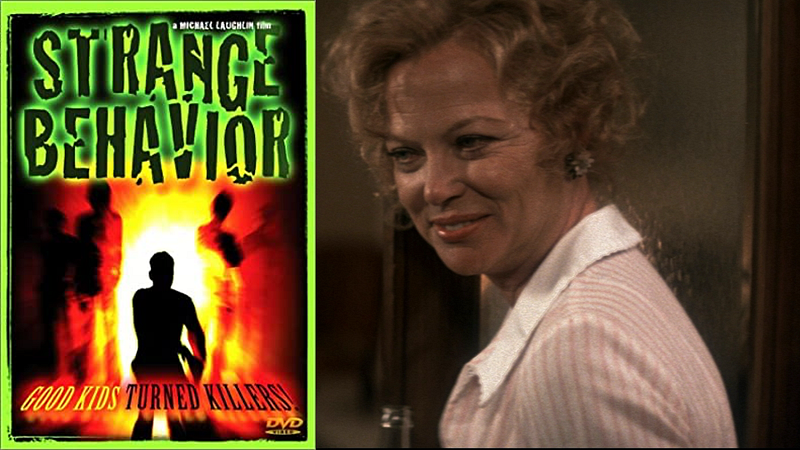
RT description: An Illinois police chief (Michael Murphy) finds a connection between dead teenagers and experiments at a college.
Anton Bitel: “A psychodrama set in that strange limbo where bloody horror meets sci fi, it exposes age-old vindictiveness, undying jealousy & Freudian friction in a small-town slice of Americana that seems sleepy, but harbours evil grudges from beyond the grave.”
3. Thieves Like Us | Mattie (Character) | 1974 Critics: 82% | Audience: 72%
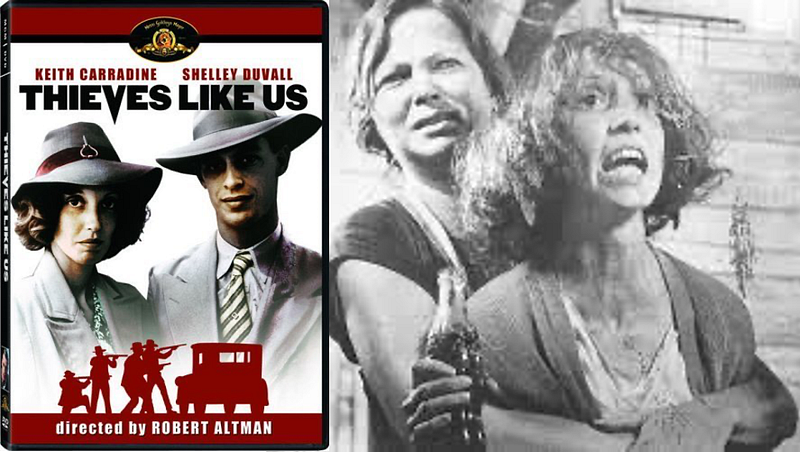
RT description: In this Robert Altman period drama, Bowie (Keith Carradine) is an escaped convict who embarks on a crime spree with fellow former prisoners Chicamaw (John Schuck) and T-Dub (Bert Remsen). While in hiding between bank robberies, Bowie meets a young woman named Keechie (Shelley Duvall), and the two quickly fall in love. A life of crime doesn’t sit well with Keechie, however, so she and Bowie try to settle down, but the law is determined to bring him to justice.
Don Druker: “At times unbearably objective.”
2. The Lady in Red | Anna Sage (Character) | 1979 Critics: 83% | Audience: 44%
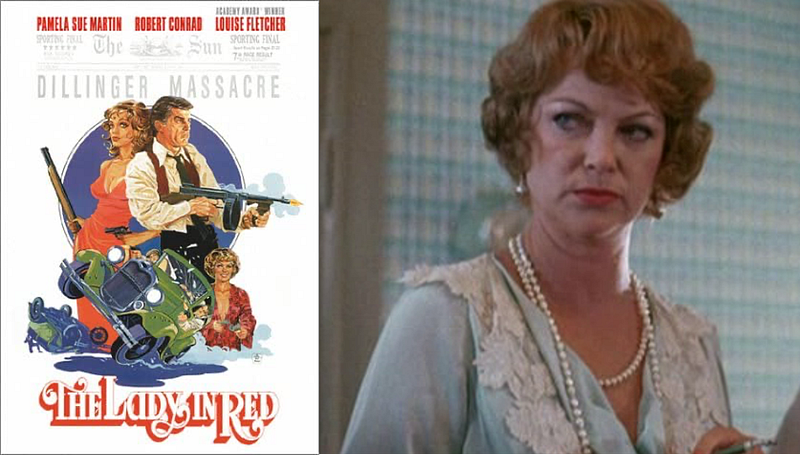
RT description: A farm girl (Pamela Sue Martin) turns to guns, sin and bathtub gin with gangster John Dillinger (Robert Conrad).
Quentin Tarantino: We feel every single emotion Polly feels. We go on this epic journey with Polly. That’s why when the film reaches her hard-fought final freeze frame we’re all exhausted.
1. One Flew Over the Cuckoo’s Nest | Nurse Mildred Ratched | (1975) Critics: 93% | Audience: 96%
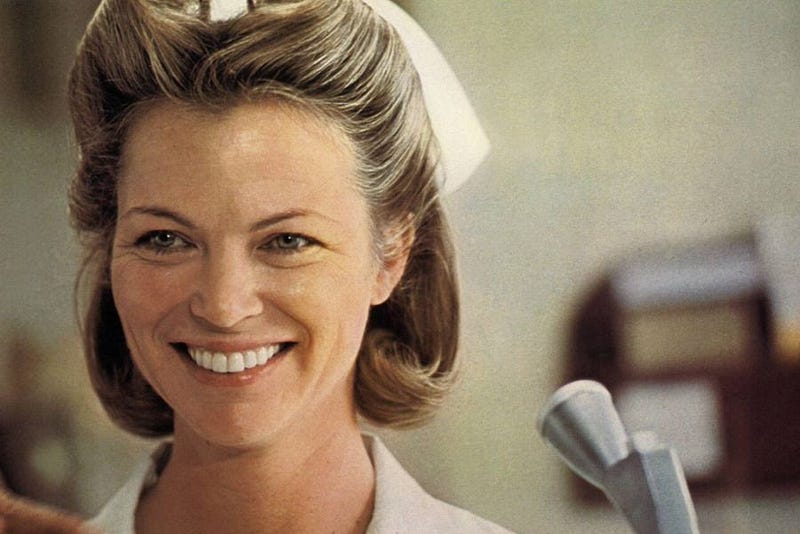
RT description: When Randle Patrick McMurphy (Jack Nicholson) gets transferred for evaluation from a prison farm to a mental institution, he assumes it will be a less restrictive environment. But the martinet Nurse Ratched (Louise Fletcher) runs the psychiatric ward with an iron fist, keeping her patients cowed through abuse, medication and sessions of electroconvulsive therapy. The battle of wills between the rebellious McMurphy and the inflexible Ratched soon affects all the ward’s patients.
Frank Capra (DailyMotion): “Welcome to the Five Oscar Club.”
Roger Ebert: “[Her performance] is not enough appreciated. This may be because her Nurse Ratched is so thoroughly contemptible, and because she embodies so completely the qualities we all (men and women) have been taught to fear in a certain kind of female authority figure — a woman who has subsumed sexuality and humanity into duty and righteousness.”
Quentin Tarantino: “I also read the book, which was written by Ken Kesey. In my opinion the book had one significant difference, which is Nurse Ratched. Nurse Ratched in the book is made out to be some demon but in the movie I think they portray her as more of a kind of friendly person that has control over the institution. That really surprised me just because in the book they made her seem so evil. Overall though I think that they made the movie very well based off the book. The production designer did a great job designing each set to look just as I had imagined it would in the book.”
Louise Fletcher (DailyMotion): “Jack and I went back to acting class in the 1950s. Late 50s. For his sake, I’ll say it was the very late 50s. It felt like something special was happening, because actors that don’t have to shoot, they don’t usually come to work. But the actors were coming to work, even if they didn’t have to work, because they didn’t want to miss something.”
Farewell, Louise Fletcher
Louise Fletcher (The Guardian): “The Oscars were wonderful. I didn’t think I was going to win, but I wrote a speech anyway. I didn’t tell anyone about signing “Thank you” to my parents, who are deaf, at the end, though. It was kind of scary for a year or two after: people would stop me at airports and tell me how much they hated me. Now I’m on all the best villain ever lists, alongside Anthony Hopkins for Hannibal Lecter. He’s usually No 1.”
Which of Louise Fletcher’s movies mean the most to you?
Louise Fletcher’s contributions to a movie about mental health mean a lot to me. My parents put me in an institution as a form of trans conversion therapy.
Living there was hard.
Getting punished there sucked.
Trying to escape only made things worse.
It wasn’t exactly like what you see in Girl, Interrupted or the movie that claimed Fletcher’s #1 spot on basically every list you can Google. But that’s just details. When you see how it was awful, yes. It is that awful. When you see how rare and precious those moments of joy are, yes. They are that rare and that precious.
What about you? Which of Louise Fletcher’s movies mean the most to you?
It’s okay if it’s just One Flew Over the Cuckoo’s Nest. That one stuck with Quentin Tarantino, too.


