
Ram Dass’s Beautiful Quote About Imagining Yourself as a Flower
It’s a brilliant analogy that captures the essence of who we are.
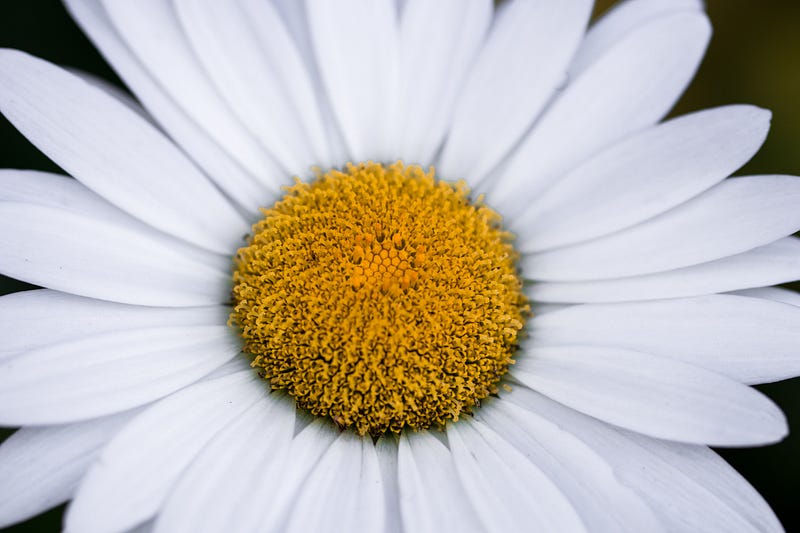
I came across a Ram Dass writing this morning that absolutely sang to me. It’s about thinking of ourselves as parts of a flower:
“Just imagine a flower and think about the center of the flower and then all the petals that come out from the center and think of the center of the flower as absolutely still, and think of all of the petals as moving, and energy, and change, but the center is still.”
Love that. So analogous to who we are. How?
We all possess that still center. In fact, that still center is the essence of every one of us. As we go about our lives that still presence is omnipresent.
Stillness in the foreground and background
But as Eckhart Tolle teaches, the degree to which that still presence is at the forefront varies depending on what’s going on. When we’re meditating or praying in a quiet church, it’s at the forefront. When we’re trying to make dinner and three of our kids are running around the house screaming at each other, that still presence is more in the background.
What about those flower petals? Ram Dass sees them as the movement, energy and change taking place around the central stillness.
I view those petals as being like clouds in the sky, constantly moving across the sky. But the sky is always there. Omnipresent. Always still.
And the petals also represent the dynamic of constant change that characterize life. All life.
The impermanent nature of life
It’s best captured by the Buddhist concept of impermanence. Things never stay the same. Not even from moment to moment.
I see it so clearly with my three young kids. They are constantly evolving. New words. New behaviors. New physical attributes.
Like the petals, which sway this way and that way. And maybe get too much sun and not enough water some day or two or three or twenty-three so their color changes or they dry out.
My body feels fine one morning then I sit for three hours of writing and my back gets stiff. My calves tighten up. My body never feels completely the same two days in a row. Constantly changing.
The unchanging center of the flower
But my essence, my “center of the flower,” stays the same. It’s unchanging. It’s my spirit. My soul. My atman as the Hindus call it. It’s that tiny slice of God, the universe, the original source, whatever you want to call it, that lies deep within every one of us.
And like the flower, it’s perfect. It doesn’t need to be changed or perfected in any way. Because it’s perfect already.
All it needs is to be realized. To be identified as the essence of who we are.
How do we do that? We let go of all the egoic/samskaric baggage we’ve accumulated over our lifetime. The inner garbage that constantly demands that we place attention on it instead of that still center part of the flower. That stuff that is so powerful that most of the seven billion souls on this planet believe that that is who they are.
The takeaway
Well, it’s not who you are. You’re that still center of the flower. And the most important work of our lives involves the work in realizing that.
Try my simple, free meditation program at davidgerken.net.


