
Raising a Brown Girl through Four Years of Trump
I brought my daughter into one world, then found myself in another
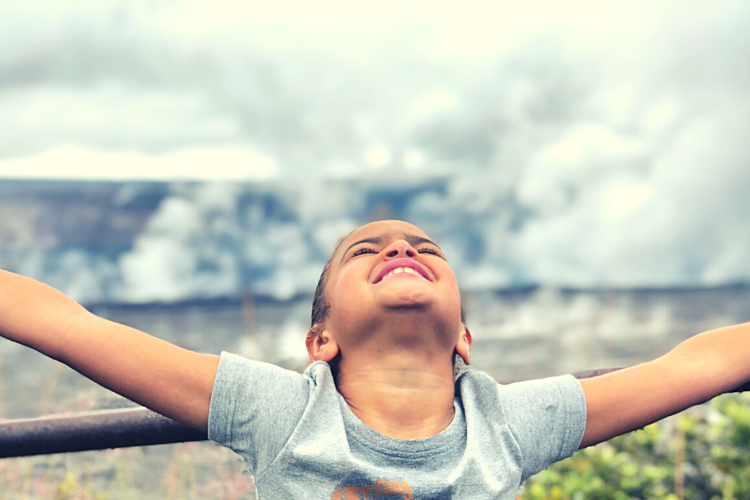
My daughter was born in 2011, back when I had the audacity to hope. Her nut butter skin tone matched that of the President of the United States. Racism was becoming decidedly uncool. Climate change was no longer a hoax. And maybe, just maybe, we would see a female president during my daughter’s childhood.
On November 3, 2008, the night that Barack Obama was first elected President of the United States, I got very drunk. It was a reveler’s drunkenness, the same kind of drunkenness that had infected the entire population of New England on the day the Red Sox clinched the 2004 World Series. It was the hug-a-stranger, throw-your-hands-in-the-air-and-cheer type of drunkenness, with a euphoria that persisted even through the next morning’s horrific hangover.
When the election results were announced, I was at a bar with my husband in Washington, DC, the city we then called home. A news crew beelined straight toward us. They wanted to know what the interracial couple thought of this historic event. My mind went blank, as it often does when I’m put on the spot, so I just hugged a stranger, then threw my hands in the air and cheered. (To my knowledge, the footage was never aired, and if it was, I never want to see it.)
After the initial high wore off, some people complained about Obama, but I refused to partake. He was a solid, upstanding, compassionate, whip-smart man with a solid, upstanding, compassionate, whip-smart wife, and together they were showing an entire generation of children that wrinkled white men did not hold a monopoly on our country’s future.
Tragically, any memory my daughter has of Obama will be fuzzy at best. She was on the cusp of turning five when our country screeched to a halt and threw itself into reverse. On November 3, 2016, the night that Donald J. Trump was elected President of the United States, I once again found myself drinking heavily. But this time, my husband and I were on our couch in Portland, Oregon, not at a bar in Washington, DC. We had a 16-month-old and a four-year-old sleeping (finally sleeping) in the other room. There were no strangers to be hugged, and the cheers poised at the back of my throat were making a slow, painful retreat, replaced instead by rising bile.
When I had poured my first glass of wine, it was intended to be celebratory, but as my sips turned to gulps, the wine became a coping mechanism to blur the edges of the new, harsh, unbelievable reality that stared at us from the bloody map on the screen.
The next morning, I woke up feeling very much hungover, and it had nothing to do with the bottle of Cabernet I’d emptied the night before. I wasn’t sure how to face the day. But life goes on. Parenting small children leaves little time for mourning.
You still stumble out of bed in the darkness of early morning and beeline for the coffee maker. Absurd sentences still tumble from your lips, like, “Stop licking my knee,” and, “Please take your Legos out of the peanut butter.” My daughter wanted to wear her party dress that morning, and I had to explain to her for the umpteenth time that her birthday party wasn’t until Sunday.
I was in no mood for power struggles. I already felt bullied, beaten, and utterly defeated. My daughter announced that she would not be inviting Donald Trump to her birthday party because he is mean. She asked if he was going to shoot lava at her because she is brown. She inquired about his toy collection and the color of the walls at his house. She thought gold walls were pretty cool.
I turned my attention to dressing her 16-month-old brother, for whom Obama would be no more than a face in a textbook. As he transitioned out of his pajamas, he correctly identified his ears, nose, mouth, and belly button. There was applause, cheering, high-fives. Then the tears welled. The victory was so small, and my sense of loss was so stifling.
There was applause, cheering, high-fives. Then the tears welled. The victory was so small, and my sense of loss was so stifling.
But there was no time to dwell on our country’s crumbling future. No time to process, no time to grieve. There was never time. There were still shoes to put on. As I attempted the Herculean feat of tying shoes on a toddler, I again cursed my husband for buying lace-up shoes. My son didn’t want his shoes on. He stamped his feet and pounded his fists. I felt not frustration but envy. I wanted to throw a tantrum. I wanted to melt into the floor right alongside him.
As I ushered my children to the door, I checked my phone, bypassing the headlines to look up recipes for German chocolate cake. Pussy-grabbing white supremacists aside, we would still be descended upon by 15 preschoolers come Sunday, and they would still expect cake. Also, balloons. God help us if we forgot the balloons.
It was past 7:30 a.m. — as usual, I was running late. And car seats and seat belts don’t buckle themselves. So I trudged on. It was all I could do.
I didn’t end up making German chocolate cake for my daughter’s fifth birthday party. I bought a cake from Fred Meyer that had the requisite pink frosting and perfect Happy Birthday cursive that she could not yet read. I went to the dollar store, trying to brighten my somber mood with Mickey Mouse balloons and polka dot table cloths. I bought useless plastic trinkets to fill up gift bags, which children would likely play with for approximately six minutes before they broke; rolled into a dusty, forgotten corner; or were smuggled by parents, sick of useless plastic trinkets, into the trash.
A few months later, we caught the tail-end of the international women’s march, weaving our stroller through the jungle of signs, chants, and fist pumps. We had arrived late; I wasn’t prepared to let even the future of women’s rights interfere with my toddler’s nap time.
I tried to explain to my daughter that we were there for her, so that she could be anything she wanted to be, so that no one would treat her differently for being a girl or having brown skin. She furrowed her brows slightly as she took it in. “Mom,” she said slowly, and I braced myself for a “parenting moment,” for one of those difficult questions that I might not know how to answer. “What?” I said with trepidation. She knit her brow deeper. “Mom,” she said again. “How come I don’t get a pink hat?”
You never know exactly what kids will pick up on and what they’ll take away. But I was glad to be at the march, glad to give my kids a taste of democracy, and glad for the selfie we took to prove to Facebook how woke we were.
By then, disbelief had morphed into grudging acceptance, but the numbness never quite wore off. We had brought our children into one world, and we suddenly found ourselves in another. We trudged on.
By then, disbelief had morphed into grudging acceptance, but the numbness never quite wore off. We had brought our children into one world, and we suddenly found ourselves in another. We trudged on.
Four long years of trudging. Putting one foot in front of the other. Four formative years in my daughter’s life, years she would remember with clarity, not through the haze of early childhood.
As I trudged, she continued to grow into herself, although it could be argued that she had always been 100 percent herself. Even at two months in the womb, a sonogram tech pronounced her the “feistiest fetus I’ve ever seen.”
My daughter morphed from adorable to beautiful — that breathtaking type of beauty that stops people in the streets. With her big eyes, endless eyelashes, and perfectly symmetrical face, she resembled a brown-skinned Disney princess, though much to her chagrin, her hair refused to confine itself to Elsa-like braids. Also, unlike Elsa, her head was proportionate to her body, and she had inherited my enormous feet.
I admired my daughter’s fierce appetite for justice. She had a voice, amplified by a healthy set of lungs, and she intended to use it. Unfortunately for me, it mostly manifested itself when resisting my authoritarian tendencies. It wasn’t Trump who was the target. It was her tyrannical mother who wouldn’t let her wear fairy wings to school.
I admired my daughter’s fierce appetite for justice. She had a voice, amplified by a healthy set of lungs, and she intended to use it. Unfortunately for me, it mostly manifested itself when resisting my authoritarian tendencies.
Whereas I would have caved the second time my mother told me that fairy wings were not allowed at school, my daughter refused to accept arbitrary rules she perceived as unfair. She didn’t cave the third, fourth, or fifth time, and even when I succeeded in winning her grudging acceptance, she still wanted the last word. “I’m going to ask my teacher if I can wear fairy wings, and if she says they’re allowed, I’m going to wear them tomorrow. OK, Mom?”
The tragedy is that when my daughter finally breaks free of the parent-child hierarchy, other limits will await her, limits that are truly, and firmly entrenched in injustice and imposed upon her not by parents who love her but by white men who see her as less of a person because of her gender and the color of her skin. As a brown girl, she’s got a double-whammy, and her stunning beauty will be both a weapon and a curse.
But I said OK in response to my daughter’s inquiry, feeling somehow that I was the one who was caving. Honestly, I had no idea if fairy wings were allowed at school, and she wanted to call my bluff.
Over the course of Trump’s presidency, I stopped listening to NPR, stopped reading the New York Times headlines, and even stopped watching The Daily Show, which had been my nightly ritual for almost two decades. In my 20s, I’d watched the 1:00 a.m. rerun after my bartending shift; now, I tuned in at 9:00 p.m. before heading to bed.
But even the news parodies kept me awake at night. It wasn’t Trevor Noah’s fault. He and his team were doing everything they could to find humor in all the things that should have been funny, except that they weren’t, because they were actually happening, and this was actually the reality we found ourselves fumbling around in, wondering if it was ever going to end, and feeling helpless to stop it.
When Michelle Obama’s Becoming documentary was released on Netflix, my husband and I watched it, thinking it would uplift us. We were in the thick of COVID, in the thick of Black Lives Matter protests, and we needed to be uplifted.
I was grieving the world we had lost, the world our children had been born into. I was grieving for the death of human decency.
But by the end of the documentary, I was sobbing into my husband’s shoulder. I was grieving the world we had lost, the world our children had been born into. I was grieving for the death of human decency. I was grieving for the brown girls and boys, who now only saw reflections of themselves in the persistent, heartbreaking photos of men and women killed by officers of the law.
I grieved for the brown girl and boy who slept in a bunk bed two rooms over. I grieved, and I trudged on.
My son turned five, and I made a chocolate cake. I attempted to construct a dinosaur, but it collapsed in defiance. COVID had somehow convinced me that I was capable of making things like three-dimensional cakes. In the end, I salvaged enough to fashion a simple caterpillar. The four of us ate it in our backyard.
There were no balloons, no party favors, no polka-dotted table cloths. (If there was one thing I was not grieving, it was the loss of birthday parties). Instead, it was just our family in the little corner of the world we had staked out for ourselves, a world with a lawn that was slowly dying under my children’s incessant scampering, with a treehouse they never played in (because it had spiders), and with a much-loved swing made out of a rope and a pizza pan. It was a world where, even though the inevitable bickering and squabbling, my brown children were loved unconditionally.
My heart ached to think how different this world might be from the world that awaited them. A world where love is scarce, a world that only white men navigate without conditions.
Four months later: Election Day, 2020. My stomach is knotted with dread. Once again, I sit with my husband on the living room couch and watch the map grow ever more red. This time, it’s not disbelief, just resignation. I go to bed. I’m sober. Against all odds, I sleep.
And yet, over the course of the next few anxiety-ridden days, something happens. The map shifts ever so slightly to blue. It’s painstaking, and the margins are narrow, but it’s enough.
When the headlines are able to proclaim the election results, suddenly, it clicks. Our next Vice President is a brown woman! Somehow, I had lost sight of that possibility. I had not dared to dream. Our next Vice President is not only a brown woman, but she’s solid, upstanding, compassionate, and whip-smart. She’s beautiful and feisty.
My daughter says, “She should be President.”
I say, “I know.”
Of course, the not-so-resounding victory doesn’t wash away the vileness, the stink. There is still deep-seated contempt for brown people, for women. The contempt has always been there, even when it hasn’t been openly celebrated, and it’s not going away any time soon.
But still, I can feel a tingling sensation rising up beneath the numbness. I feel a new lightness to my step. After four long years of trudging on, I have reclaimed the audacity to hope.


