
Radicand
Not that extremist former friend you might be thinking about
Today’s New York Times Spelling Bee letters: A, D, G, I, N, R, and center C.
Merriam-Webster says…
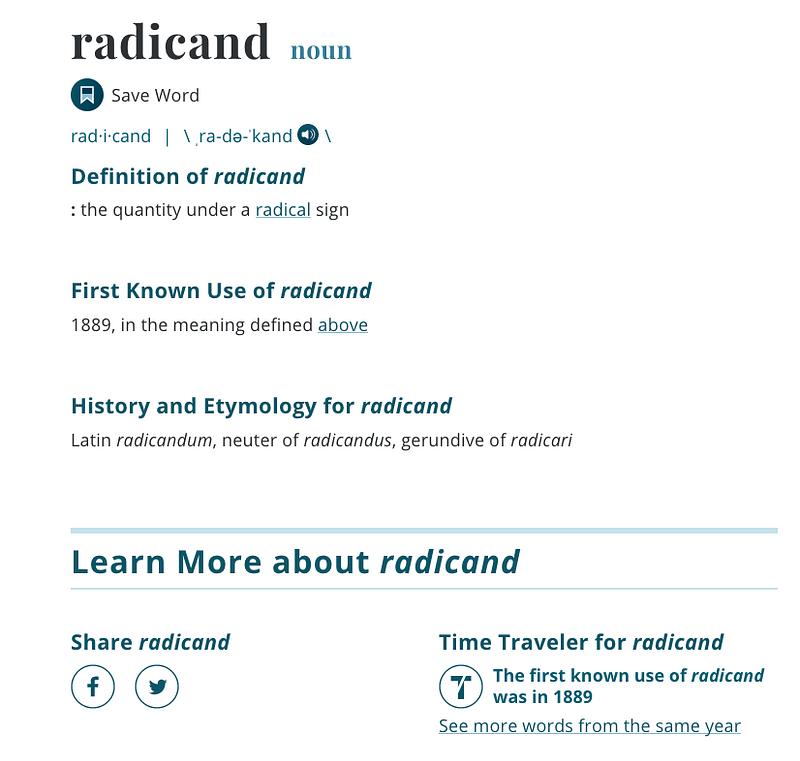
Silly little dictionary! Don’t you know radicand can’t possibly be a word if the New York Times says it ain’t?
For further fascinating facts, check out the Spelling Bee Master.
What’s your favorite g.n.a.w. from today’s puzzle?
My Two Cents
So many fun non-words to pick from today. Carina sounds like a person’s name and needs only one more letter to become a musical instrument. Incongruously, caca is not accepted by Spelling Bee, although poop is. I was about to choose arnica because here in Spain this member of the sunflower family is a big deal when it comes to muscle pain rubs.
But then I read the comments section for the New York Times crossword puzzle. Solvers have their say about the Spelling Bee there, as this puzzle does not allow comments. A few people — including one with a math degree — complained about the fact that radicand was missing. That made me change my mind.
That’s how we ended with radicand as the non-word for today.
A bit of math
What’s a radicand? If you’re a math nerd like me or are able to recall your grade school years, you might recall the components of root notation. Remember how division equations feature a dividend, a divisor, and quotient? No? Oh… well… anyway, by the same token, root notation includes its own terms that most of us would rather not use on a daily basis. Unless we’re math teachers, of course. Here is well-known root:
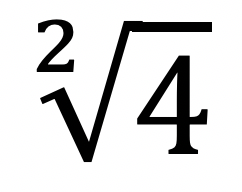
- Check mark’s cooler cousin is called a radix.
- The 2 digit is called the index.
- The 4 is the radicand. A-haaaa!
When the index is 2, as in the above case, it is usually omitted. So, by default, a root symbol (the radix) with no index indicates a square root. If we replace the 4 with an 8 and the 2 with a 3, we would be showing the cubed root of eight. Which is 2. Because 2 to the 3rd power is 8. And since Medium text formatting does not allow for superscripts, I have to use an image:
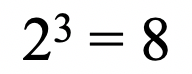
In other words, 2 x 2 x 2. Yep, still 8.
In the case of the above equation, 8 is a product. When it gets placed under the nifty check mark… er, radix, it transforms into a radicand.
The magic of math!
By the way, the preferred upscale jargon for “root” is radical, used by those mathematicians who know what’s what. Which brings us to…
F. Scott Fitzgerald
Remember? The Nobel Prize-winning mathematician!
Actually, I have no idea if Francis was any good with numbers or hated math. Aside from being know for writing a DiCaprio 3-D movie, he also authored a famous quote:
…the test of a first-rate intelligence is the ability to hold two opposed ideas in the mind at the same time, and still retain the ability to function.
That’s what radical is. Not the person; the word itself.
What’s the first thing you think of when someone says “radical”? If you’re like most people in the world today (and yes, it’s not just the U.S. that’s hopelessly polarized and on the verge of repeating history from a century ago), you think of an extremist, a person with… um… radical political views. It might even be someone you know, someone who’s face you immediately picture being bashed in.
Although radical is often construed as belonging to the left, it simply refers to anyone espousing extreme measures to change or restore a political state of affairs.
So what does that have to do with Fitzgerald’s quote? Most radicals I’ve met don’t seem capable of holding two opposing thoughts even for a second. It might make their head explode. As far as politics go, that maneuver is best left to us schmucks who are aiming for the boring, squalid center.
However, the word radical is a contronym. Also known as an autoantonym. (Both words have probably been summarily dismissed by the editors of the Spelling Bee, I’m sure.)
Contronyms are words that have two meanings that contradict each other. This is why they are commonly known as Janus words. In honor of this guy:
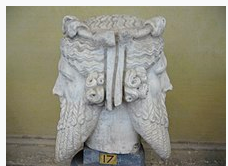
Prior to being beheaded, he was the Roman god of beginnings and endings, transition and duality.
There are plenty of contronyms in the English language. They form a subset of words that most native speakers don’t even think about twice because they instinctively use and interpret them correctly according to context. Many English learners may sometimes struggle with their use. To be fair, though, without any context it’s impossible to know what a speaker means. For example:
- “I’m going to clip that.” Does she mean she’s cutting something or using a paper clip?
- “That needs to be sanctioned!” Does he mean it needs to be approved or boycotted?
- “That’s a variety.” Are we talking about many types or one type in particular?
You get the drift. There are plenty of these amazing, interesting, schizophrenic words. Weather (to erode and to resist); fast (to stay put and to move quickly); sanguine (hotheaded & bloodthirsty and calm and cheerful); and, a personal favorite of mine, cleave (cut in half and stick together).
Cleave is what linguists call a true homograph. The opposite meanings of this word come from different etymologies that ended up evolving to the same form. Old English clēofan meant “separate”, while Old English clifian meant “adhere”. Both eventually were pronounced as “cleave”.
While many Janus words are homographs, others are polysemous. Get your mind out of the gutter! That simply means they acquired their opposing definitions along the way through usage.
Looping back to radical… this term, especially when used in math, means “relating to or proceeding from a root”. Which is contronymic — and I just made up that word — to “extreme”. Sort of like a tree, with the branches and limbs being the extremities, and the roots being… well, the roots.
Wait a minute… if the word radical contains two opposing ideas, then the next time someone calls you a radical, take it as a compliment. After all, that person is saying you have a first-rate intelligence!
And if you’re a math nerd like me, you can dismiss the dismissal of the Spelling Bee editors when they heard radicand and thought “Gee, Not A Word”.
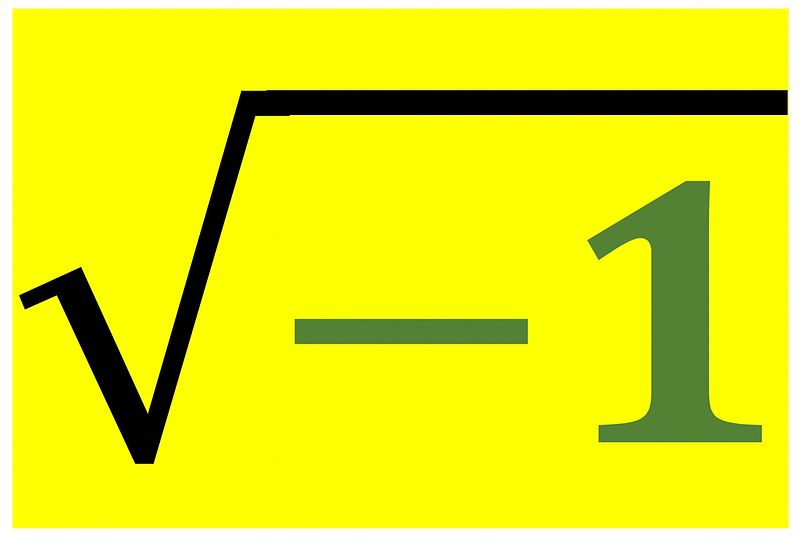
P.S. There’s a dad joke referenced in the caption of the top photo. What’s the most selfish number of them all? The square root of -1, because it’s all about i.