
Racism in College Athletics: How Do We Respond to Its Presence?
Failure to call it out leads to perpetuation.
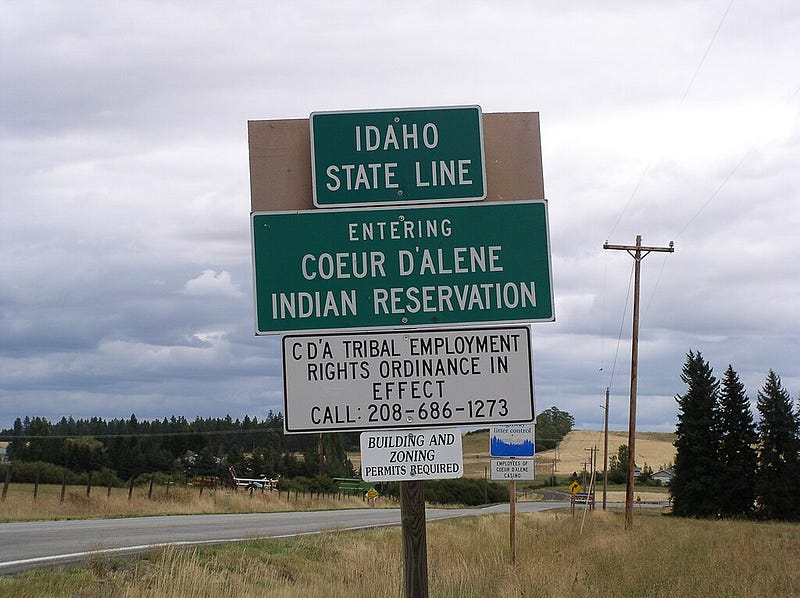
During the 2024 NCAA Women's Basketball Championship. The Utah Women’s Basketball changed hotels because of a racist incident. The team has a multi-ethnic, international makeup with a few Black players and members from Australia, Portugal, Spain, and Belgium. Gonzaga University in Spokane, Washington, hosted Utah’s first-round games.
Hotel shortages meant some teams were housed 30 miles away in Couer d’Alene, Idaho. When going out to dinner, the Utah bus faced racial taunts, including the use of the N-word. After eating, they were taunted again by occupants of a pick-up truck with a Confederate flag that followed them back to their hotel.
The NCAA helped coordinate moving the Utah team to another hotel. The UC-Irvine team was also relocated from the same hotel out of an abundance of caution, though they didn’t have the same negative experiences. White supremacist activity has been on the rise in Northern Idaho, so in retrospect, what happened to the Utah team is unsurprising.
Amazingly enough, I’ve been to Couer d’Alene and had a quite different experience. While in junior high school, I attended a Boy Scout National Jamboree with Scouts of all races worldwide. We were admittedly in a segregated environment, having taken over Farragut State Park.
Wearing a Boy Scout uniform, I traveled by train from Minneapolis, Minnesota, to Bayview, Idaho, and by bus to the campgrounds at the park. We never ate in restaurants or stayed in hotels. I had a wonderful experience; the Scouts sought out other scouts from other places to trade patches and flags.
I have a college teammate who posted his reflections after the Utah women’s team incident. He recalled when he played basketball for a Wyoming community college, and they were returning from a game in one of the Dakotas by bus. It was 15-degree weather, and the heat wasn’t working properly on the bus.
The team stopped at a restaurant/bar that refused entry to the Black players on the team. Ultimately, the white players and coaches ate inside while the Black players shivered on the bus. My friend ultimately transferred to an HBCU, Fisk University in Nashville, Tennessee, which he considers one of the best decisions of his life.
The first news regarding the Idaho incident was limited. The Utah team changed hotels due to a racist incident. That was about it. Days later, some of the specifics came out, including multiple uses of the N-word and the fact they were followed back to their hotel, which takes things to a new level.
When we have to guess what actually happened, it lessens the incentive to take action. It seems a police report was eventually filed. The police have thus far found no “victims” to speak to, though there were reportedly over 100 witnesses to the events.
The NCAA came out with a statement:
“We are devastated about the Utah team’s experience while traveling to compete on what should have been a weekend competing on the brightest stage and creating some of the fondest memories of their lives,” — NCAA
So did the local Mayor:
“To the young women who endured racial slurs while visiting, I offer my most sincere apology,” — Coeur d’Alene Mayor Jim Hammond
The Idaho State Legislature struggled with responding, some needing proof that something happened and making sure it didn’t sound like an apology.
The police have recovered video of some of the events, removing all doubt as to whether it happened. Details are recorded in this article titled: Idaho far-right lawmakers flinch at condemning racism in the Coeur d’Alene incident.
Less than two years ago, an HBCU, Delaware State University women’s lacrosse team was returning from Georgia. They stopped in Liberty County, GA, and had their bus searched.
AK-9 dog boarded the bus and sniffed around, and deputies opened the luggage and threw around garments, including underwear, while making threats to the young women about what would happen if they located drugs. Nothing was found.
Because it made news, weak apologies were uttered alongside statements about the validity of the search because a K-9 dog “alerted” officers to the possibility of drugs. Delaware State University made good on its promise to alert the Justice Department.
A year later, a meaningless agreement was reached with the Liberty County Sheriff in which they promised not to discriminate without acknowledging ever having discriminated.
In 2022, Brigham Young University (BYU) fans called Duke women’s volleyball players the N-word at a home game and five weeks later used the same word at a USC women’s soccer match. Most media reporting suggested the events didn’t happen because the reporters couldn’t prove it.
Racism has always been a part of sports, including college athletics, which no longer represents amateurism and has never been pure. I grew up watching Black athletes compete at the University of Minnesota.
Bear Bryant and the University of Alabama didn’t integrate its football team until I was in tenth grade. Adolph Rupp had integrated the University of Kentucky basketball team the year before.
Bryant and Rupp acted because they could no longer win without Black players. Imagine either one of those schools fielding teams without Black players now.
If we want to eradicate public displays of racism now, the punishment must be severe enough to make racists think twice. Suppose Spokane was banned from hosting NCAA events for five years or at least housing participants in Idaho.
Since 2002, the NCAA has stopped holding championships in states flying the Confederate flag. That was one of the reasons Nikki Haley took it down.
For racism to be stopped, it cannot be ignored. It must be called out and then hauled out. Hoping it will go away doesn’t seem to be a working strategy.