
Racism Hurts All of Us
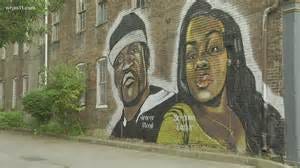
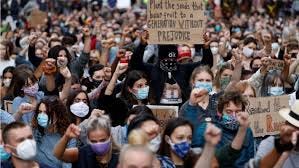
Our neighborhood group on San Francisco’s west side held a demonstration for Black lives and against police violence Sunday. The organizers provided blank poster board and markers for us to make our own signs. Most people wrote “Black Lives Matter” or “No Justice, No Peace,” but I wrote “Racism Hurts All of Us.” Was that a good thing?
My sign got a lot of appreciative nods and fists from other demonstrators and from passing drivers, but was it true? Racism is systemic discrimination against people based on their color, justified by a belief that they are inferior. That belief, without the power to act on it in a discriminatory way, is better called prejudice. As a White-appearing man, how have racism and prejudice hurt me? I’ve never been discriminated against or beaten for the color of my skin. Yes, I have Black and Latino friends who have been hurt, and yes, I have to live with upsetting knowledge and news reports of horrible things done to people of color, but this is vicarious hurt, not personal.
Since we have not all personally suffered from racism, one could charge that saying ‘Racism hurts all of us’ selfishly moves the focus away from Black people, who are subject to racist discrimination in countless ways, and are two to three times more likely to be killed by police than White people. But I can honestly say ‘Racism hurts me,’ and I think we all need to learn how this could be, for two reasons. First, my class has suffered; my country, the world, the forests and rivers and oceans have suffered from a capitalist system based on racism. That affects me. And second, if the movement is to grow and make the changes we all need, more people must recognize that anti-Black racism is an attack on them, too.
Unless they’re capitalists, in which case racism may be their friend. Capitalism, by which I mean control of government by owners of capital (a fancy word for wealth,) who then use government to further enrich themselves, is built on racism and relies on it. In 21st century America, the capitalist system impoverishes working people and denies them equal rights. It destroys environments and causes constant war. Without racism, the owners could not run this grossly unfair, cruel, and destructive system for long. In fact, they couldn’t have built it in the first place.
Brief History of Capitalism and Racism
Industrial capitalism began in the 18th Century, according to most scholars. There had always been trade and merchants, rich and poor people, but building big industries required startup capital to build factories and labor to work in them. Karl Marx called this startup wealth primitive accumulation, and it was mostly gained through 1) taking land by force from peasants, making them become wage laborers to survive, and 2) stealing enormous wealth from Africa, America, and Asia through slavery and colonialism. The ruthless exploitation of African labor and large-scale robbery of colonies’ wealth funded early capitalism’s expropriation of European farmers.
So, right from the beginning of capitalism, racism and the oppression of White people were interconnected. There is no way Europe’s early capitalists could have done the cruel and inhuman things they did to build their system, if they had regarded Africans, Native Americans and Asians as fully human. To become primitive capital, people had to be dehumanized (as capital does with workers to this day.) So, without racism, primitive accumulation might never have happened, and generations of future wage slaves could have kept their land.
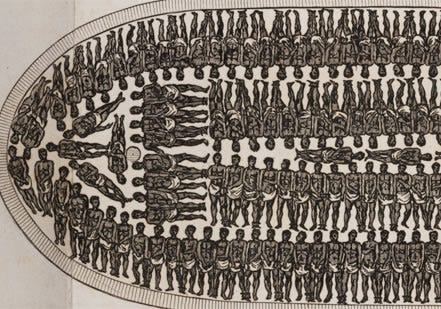
In North America, the relationship between race and class has been even more fraught. Both Europeans and Africans were brought to the New World as indentured servants, people contracted or forced to work as slaves for a set number of years, after which they could be freed. But Black and White indentured servants sometimes got together to fight their aristocrat owners. Their English lords stopped these alliances through racism, separating Black from White by replacing indentured servants with large numbers of African slaves, people who would never be freed and whose children would be born into slavery.
This use of racism to maintain capital’s dominance of society continues to this day, leading to worse lives for all who work for a living. Slavery set the lowest bar imaginable for how workers should be treated, and the competition from slave labor, as with today’s prison labor, made it nearly impossible for “free” workers to win decent wages and working conditions. Dividing the working class by race causes us to blame each other instead of our rulers. Meanwhile, poverty deepens, the rich get richer, freedoms and rights disappear.
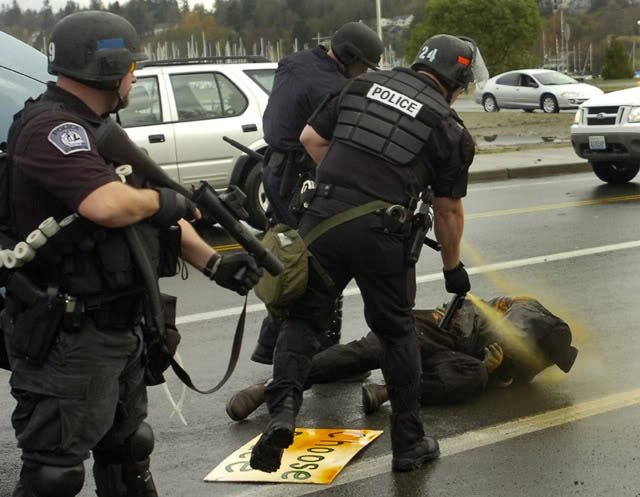
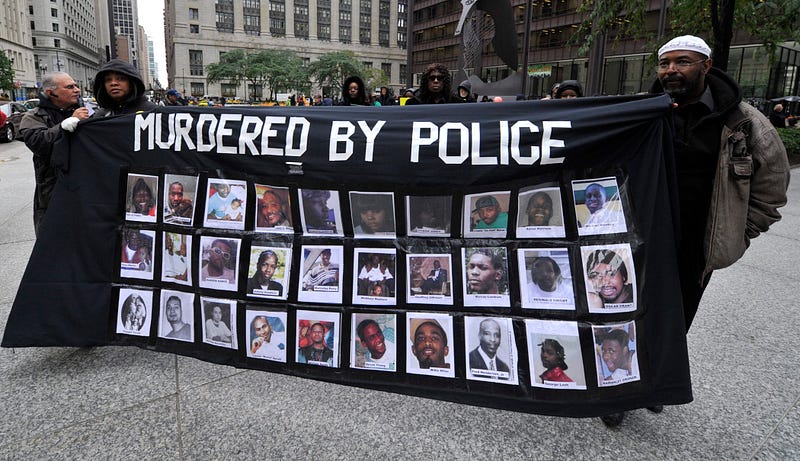
With capitalist order disintegrating, police have become more violent, to keep control. That is their job. For years, researcher Rick Hill has recorded police killings on his Facebook page Disarm the Police in America. The average has consistently been between 3 and 3.5 killings per day, far more than any other industrial country in the world. But in 2020, the rates have gone sharply up. In May police killed 205 people, an average of 6.6 people each day. The victims are disproportionately Black, but also White, Latino, and Native. Why aren’t we fighting back together?
The slogan Black Lives Matter is necessary. Certainly, the USA has never acted as if Black lives mattered when it comes to police violence, or in other ways including health care, jobs, housing, and education. How could unity be possible if we don’t value each other’s lives? But the BLM slogan has a significant downside, making it sound like the struggle against police violence only affects Black people. Others are supposed to support them, because it’s the right thing to do.
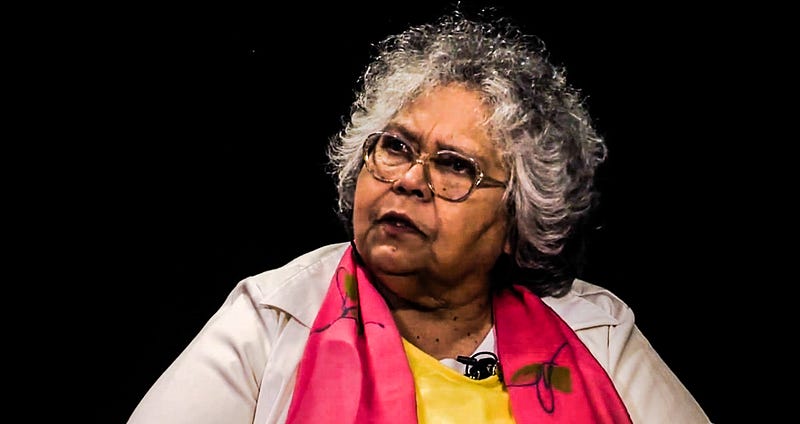
But this is not how long-term movements are built. As the Australian aboriginal leader Lilla Watson told European supporters, “If you have come here to help me, you are wasting your time. But if you see your liberation as bound up with mine, let us work together.” She credited this wisdom to her people’s long experience with helpers, or “allies,” as they are now called. Allies tend to come for a while, water down people’s resistance, then leave when things get too dangerous or drag on too long. Being an ally or a supporter, working to help others, might be fine for making small liberal reforms. But when we are confronting a vicious class system on the brink of collapse, when we need revolutionary change that risks our well-being and might even get us shot, we have to “see that our liberation is bound up with yours.”
That’s why it’s critically important to realize that racism hurts everyone. Last week in Pettis County, Missouri, Hannah Fizer, a 25-year-old White woman, was murdered by a sheriff’s deputy after allegedly running a red light. If a White person brought up Fizer’s case in the context of Black Lives Matter, they could be saying, ‘See, it’s not about racism. They kill White people too.’ But they could also mean, ‘We all need to support Black Lives Matter, because when police kill Black folks, it makes it easier for them to kill us.’
Our rulers are fine with the former, scared to death of the latter. They have traditionally divided Black from White by denying racism exists. But, as police ramp up their violence against Black people, that narrative no longer works. And with the economic collapse caused by the COVID-19 shutdown, White people are enraged and desperate too. So are most Asians and Latinos. The sheriff whose deputy killed Hannah Fizer pleaded with residents, “Are you willing to allow Pettis County to become the test project for some social justice experiment for rural America? I hope not.”
But it will. People are starting to realize that attacks on Black people are attacks on the whole working class. So now liberal media emphasize racism, but rarely mention the class context that creates and maintains it. They’re telling us that if you’re not Black, racism might be your fault, but it’s not hurting you. This won’t work either.
How not to talk about racism
In my opinion, we have to be careful about how we use the terms racism and White Supremacy. They are real things, but how often does this language help? Depending on your audience, does it build the movement or divide it? Racism is systemic discrimination and oppression based on skin color. An HR exec who underestimates the ability of a POC job applicant and denies her a job is being racist, because they have power over the person. But a similar attitude held by a random White co-worker might only be prejudice. It has less impact and can be unlearned over time.
True, prejudice can promote racism. Prejudiced White people ally with racist power when they side with their White oppressors over their class brothers and sisters of color. We have done this routinely in US history. When a cop murders a Black man because he ran away, that is racism. The people on social media who post comments saying, “He shouldn’t have run. What did he expect?” are prejudiced, but they are reinforcing systemic racist violence. So, unlearning our misconceptions and prejudices about each other is important, but those attitudes are not what’s causing the brutality we see from police and other institutions every day. That cause is an oppressive system that relies on racism to make money, divide people and keep everyone down. That is why racism hurts all of us.
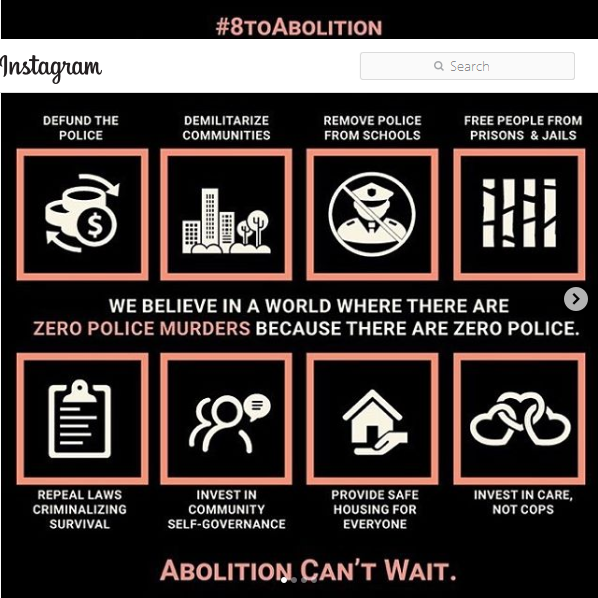
We need to say black lives matter, but an American of any color also needs to take racism as a personal attack. The fight against police violence is critical to all of our survival. As Australian journalist Caitlin Johnstone wrote, “The rulers know that the last line of defense against people rising up is their ability to use extreme violence upon the population until they stop revolting. So, they have no intention of ever giving up this ability.” That’s why procedural police reforms can’t work, and the M4BL demand to Defund the Police is so important. Police wearing body cams won’t stop them from beating protestors or killing Black youth, if that’s what their capitalist employers want them to do.
The Movement for Black Lives program wants more, and people need to support their demands, “Direct democratic community control of local, state, and federal law enforcement agencies, ensuring that communities most harmed by destructive policing have the power to hire and fire officers, determine disciplinary action, control budgets and policies, and subpoena relevant agency information.” In other words, completely overhaul what policing means in America. Make it something that serves everyone, doesn’t just protect the privileges of the rich.
This battle against racism is winner-take-all. We will wind up struggling to survive in a racist dictatorship backed by police power and white nationalist militias, (who are sometimes the same people) or we will build a multi-racial movement and create a more beautiful world. The time to connect with each other and fight back is now.


