avatarRubaiyat Rahman

Free AI web copilot to create summaries, insights and extended knowledge, download it at here

4559

Abstract

um.com/v2/resize:fit:800/1*thTlmpWEKKeJfD6Ju6o7fQ.jpeg"><figcaption>Photo Credit: Freedom House</figcaption></figure><p id="0cc6">Dankwart Rustow criticizes the theory of Lipset in the sense that Lipset neglects the ‘genetic question of how does democracy come into being’ (Rustow 1970; Teorell 2010).</p><p id="9934">Rustow suggests three phases of democratization for a country to proceed from authoritarian to democratic rule (Rustow 1970; Huntington 1984; Teorell 2010). The first one is stable and strong economic and social background (Rustow 1970) which Rustow explains as urban residence, higher per capita income and higher literacy (Rustow 1970). The second phase is consensus and participate attitude (civic attitude) among citizens (Rustow 1970). Existence of civic culture is essential for participant democracy (Almond and Verba, 1963). Rustow in his paper comments that to refer ‘civic culture’ of democracy, Almond and Verba points traditional and parochial attitudes along with willingness attitude to participate (Rustow 1970; Almond & Verba 1963). The third one is association of social and political structures (Rustow 1970). Referring the arguments of Robert Dahl and Herbert McClosky, Rustow comments that such association ensures commitment to democratic values and as a result, fulfills the requirement of stable democracy (Rustow 1970).</p><figure id="3d1b"><img src="https://cdn-images-1.readmedium.com/v2/resize:fit:800/0*qVrWJAWaUdL_9utO"><figcaption>Photo by <a href="https://unsplash.com/@designecologist?utm_source=medium&amp;utm_medium=referral">DESIGNECOLOGIST</a> on <a href="https://unsplash.com?utm_source=medium&amp;utm_medium=referral">Unsplash</a></figcaption></figure><p id="1c8e">However, democracy is not a ‘one-way ladder’ that countries would climb as their economic and social structure develop (Arat 1988). Przeworski and Limongi make comprehensive efforts to analyze the relation between economic development and regime change. They try to analyze the transition from dictatorship to democracy (Przeworski and Limongi 1997). In brief, they disjoint the relation between economic development and democracy.</p><figure id="6c6c"><img src="https://cdn-images-1.readmedium.com/v2/resize:fit:800/0*LF03usqaAHPh_QXL"><figcaption>Photo by <a href="https://unsplash.com/@jonnysplsh?utm_source=medium&amp;utm_medium=referral">Jonny Caspari</a> on <a href="https://unsplash.com?utm_source=medium&amp;utm_medium=referral">Unsplash</a></figcaption></figure><p id="215a">Przeworski and Limongi explain against the arguments of Lipset quite systematically. They argue that both democracy and dictatorship may survive the rapid economic growth. However, challenges appear when there is economic crisis. The poor democracies are extremely fragile in the face of economic crises. Their argument tries to explain that construction of democracy does not depend upon condition on development; also, it is pertinent to mention here that democratization is not by-product of economic achievements. They suggest that democratization can be initiated at any level of development (Przeworski & Limongi 1997).</p><figure id="b50c"><img src="https://cdn-images-1.readmedium.com/v2/resize:fit:800/0*kb0nBY8NGsgEyjbd"><figcaption>Photo by <a href="https://unsplash.com/@markusspiske?utm_source=medium&amp;utm_medium=referral">Markus Spiske</a> on <a href="https://unsplash.com?utm_source=medium&amp;utm_medium=referral">Unsplash</a></figcaption></figure><p id="1882">Lipset suggests that democracy is related to the status of economic development (Lipset 1959). Regarding the level of development and democracy and argument to Lipset, Przeworski and Limongi argue that- there is no basis to believe that economic development breeds democracy. Their data analysis (from 1955 to 1990) reveals that correlation between democracy and per capita income rise becomes weak when per capita income rise reach at a certain level or ‘threshold point’ (Przeworski and Limongi 1997). To Przeworski and Limongi, dictatorship becomes more stable and chances of democracy becomes weak when the per capita income reaches at that certain point (Przeworski & Limongi 1997).</p><blockquote id="a824"><p>It pertinent to mention here that Lipset’s systematic research on democracy are done long before the third wave of democratization. So, many dynamic democratic developments of post-1990s countries of Asia and Africa region are left without any analysis of Lipset (Norris 2008).</p></blockquote><p id="ae8b">Jan Teorell also contradicts with Lipse

Options

t’s theory about democracy. However, he agrees in his book that socioeconomic development play role during democratization process (in 1980's), but that conclusion is only limited in the sense that the socioeconomic modernization prevents the democratization process from sliding back to autocracy (Teorell 2010).</p><figure id="3b5b"><img src="https://cdn-images-1.readmedium.com/v2/resize:fit:800/0*VUGro-Aq4ISHXBhu"><figcaption>Photo by <a href="https://unsplash.com/@joelvalve?utm_source=medium&amp;utm_medium=referral">JoelValve</a> on <a href="https://unsplash.com?utm_source=medium&amp;utm_medium=referral">Unsplash</a></figcaption></figure><p id="153f">Democratization does not occur automatically. It requires someone to take action to launch a movement to install and protect democratic institutions (Teorell 2010). Teorell in his empirical investigation, finds that <i>economic crises, peaceful demonstrations </i>are robustly related to positive increases in the level of democracy (upturn) (Teorell 2010).</p><p id="fcfd">If we would sift through the situations (of democracy) in Middle East, North Africa, Hong Kong, Venezuela, Thailand, Iran and the Philippines — many of us would definitely be veered from the side of Przeworski, Limongi and Jan Teorell. Definitely, after a close observation on the status of democracy of those states, we can’t just give consent to the theory that democratization is by-product of economic achievements.</p><blockquote id="a4bb"><p><b>Important:</b></p></blockquote><blockquote id="e0c9"><p><i>This write up aims to provide concise outline to civil society & democracy for Readers. It hopes that Readers might get inspiration from here to pursue the discussed issues in greater depth.</i></p></blockquote><blockquote id="aa42"><p><i>It is recommended that the Readers have correct understanding of the referred literature (see the Reading List mentioned below) under discussion. A prior reading of the papers under review would enable enthusiastic Readers to get a fair and reasonable evaluation of this write up.</i></p></blockquote><h1 id="e411">Reading List</h1><figure id="23a3"><img src="https://cdn-images-1.readmedium.com/v2/resize:fit:800/0*MFWIDNXgYojxkee8"><figcaption>Photo by <a href="https://unsplash.com/@priscilladupreez?utm_source=medium&amp;utm_medium=referral">Priscilla Du Preez</a> on <a href="https://unsplash.com?utm_source=medium&amp;utm_medium=referral">Unsplash</a></figcaption></figure><p id="f3f4">Almond, Gabriel, and Sydney Verba. 1963. <i>The Civic Culture</i>. Princeton University Press.</p><p id="8fbc">Alvarez, Michael, Jose Cheibub, Fernando Limongi, and Adam Przeworski. 1996. “Classifying Political Regimes.” <i>Studies in Comparative International Development</i> 31 (2): 1–37.</p><p id="3730">Arat, Zehra F. 1988. “Democracy and Economic Development: Modernization Theory Revisited.” <i>Comparative Politics</i> 21 (1): 21–36.</p><p id="2647">Levitsky, Steven, and Lucan A Way. 2002. “The Rise of Competitive Authoritarianism.” <i>Journal of Democracy</i> 13 (2): 51–65.</p><p id="2316">Linz, Juan. 2000. <i>Totalitarian and Authoritarian Regimes</i>. Lynne Rienner Publishers.</p><p id="4469">Lipset, Seymour Martin. 1981. <i>Political Man: The Social Bases of Politics</i>. Johns Hopkins University Press.</p><p id="6bc4">Norris, Pippa. 2008. “Wealth and Democracy.” In <i>Driving Democracy: Do Power-Sharing Institutions Work?</i> Cambridge University Press.</p><p id="b0ea">Przeworski, Adam, Michael Alvarez, Jose Antonio Cheibub, and Fernando Limongi. 1996. “What Makes Democracies Endure.” <i>Journal of Democracy</i> 7 (1): 39–49.</p><p id="1c3f">Przeworski, Adam, and Fernando Limongi. 1997. “Modernization Theory and Facts.” <i>World Politics</i> 49 (2): 155–83.</p><p id="6b04">Rustow, Dankwart A. 1970. “Transitions to Democracy: Toward a Dynamic Model.” <i>Comparative Politics</i> 2 (3): 337–63.</p><p id="3807">Sahoo, Sarbeswar. 2013. <i>Civil Society and Democratization in India: Institution, Ideologies and Interests</i>. Routledge.</p><p id="4f54">Teorell, Jan. 2010. <i>Determinants of Democratization: Explaining Regime Change in the World, 1972–2006</i>. Cambridge University Press.</p><figure id="2d69"><img src="https://cdn-images-1.readmedium.com/v2/resize:fit:800/0*9J_68Cn-CSmRQwL3"><figcaption>Photo by <a href="https://unsplash.com/@calebjamesfisher?utm_source=medium&amp;utm_medium=referral">Caleb Fisher</a> on <a href="https://unsplash.com?utm_source=medium&amp;utm_medium=referral">Unsplash</a></figcaption></figure></article></body>

Donald Trump and Quest for Defining ‘Democracy’

Through Prism of Political Science Literature
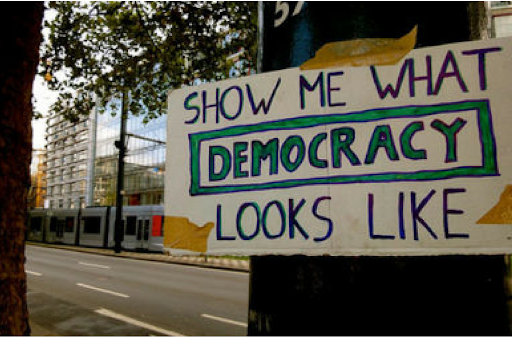
Photo Credit: PACE

The domain of comparative studies of democratization is not uniform. Therefore, Jan Teorell comments in his book that neither the structural, strategic nor social forces tradition have succeeded in stating a generally acceptable theory or definition of democratization (Teorell 2010).

Photo by Jørgen Håland on Unsplash

Seymour Martin Lipset defines democracy as political system consisting of constitutional opportunities and social mechanism to enable the largest possible population to influence major decisions by choosing among contenders for political office (Lispet 1981). Seymour Lipset suggests that positive linear relationship between level of socioeconomic development and development of democracy (Lipset 1959; Arat 1988; Sahoo 2013).


Photo by George Pagan III on Unsplash
Photo by Maria Oswalt on Unsplash

Przeworski, along with other scholars, defines democracy as a regime in which some government offices are filled as consequence of contested elections (Alvarez et al 1996).

To explain Przeworski’s definition on democracy, Professor Teorell opines that Przeworski defines democracy as a regime in which those who govern are selected through contested elections and where ‘contested’ means the presence of an opposition that has some chance of winning ‘office’ (Teorell 2010).
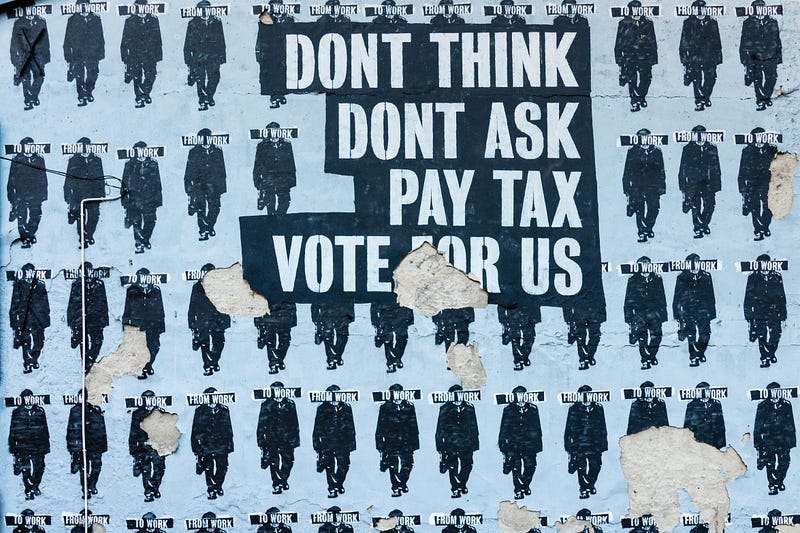
Photo by Paweł Czerwiński on Unsplash

Juan J Linz, contrary to Lipset, dissents to consider economic approach to identify classes of regimes (Linz 2000). To support this, Professor Linz argues that such economic approach does not consider importance of institutions and political legitimacy (Linz 2000).

Juan J Linz in the book Totalitarian and Authoritarian Regimes (2000), provides specific categorized features of non-democratic regimes (Linz 2000) and theses are: absence of multiparty election; civil society subject to surveillance and control; state-controlled media; weak rule of law (i.e., judiciary and courts not independent); and restrictions on civil and political rights. (Linz 2000; Levitsky & Way 2002).

In non-democratic regime, such features create uneven playing field between incumbent government and opposition (Levitsky & Way 2002).

Photo Credit: Center for Cartoon Studies

Pippa Norris explains the theory of Lipset in illustrative way that:

‘development’ consolidates democracy by spreading the levels of literacy, schooling, media access, broadening the middle classes, reducing the extremes of poverty, facilitating the intermediary organization (i.e, labor unions or trade unions), and promoting values of legitimacy and social tolerance (Norris 2008).
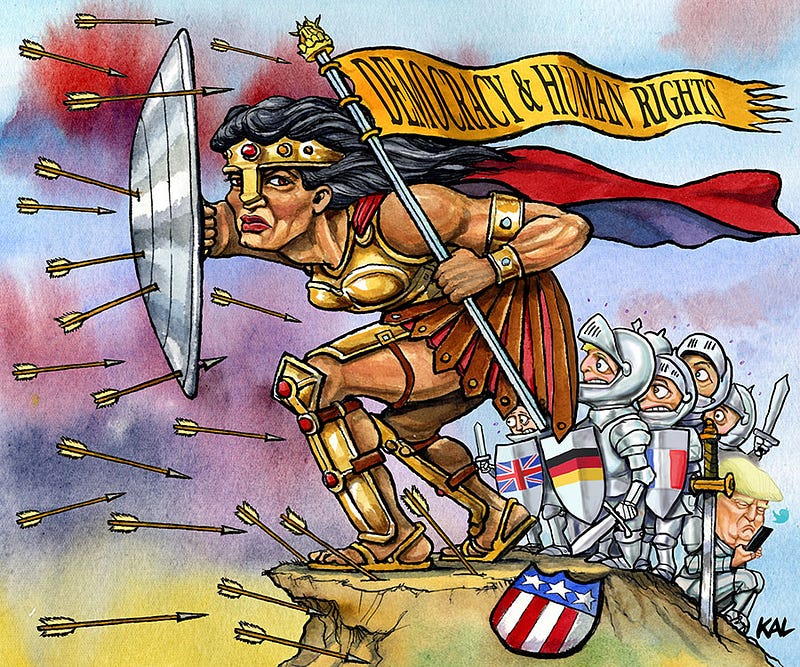
Photo Credit: Freedom House

Dankwart Rustow criticizes the theory of Lipset in the sense that Lipset neglects the ‘genetic question of how does democracy come into being’ (Rustow 1970; Teorell 2010).

Rustow suggests three phases of democratization for a country to proceed from authoritarian to democratic rule (Rustow 1970; Huntington 1984; Teorell 2010). The first one is stable and strong economic and social background (Rustow 1970) which Rustow explains as urban residence, higher per capita income and higher literacy (Rustow 1970). The second phase is consensus and participate attitude (civic attitude) among citizens (Rustow 1970). Existence of civic culture is essential for participant democracy (Almond and Verba, 1963). Rustow in his paper comments that to refer ‘civic culture’ of democracy, Almond and Verba points traditional and parochial attitudes along with willingness attitude to participate (Rustow 1970; Almond & Verba 1963). The third one is association of social and political structures (Rustow 1970). Referring the arguments of Robert Dahl and Herbert McClosky, Rustow comments that such association ensures commitment to democratic values and as a result, fulfills the requirement of stable democracy (Rustow 1970).

Photo by DESIGNECOLOGIST on Unsplash

However, democracy is not a ‘one-way ladder’ that countries would climb as their economic and social structure develop (Arat 1988). Przeworski and Limongi make comprehensive efforts to analyze the relation between economic development and regime change. They try to analyze the transition from dictatorship to democracy (Przeworski and Limongi 1997). In brief, they disjoint the relation between economic development and democracy.

Photo by Jonny Caspari on Unsplash

Przeworski and Limongi explain against the arguments of Lipset quite systematically. They argue that both democracy and dictatorship may survive the rapid economic growth. However, challenges appear when there is economic crisis. The poor democracies are extremely fragile in the face of economic crises. Their argument tries to explain that construction of democracy does not depend upon condition on development; also, it is pertinent to mention here that democratization is not by-product of economic achievements. They suggest that democratization can be initiated at any level of development (Przeworski & Limongi 1997).

Photo by Markus Spiske on Unsplash

Lipset suggests that democracy is related to the status of economic development (Lipset 1959). Regarding the level of development and democracy and argument to Lipset, Przeworski and Limongi argue that- there is no basis to believe that economic development breeds democracy. Their data analysis (from 1955 to 1990) reveals that correlation between democracy and per capita income rise becomes weak when per capita income rise reach at a certain level or ‘threshold point’ (Przeworski and Limongi 1997). To Przeworski and Limongi, dictatorship becomes more stable and chances of democracy becomes weak when the per capita income reaches at that certain point (Przeworski & Limongi 1997).

It pertinent to mention here that Lipset’s systematic research on democracy are done long before the third wave of democratization. So, many dynamic democratic developments of post-1990s countries of Asia and Africa region are left without any analysis of Lipset (Norris 2008).

Jan Teorell also contradicts with Lipset’s theory about democracy. However, he agrees in his book that socioeconomic development play role during democratization process (in 1980's), but that conclusion is only limited in the sense that the socioeconomic modernization prevents the democratization process from sliding back to autocracy (Teorell 2010).

Photo by JoelValve on Unsplash

Democratization does not occur automatically. It requires someone to take action to launch a movement to install and protect democratic institutions (Teorell 2010). Teorell in his empirical investigation, finds that economic crises, peaceful demonstrations are robustly related to positive increases in the level of democracy (upturn) (Teorell 2010).

If we would sift through the situations (of democracy) in Middle East, North Africa, Hong Kong, Venezuela, Thailand, Iran and the Philippines — many of us would definitely be veered from the side of Przeworski, Limongi and Jan Teorell. Definitely, after a close observation on the status of democracy of those states, we can’t just give consent to the theory that democratization is by-product of economic achievements.

Important:

This write up aims to provide concise outline to civil society & democracy for Readers. It hopes that Readers might get inspiration from here to pursue the discussed issues in greater depth.

It is recommended that the Readers have correct understanding of the referred literature (see the Reading List mentioned below) under discussion. A prior reading of the papers under review would enable enthusiastic Readers to get a fair and reasonable evaluation of this write up.

Reading List

Photo by Priscilla Du Preez on Unsplash

Almond, Gabriel, and Sydney Verba. 1963. The Civic Culture. Princeton University Press.

Alvarez, Michael, Jose Cheibub, Fernando Limongi, and Adam Przeworski. 1996. “Classifying Political Regimes.” Studies in Comparative International Development 31 (2): 1–37.

Arat, Zehra F. 1988. “Democracy and Economic Development: Modernization Theory Revisited.” Comparative Politics 21 (1): 21–36.

Levitsky, Steven, and Lucan A Way. 2002. “The Rise of Competitive Authoritarianism.” Journal of Democracy 13 (2): 51–65.

Linz, Juan. 2000. Totalitarian and Authoritarian Regimes. Lynne Rienner Publishers.

Lipset, Seymour Martin. 1981. Political Man: The Social Bases of Politics. Johns Hopkins University Press.

Norris, Pippa. 2008. “Wealth and Democracy.” In Driving Democracy: Do Power-Sharing Institutions Work? Cambridge University Press.

Przeworski, Adam, Michael Alvarez, Jose Antonio Cheibub, and Fernando Limongi. 1996. “What Makes Democracies Endure.” Journal of Democracy 7 (1): 39–49.

Przeworski, Adam, and Fernando Limongi. 1997. “Modernization Theory and Facts.” World Politics 49 (2): 155–83.

Rustow, Dankwart A. 1970. “Transitions to Democracy: Toward a Dynamic Model.” Comparative Politics 2 (3): 337–63.

Sahoo, Sarbeswar. 2013. Civil Society and Democratization in India: Institution, Ideologies and Interests. Routledge.

Teorell, Jan. 2010. Determinants of Democratization: Explaining Regime Change in the World, 1972–2006. Cambridge University Press.

Photo by Caleb Fisher on Unsplash
Politics
Democracy
Philosophy
Election 2020
Donald Trump
Recommended from ReadMedium