
IGNORE NAYSAYERS
Queen Stole the Show at Live Aid Due to Their Sound Engineer’s Gutsy Action
Why it’s important to trust your expertise and how sometimes your most important job is to help someone else shine
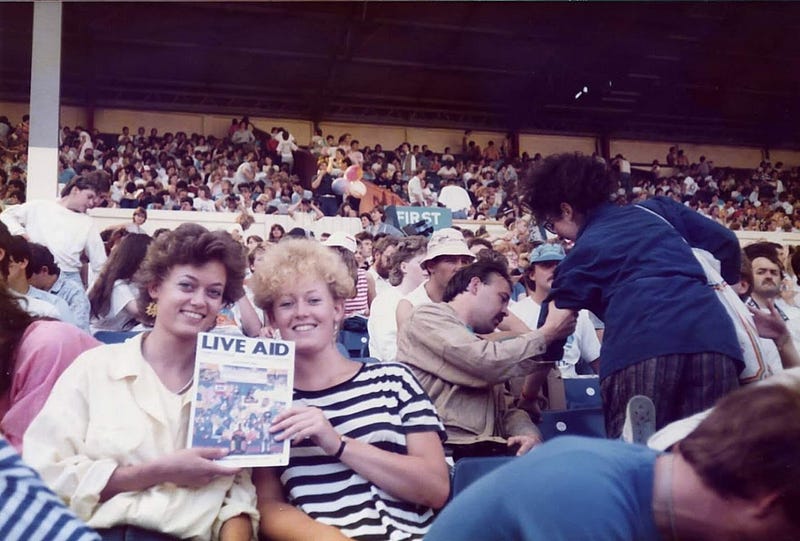
Attending the Live Aid concert will forever be one of the most memorable days of my life.
My sister, Jackie, had camped out all night on the street in Manchester to get us tickets. On July 13, 1985, together with over 72,000 excited spectators at Wembley Stadium and approximately 2 billion TV watchers — 40% of the world’s population at the time, we witnessed a piece of history unfold.
Live Aid was a benefit concert organized by Bob Geldof and Midge Ure in the wake of a horrific famine in Ethiopia. The lineup featured more than 75 acts, including Elton John, Queen, Madonna, Santana, Run DMC, Sade, Sting, Bryan Adams, the Beach Boys, Mick Jagger, David Bowie, Duran Duran, U2, the Who, Tom Petty, Neil Young and Eric Clapton. Despite the incredible atmosphere in the stadium, up until Queen’s performance, the sound quality of the music had been mediocre at best. There was no time for rehearsals, sound or lighting checks, and some of the performances were rough around the edges.
When Queen walked onto the stage, though, everything changed. Suddenly the volume was right, and the sound was balanced. Freddie took control of the stadium, and along with the rest of the crowd, we were mesmerized. Queen’s 21-minute set at Live Aid is still considered one of the most notable musical performances of all time. Freddie Mercury sang his heart out and rocked the world. If there had been a roof on Wembley Stadium that day, Queen would have blown it off.
Since that memorable day 33 years ago, one question bugged me. Why did Queen sound so much better than all of the other bands that performed before them that day? When I watched the movie Bohemian Rhapsody, I discovered the answer to my question. Just before Queen went on stage, their sound engineer, Trip Khalaf, went to look at the sound system. On the master mixing console, he saw strips of sticky tape on some of the faders that said, “DO NOT ADJUST” and “NO!”
Wembley Stadium is in the heart of London and has to abide by noise regulations. The Live Aid organizers had to agree the volume could not exceed a certain level.
Queen’s sound engineer, trusting his expertise, ripped off the labels and cranked up the faders. He did what he needed to do to ensure the best possible experience for two billion+ listeners.
The rest is history.
Live Aid was a life-changing highlight in my life. The concert raised $127 million for famine relief in Africa, and it showed me how music has the power to unite people of all ages, genders and cultures. I also learned that sometimes in life, you have to ignore the “NO!” stickers, the naysayers, the people who want to limit you and keep you down to their mediocre levels. You have to take a deep breath and go out there and perform.
And there are other times when, like Queen’s sound engineer, the most important job you need to do is help someone else shine.
Thanks for reading! For an email when I publish a new story, please subscribe here. You can find my story index here.