
Quantum Computing (1) — — Error Mitigation Algorithm

Are you ready for the arrival of the quantum computing era?
Recent Progress in Quantum Computing
Major players like IBM and Google are rapidly increasing the number of qubits in their quantum processors. IBM unveiled its 1,121-qubit processor, called Condor, in December of 2023.
Many of the world’s largest enterprises, including Boeing, BMW, and Goldman Sachs, are investing in quantum computing strategies. They are assessing processes that could bring business value when quantum computing is ready to handle the optimization of workflows, such as business processes and manufacturing design.
On July 12, 2023, the Google Quantum AI team demonstrated that qubits can be assembled into error-correcting ensembles that outperform the underlying physical qubits. This is a significant step towards building large-scale quantum computers that are robust to errors.
On August 30, 2023, researchers developed a new approach to building quantum repeaters, which are devices that can link quantum computers over long distances. This could pave the way for a future quantum internet.
On October 27, 2023, quantum physicists successfully demonstrated the control and manipulation of spin waves on a chip using superconductors for the first time. This could lead to new types of qubits that are more stable and less susceptible to errors.
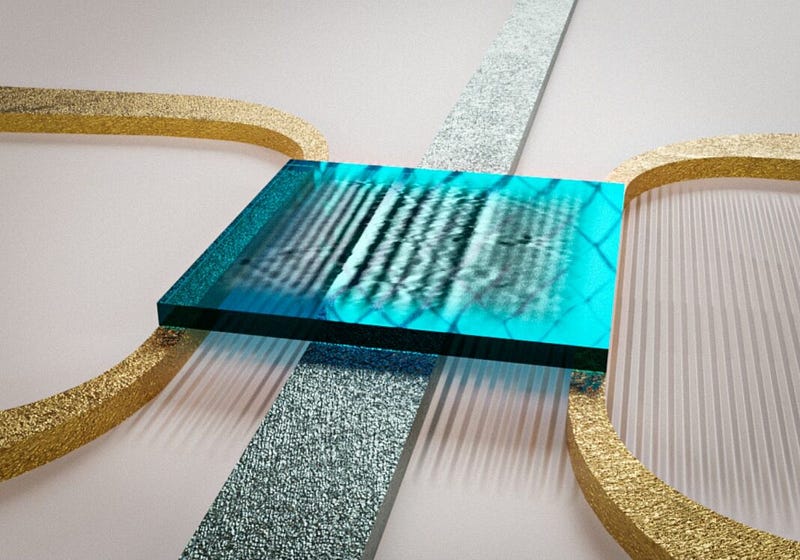
Researchers are making significant strides in improving qubit quality (e.g., in terms of coherence times and fidelity of qubits), which are crucial for reliable quantum computation. Various architectures for quantum computers (e.g., trapped ions, topological qubits, and photonic qubits) have been experimented.
Concepts of Quantum Computing
1. Qubits: Qubits are the fundamental unit of information in quantum computing. Unlike classical bits, which can only be 0 or 1, qubits can exist in a superposition of both states simultaneously. This is often represented mathematically by the state vector (or state wavefunction):
|ψ⟩ = α|0⟩ + β|1⟩
where:|ψ⟩ represents the state of the qubit; α and β are complex numbers, with |α|² + |β|² = 1; and |0⟩ and |1⟩ represent the basis states of the qubit, analogous to 0 and 1 in classical bits.
2. Superposition: Superposition can be visualized as a point on the Bloch sphere, where the poles represent |0⟩ and |1⟩, and any point on the sphere represents a superposition of both states.
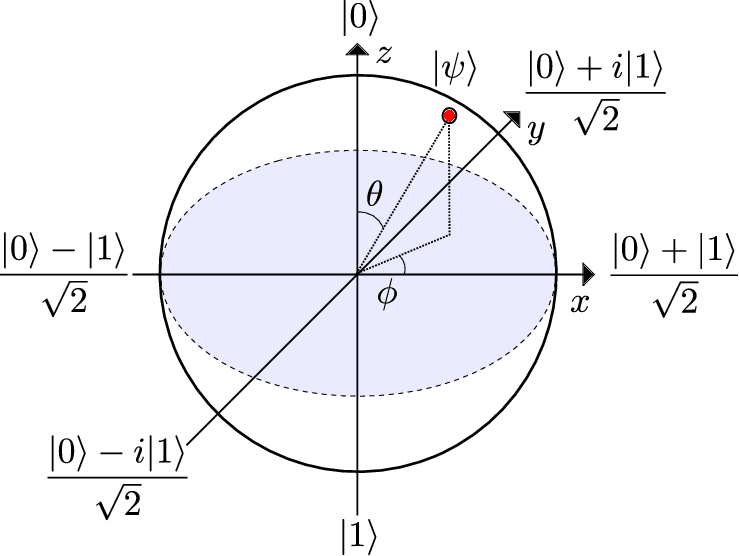
The probability of the qubit being in state |0⟩ or |1⟩ is determined by the absolute value of α and β, respectively.
3. Decoherence: Decoherence is the loss of quantum information due to interactions with the environment. When a qubit interacts with its surroundings, it loses its superposition and collapses into a single state. Decoherence is a major challenge for building large-scale quantum computers, as it can lead to errors and loss of information. Researchers are actively investigating ways to mitigate decoherence, such as using error correction techniques and building quantum computers in isolated environments. This article focuses on how such error mitigations can be achieved via quantum programming.
4. Entanglement: Entanglement is a phenomenon where two or more qubits are linked together in a way that their fates are intertwined. If you measure one qubit in an entangled pair, the other qubit instantaneously collapses into a state that is correlated with the first.
Entanglement is crucial for performing complex calculations in parallel, as it allows qubits to share information instantly. A separate article of the Quantum Programming series devoted to the discussion of quantum entanglement has been written and will be published soon. Mathematically, entanglement is described by a shared state vector for multiple qubits. For example, two entangled qubits can be represented as:
|ψ> = (α|00> + β|01> + γ|10> + δ|11>)
Where each term represents a possible state of the two qubits.
By exploiting superposition and entanglement, quantum computers can perform operations on multiple data points simultaneously. This parallelism allows them to tackle problems that are intractable for classical computers, such as factoring large numbers or simulating complex molecules. Imagine searching for a specific book in a library. A classical computer would have to search each book individually. A quantum computer, however, could search all the books simultaneously, using superposition and entanglement.
Quantum computing is a complex and rapidly evolving field. Understanding these basic principles is essential for appreciating the potential of this revolutionary technology.
Quantum Computing Mechanisms
Quantum computing mechanisms are quite different from that of classical computers. This is an evolving field. Listed below are a few established mechanisms, each with its own advantages and disadvantages.
1. Gate-based mechanism: This method uses a series of quantum gates to manipulate individual qubits. It is the most mature method, but it can be challenging to scale up to large numbers of qubits.
2. Adiabatic mechanism: This method slowly changes the Hamiltonian of the system until it reaches the desired solution state. It can be more efficient than gate-based quantum computation for certain problems but requires precise control over the system.
3. Quantum annealing mechanism: This is a type of adiabatic quantum computation designed explicitly for optimization problems. It has been shown to be effective for solving problems in various fields, such as finance, logistics, and scheduling.
4. Variational quantum eigensolver (VQE) mechanism: This method uses a classical computer to optimize the parameters of a quantum circuit. It is a versatile method that can be used for various problems but can be computationally expensive.
Quantum Programming
As the quantum computing mechanisms dictate, programming quantum computers requires a different mindset than programming classical computers. Here are some of the key challenges and considerations:
- Qubits are fragile: Quantum information is easily lost due to decoherence, so writing programs that are as short and efficient as possible is essential.
- Quantum operations are non-commutative: This means that the order in which quantum operations are applied can affect the program’s outcome.
- Quantum programs are often difficult to debug: This is because it can be difficult to determine the state of a quantum system during the execution of a program.
Remember: While these frameworks are valuable tools, it’s crucial to understand the limitations of current quantum computing technology and the challenges developers face. As the field evolves, we can expect advancements in error correction and improved solutions for dealing with the inherent complexities of quantum programming.
An Example of Quantum Programming
Below is a Cirq snippet for helping beginners understand how to put together a quantum program. It is meant to be a learning assistance. (Cirq is an open-source framework for programming quantum computers.)
Snippet for Error Mitigation in Quantum Computing:
# Import libraries
import cirq
import cirq.contrib.noise_models as nm

# Define circuit
qubits = cirq.LineQubit.range(2)
circuit = cirq.Circuit(cirq.H(qubits[0]), cirq.CNOT(qubits[0], qubits[1]), cirq.H(qubits[1]))

# Add noise model
noise_model = nm.DepolarizingNoiseModel(p=0.1)
noisy_circuit = cirq.CircuitOperation(circuit).with_noise(noise_model)

# Perform randomized benchmarking
rb = cirq.measure_error_bars(cirq.unitary(noisy_circuit))

# Print results
print("Error bars:", rb)
This snippet demonstrates randomized benchmarking, a technique for estimating the error rate of a noisy quantum circuit. Here is a line-by-line breakdown of the code:
- import cirq: Imports the Cirq library, providing access to quantum circuit operations, gates, and functionalities.
- import cirq.contrib.noise_models as nm: Imports the noise models library from Cirq, containing various models for simulating noise in quantum circuits.
- qubits = cirq.LineQubit.range(2): Defines a list of two qubits using the LineQubit class, representing the quantum bits that will be manipulated in the circuit. cirq.LineQubit.range(n): Creates a list of n LineQubit objects.
- circuit = cirq.Circuit(cirq.H(qubits[0]), cirq.CNOT(qubits[0], qubits[1]), cirq.Circuit(operations): Creates a quantum circuit object and adds the following 3 specified operations. (1) cirq.H(qubits[0]): Applies the Hadamard gate operation to the specified qubit. (2) cirq.CNOT(qubits[0], qubits[1]): This operation is in the form of cirq.CNOT(control_qubit, target_qubit). It applies the CNOT gate operation on the target qubit controlled by the control qubit. (3) cirq.H(qubits[1]): Applies another Hadamard gate operation to the specified qubit.
- noise_model = nm.DepolarizingNoiseModel(p=0.1): Creates a DepolarizingNoiseModel object named noise_model with a depolarization probability of p=0.1. This model simulates random errors that can occur during the execution of the circuit on actual hardware.
- noisy_circuit = cirq.CircuitOperation(circuit).with_noise(noise_model): Wraps a quantum circuit in a CircuitOperation object and adds the noise_model to it, effectively creating a noisy version of the original circuit.
- rb = cirq.measure_error_bars(cirq.unitary(noisy_circuit)): The cirq.unitary(noisy_circuit) computes the unitary matrix representation of a quantum circuit. Then, the measure_error_bars function from Cirq estimates the error rate of the noisy quantum circuit by performing randomized benchmarking with a specified number of repetitions. This function calculates the average fidelity between the expected and actual outputs of the circuit under the influence of noise.
- print(“Error bars:”, rb): Prints the calculated error bars, providing a quantitative measure of the circuit’s performance under noisy conditions.
This snippet demonstrates how Cirq can be used to simulate noise in quantum circuits and estimate their error rates, facilitating the development and optimization of robust quantum algorithms.
Why Error Mitigation is Essential
1. Quantum Computation is Prone to Errors
Unlike traditional computers that operate on bits (0 or 1), quantum computers utilize qubits, which can exist in a superposition of both states simultaneously. This superposition, along with entanglement, allows for powerful parallel processing. However, this very nature of quantum systems makes them incredibly sensitive to noise and decoherence.
Here are some key factors contributing to the susceptibility of errors in quantum computation:
- Decoherence: Quantum information is fragile and easily interacts with its environment. This interaction can cause the superposition and entanglement to collapse, leading to errors in the computation.
- Gate errors: Quantum gates are operations performed on qubits to manipulate the quantum state. However, these gates are imperfect and can introduce errors due to limitations in control technology and imperfections in the qubits themselves.
- Measurement errors: Measuring the state of a qubit destroys the superposition and entanglement, and the measurement process itself can be noisy and inaccurate.
These factors can lead to significant errors in large-scale quantum computation, rendering the results unreliable and unusable.
2. Significance of Error Correction for Large-Scale Quantum Computation
Building a large-scale quantum computer capable of solving real-world problems requires maintaining accurate quantum information throughout the computation process. However, as the number of qubits increases, the rate of errors also increases exponentially. This makes error correction an indispensable component of any viable large-scale quantum computer.
Without effective error correction, errors would accumulate, leading to completely inaccurate results. Imagine trying to build a skyscraper with individual bricks that constantly shift and change shape. The structure would become unstable and collapse before reaching any significant height. Similarly, a quantum computer without error correction would be incapable of performing complex calculations due to the overwhelming noise and errors.
3. Addressing Error Correction with Quantum Programming
Surface codes are a powerful family of error correction codes specifically designed for quantum computation. They encode a single logical qubit, the information unit used in quantum algorithms, across multiple physical qubits. This allows for detecting and correcting errors before they significantly impact the computation. The snippet given above is a simple illustration of how a surface code would work.
The effectiveness of surface codes relies on stabilizers, which are operators that leave the encoded information unchanged. By monitoring the stabilizers, we can identify and locate errors in the system and then apply correction operations to restore the correct state.
Here’s a visual representation of a surface code:
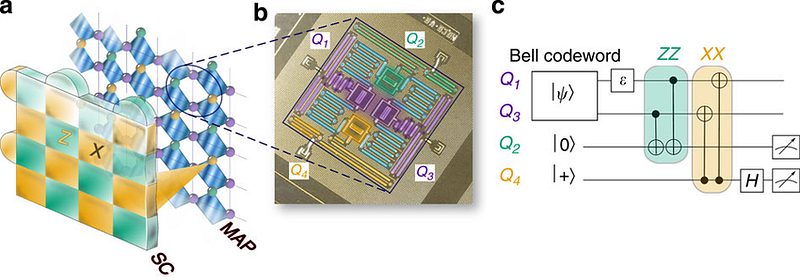
In this diagram, the blue squares represent physical qubits, while the red circles represent stabilizers. The logical qubit is encoded across the entire network of qubits and stabilizers.
While surface codes offer a promising solution for error correction, they also come with challenges. For instance, (1) Encoding a single logical qubit requires a large number of physical qubits, leading to increased complexity and resource overheads. (2) While effective against certain types of errors, surface codes may have limited fault tolerance and be vulnerable to specific error patterns. (3) Implementing surface codes requires complex control and measurement techniques, which pose significant technical hurdles.
Despite these challenges, research and development in surface codes are progressing, and they remain one of the most promising approaches for realizing large-scale fault-tolerant quantum computation.
Generally speaking, error correction is an essential component for achieving large-scale quantum computation. Without it, the susceptibility of quantum information to noise and errors would render the technology impractical for real-world applications. Surface codes offer a powerful and promising approach to address this challenge, and ongoing research and development are paving the way for a future where large-scale quantum computers can unlock the immense potential of quantum technology.
Testing a Cirq Snippet on a Classical Computer
Cirq offers a powerful simulation engine that can simulate the behavior of quantum circuits on a classical computer. This allows developers to test and debug their code without requiring expensive quantum hardware.
Error estimation and analysis, e.g., randomized benchmarking, as shown in the above snippet, can be used to estimate the error rate of a circuit even on a classical computer. This provides valuable insights into the potential performance of the circuit on real hardware.
Cirq tools like circuit optimization and visualization can be used to analyze and improve the efficiency and correctness of circuits, regardless of the specific hardware or computation method.
Cirq operations and functionalities are designed to be generic and not tied to a specific hardware platform or computation method. This allows developers to write code that can be tested and debugged on classical computers and then adapted to different quantum hardware configurations.
However, there are limitations. While simulation can provide valuable information, it cannot fully capture the complexities of real quantum hardware. Some aspects, like noise and decoherence, can only be accurately assessed on actual quantum devices. While the basic functionalities of Cirq are generic, some optimization techniques might be specific to certain hardware or computation methods. For example, gate-based optimization algorithms might not be directly applicable to adiabatic quantum computation.
Overall, testing and debugging Cirq snippets on classical computers is highly recommended before deploying them on quantum hardware. This saves valuable resources and allows for efficient development and troubleshooting of quantum algorithms.
Remember, as the field of quantum computing matures, we can expect even more sophisticated simulation tools and methodologies to bridge the gap between classical and quantum computation.
Allow me to take this opportunity to thank you for being here! I would be unable to do what I do without people like you who follow along and take that leap of faith to read my postings.
If you like my content, please (1) leave me a few claps and (2) press the “Follow” button below my photo. I can also be contacted on LinkedIn and Facebook.
Brain-Computer Interfaces: The Next Frontier in Human Technology | Generative AI (medium.com)
Attention Mechanisms in Transformers | Artificial Corner (medium.com)
How an AI Model Acquires Its Writing Capability? | Artificial Corner (medium.com)

This story is published on Generative AI. Connect with us on LinkedIn and follow Zeniteq to stay in the loop with the latest AI stories. Let’s shape the future of AI together!
