
Quantum Computers Explained
The Quantum Leap: Revolutionizing Computing and Beyond
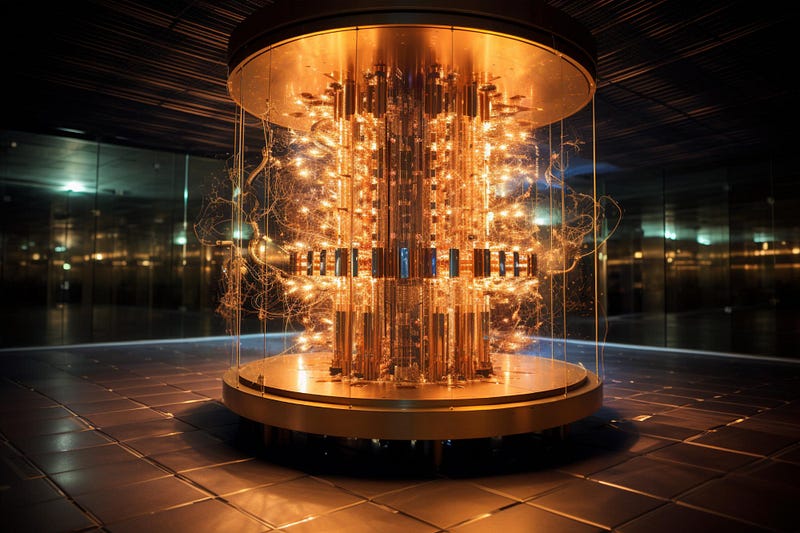
Imagine stepping into a world where computers are no longer bound by the limitations of classical computing, where machines can solve complex problems that were once thought impossible, and where the very fabric of reality is harnessed to transform technology as we know it. Welcome to the world of quantum computing, a realm that is set to revolutionize not only the way we compute but also how we understand the universe itself.
Also, to read:
What is a Quantum Computer?
“Bits! Qubits!” If these words sound like gibberish to you, fear not; you’re not alone. Quantum computers, often touted as the future of computing, are shrouded in an enigmatic aura. Let’s demystify them.
At first glance, a quantum computer might appear much like your ordinary computer. Quantum computers, often misunderstood as just bigger, faster versions of classical computers, are, in fact, something entirely different.
However, beneath its unassuming exterior lies a complex web of qubits, the building blocks of quantum computation.
They operate on the principles of quantum physics, featuring qubits as their building blocks. Unlike classical bits, which can only represent 0 or 1, qubits exist in a superposition of states, a feature that forms the core of quantum computing’s incredible power. It’s like juggling multiple balls at once, with each ball representing a different possibility.
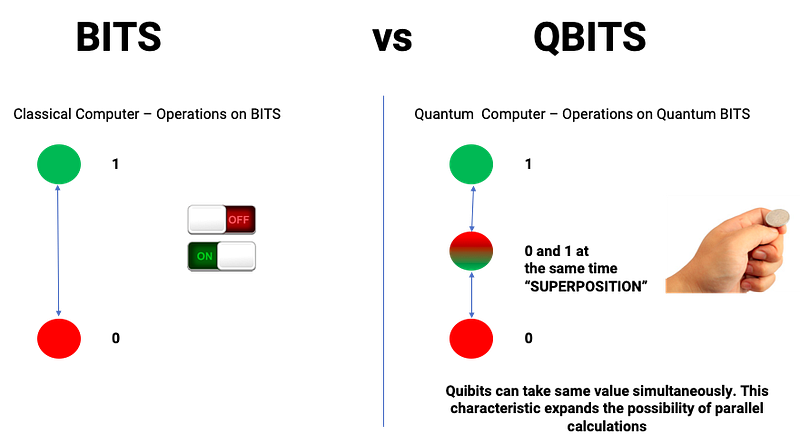
These qubits work in harmony, performing quantum operations that classical computers can only dream of. They’re not just faster cars on the computing highway; they are boats, built to navigate uncharted waters, solving problems and unlocking new realms of discovery.
Why is Quantum Computing so Important?
In a world brimming with technological advances, quantum computing stands out as a beacon of hope. But what makes it so crucial?
Traditionally, our understanding of technology’s evolution was straightforward. New generations of computers meant faster processors and more storage capacity. However, quantum computing defies these conventional expectations. It’s not just about bigger, faster versions of the machines we’ve grown accustomed to; it’s about something entirely different.
In the realm of quantum computing, we find the potential to solve problems that are deemed impossible for classical computers. It’s not just about speed; it’s about redefining the map of our technological possibilities. From simulating the complex world of nature to revolutionizing encryption, quantum computers are here to shake things up.
Simulating Nature — The Quantum Advantage The beauty of it all is that nature itself is governed by quantum physics, but we seldom see it at work in our daily lives. At the molecular level, atoms and molecules follow the laws of quantum mechanics, and predicting their behavior accurately has long been a challenge for classical computers.
While we might not perceive it in our everyday lives, at the molecular and atomic levels, everything follows the laws of quantum physics.
Nature, at its core, adheres to quantum physics, so one of the most exciting applications of quantum computing lies in simulating the natural world, by predicting what a material or atom will do at a certain scale becomes a daunting task, like predicting the behavior of molecules to design advanced materials and medicines, quantum computers offer unprecedented capabilities.
Quantum computers really change the game. With their unique ability to handle quantum states, they can unlock the secrets of molecular interactions, paving the way for groundbreaking discoveries in materials science, physics, and beyond.
Quantum computing’s potential extends to the development of battery technology, the creation of new materials, and the understanding of long molecular chains. It unlocks possibilities that were previously out of reach, redefining the boundaries of science and innovation.
The Quantum Video Game Analogy
To comprehend the significance of quantum computing, we’ve come up with an analogy that simplifies the complexity. Imagine being in a video game where your ability to navigate the map depends on your math skills.
At first, we had no computers, making tasks like geometry and astronomy painfully time-consuming.
You can picture this as using pencil and paper to traverse the mathematical landscape — slow and with many areas left unexplored due to computational limitations. The analogy evolves as we introduce early computers. They allowed us to input larger datasets and solve problems that were previously insurmountable.
Instead of walking, we could now ride horses It was a significant advancement, facilitating quicker access to previously unreachable areas. Over time, computers improved, enabling us to solve more complex mathematical problems. Our virtual map transformed, with the addition of roads and cars, as we reached areas previously considered inaccessible.
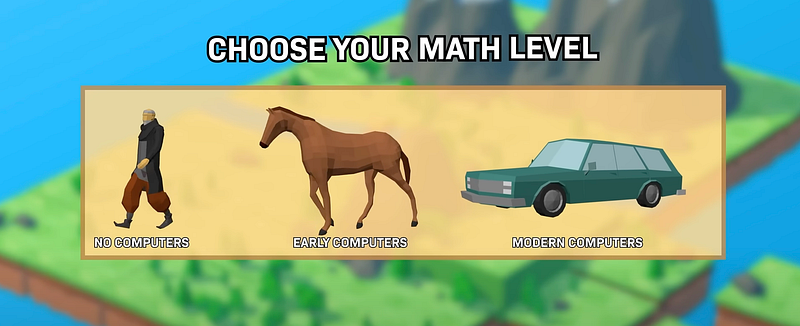
However, quantum computers are not just faster cars. They are akin to boats, designed for entirely different terrain. While classical computers are like cars, efficient for various tasks, quantum computers navigate entirely new mathematical waters. They excel at solving problems and discovering areas that classical computers cannot fathom. It’s a journey that has only just begun, with no apparent limits in sight.
What does a Quantum Computer look like?
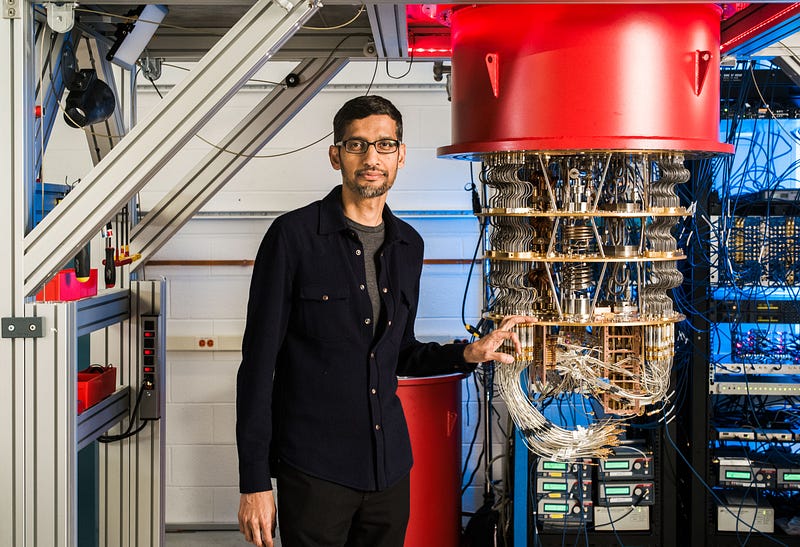
Now, let’s satisfy your curiosity about what a quantum computer actually looks like. These extraordinary machines may not be what you envision.
Contrary to what we might expect, quantum computers look much like ordinary computers on the outside.
However, Quantum computers aren’t just supercharged versions of conventional PCs; they are something fundamentally distinct. Within resides a complex network of cooling systems, all designed to maintain temperatures colder than outer space. These conditions are essential for quantum operations to function effectively.
Quantum Supremacy — Breaking the Unbreakable
While the idea of quantum computers breaking all internet encryption might sound like something out of a sci-fi movie, it’s a real concern in the world of cybersecurity. The reason behind the anxiety? Shor’s Algorithm.
This algorithm, named after the brilliant Peter Shor, has the potential to unravel RSA encryption, the backbone of secure online transactions.
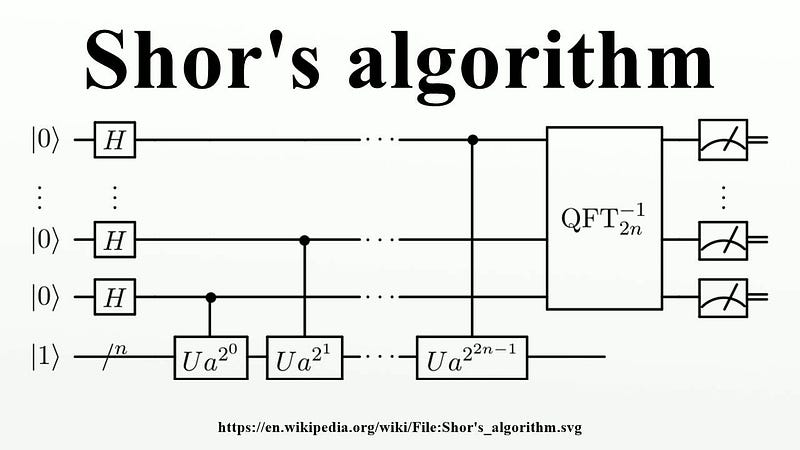
Classical computers would take billions of years to crack RSA encryption, but a quantum computer could do it in mere hours. The implications are profound, as our digital security infrastructure relies heavily on RSA encryption.
However, the reality is not quite so dire. We’re still in the early stages of quantum computing, with a mere 433 qubits being the current record. To break RSA encryption, we’d need millions of qubits, a milestone we’re working toward but haven’t reached yet.
So, while we’re not on the brink of quantum computers breaking all encryption just yet, it’s on the horizon, and the race is on to develop quantum-resistant encryption methods.
The Quantum Future — Infinite Possibilities
Quantum computers are not simply faster cars on a well-known road; they’re like boats exploring uncharted waters. They manipulate qubits, which are not limited to being just 0s or 1s but can exist in complex states.
Quantum computers use probabilities of multiple qubits interacting, akin to waves on a pond, to find the most likely answer.
Classical computers, based on bits, can’t effectively navigate the quantum world. They’re excellent at addition but struggle with finding structure in vast amounts of data. This is where quantum computers shine. They excel at tasks like simulating nature on a molecular scale, helping us design materials, medicines, and molecules with remarkable precision.
So, what lies ahead in the world of quantum computing? A limitless ocean of possibilities. Quantum computing technology is advancing at a breathtaking pace, and we’re only scratching the surface of what’s achievable.
In the next five years, we could see the gradual adoption of quantum-safe encryption algorithms, making online transactions more secure against potential quantum threats. But that’s just the beginning. The applications of quantum computing are virtually boundless. From optimizing supply chains to revolutionizing drug discovery, quantum computers promise to transform industries across the board.
Conclusion
The quantum revolution is upon us, and the future of computing is quantum. These extraordinary machines, with their qubits, quantum states, and limitless potential, are poised to change the way we understand and interact with technology.
As we journey through the uncharted waters of quantum computing, we must keep in mind that the quantum future is a promise of progress and discovery. It’s a future where our understanding of the world deepens, our problems become solvable, and the impossible becomes possible.
The quantum leap is not just about the evolution of computers; it’s about the evolution of human knowledge and the infinite possibilities that lie ahead. So, stay tuned, because the quantum revolution is just beginning, and it’s an exhilarating journey to be a part of.


