avatarKingsley Asuamah

Free AI web copilot to create summaries, insights and extended knowledge, download it at here

2243

Abstract

immersive experience but also acutely aware of the glitches that disrupted the gameplay. That’s when I realized the importance of QA in the Metaverse.</p><p id="b3f0">As I said before, testing in the Metaverse is unlike any other form of software testing. It’s not just about finding bugs; it’s about ensuring an immersive and enjoyable user experience.</p><p id="75e2">Imagine testing a virtual concert. You’re not just checking if the audio works or if the avatars render correctly. You’re checking if the crowd’s cheers give you goosebumps, if the lights create the right mood, if the performance gives you a sense of awe. You’re testing for emotion, for feeling, for fun.</p><figure id="617e"><img src="https://cdn-images-1.readmedium.com/v2/resize:fit:800/1*-wgjgjeH2JQOb4qYeAKZwQ.jpeg"><figcaption><b>People using VR headsets and smart glasses. Image generated by the author using DALL·E 3</b></figcaption></figure><p id="5af8">I recall a project where I was testing a virtual art gallery. I spent hours walking through the virtual space, inspecting each artwork, and interacting with the exhibits. I wasn’t just looking for bugs; I was experiencing art in a whole new way.</p><p id="fa53">But it’s not all fun and games. Testing in the Metaverse comes with its own very unique set of challenges.</p><p id="ca1f">The sheer scale of the Metaverse makes exhaustive testing nearly impossible. The number of possible interactions in a virtual world is astronomical. How do you ensure every interaction results in the expected outcome? How do you quantify immersiveness?</p><p id="6789">Then there’s the issue of hardware. Different users will have different VR/AR setups. How do you ensure a consistent experience across different devices?</p><p id="0c73">Despite these challenges, I believe in the potential of the Metaverse. I’ve seen firsthand how it can transform experiences, create communities, and even change lives.</p><p id="c089">As QA engineers, we have a crucial role to play in shaping this new technology. We’re not just testers; we’re explorers, charting the unknown, ensuring that these new worlds are not just functional, but also immersively fun.</p><figure id="527b"><img src="https://cdn-images-1.readmedium.com/v2/resize

Options

:fit:800/1*0zuz1KjUhqEnfW71Qz0l0A.jpeg"><figcaption><b>People attending a virtual concert. Image generated by the author using DALL·E 3</b></figcaption></figure><div id="2543" class="link-block"> <a href="https://readmedium.com/why-your-next-ceo-should-be-a-qa-tester-yes-you-read-that-right-c7c5088d52b9"> <div> <div> <h2>Why Your Next CEO Should Be a QA Tester (Yes, You Read That Right)</h2> <div><h3>The tech world is ripe for a leadership shakeup</h3></div> <div><p>medium.com</p></div> </div> <div> <div style="background-image: url(https://miro.readmedium.com/v2/resize:fit:320/1*ylN-1kXjhDaVykscBF0yuQ.jpeg)"></div> </div> </div> </a> </div><div id="3261" class="link-block"> <a href="https://readmedium.com/is-agile-killing-quality-a-qa-testers-perspective-on-the-speed-vs-thoroughness-debate-fac46351a688"> <div> <div> <h2>Is “Agile” Killing Quality? A QA Tester’s Perspective on the Speed vs. Thoroughness Debate</h2> <div><h3>The software development industry’s love affair with “Agile” is undeniable. Faster releases, increased flexibility…</h3></div> <div><p>medium.com</p></div> </div> <div> <div style="background-image: url(https://miro.readmedium.com/v2/resize:fit:320/1*12sFe6jIxDqVpZHQKkrYjQ.jpeg)"></div> </div> </div> </a> </div><div id="d9b2" class="link-block"> <a href="https://readmedium.com/are-testers-becoming-obsolete-in-the-age-of-ai-d582fd040f89"> <div> <div> <h2>Are Testers Becoming Obsolete in the Age of AI?</h2> <div><h3>Do we really need a human touch in the age of machines?</h3></div> <div><p>medium.com</p></div> </div> <div> <div style="background-image: url(https://miro.readmedium.com/v2/resize:fit:320/1*CZEM8DgyokQgfUsL1u6ivw.jpeg)"></div> </div> </div> </a> </div></article></body>

QA in the Metaverse — Testing Virtual Worlds for Functionality and Fun

The Challenges and opportunities of traditional software QA testing in the Metaverse
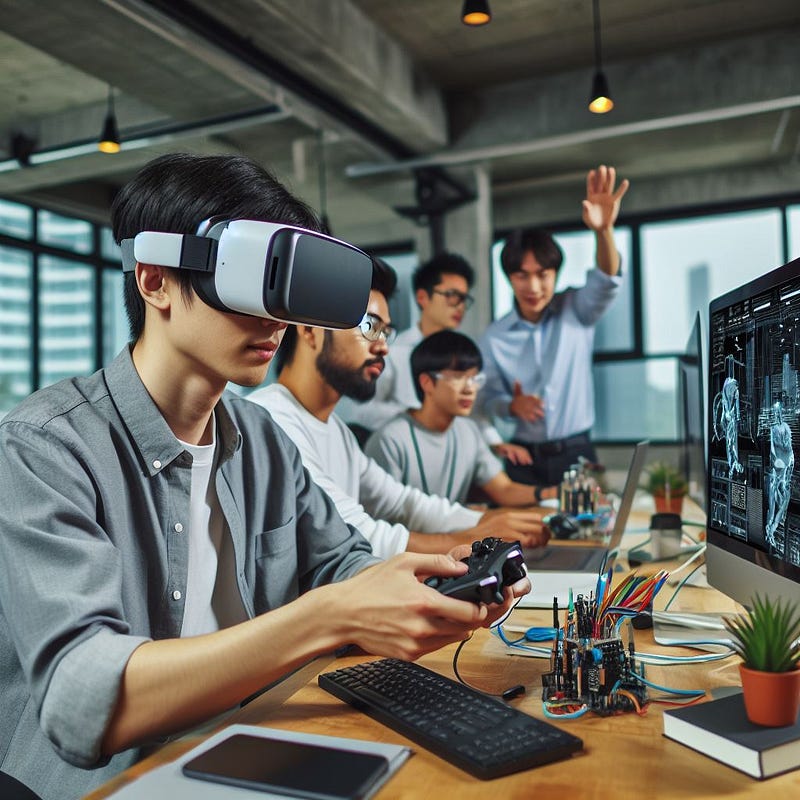
A diverse group of software QA engineers collaborating in a workspace, with one person wearing a VR headset and testing a virtual world on a screen. Image generated by the author using DALL·E 3

As a seasoned Software QA Engineer, I’ve seen technology evolve in ways that were once only imagined in science fiction. Today, there is a new technology shaping how we live, work and have fun: the Metaverse.

The Metaverse, a collective virtual shared space created by the convergence of physical and virtual reality, is no longer a concept confined to the pages of a Neal Stephenson novel. It’s here, and it’s growing, fueled by advancements in virtual reality (VR) and augmented reality (AR).

For years, I’ve honed my skills in the trenches of traditional software QA, ensuring the smooth operation of applications. Now, the world is shifting, and the platform has become the expansive, fantastical virtual world of the Metaverse.

Testing video games has always been more than just identifying bugs. It’s also ensuring a seamless experience, one that keeps players engaged and coming back for more.

Now, with the rise of the metaverse — a persistent, interconnected network of virtual worlds — the stakes are even higher. We’re not just testing games anymore; we’re testing the future.

Here, the lines between reality and virtuality blur, and the testing challenges are unlike anything we’ve encountered before.

But with new technologies come new challenges. So how do we ensure these virtual worlds function as intended? How do we test for immersive fun?

I remember my first encounter with VR. I was at a tech conference, and there was a booth showcasing a VR game. I put on the headset, and suddenly, I was transported to a different world. I was in awe of the immersive experience but also acutely aware of the glitches that disrupted the gameplay. That’s when I realized the importance of QA in the Metaverse.

As I said before, testing in the Metaverse is unlike any other form of software testing. It’s not just about finding bugs; it’s about ensuring an immersive and enjoyable user experience.

Imagine testing a virtual concert. You’re not just checking if the audio works or if the avatars render correctly. You’re checking if the crowd’s cheers give you goosebumps, if the lights create the right mood, if the performance gives you a sense of awe. You’re testing for emotion, for feeling, for fun.

People using VR headsets and smart glasses. Image generated by the author using DALL·E 3

I recall a project where I was testing a virtual art gallery. I spent hours walking through the virtual space, inspecting each artwork, and interacting with the exhibits. I wasn’t just looking for bugs; I was experiencing art in a whole new way.

But it’s not all fun and games. Testing in the Metaverse comes with its own very unique set of challenges.

The sheer scale of the Metaverse makes exhaustive testing nearly impossible. The number of possible interactions in a virtual world is astronomical. How do you ensure every interaction results in the expected outcome? How do you quantify immersiveness?

Then there’s the issue of hardware. Different users will have different VR/AR setups. How do you ensure a consistent experience across different devices?

Despite these challenges, I believe in the potential of the Metaverse. I’ve seen firsthand how it can transform experiences, create communities, and even change lives.

As QA engineers, we have a crucial role to play in shaping this new technology. We’re not just testers; we’re explorers, charting the unknown, ensuring that these new worlds are not just functional, but also immersively fun.

People attending a virtual concert. Image generated by the author using DALL·E 3
Technology
Artificial Intelligence
Programming
Software Development
Virtual Reality
Recommended from ReadMedium