
Q&A With the Authors of “The Forever Dog”
The longevity of our canine friends is the heart of this new book.
Health and wellness is a booming industry, supported by most consumers in one way or another. The newest part of this economy is a tide of products and research coming out of longevity technology. Many people take their investments in these areas very seriously. But there is little thought given by most as to how one important part of their families could benefit from the same research and technologies:
Our pets.
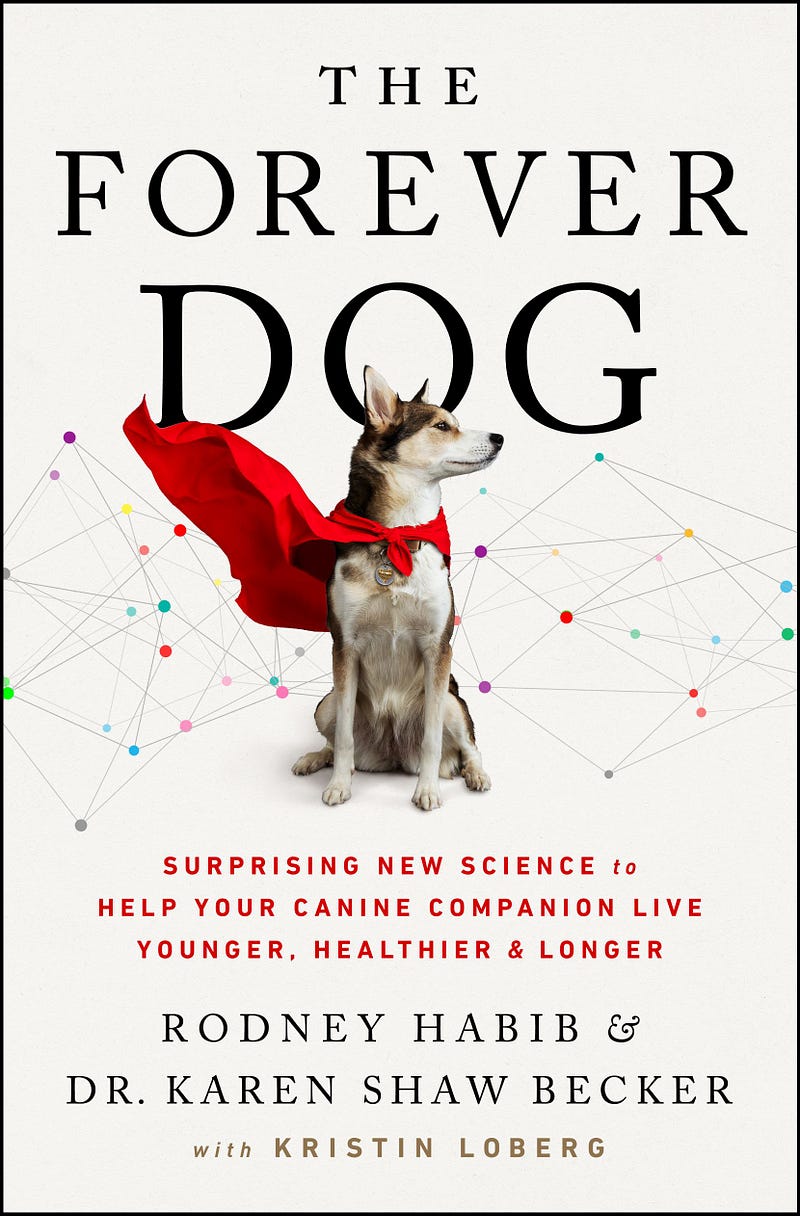
Specifically, the subject matter of a new book titled The Forever Dog are humanity’s canine companions of the last 40,000-odd years.
Our domesticated dogs have lived so closely with us for such a long time that many similarities can be found when examining their health and longevity trends alongside our own. Since the mid-20th century — just like humans — dogs have been displaying illnesses that parallel human afflictions in industrialized societies. Obesity, diabetes, autoimmune disorders, cancers and many other problems that have ticked up in developed nations have also ticked up in canines. Just as in humans, many of these are preventable conditions.
Our pets don’t have the benefit of understanding why they are sick and how our technology, nutritional understanding and medicines might help them, but WE do. Over 11 million households got a new pet during the pandemic, so far, so it’s more important than ever to make sure we do our best to protect them.
THE FOREVER DOG: Surprising New Science to Help Your Canine Companion Live Younger, Healthier, and Longer (Harper Wave, October 12, 2021, 978–0063002609) is by Dr. Karen Shaw Becker, the most followed veterinarian on social media, and Rodney Habib, one of the world’s most influential pet health leaders. The authors were gracious to offer their time to answer a few questions about the book, their work, and their advice:
What was the moment for each of you when you realized that the thinking about longevity of our canine companions had to change?

Dr. Becker: Creating optimal wellbeing for our animals is rooted in making excellent lifestyle choices on a day-to-day basis. When I opened my veterinary hospital in 1999, my clients relied on me to tell them what to do with no knowledge as to why (which poses a problem the other 354 days if you only see your wellness veterinarian once a year). I made it my goal in 2000 to educate and empower pet owners to become knowledgeable health advocates (aka “Longevity Junkies”) for their animals. Pets are up against daunting genetic and environmental health obstacles that every owner needs to know about; their only hope for maximal lifespan is having educated owners making wise decisions on their behalf. Our pets’ wellbeing literally rests in our hands…we have a duty to do our best for them by knowing enough now to not have regrets later.

Mr. Habib: I read an article in 2016 that changed my life. The “longevity and mortality in kennel club registered dog breeds in the UK” report showed what some news agencies called an “apocalyptic drop” in purebred dog longevity (an 11% drop in the median across all breeds, according to UK kennel club stats). There had to be some underlying reasons why…bad genetics…something in our environment? It also seems like every dog I meet has something going on…allergies, skin and ear issues, GI problems, kidney, liver, pancreas or heart problems. I decided to go on a search for the oldest dogs in the world in 2017, to find out if the outliers had anything in common.
What has been the most surprising finding for you in your research into canine nutrition?
Dr. Becker: I was saddened to learn that veterinarians are the last remaining group of healthcare professionals, worldwide, still recommending our patients eat only processed food. In fact, ultra-processed, all-in-one pellets (kibble) is still considered the “gold standard” in veterinary nutrition. Pediatricians, registered dieticians and human nutritionists all advocate reducing our family’s consumption of highly refined foods in favor of eating more real, whole, fresh foods. I’m frustrated that as a profession, only the wellness veterinary community is advocating pets eat healthier, less processed diets. Research shows adding even small amounts of real foods can decrease inflammatory markers in dogs, so replacing those empty calorie dog treats with blueberries or slices of carrots is an easy place to start.
One of the most compelling graphics in The Forever Dog is the chart showing breed lifespan differences based on body weight. This seems to correlate very closely with human lifespans versus body weight as well as many other mammals. What are some of the key factors pet owners can focus on to help keep their furry friends at their “goal weights”?
Mr. Habib: Most dogs don’t get enough exercise and fenced in back yards or a walk around the block won’t cut it, sorry! Even a walk around the block twice a day doesn’t compare to how much the oldest dogs in the world moved their bodies. The more your dog can exercise, the calmer she’ll be, the more feel-good “happy” hormones she’ll secrete, the better her joint and heart health will be, not to mention the calories she’ll burn. The other notable factor accounting for weight gain among our canine companions is the amount of carbs they’re consuming in dry dog food: carb-loading is one of the fastest ways to gain weight quickly. Dogs and cats don’t have a carb requirement. So, what’s the problem?
The average bag of dog food consists primarily of carbs. Unfortunately, you won’t find the amount of carbohydrates listed on your pet food bag, as you do with human foods, but you can easily calculate how many carbs are in your dog’s food: find the Guaranteed Analysis on the side of your dry dog food bag, then add the %protein + % fiber + % moisture + % fat + % ash (if listed), subtract this total from 100 and you will have the amount of carbs (aka starch/sugar) in your pet food. Ideally, keeping carbs less than 20% of your healthy dog’s diet is ideal for his metabolic machinery, with the bulk of his calories coming from lean meat-based protein and health fats. We’ll also mention it’s impossible to provide critical polyphenols, antioxidants, enzymes and phytonutrients from kibble or canned foods because these delicate compounds are destroyed during the high-heat processing, so lots of animals end up overfed (too many calories) but undernourished.
While you have both been keystones in bringing this scientific view of canine longevity into the public spotlight, where do you see some areas of opportunity remaining to improve general knowledge?
Mr. Habib: My interview with famed microbiologist Dr. Tim Spector was insightful because he highlighted the impact food choices make on our pets’ longevity, saying “Most dogs and cats are given processed food their whole lives. From my recent studies, I can’t think of anything worse for a microbiome than feeding high-starch, highly processed, non-diverse foods to any animal for sustained periods of time. This will reduce the number of microbial species in the gut, affect gene expression, and reduce the numbers of enzymes and metabolites. And that affects the immune system. The immune system is what stops allergies and cancers.” In essence, we’ve all been duped into believing “dog food” is all we need to feed our companions to achieve vibrant health. And because pet food companies directly advise against changing brands, people are left with profound food fears, so they don’t make any dietary improvements at all. I think the best opportunity to reduce apprehensions about making lifestyle changes, including diversifying your animal’s diet, is through education. In some cases, this means unlearning and re-learning newer, more up to date information.
When it comes to getting the latest longevity science that can directly benefit man and beast, the One Health Initiative has been beneficial for both species. One Health is a movement to forge research partnerships between physicians, veterinarians, and other scientific-health related disciplines, recognizing that the health of humans is intimately connected to the health of animals and our shared environment. In the case of dogs, they share our homes, beds and lifestyles, so the same environmental factors impacting our family pets may also be affecting our human family members and sharing this science benefits all of us.
What are some ways pet owners can maintain a better eye on their canines’ mental health?
Dr. Becker: We expect so much from our dogs. We often invite Canis lupis familiaris to live in our homes as family members but forget they’re a different species. We assume they understand our language, behaviors and what’s expected of them without doing our part in being consistent, trustworthy teachers and communicators. Behaviorists often say, “If you own a dog, you’re by default a dog trainer.” Some owners take this responsibility very seriously, making daily training sessions a priority, while others are reactive with dog training, waiting until their dog misbehaves then punishing unwanted behaviors. This approach damages your dog’s trust in you and can manifest anxiety and “behavior issues,” including fear aggression.
It’s our responsibility to establish respectful, effective, two-way communication (through ongoing science-based, fear-free training) the day we bring our dog home and continue working on our relationship with our dog for the rest of his life. If you need help in this area, visit the American Veterinary Society of Animal Behavior’s website (www.avsab.org). As with human kids, puppies benefit from a lot of mentally stimulating games, exercises and experiences that engage both their brains and bodies. Many dogs enjoy engaging in activities that resonate with their breed’s DNA (herding breeds enjoy herding activities, etc) and most dogs would love more opportunities to get outside and do something, anything with you. Planning regular activities that your dog really enjoys, whether it’s a nose work class, a swim or a hike, is a great way to enrich your dog’s brain. As seniors, dogs need less strenuous physical exercise but still benefit from a lot of mental enrichment to keep their cognitive skill sharp and this is when you can take full advantage of DIY brain games and “sniffaries”: short walks that allow your dog to sniff and smell to his heart’s content. Dogs process their environment through their noses and being allowed to take in all the scents in their environment at their own pace for a few minutes every day can be an incredibly rewarding experience for both of you.
What predictions do you have regarding canine longevity and aging science that we might expect to see over the next 25 years?
Mr. Habib: I think the pet food industry will become much more diversified. Well-educated consumers are demanding minimally processed, healthier pet food, sparking a boon of innovative, fresher pet food startups. I predict we will see dozens of transparent pet food producers enter the marketplace offering well-sourced, more species-appropriate real pet foods. I also think personalized pet nutrition and medicine is just around the corner, following the progress made in this human space. A simple DNA saliva test will reveal your animal’s unique genetic variants. This information can be uploaded into specialized software, along with the patient’s lab work, allowing doctors and nutritionists to identify metabolic and methylation pathways that need extra support, completely customized around your animal’s specific needs. I believe customized medicine has the potential to really improve healthspan and lifespan for all of us. I think we’ll also have greater access to longevity and early disease diagnostics, so intervention strategies can be implemented before the body breaks.
Many of us have some regrets when thinking back over what we might have done better to care for our “best friends”. If you could go back in time and give your teenage selves a bit of advice, what would that be?
Mr. Habib: Don’t rely on dog food commercials or your neighbors for dog health and wellness advice. Start educating yourself now, before you have problems. Spend 5 minutes a day researching and learning, incorporating enough viewpoints and sources to understand the basics or you’ll spend your life saying, “I wish I knew then what I know now.”
Dr. Becker: You can look great on the outside while degenerating on the inside. We don’t see overt symptoms antioxidant deficiencies or feel the accumulation of inflammatory markers or environmental pollutants in our bloodstream and organs. Left unsupported, the body quietly breaks. Cellular dysfunction turns into organ system dysfunction and immune dysregulation. Don’t wait to until the body begins to fall apart from neglect or until you have symptoms of lifestyle diseases. It’s entirely possible to prevent the body from breaking in the first place.
Thanks again to Dr. Becker and Mr. Habib for their time. The Forever Dog is available now.
Thank you for reading and sharing! If you would like to support me further as a writer you can purchase my novel “Talisman of Earth” here: https://amzn.to/3rTHS1f