Summary
The web content discusses the use of Unicode in Python to represent special symbols, illustrated by an example of printing the Dead Man's Hand playing cards.
Abstract
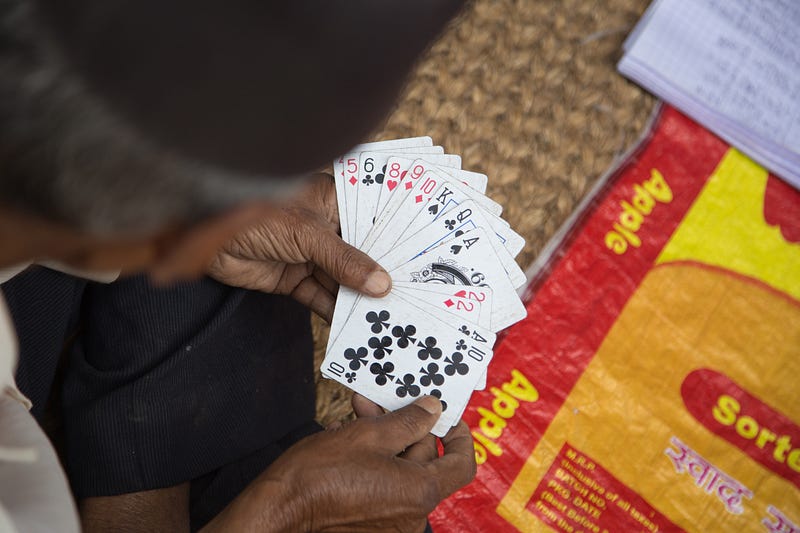
The article titled "Python And The Dead Man’s Hand" explores the application of Unicode in Python programming to facilitate the representation of a wide array of symbols, including those from non-Latin writing systems and special characters like playing cards suits. It references the historical "Dead Man's Hand" — a legendary poker hand held by Wild Bill Hickok at the time of his assassination — as a narrative hook to demonstrate how Python can be used to print symbols such as club, diamond, heart, and spade. The article provides a Python code snippet that uses Unicode character names to output the Dead Man's Hand, showcasing Python's capability to access the vast Unicode library by both number and name. The piece concludes by noting that it is part of "A Few Words," a Medium publication that favors brevity and accepts stories under 500 words.
Opinions
- The author implies that Python's handling of Unicode is straightforward and accessible, making it an ideal tool for text representation tasks.
- There is an appreciation for the breadth of Unicode, highlighting its inclusion of modern and ancient writing systems, as well as technical and punctuation symbols.
- The article suggests that the ability to use Unicode in programming can add a layer of expressiveness and precision to written text, which is particularly relevant in the context of diverse linguistic and symbolic requirements.
- By mentioning "A Few Words," the author endorses concise writing and invites like-minded writers to contribute to the publication, emphasizing the value of meaningful brevity.