“Putin’s Perspective on the Russia-Ukraine War” — written by George Friedman
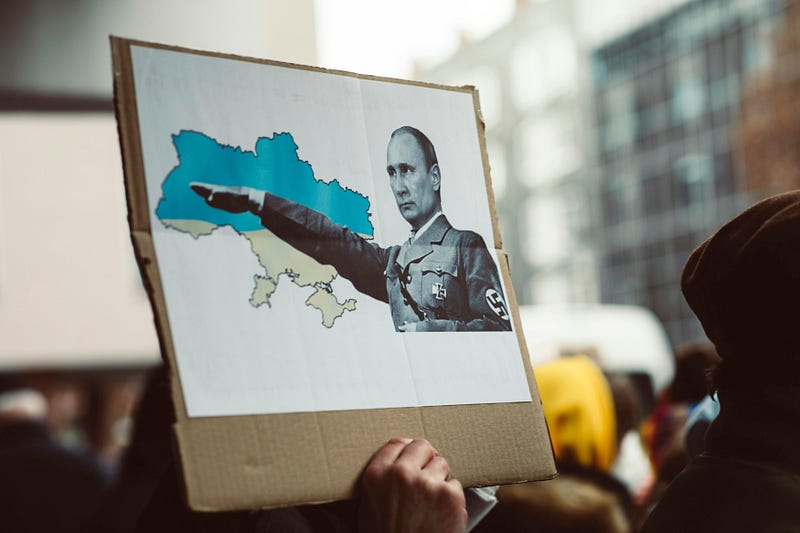
I am a loyal follower of Geopolitical Futures and its diverse team of writers, analysts and forecasters.
George Friedman is founder of Geopolitical Futures and author of many books on geopolitics. This latest writing by Friedman about the interview between Russian President Vladimir Putin and the American reporter Tucker Carlson is insightful and a little controversial. Have a look at it here.
Now, here are my thoughts about the article.
“It was not exactly a press conference, in the sense that Tucker Carlson, a talk show host perceived as sympathetic toward Russia, was the only reporter present. But neither was it, strictly speaking, an interview, as for most of the program, Putin held forth without the benefit of questions…Instead, we got a genuine Russian perspective on the war in Ukraine, and Putin appeared to be a reasonable and thoughtful man.”
Okay, here we go. Friedman lays out some questionable comments from the onset of this writing. A press conference? He explained his reasoning, but I only viewed this Putin-Carlson meeting as a one-on-one conversation, and I don’t understand why Friedman would suggest it was like a press conference for the American public.
On the other hand, it was still an interview format. Or at least it was supposed to look like one. Perhaps many of the people viewing this war from a geopolitical perspective had high expectations for this interview. No-one should have held any expectations since it was held in Moscow — a country, lest we forget, that doesn’t allow for rights of speech or freedom of press. Gee, Americans should just feel lucky that one of their reporters lived to die another day!
“Still, the historical context, the targeting of an American audience, and the extraordinarily detailed description of Russia and Russian history seem to be setting the stage for negotiations. In defense of Russia’s attack, Putin charged the U.S. and NATO with dishonesty and duplicity in facing Russia, which was simply pursuing its historical imperative. This was no ordinary program, nor was it self-indulgent rambling; Putin’s emphasis on the failure of negotiations in Turkey early in the war makes this clear.”
In fact I have heard other comments alluding to the contrary of Putin’s “self-indulgent rambling” during the meeting with Carlson. Many people seem to think that Putin’s focus on the historical context of this Russia-Ukraine war was intentional, in order to avoid answering questions about the country’s future plans for Ukraine. The US and NATO have been anything but dishonest during Russia’s invasion of Ukraine.
Both sides showed no signs of backing down on their commitments to assist Ukraine militarily ever since the initial invasion on February 24, 2022. Now many people would argue that they are not doing enough to help Ukraine, but no-one should feel that they did not respond according to what NATO is supposed to represent for the European continent’s security and defense. And thus, we should always keep in mind what this “historical imperative” means for all sides on the European continent, and why perspectives of security and defense are evolving with other imperatives for security and defense.
“Putin said the United States was damaging itself by using the dollar to compel foreign powers to align with its worldview. He then claimed, in his most baffling remarks, that China’s economy dwarves America’s and that its economic future is bright. It is as if he has missed China’s reality in the two years since Ukraine was attacked.”
China is an important global actor. No doubt. But is it really an important actor in the Russia-Ukraine war? There is evidence in the public domain pointing to both sides of the argument: China relies on cheap Russian oil and gas imports; while China also does not interfere in the affairs of other countries’ foreign policy. I argue that China is the most important country to Russia’s future strategy, so, yes, China is an important actor in the Russia-Ukraine war. Though I do not expect China do make any drastic changes to its foreign policy as a response to Russia’s invasion of Ukraine.
China will continue to engage with Russia for as long as needed. Both of the countries share mutual interests in combatting US sanctions, protecting their respective national interests in the Global South and expanding into Africa for a variety of economic and political ambitions. Friedman claims that Putin ignored the last two years of China’s economic instability. He makes a solid point. How will Russia respond to China’s declining influence in the global economy? This is probably one of the strategic dilemmas that Friedman will be talking about in the future.
Read the full story: “Putin’s Perspective on the Russia-Ukraine War”.