
Putin’s Brutal Murder of Navalny Exposes the Cowardice of Autocrats
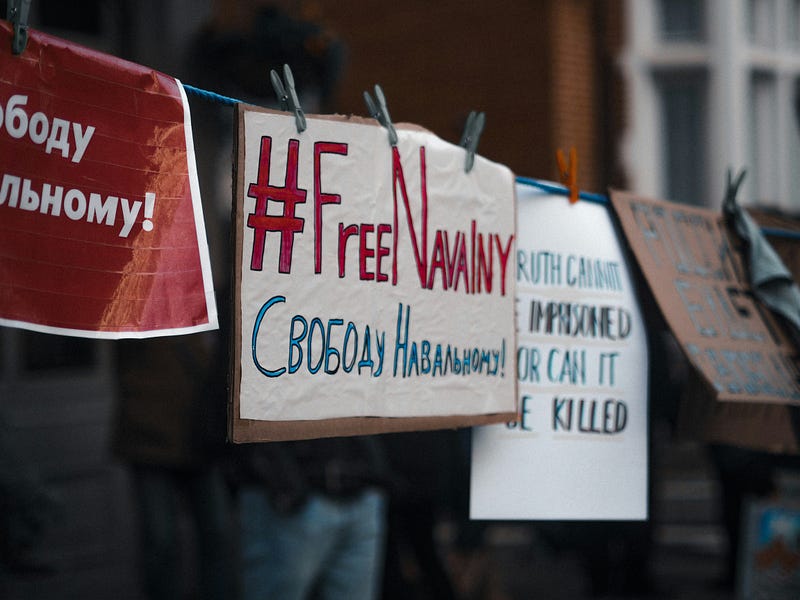
The tragic assassination this week of Russian opposition leader Alexei Navalny makes abundantly clear the cruel depravity of Vladimir Putin’s autocratic regime. Navalny, Russia’s most prominent anti-corruption activist and Putin’s most effective political rival, was murdered in prison at the age of just 47.
This courageous dissident survived countless persecutions during his years-long quest to expose the astonishing graft and criminality endemic at the highest levels of Russia’s government. In 2017, Kremlin-directed thugs threw dangerous chemicals in Navalny’s face, nearly blinding him. Most infamously, in 2020 FSB agents smeared the deadly military-grade nerve agent Novichok on his underwear in a botched assassination attempt. Navalny barely survived the poisoning and underwent months of treatment in Germany before defiantly returning home to Russia, where he knew police would immediately imprison him on politically motivated charges.
“Putin will go down in history as the poisoner of underpants,”
Navalny quipped with his signature dark humor, displaying astonishing bravery in the face of mortal peril. This remark captures the defiant spirit with which he railed against the corrupt authoritarian system dominating his homeland.
The son of a Soviet army officer, Navalny trained as a lawyer before joining the liberal opposition Yabloko party in the early 2000s. He exploded onto the national political scene in 2008 when he began utilizing his popular blog to systematically expose the astonishing wealth secretly accumulated by Putin’s circle of billionaire oligarch allies. Navalny famously labelled these profiteers crooks and thieves — a devastatingly effective slogan that encapsulated public outrage.
The Kremlin’s initial attempts to ignore Navalny only elevated his profile. He was soon leading mass rallies of over 100,000 people in Moscow, the largest anti-government demonstrations since the fall of the USSR. Navalny won 27% of the vote in Moscow’s 2013 mayoral election despite widespread fraud and ballot-stuffing, cementing his status as the de facto head of Russia’s opposition.
Over the next decade, Navalny sacrificed his freedom, health and ultimately his life in pursuit of his ideals. He endured constant harassment, multiple arrests and savage beatings by police in response to his activism. What truly threatened the Kremlin elite was not just Navalny’s extraordinary courage in exposing Putin’s secret $1.3 billion Black Sea palace and other ill-gotten gains. It was his genius for creatively weaponizing the internet and social media to reveal the regime’s astonishing corruption in a country with virtually no free press.
While no liberal in the Western sense, Navalny understood that given Russia’s long history of autocracy, political ideology mattered far less than opening the door to democratic pluralism and the rule of law by dismantling Putin’s profiteering mafia cabal. The Kremlin clearly recognized that Navalny’s viral online investigations represented an existential threat capable of catalyzing mass revolt.
Through relentless intimidation, violence and ultimately assassination, Putin has gone to extraordinary lengths to cling to power and snuff out those who dare challenge his interests. But Navalny’s fearless example has cemented his legacy as a defining symbol of Russian hopes for freedom and democracy. His murder will only further inspire the struggle against tyranny.
Autocrats thrive on fear, but Navalny showed the power of courage. His ultimate sacrifice reminds us that the yearning for liberty and accountable government cannot be extinguished.