
Putin used the 48 laws of power to get where he is and could use them win in Ukraine
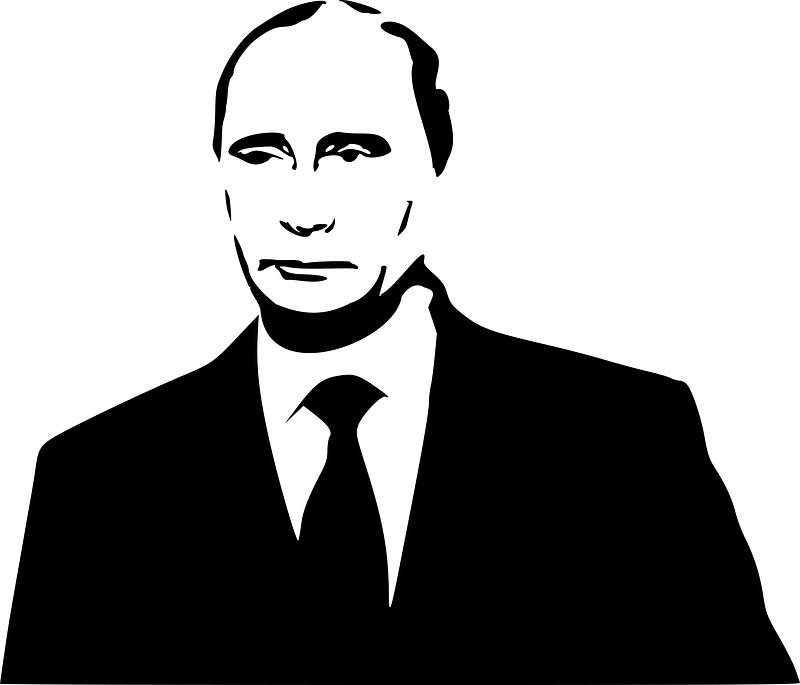
Robert Greene is a bestselling author of The 48 Laws of Power, a guide to how to gain and keep power and understand those who do.
The book reads like a modern version of Machiavelli’s The Prince, full of tips and tools that can feel at odds with living a moral life. That is not surprising because the moral life is based, in some sense, on gaining spiritual power through the abdication of the temporal.
Nevertheless, the 48 laws are an excellent guide to understanding how people gain power and why some apparently powerful people are, in fact, not as powerful as they appear.
A good example of someone who appears powerful but isn’t is Donald Trump. Trump appears to have a lot of power over people, but much of that comes from a single law. As Robert mentioned in this YouTube interview, Trump is better than anyone at law 6: Court Attention at all Costs. (I would add law 27: play on people’s need to believe to create a cult like following.) But, according to Greene, “he is not in control of himself”. He is incapable of strategy so he can’t play the long game. He sacrifices powerful allies in the name of courting attention.
Putin, on the other hand, could teach master classes in gaining and keeping power, and much of his intuitive behavior can be boiled down to the 48 laws.
For example, Putin is a master of using law 8: make people come to you and law 11: Keep people dependent on you in conjunction. Whatever resources he controlled, whether as a city functionary in St. Petersburg or as President, he would use those resources shamelessly to gain control over people and make money.
All the while, Putin guarded his reputation (law 5) and courted public attention.
In 1999 there were a series of apartment bombings. These gave Putin, then the head of the FSB, the Russian equivalent of the KGB, a chance to go on TV and vow revenge. (Law 43: working in the hearts and minds of others and law 5 and law 6 again.) This made him popular on the national stage.
All the while, Putin was playing the part of a loyal follower of Boris Yeltsin who was in bad health and looking to hand off power. Putin played the perfect courtier (law 24), seeming like a “liberal and a democrat” who was ready to keep market reforms going. He played on the confidence of Valentin Yumashev, Yeltsin’s closest aide, to gain the Prime Minister position and eventually the Presidency.
Showing off his ability to analyze situations and argue his case, he gave the impression of someone who was ready to handle a difficult seat of power.
Of course, once Yeltsin had handed off power to Putin, he set out using the laws to put the Russian oligarchs under his thumb, applying thumbscrews if needed (law 33) and crushing anyone who opposed him (law 15).
Rather than trying to forge the path that Yeltsin had outlined, he returned Russia to an authoritarian state.
He masterfully took Crimea from Ukraine in 2014, ensuring that the consequences were minimal (law 28: enter action with boldness and law 47: in victory, know when to stop).
So between then and now what happened? How did Putin miscalculate and why has he thrown more and more resources after the war in Ukraine, losing a great deal of power in the process?
Perhaps his greatest mistake came from the Covid-19 pandemic. He violated law 18: Do Not Build Fortresses to Protect Yourself — Isolation is Dangerous. Because of the fear of illness and perhaps increasing paranoia that often afflicts those at the height of power, Putin isolated himself, rarely emerging at all, even to his inner circle.
As a result, Putin entered an echo chamber of ideas and thoughts that appealed to him. The more isolated he became from useful ideas and information, the more plausible schemes such as invading Ukraine appeared.
What followed were a series of missteps and mistakes where we see Putin continuing to apply the laws of power but failing primarily because of his isolation. If he were not so isolated, he would have known that his military was in shambles and his commanders were mere henchmen, not skilled strategists.
He kept his plans a secret (law 3) but failed to keep it from US Intelligence who warned the world ahead of the invasion.
He also assumed that Ukraine would follow the same rule book he does: “Law 22: Use the Surrender Tactic: Transform Weakness into Power.” Because of their weakness, he assumed Ukraine would simply surrender. He didn’t expect such a ferocious response.
Putin also was following law 42: Strike the Shepherd, and the Sheep will Scatter. He wanted to make sure to decapitate the Zelenskyy government at the start of the invasion. He knew that confidence in the central government both by Ukrainians and the West would melt away if he could remove the head. Instead, his assassination attempts failed.
Of course, Putin applied law 29: Plan all the way to the end. He had a playbook for failure, which is to mount an overwhelming invasion while playing the propaganda game at home and abroad. He made sure that no one at home could refer to the invasion as a “war”, arresting people who did and giving them long sentences if they spoke out against it. Those with more power who opposed him found themselves thrown out of windows (law 26: keep your hands clean).
Meanwhile, he felt he could control Europe because he had used law 11 by supplying oil and gas to them. He failed to realize that unified outrage (and not a little deep seated resentment over Soviet atrocities in Eastern Europe) would cause Europe to slit its own throat rather than allow Ukraine to fall to Russia.
Meanwhile, Putin failed to gain as much support from China (which is not Russia’s friend) as he would have hoped (law 2: Never Put Too Much Trust in Friends, Learn How to Use Enemies). Nor had he succeeded in manipulating American politics sufficiently (although many on the right have played into his hands.)
Quiet Putin (law 4: Always Say Less Than Necessary) had the appearance of the calculating strategist but, with Ukraine fighting back and winning and NATO weaponry pouring into the former Soviet republic, revealed himself to be a bungler. His nuclear threats (law 17: Keep Others in Suspended Terror: Cultivate an Air of Unpredictability) seemed to have little effect on anyone.
Perhaps the biggest problem was that he underestimated Zelenskyy (law 19: Know Who You’re Dealing With — Don’t Offend the Wrong Person). His Ukrainian counterpart has mastered, in a short time, quite a few laws of power. He wooed the West into providing its most advanced weaponry and was able to highlight the suffering of the Ukrainian people while at the same time maintain confidence in its ability to win. There is not a little bit of Churchillian mastery of alliances in him.
While Putin sat at enormous tables in ornate rooms (Rule 34: Be Royal in Your Own Fashion: Act like a King to Be Treated Like One), Zelenskyy wore fatigues and looked every bit the front-line commander. In this, Zelenskyy’s use of “law 32: Play Into People’s Fantasies” trumps Putin’s royal demeanor.
Also, don’t assume that Zelenskyy believes he is getting all this aid and weaponry for free. “Law 40: Despise the Free Lunch” shows that Zelenskyy can promise not only to keep Russia’s power in check and destabilize Putin’s regime but also provide as much intel on Russia’s military weaponry and tactics as he is getting about their movements.
Zelenskyy has also succeeded in applying “Law 43: Work on the Hearts and Minds of Others.” People in the West feel committed to the war effort now.
One would hope that Putin is getting close to applying Law 36 at this point “Disdain Things You Cannot Have: Ignoring Them Gives You Power” and, pulling back from Ukraine, he will indicate that it is not worth having.
Perhaps the main reason Putin hasn’t done this is because the West has been wishy-washy in its support for Ukraine, giving Putin hope that the political winds would simply shift in America and Europe.
If Putin, for example, believes he merely has to wait through the next Presidential election in 2024 to win at least some of his captured territory, then he will certainly wait it out.
Having Donald Trump back in power would help Putin enormously. He would love to have his American patsy back, who is so easy to control with flattery. Ever the perfect courtier, Putin must find Trump to be his dream come true.
Recent polling has shown Trump ahead of Biden in the general election. Such results scream for Putin to stay the course and depend on Trump to cut off American support for Ukraine, ending the war in Putin’s favor.
Trump’s insistence that he wants to end the war immediately (in 24 hours) plays into Russia’s hands since there is no way the war could be ended so quickly without Ukraine conceding territory and making promises not to join NATO. Trump’s track record in foreign relations from his first term do not give one confidence since he failed to apply leverage in any negotiation and tended to give away control in exchange for attention and self-aggrandizement.
Should Biden eke out a win in 2024, on the other hand, and maintain strong support, Putin may seek another kind of exit from the war. He will seek to control the options that Ukraine and the West have (law 31), offering them a menu of potential exchanges for ending the conflict, all of which work in his favor in terms of territory and strategic alliances. He will, at all costs, try to avoid having a Ukraine that is aligned with Western interests against Russia, even sacrificing territorial gains in order to ensure that happens. He will also ensure that he keeps any land bridge to Crimea and naval control in the Black Sea.
Any hopes that the military will revolt against Putin in the meantime are probably overblown. Wagner was a mercenary group, not regular troops. Now that the Wagner rebellion has ended, Putin will crackdown on any dissent within the ranks.
Moreover, while Russian troop morale is extremely low, they are well entrenched and unlikely to move easily without overwhelming power. This means that the best outcome for Ukraine is for the war to freeze, with currently held territories continuing as is. Putin can easily find scapegoats (rule 26) for any failures and declare some level of victory in that case, but he is likely to ask for the strategic assurances he craves.
Alternatively, Ukraine could, under the guise of a counteroffensive, seek to gain hold of Russian territories to use as bargaining chips to gain its own territory back. This would be a dangerous move on their part both in terms of Western support and losing the moral high ground, not to mention kicking the hornet’s nest of Russian aggression, but could pay off.
Perhaps the most predictable aspect about Putin, however, is his use of the laws of power and so, it is well to remember that the only way to fight against these laws is to use other laws. Zelenskyy has done that well so far.
The other caveat is that the West needs to recognize when we are being played.
One day, Russia and Ukraine will have to sit down at the table. If Ukraine wants to have a chance to maintain its sovereignty, it and Western leaders will have to recognize that Putin wants to be the one dealing all the cards and deny him that opportunity.


