
Push Back Against Court’s Abortion Opinion
Steps to take to temper a radical attack on privacy rights
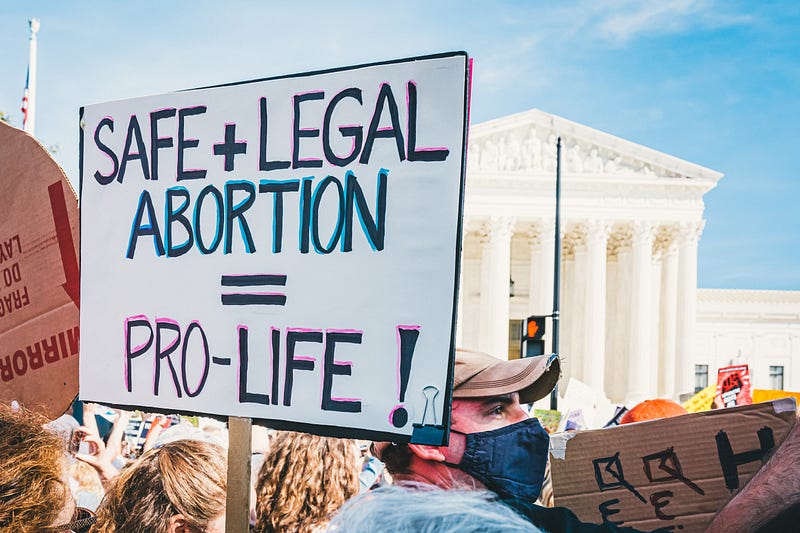
That the conservative majority of the U.S. Supreme Court would seek to overturn nearly 50 years of protected abortion rights is no surprise. The breadcrumbs were obvious in various hearings and restrictive state laws the court refused to block.
But the court’s leaked draft opinion is more radical than Mississippi’s 15-week ban, the case the court is supposed to be considering, The rationale that rejects precedences such as Roe v. Wade also undermines broader privacy rights such as on birth control and gay marriage.
And it lays the groundwork for a Republican plan for a nationwide six-week ban— if they gain control of Congress.
All this is happening even though a majority of Americans support abortion rights. Also, the number of abortions — primarily by women who are already mothers — is lower than ever.
Despite the dire news of the court opinion, there are actions citizens can take to try to salvage some of this health care option:
Let the court hear from you.
The opinion, written by Justice Samuel Alito, is currently circulating among judges for responses and rewrites. The final decision is not due until late June or early July. There’s a chance that even if Justices Neil Gorsuch or Brett Kavanaugh don’t change their votes, they could curb the radical nature of the decision. Both had vowed during confirmation hearings that they considered Roe as settled law.
Leave phone messages at (202) 479–3000 or send emails to [email protected]
Pressure Congress.
The Democratic House has passed the Women’s Health Protection Act, which makes abortion rights the law of the land. But it does not have 60 votes in the Senate to overcome a filibuster. Republican Sen. Susan Collins of Maine, who cast the decisive vote for Kavanaugh in part because of his promise to support abortion rights, is supposed to be working on a bipartisan bill to codify Roe. Call her, but also contact your senators.
Republican lawmakers, in particular, have used anti-abortion talking points to win votes with the expectation that the right would never be overturned. The time for political gamesmanship is over. You can leave phone messages through the switchboard at (202) 224–3121. Or here is a link to senators’ offices.
Carefully choose state lawmakers.
When the court decision is handed down, already-passed laws outlawing or severely restricting abortion will go into effect in 26 states, mostly in the South and Midwest. Without Roe, everything will be left to the whims of state legislators and attorney generals, Already half the states have very restrictive laws that allow few exceptions for abortion; more are now making it harder to receive abortion pills.
In this primary season, it’s more important than ever to find out where candidates stand on reproductive rights and to rule out those who would deny them to women and their families.
Write a letter to your local newspaper.
A clear, focused statement on the importance of abortion rights or criticism of an elected official who disagrees may seem outdated in the social media era. But lawmakers still pay attention to constituent comments that are preserved for history. Here is a template for letters to the editor.
Join a protest.
State and federal lawmakers can be moved by crowds or even small, well-targeted protests. Various groups supporting civil rights and women’s rights will no doubt plan demonstrations across the country.
In his opinion, Alito rejects the idea that abortion bans reflect the subjugation of women. “Women are not without electoral or political power,” he writes. “The percentage of women who register to vote and cast ballots is consistently higher than the percentage of men who do so.”
It’s time to really exercise that power. For almost a half-century, women in this country have been freed from having illegal, dangerous back-alley abortions. Families had the right to choose whether to have a child based on their private concerns.
What kind of country will we have if this is lost?


