
Publish and Be Damned
Writer’s Block, Hesitancy, Perfectionism, and All That Jazz
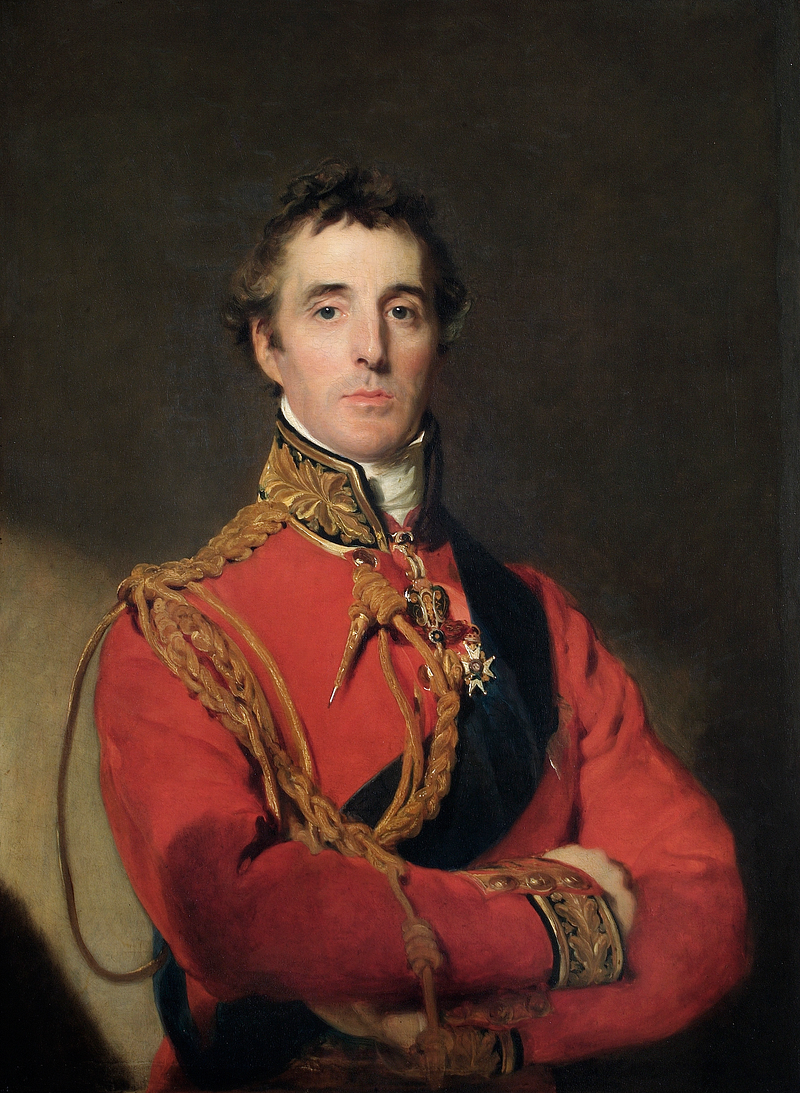
In case you’re wondering, as I did, where the words “publish and be damned” started, they are said to have been uttered by Arthur Wellesley, first Duke of Wellington after his mistress threatened to publish the letters he had written to her.
It was 1824, and Wellesley was the British prime minister. His former mistress, Harriet Arbuthnot, was demanding a peerage for her husband, and Wellesley was having none of it. This was the early nineteenth-century version of revenge porn with blackmail.
Whereas these days, a miffed or even just spiteful and sadistic ex might post pictures of their past partner’s wiener shots or video footage of some hanky panky, back in the day, “Thine quim is sweeter than the finest honey, and thou hast the most succulent buds” was considered as seriously hot stuff.
Back to the Future
I’ll park the history. That’s not what this article’s about, but I wondered where the words “publish and be damned” came from and got carried away. What counts is that we adopt the same spirit.
Donkey’s years ago, when I was a young man studying English literature as an “A-level” student (“advanced level” qualifications that we did before university), I got stuck on an essay about The Crucible. It didn’t matter how I approached it, I kept screwing up the paper and going back to the drawing board before I could complete a single side of A4.
My teacher, Mr. Rand, pulled me to one side for the Nth time to find out how I was getting on, and I came clean. That was when I was given one of the best lessons of my life.
Just Do It
“Martin, go to the library right now and write the essay. Don’t think about how good it is. Just write whatever comes to mind. No preparation. You’ve been asked a question. Give an answer. Just write it. I’m sure it will be better than you think.” — my former English literature teacher, Mr. Rand
Those words left me with no way out but allowed every other possibility. I could submit three paragraphs if I wanted to, or I could go to town with a 5000-word ramble. I’d been given the spirit of Nike, and I had no more excuses not to “just do it”.
Mr. Rand was practically telling me all would be forgiven. That reminds me of another phrase that I have heard highly successful people say: done is better than perfect.
The Roots of Writers’ Block
What are the roots of writer’s block? Well, perfectionism for one. For some people, that article or poem, last chapter, page, paragraph, sentence, or even word is never good enough. For a perfectionist, not done beats imperfect eight days a week. If that’s you, ask yourself these questions:
- What is perfect?
- Does perfect exist?
- What would you prefer — something that is perfect but unappreciated or something that is real, imperfect, and affects readers positively?
- What’s wrong with “moving”, “engaging”, “stimulating”, or even plain old “really good”?
Perfectionism has many ugly sisters (or brothers if you think that sounds misogynistic).
The Old Favourite — Imposter Syndrome
For many, the reason why the work won’t be good enough is that they don’t believe they are good enough. Are any of these familiar?
- Who do I think I am?
- Why should anyone care about what I have to say?
- Since when have I been a writer?
- Who am I trying to kid?
If that’s you, would it make any difference if I told you that I make a decent living as a full-time professional writer even though my vocabulary is “absolutely average” as one of my old bosses used to say, and I stumbled into ghostwriting and book-editing accidentally?
You’re Not Alone
I suffered a lot of trauma as a child and was often told I was the “world’s worst”. Although I did alright academically, my performance fell far short of my potential, and I dropped out of not one but two undergraduate courses — a Higher National Diploma (HND) in Environmental Control Engineering and a Bachelor of Science (BSc) in Psychology.
A Glass Half-empty
My journey is riddled with failures — a lacklustre career in advertising, a failed marriage, too many regrets about being a crap parent to my children including one who has moved on from this physical world, and so many failed opportunities. But it’s not just me. Most people can look back on their lives and see the glass as half-empty, so it’s not just you either.
Or Half-full
Here’s the other side of the coin. My first book-related gig was editing Richard McCann’s third autobiographical book, Just a Man. His first book was a Sunday Times bestseller, so I had a tough act to follow.
Before that, I had been hired for a wide variety of copywriting, content writing, and other scribe-related work. Just a Man was my first lesson in writing a non-fiction book, from a global speaker and master storyteller (thanks, Richard).
Bootstrap Your Skills and Experiences
Although I had never worked on a book before, I had accumulated various skills that came in useful — writing technical reports as a trainee engineer, more report writing as a psychology undergraduate, a sharp mind for reason and argument, and a keen interest in philosophy, to name a few. Again, everyone has far more useful skills and experience than they realise; it’s not just me.
We’re All Improving
If you are still not convinced that you are good enough to write, know this — if you’re not good enough, no one else is because no one is perfect. Most people want to be better than they are! The alternative is arrogance.
Difficulty Starting
Another manifestation of writer’s block is not being able to start. What’s at the root of that? Well, it could be perfectionism (this must be the most sensational start ever or I’m not doing it), or imposter syndrome (I’m not good enough for this), but there could be other factors.
Spoilt for Choice
Sometimes we don’t know where to start. If we're sharing a story, do we go for the most exciting bit, go back to the beginning, or start with a lesson learnt? These are only some of the options available. We could be spoilt for choice. The solution is the Nike button. Pick one, any one, and get started. Own it. That means owning the fact that it might not be the best option, but unless we write every possible version, we could never know what the best alternative would be anyway.
What to Write About
If we’re talking fiction, poetry, or a blog to share our thoughts, the issue may be a lack of inspiration. Who or what’s to blame for that? It’s on us because you know as well as I do that when you’re in the right frame of mind, even a dollop of doggy business on the lawn can trigger the muse. What can you do about not feeling it?
Relax, let it go, and accept it as a part of the creative process. Have faith because the inspiration will come when you least expect it. Trying to “will” it to happen is like trying to make yourself sneeze. It’s not going to happen that way.
Be Your Own Mentor
You could try becoming the client, the English teacher, or the reader. Yes, you understood me. What would you like to read about right now? If you were setting a test for an aspiring writer, what would you ask them to write about? Well, go on then. You’ve thought about it, so get on with it. There’s your inspiration.
Make Distraction Your Friend
Last, but not least in this far from an exhaustive list of possible roots of writer’s block, are distractions. These can lead to procrastination, hesitation, slow rates of productivity, and ridiculous pauses halfway through, and these can even be sought after by the writer as an excuse for not writing.
Some distractions are not your fault — matters of the heart, worries, physical discomfort, or a noisy environment, for example. Again, if your bag is creative writing, you can use these distractions as the inspiration for your work. You can also help others by writing about grappling with these everyday life experiences.
Publish and Be Damned
Sometimes writer’s block doesn’t manifest as not wanting to write, knowing what to write about, or where to start. I’m probably stretching the meaning of the phrase here, but what else would you call it when someone finishes a piece and then throws it away? Isn’t that the same as being stuck on the first page, just more of a waste of one’s time and effort?
I opened this article with a story about the history of the phrase “publish and be damned”, and that’s pretty much what my English teacher told me to do. It’s the Nike way — just do it! What’s the worst thing that could happen?
- You don’t get a grade A with distinction
- A member of the grammar police posts a sarcastic comment underneath your article (very dangerous game — see “no one’s perfect” for details)
- It turns out that had you written it slightly differently, it could have been better
- You’re not happy with it, either as soon as it is finished or an hour later
None of these is a valid reason for throwing it away.
Am I suggesting that when you write a poem, blog post, or short story, you must not edit it? No; of course, not — not unless you have writer’s block. If you DO have writer’s block, it’s better to go with the first draft than not produce anything. We learn from the stuff we produce, and writer’s block can’t stick around forever.
You can apply the principle of publishing and be damned at any stage of the process. It indicates that a decision has been made, an issue has been put to bed, and a crossroads has been passed.
Stephen King is well known for not looking at what he has written until he has completed the first draft of the entire novel. I’m the opposite. I tend to write, check, write more, go back, and check again while paying particular attention to the flow and connection between points where I stopped and resumed writing.
Even a Piece You Are Not Proud of Will Be Appreciated
The other day, I wrote a throw-away poem about the monotony of lo-fi music. Here it is:
Yo! Listening to lo-fi Trying to write for clients When my mind doesn’t wanna try.
Lazy! My head’s in a spin Seriously lacking focus I need to rein it in.
Repetitive! Driving me insane I cannot work in silence But this music’s like a migraine.
Digging! Penetrates my skull I know it should be chilled But why so fucking dull.
Stop! My fingers hit the keys No more lo-fi torture My mind is finding peace.
Yes! Ideas start to form Words build sentences This writer is reborn.
©Martin Morrison 2023 All Rights Reserved
I thought it was rubbish then, and I still think it’s under par. A child could have written this. Anyone could write it. So. Fucking. What!? Am I trying to be the next Shelley, Dunn, Auden, Owen or Shakespeare? No. I was writing, the lo-fi was doing my head in, and that inspired me to want to rap. The poem is a rap, a terrible one.
Don’t Take It Too Seriously
But was it terrible, or was it more a case of being embarrassed or ashamed because it wasn’t high-brow or carefully crafted enough to make the inner and outer critics happy? I’m sure someone liked it, but it was never supposed to be taken seriously.
Use Your Creative Licence
Back in the days when I used to read a lot, I was a massive fan of Philip K Dick, Philip José Farmer, and other quite radical speculative fiction writers. Some of Norman Spinrad’s stuff is bonkers! Many of the traditional rules were thrown out of the window by these guys (and gals — don’t let me forget Ursula Le Guin), and I am sure the puritans hated them for it.
Last year, I wrote Don’t Let Anyone Tell You Your Poetry’s Crap to remind people of the power and value of creative expression. No one has the right to tell you your work is worthless, especially not you. You can’t stop other people from having opinions, but you don’t have to become your worst enemy. Encourage yourself.
What Inspired This Article?
Well, as is often the case, this article was prompted by true events.
Recently, I reflected on how some of my inner muses had been silenced after a couple of months of therapy. The result was a poem that I could have called “Message to My Therapist”:
You Killed the Poet in Me — But I’d Rather Be Sane
You nudged me gently Into dark corners, nooks, and crannies Of the labyrinth of my mind Gently posing questions Most people would have no business to ask And being thanked for it.
My body convulsed The tears flowed from a bottomless pit Hidden in my tormented psyche. Grateful for every breakdown I kept pressing the buttons you helped me discover From fortnight to fortnight.
At the end of the road Most questions answered at least for now We’ve gone our separate ways. What shall I write about Where have those intangible, abstract thoughts and feelings gone That drove me to write before?
Poetry driven by pain Has left the building like Elvis without an encore What shall I write about? I guess there’s nature And you can’t beat a little love to keep the muse amused If only I could hear it.
© Martin Morrison 2023 All Rights Reserved
Ironically, given that I was writing about a kind of writer’s block, this poem flowed unobstructed by perfectionism, procrastination, imposter syndrome, or distraction. Furthermore, it was quite well received by those who read it.
[If you’ve come to this article for tips on how to overcome writer's block, this next part is not for you but directed at authors who submit work to my poetry publication — do, however, do the honours of scrolling to the bottom of the page, so that your visit will be recorded as a “read” by Medium’s algorithm. Thank you.]
Don’t Delete Your Articles and Poems
Every now and then, I go to edit a piece that has been submitted for publishing in Bouncin’ and Behavin’ Poems, only to find that the author has pulled it. There’s no harm done. Rarely, although it happens, authors pull the poem after it has been published, but they usually drop a private note to me in advance, which I appreciate. Sometimes they resubmit it later.
Over the last week, three articles have been DELETED after I had spent time on them and without a word from the authors. Running a publication is time-consuming, but let me run you through the process.
First up is the email. If an American has submitted a poem after 5 pm in their time zone, I am probably not going to see it until at least 10 at night in mine. Whether I process it there and then, when I should be winding down for bed, or I wait until the morning, it creates pressure, and that’s fine. I knew what I was getting into when I launched the publication.
Once I’ve opened the Medium story, I have to check over the formatting, make sure the image creator has been credited, check for typos, read the poem, and do many other bits and bobs that any editor should do.
Please, therefore, put yourself in an editor’s shoes for a moment — you open the email, click the link, process the piece, and publish… only to receive notice that it has been deleted.
Two separate authors did this over the last few days, one of them did it twice, and I only received a note of apology/appreciation once. I’m not going to lie to you — seeing something I have spent time on deleted without a word is frustrating and a little insulting.
I care about writing, writers, and the publication, so I don’t mind putting the time in to ensure we are building something great together, but please don’t take that love for granted. Don’t take my time for granted! Don’t take Jason Provencio’s or any other editor’s time and love for granted.
There’s another way…
Write, Fine-tune, and Breathe
I don’t believe anything is so bad it has to be deleted. If you are not happy with something you’ve started or even finished, put it back in drafts. You might like it or repurpose it later.
If you want to publish in someone else’s publication, take your time. Leave it in drafts for a day or two. You may decide to make further changes or even — please don’t — delete it, but if you do, that’s only going to affect you. Once you press publish, you’ve given a gift to the world or to an editor. Surrender, let it go, and have faith. You’ve shared a piece of yourself. Stand by it.
Publish and be damned!
Since you’ve read this far, I’d appreciate it if you’d scroll right to the end, past any other stuff that the platform adds. That will ensure the Medium algorithm registers your visit as a full read. Thanks.