
Psychology Studies Cannot Unravel People’s Minds
Self-reporting by individuals is unreliable
Let me begin this story with a disclaimer. I am not a scientist. I have no scientific training or background.
I respect science and its contribution to human progress. This is just thinking aloud, a layman’s curious speculation.
Psychology deals with the mind, consciousness, and the intellect, all invisible abstract notions that defy precise explorations in the laboratory as with physical objects that obey the natural laws.
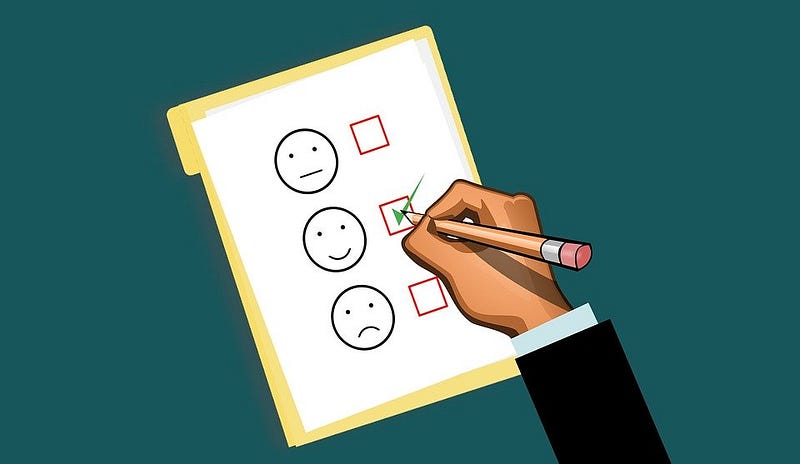
Psychology studies look into people’s behaviour in controlled laboratory settings. Many studies, however, use the questionnaire format. They pose carefully drafted questions to the chosen subjects and draw specific conclusions from the answers.
For example, studies about altruism will pose questions about how we react to the suffering of others and our willingness to help them. Based on the answers, researchers will measure the altruism of the subjects on a scale, say moderately altruistic, extremely altruistic or selfish.
Personality studies and psychometric testing also depend on the question-and-answer format to draw conclusions.
What are the limits of self-reporting?
Self-awareness is low
Lack of self-awareness is a pervasive human flaw. Total self-awareness is a myth. Nobody can claim that they know who they are because our personality and character have their roots in our unconscious minds. The unconscious mind is the psychological nether world buried deep down in our conscious minds. It is not easily accessible. The unconscious mind communicates to us through dreams or sudden flashes of insight.
When people answer questions in psychology studies, they tap into the information they hold in their conscious minds. When somebody answers “I always try to help people who are suffering”, they may try to conform to social norms about good and ethical conduct. We can only test their willingness to help others can in actual life situations.
People change their minds, even about themselves
Our opinions about how we will respond to a particular situation may change. It depends on our moods when we are answering questions. If we are in an optimistic mood, we will picture ourselves as good and responsible citizens. In a grim mood, we may not feel very charitable.
The format of questions can influence answers
We can reframe the same question in distinct ways. The question “Do you always help people who are suffering?” can be reframed as “How will you react to a person’s suffering?”. The same person may give different answers to these two questions which basically test their level of compassion. People are not honest when they answer questions about their sexual behaviour.
For greater accuracy, some researchers design the questionnaires in such a way that half the questions are in the yes/no answer format and the other half comprises reporting on a scale. Some others combine the self-report data with other behavioural studies to validate their initial conclusions.
The questionnaire format is popular among researchers as it is cheap and easy to administer to a larger sample of the population.
The problem with self-reporting is acute in psychiatry. Psychiatric misdiagnoses happen because patients may not accurately describe their mental condition.
Psychologists are trying to refine the self-reporting methodologies to eliminate bias in people’s responses.
In the meantime, we must treat findings based on self-reporting with the caution they deserve.
Thanks for reading.