
Psychology of Superstitions: Impact on Behavior and Decision-Making
How culture affects behaviour
Knock on wood I say out loud, looking for the actual wood to knock on when I want my good luck to continue or when I don’t want to jinx something.
Now I’m as rational as one can claim to be and yet I can’t help myself. I feel compelled to do so even though I know it doesn’t influence the outcome.
It feels wrong not to knock on wood and that irrational feeling is what we call a superstition.
Superstitions have woven themselves into the human culture since time immemorial.
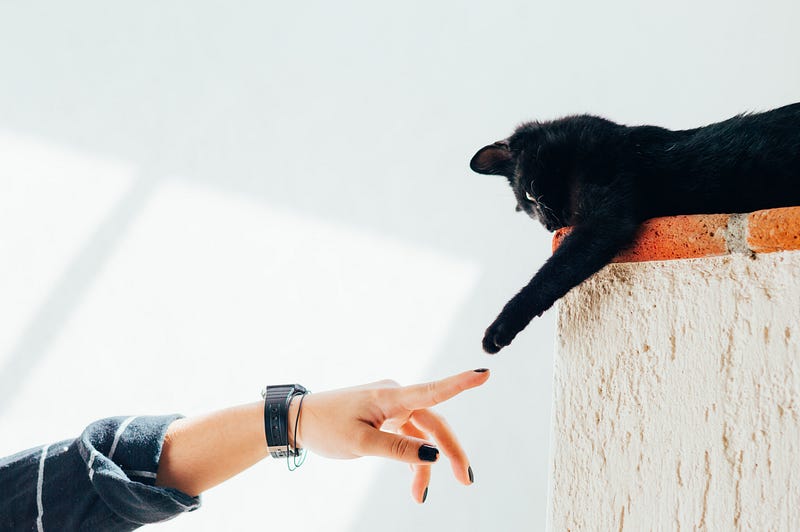
Be it avoiding walking under ladders, avoiding black cats or throwing salt over one’s left shoulder — these seemingly illogical beliefs hold power over our behaviours and decisions.
But what underlies this aspect of human psychology?
The brain and pattern recognition
At the very core of our cognitive architecture, our brain is a pattern-seeking machine.
From the neural pathways to perception, the brain is biologically primed to identify and interpret patterns in our surroundings.
This inherent trait traces its roots back to our ancestors.
In the wild, unpredictable terrains where early humans roamed, recognizing patterns was a matter of life and death.
The hint of movement in tall grass could signify a hidden danger; the arrangement of stars could have been God speaking to you. It wasn’t just about noting these patterns, but about efficiently responding to them.
However, as the environment evolved and human societies grew more complex, this pattern-recognition system began to see connections where none existed.
A random event followed by a significant outcome — say, a ritual dance followed by rain — would seem like a cause-effect relationship that then makes it into community’s collective psyche.
Over time, these coincidences became deep-seated beliefs. Actions and events that had no scientific correlation were interlinked, paving the way for superstitions.
The very cognitive ability that once safeguarded us from threats now turned into rituals and beliefs that, while lacking in empirical evidence, offered psychological comfort and order in a chaotic world.
Control in an unpredictable world
Unpredictability and chaos seem to be a common thread in our lives.
From unexpected challenges in our personal lives to larger, global uncertainties, unpredictability is a universal human experience.
As humans, we innately crave structure, predictability, and a sense of control over our surroundings and fate.
With this in mind, superstitions serve as our personal coping mechanisms. At their core, they offer an illusion of control, transforming the world into something more manageable.
By adhering to certain rituals or believing in omens, we feel equipped to influence outcomes, even if it’s just by a tiny margin.
Consider the athlete who always wears the same pair of socks during a championship game or the student who carries a lucky talisman during an exam. These seemingly trivial rituals provide an emotional anchor, a psychological bubble of safety.
But here’s the twist: even if there’s a negative outcome, the human mind, will rationalize it and might dismiss it as an anomaly.
“Perhaps I didn’t wear it right,” the athlete might think, or “I didn’t pair it with the shorts.”
This loop of seeking validation, receiving reinforcement, and sometimes rationalizing incongruences, perpetuates our superstitions, subtly influencing the decisions and behaviours we exhibit.
In high-stakes situations, where the pressure is immense, even a slight boost in confidence or reduction in anxiety — like that provided by a superstition — can have a noticeable impact on your behaviour.
Cultural narratives and collective behaviour
Among these narratives, superstitions hold a unique place, often serving as unspoken guidelines influencing collective behaviour.
These shared beliefs, rooted in cultural history and lore, have the power to drive decisions on both individual and societal levels.
One such example is Japan where certain numbers, especially 4, are avoided because it sounds like the word for death.
So many buildings in Japan don’t have a fourth floor — similar to the way some Western buildings skip the 13th floor due to triskaidekaphobia.
It’s not just about personal luck or misfortune; it’s a shared belief shaping the real world like architectural designs and construction decisions.
In Spain, for instance, the tradition of eating 12 grapes at the stroke of midnight on New Year’s Eve is believed to bring luck for each month of the coming year.
Over time, this practice influenced by superstitions became so deeply entrenched that it became tradition rather than superstition.
Across cultures, shared superstitions can dictate daily practices, rituals, and even societal norms. They can determine which days markets are held, influence marriage customs, or decide on planting and harvesting calendars.
The intertwining of belief and behaviour shows the impact cultural narratives exert on the collective psyche: influencing decisions large and small, and in many ways, steering the course of societal evolution.
Finding balance
Superstitions, a blend of evolution-inspired beliefs and psychological coping mechanisms, have a massive influence on our behaviours and decisions.
Recognizing and understanding this can help us navigate our choices better, ensuring that while we respect age-old traditions, we don’t let them overshadow rational thought.
While superstitions can provide comfort, over-reliance can be detrimental, especially when they replace logical reasoning. Basing crucial decisions on superstitions alone can lead to sub-optimal outcomes.
However, when used as a supplementary tool it could offer psychological support.
The experience of being a human requires accepting the chaos of existence. What helps me, is viewing this life as a dance between me and the Universe.
On my own, I do nothing but the idea that I have no effect on life whatsoever makes me wonder why do anything. So for better or worse, I hold a belief in being life’s dance partner.
If you enjoyed this, please click the clap icon below, leave a comment and/or share it with someone who you think would enjoy it.


