avatarElla Ann

Free AI web copilot to create summaries, insights and extended knowledge, download it at here

3554

Abstract

ions of power can corrupt one’s own morality and with extreme institutions comes extreme behavior.</p><p id="bf66">The Stanford Prison Experiment has come under a lot of criticism throughout the years. Retesting has produced widely varying results. In one experiment, the prisoners rallied together and overthrew the guards proving that the Stanford prison experiment has its limitations.</p><figure id="5438"><img src="https://cdn-images-1.readmedium.com/v2/resize:fit:800/0*j5Ek0dCxiLtd6Aih"><figcaption>Photo by <a href="https://unsplash.com/@davidmatos?utm_source=medium&amp;utm_medium=referral">David Matos</a> on <a href="https://unsplash.com?utm_source=medium&amp;utm_medium=referral">Unsplash</a></figcaption></figure><h2 id="d2a6">Being Surrounded By Disorder Brings About More Disorder</h2><p id="2401">The Broken Window Theory, created by British criminologist James Q. Wilson, proposed that broken windows (visible signs of disorder) lead to increased theft (further disorder.) That makes sense when you think about it, however, this theory is a prime example of correlation without causation. Studies proved the Broken Window Theory flawed and not actually true. Correlation alone does not cause causation.</p><h2 id="28ac">Having Money Makes You Inherently a Selfish Person</h2><p id="e1fb">The theory that money makes people more selfish was proposed in a time when money was blamed for discrimination. This theory was tested in over 30 labs, yet still failed to replicate consistent results concluding that it is not certain that having money is the root of selfishness or our own moral shortcomings.</p><h1 id="afe1">Conclusion</h1><p id="6752">Psychology is an amazing science that has come a long way in understanding our minds and how they operate and effect our behaviors. Throughout Psychology, there are many theories that come subject to the replication crisis and other limitations making it difficult to prove or disprove. However, we can always learn something from the theories, the dedicated scientists who stand behind them, and the studies they conduct. Like with any science, the field of psychology is about always learning!</p><p id="8471">References and more information:</p><div id="271f" class="link-block"> <a href="https://www.nateliason.com/blog/psychology-myths"> <div> <div> <h2>16 Popular Psychology Myths You Probably Still Believe - Nat Eliason</h2> <div><h3>If you're trying to navigate a foreign city, you'll probably whip out Google Maps to guide you. Google Maps uses GPS…</h3></div> <div><p>www.nateliason.com</p></div> </div> <div> <div style="background-image: url(https://miro.readmedium.com/v2/resize:fit:320/0*bPTxm7A4O72it3-E)"></div> </div> </div> </a> </div><div id="4854" class="link-block"> <a href="https://www.psychologytoday.com/us/blog/great-ape-expectations/201705/hundreds-psychology-studies-are-wrong"> <div> <div> <h2>Hundreds of Psychology Studies Are Wrong</h2> <div><h3>This might sound like nothing new if you've kept up with the replication crisis, but I'm referring to a completely…</h3></div> <div><p>www.psychologytoday.com</p></div> </div> <div> <div style="background-image: url(https://miro.readmedium.com/v2/resize:fit:320/0*zFs0Yf1hE_HaeuUT)"></div> </div>

Options

      </div>
      </a>
    </div><div id="00f7" class="link-block">
      <a href="https://www.realclearscience.com/blog/2018/01/08/the_six_stages_of_a_failed_psychological_theory.html">
        <div>
          <div>
            <h2>The Six Stages of a Failed Psychological Theory | RealClearScience</h2>
            <div><h3>With the publication of his exhaustingly researched and skillfully reported article, " LOL Something Matters," science…</h3></div>
            <div><p>www.realclearscience.com</p></div>
          </div>
          <div>
            <div style="background-image: url(https://miro.readmedium.com/v2/resize:fit:320/0*BayTQqRrF-tEYXR2)"></div>
          </div>
        </div>
      </a>
    </div><div id="aeae" class="link-block">
      <a href="https://futurism.com/28-classic-psychology-experiments-failed-replicate">
        <div>
          <div>
            <h2>New research just debunked 14 classic psychology experiments</h2>
            <div><h3>A lot of what we think we know about psychology is probably wrong. A major research initiative, the second of its kind…</h3></div>
            <div><p>futurism.com</p></div>
          </div>
          <div>
            <div style="background-image: url(https://miro.readmedium.com/v2/resize:fit:320/0*LYdM2VkpTEkB4uyJ)"></div>
          </div>
        </div>
      </a>
    </div><div id="253a" class="link-block">
      <a href="https://www.livescience.com/27262-psychology-studies-questioned.html">
        <div>
          <div>
            <h2>Psychologists Confront Rash of Invalid Studies</h2>
            <div><h3>(Image credit: argus | Shutterstock.com ) In the wake of several scandals in psychology research, scientists are asking…</h3></div>
            <div><p>www.livescience.com</p></div>
          </div>
          <div>
            <div style="background-image: url(https://miro.readmedium.com/v2/resize:fit:320/0*LcsdduO6KNamwYvo)"></div>
          </div>
        </div>
      </a>
    </div><div id="cc41" class="link-block">
      <a href="https://www.verywellmind.com/what-is-a-theory-2795970">
        <div>
          <div>
            <h2>How Theories Are Used in Psychology</h2>
            <div><h3>The term theory is used with surprising frequency in everyday language. It is often used to mean a guess, hunch, or…</h3></div>
            <div><p>www.verywellmind.com</p></div>
          </div>
          <div>
            <div style="background-image: url(https://miro.readmedium.com/v2/resize:fit:320/0*LJ-3R3U4VvsnkZO_)"></div>
          </div>
        </div>
      </a>
    </div><div id="1aab" class="link-block">
      <a href="https://www.vox.com/science-and-health/22360363/replication-crisis-psychological-science-accelerator">
        <div>
          <div>
            <h2>The replication crisis devastated psychology. This group is looking to rebuild it.</h2>
            <div><h3>The 2017 Great American Solar Eclipse left Chris Chartier feeling, well, a little jealous. Chartier, like so many…</h3></div>
            <div><p>www.vox.com</p></div>
          </div>
          <div>
            <div style="background-image: url(https://miro.readmedium.com/v2/resize:fit:320/0*FTU4wCCa4YsMNELi)"></div>
          </div>
        </div>
      </a>
    </div></article></body>

Psychological Theories That May Actually Be Wrong

Popular theories that may poorly be used to explain behavior.
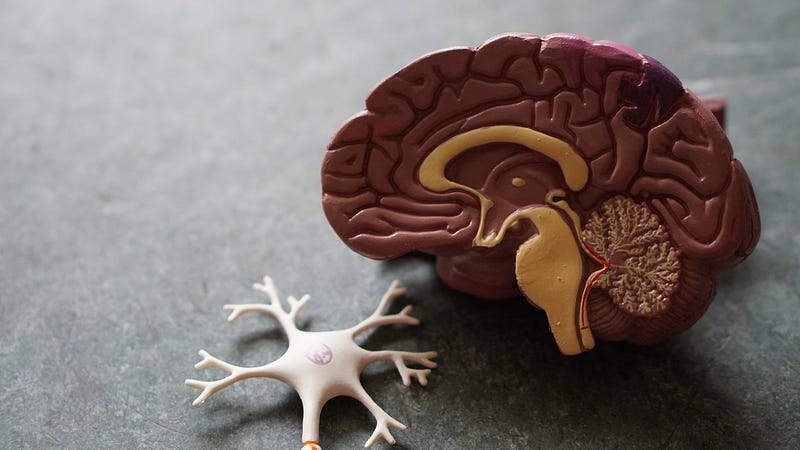
Photo by Robina Weermeijer on Unsplash

Psychology has been studying human behavior for over a century. It has come to many conclusions about what makes us tick and how we think. But just like any other science, psychology is always evolving and burdened by it’s own limitations. And with that comes theories that are disproven by new research or do not make sense in the current-day world. Here, are some theories that may or may not have been proven wrong by scientists.

The Failed Replication Crisis

Reproducibility is one of the biggest issues in the science of psychology. One would think that after so many studies have been performed on a certain subject, scientists would have learned that the answer is correct. And for the most part, we think it is. But that’s not always the case.

The replication crisis is an on going battle in psychology today as many studies are difficult to nearly impossible to reproduce under the same factors and controls. Even a few psychological theories taught in text books have failed replication with modern day testing.

Possibly, fifty percent of Psychological theories failed during the retesting process.

Psychological Theories That Are Probably Wrong

Artificial Surveillance Cues Influencing Generosity

Have you ever been in a parking lot and look up to a sign with a picture of a camera hanging from a light pole?

Artificial surveillance cues have been used in psychology as a method to increase altruistic behaviors. It leans on the widely suspected belief that people need to be “watched in order to behave appropriately.” Artificial surveillance cues such as signs that you are on camera while shopping and faces or “watching eyes” placed strategically near a place where compliance is desired have been thought to increase wanted behavior and deter criminal activity.

You may also see pictures on donation jars or honesty boxes, as surveillance cues have been thought to increase generosity as well.

The problem with this theory is that the results of research has greatly varied and are influenced by many factors. That’s where the failed replication crisis comes in through the front door. There is no solid proof that surveillance cues increase generosity. In fact, many consider this theory debunked.

Corruption Through Circumstances of Power

A Psychologist from Stanford University Philip Zimbardo wanted to test the effects that social roles imposed on individual morality. With the help of his colleagues, he created a mock prison and assigned half of the group to participate in the position of the guards and the other half of the group to be the prisoners. The experiment was cut short after the guards behaved inhumanely towards the “prisoners.” To Zimbardo, this proved his theory that positions of power can corrupt one’s own morality and with extreme institutions comes extreme behavior.

The Stanford Prison Experiment has come under a lot of criticism throughout the years. Retesting has produced widely varying results. In one experiment, the prisoners rallied together and overthrew the guards proving that the Stanford prison experiment has its limitations.
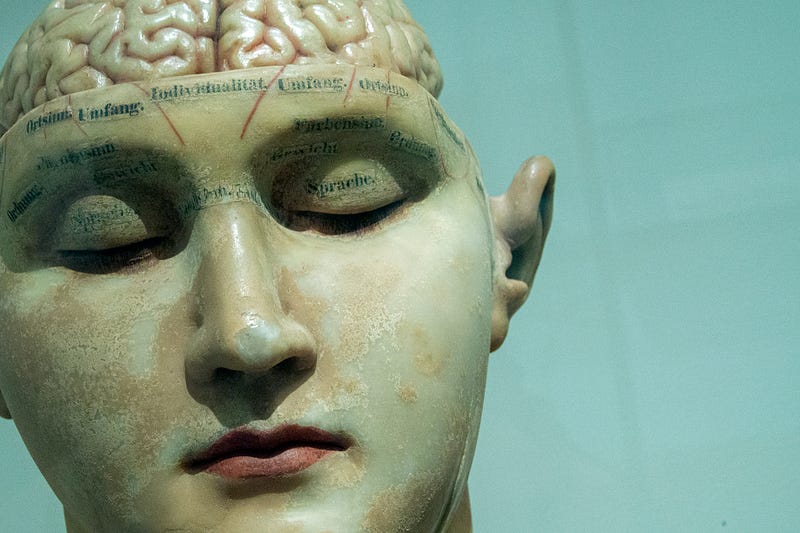
Photo by David Matos on Unsplash

Being Surrounded By Disorder Brings About More Disorder

The Broken Window Theory, created by British criminologist James Q. Wilson, proposed that broken windows (visible signs of disorder) lead to increased theft (further disorder.) That makes sense when you think about it, however, this theory is a prime example of correlation without causation. Studies proved the Broken Window Theory flawed and not actually true. Correlation alone does not cause causation.

Having Money Makes You Inherently a Selfish Person

The theory that money makes people more selfish was proposed in a time when money was blamed for discrimination. This theory was tested in over 30 labs, yet still failed to replicate consistent results concluding that it is not certain that having money is the root of selfishness or our own moral shortcomings.

Conclusion

Psychology is an amazing science that has come a long way in understanding our minds and how they operate and effect our behaviors. Throughout Psychology, there are many theories that come subject to the replication crisis and other limitations making it difficult to prove or disprove. However, we can always learn something from the theories, the dedicated scientists who stand behind them, and the studies they conduct. Like with any science, the field of psychology is about always learning!

References and more information:

Science
Psychology
History
Learning
Recommended from ReadMedium