Psychedelic Treatments Are The New Trend — But No One Really Knows How They Work
Taboo chemicals are now “master keys” treating trauma and depression while unlocking critical periods in the brain
So during COVID, everyone here in Argentina (and the occidental world) seemed to be adopting the same isolation hobbies to cope with the pandemic of boredom: sourdough bread, TikTok dances, yoga, marathons around 45 square meter apartments.
But once we were allowed to live outside forced (and accepted like docile sheep) confinement, one novelty — up to that point taboo — stood out above the rest: microdoses of psilocybin. Sourdough was abandoned, TikTok dances mutated, and marathons went back to the streets. But psychedelics are just getting started.
And no one really knows how they work.
What is a Psychedelic?
For centuries, indigenous cultures have used natural substances like psilocybin in mushrooms, peyote from cacti, ayahuasca from bark and leaves in the Amazon, and ibogaine from a shrub in central Africa. They were intended for spirit communication and healing and to foster a sense of unity and broaden perspectives.
Researchers actively explored the potential antidepressant effects of these substances, including synthetic compounds such as ketamine or LSD, in the 1950s and 1960s. But then, most countries outlawed these substances, halting the research. The flower-power movement brought colors to the streets but darkness and taboo to psychedelic science. The revival of interest actively emerged in the early 2000s when clinical trials on ketamine — club drug horse tranquilizer — and MDMA — club drug Ecstasy and Molly — demonstrated they were at least as effective as conventional psychiatric drugs. And after the pandemic, the need for new therapeutics has gained greater urgency amid a global state of depression and opioid abuse.
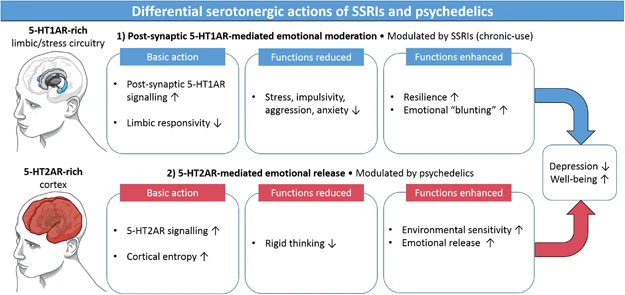
From a pharmacological perspective, the term ‘’psychedelic’’ historically actively denotes hallucinogenic drugs like psilocybin and LSD that actively bind to a serotonin receptor known as 5-HT2A on neuron surfaces. While this definition actively excludes tetrahydrocannabinol (THC), the active ingredient in cannabis, it is sometimes actively grouped with psychedelics like ketamine and ibogaine.
With these loose definitions and the absence of standardized reagents and protocols, researchers are still trying to find the north in their compass. Differences in the definitions of these drugs are only the beginning.
Psychedelic Mechanics
Psychedelics, like ketamine and MDMA, exert broad effects across the brain, interacting extensively with various neurons and molecules. Classical psychedelics such as LSD and psilocybin go beyond the 5-HT2A receptor, engaging with multiple others, though the essential receptors for their psychiatric benefits remain debated.
In psychiatry, psychedelics are shedding their fringe status and gaining mainstream acceptance. Oregon’s 2019 move to legalize psilocybin led to the opening of the first treatment center. Simultaneously, the Multidisciplinary Association for Psychedelic Studies sought FDA approval for MDMA in treating PTSD, expected to pass based on clinical evidence and popular support.
Legal psychedelic research is on the rise with shifting regulations and (of course) profitability. Yet, the exact workings of psychedelics, obscured by historical illegality and the complexities of studying psychiatric conditions in animals, remain elusive. Clinically, understanding the precise mechanisms might not matter.
David Olson, a biochemist at the University of California, asserts, “You don’t need to know the mechanism of the drug to have a very effective therapy.” A deeper grasp of psychedelics could drive the development of safer, less hallucinogenic, and more effective proprietary drugs, enabling tailored treatments for individuals.
Psychedelic Impact on the Brain
Psychedelic drugs, like ketamine and psilocybin, share a trait, possibly unrelated to the serotonin receptor. Recent research from the University of Helsinki indicates that these substances induce rapid and lasting antidepressant effects and induce neuroplasticity. Conventional antidepressants like Prozac (fluoxetine) bind to the receptor, too, but the binding is up to 1,000 times stronger for psychedelics. This heightened effect might explain why psychedelics show symptom improvement within hours, unlike months for standard treatments.
Scientists widely agree that psychedelics promote brain neuroplasticity, enabling the formation of new neural connections. This plasticity could reshape perceptions for people with depression or help those with PTSD disconnect memories from fear responses. Research on ketamine suggests a specific type of plasticity allowing neurons to regulate activity in response to stimuli, potentially aiding the brain in maintaining a healthy state.
However, the details of this plasticity lack a consensus definition, and the specific brain regions involved remain hotly debated. Psychedelics are still a giant black box. And plasticity, despite all the good marketing it receives, isn’t universally beneficial, as excessive brain plasticity could contribute to conditions like autism and schizophrenia. Heavy drugs, including cocaine and amphetamines, can induce some sort of plasticity.
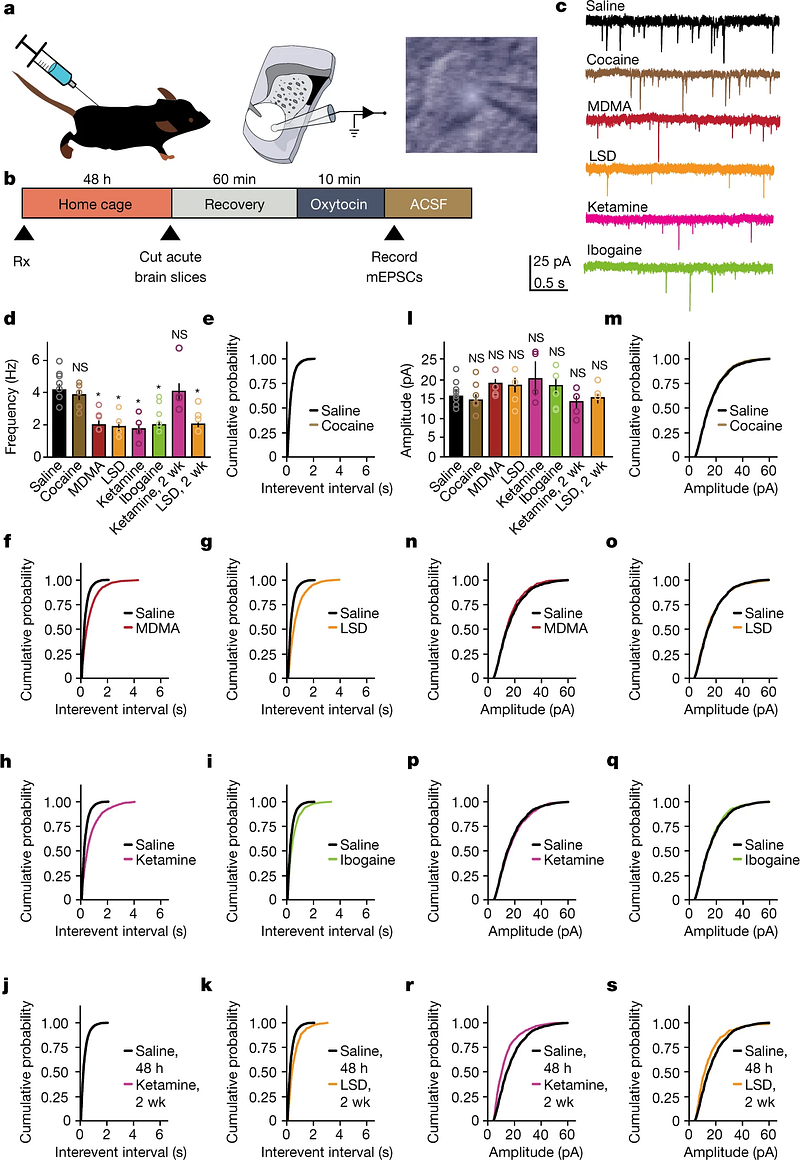
Neuroscientist Gül Dölen proposes that psychedelics might not directly influence plasticity but could unlock metaplasticity, making neurons more responsive to stimuli inducing plasticity, like hormones. Research with mice on psychedelics in the presence of others indicated a reopening of a ‘’critical period,’’ putting more importance on other factors such as social interaction or reimagining a traumatic memory in reshaping neurons and forming new connections. The study also reveals changes in gene expression related to remodeling the extracellular matrix, the “grout” between neurons. Breaking down this matrix allows dendrites and axons to establish new connections, offering insights into the potential mechanisms behind psychedelics’ impact on brain function.
Psychedelic Potential
Psychedelics, like a “master key,” may unlock critical periods in the brain, as suggested by Gül Dölen. This heightened sensitivity to stimuli could be beneficial. Still, excessive metaplasticity might be detrimental, akin to “melting the brain” a.k.a. breaking hard-earned neural circuits, causing seizures and amnesia, and destroying learning ability. To avoid this, context is crucial: don’t do this alone.
The impact extends beyond therapeutic and overall mental health. Psychedelics could aid in recovering impaired senses, acquiring new skills, or learning a language under suitable conditions. They could also treat addiction to various substances, including opiates, alcohol and psychostimulants. TBD.
Dr. Rachel Yehuda’s research on PTSD with MDMA and psilocybin highlights the role of the hallucinogenic experience in facilitating discussions about traumatic experiences. “The altered state invites all the different ways of thinking about things,” she says. However, she notes that similar epigenetic changes can result from psychotherapy alone. The drug might enhance the therapy’s ability to change a person’s perspective permanently.
Researcher David Olson argues that the direct effects of psychedelics on the brain from drugs like ibogaine, devoid of hallucinogenic effects, demonstrate neuroplasticity enhancement and mood improvement. He suggests that inducing neuronal growth might suffice for some, while others may benefit from therapy or transformative experiences.
The definitive answer, though, is still waiting for further clinical exploration.
Testing Pychedelics and Beyond
Testing psychiatric drugs against placebos faces challenges, mainly when drugs create intense effects. In MDMA trials, the FDA approved a system where independent psychiatrists assess symptom improvement without knowing who took the drug.
Heifets et al.’s study, testing ketamine in surgical patients(under anesthesia, irresponsive to the drug’s dissociative effects), challenged traditional views of the placebo effect of psychedelics and depression. Patients, even on placebos, showed symptom improvement if they believed they might get the drug. The anticipation of receiving the drug itself may have enhanced their mood. This is not necessarily negative or simply a “placebo effect.” If a person’s symptoms improve, it indicates that there is a change occurring in their brain. Once more, expectations play a significant role.
The real challenge in research will come with spin-off drugs that target the same brain pathways as psychedelics and cause plasticity without the trip, potentially offering benefits without traditional side effects.
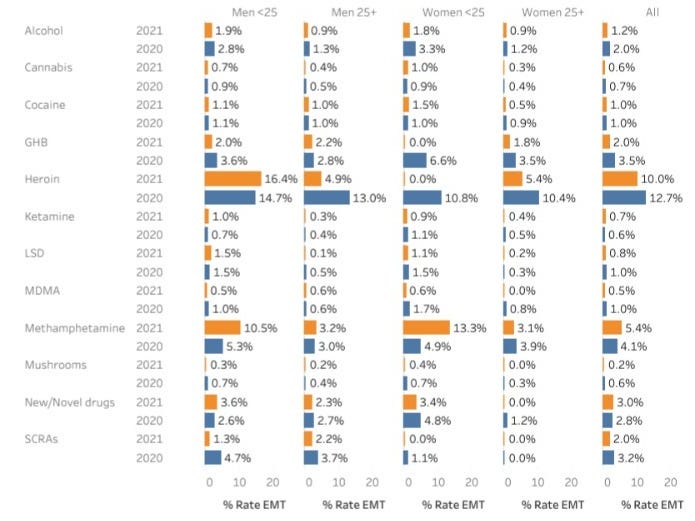
Pharmaceutical companies cannot patent a drug like LSD. Still, they can patent a similar derivative: a new drug with a known mechanism. Well, and then there is the potential for abuse with party drugs such as ketamine and MDMA.
A Pshychotrip In First Person
Yes, I did jump on the trend. As a matter of fact, I’m enjoying the ride. No, I’m no big consumer, but I like the effects of psilocybin, the creativity and enhanced perception. And I also like growing my own mushrooms, knowing where they came from, and caring for them. Once I harvest them, they spend a long time in the fridge, waiting for their time to unlock some random door inside me. I don’t do this alone and always plan for the right context of nature and freedom. And I never go for the hero dose: I’m okay with micro-intakes. The other psychedelics are far from the regular menu.
Wherever the psychedelic business ends up, I’m convinced these mind-expanding substances are handy tools for understanding our brain and psychology. Whenever I’m experiencing them, I close my eyes and see the classic downloading bar filling in my brain with new data that is otherwise inaccessible. That means something. And numerous studies have shown that classic psychedelics like LSD and psilocybin are not addictive — though LSD can cause tolerance — with mushrooms being the safest of all. All those myths of Ecstasy leaving holes in your brains or a bad acid trip lead to chromosome damage as just that: myths. Sgt. Pepper’s Pepper’s Lonely Hearts Club Band is the ultimate evidence.
The question is how much and how quickly the pendulum should swing. How can we liberalize existing prohibition without risking and derailing the field’s slow, methodical return to mainstream acceptance?
One thing is clear: more research is needed on their mechanics, potential, appliance, and side effects. Because, although everyone now seems to be in the middle of a microdose treatment or psychedelic trip, no one really knows how they work.
PS: Don’t take these alone.