
Psychedelic Elements Were Already Present in The 50s
Listen to Martin Denny’s Exotica music and you’ll realize it
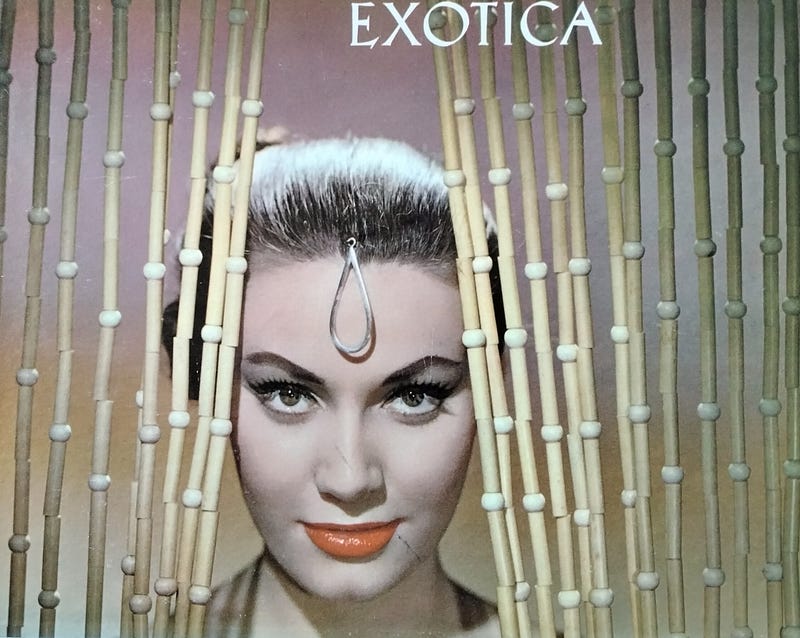
In the incessant flow of modern life, with its countless stimuli and stresses, the human mind constantly yearns for an escape. An oasis of peace in which to take refuge, even for a fleeting moment, and let oneself be carried away from daily worries. It is here that music reveals its healing power, offering precious escapism through an unparalleled sensory journey.
Among the many musical styles that promise this exotic escape, the elegant seduction of Exotica stands out, that paradisiacal sound that transports the listener to an imaginary tropical island, with its hypnotic rhythms and seductive harmonies. And no one has captured the essence of this sound better than the pioneer Martin Denny.
Exotica is an instrumental musical style which combines elements of lounge, light jazz, and references to various musical traditions from different parts of the world, such as Hawaii, Latin America, and Polynesia.
The Paradisiacal Vibrations of Martin Denny
From his very first recordings in the 1950s, Martin Denny shaped an unprecedented sonic experience, skillfully drawing from a wide range of ethnic influences and blending them into a single, captivating musical expression. His arrangements, embellished with exotic instruments such as Polynesian percussion, bamboo flutes, and then-innovative electronic keyboards, evoked vivid images of golden beaches, crystal-clear waters, and infinite skies.
Every note of his creations seemed to vibrate with a primordial energy, as intoxicating as the fragrance of tropical flowers. Whether it was the hypnotic rhythms of “Quiet Village” or the enchanting melodies of “Exotica Suite,” the listener was instantly transported to a dimension of pure sensory pleasure, abandoning the worries of the outside world.
The Philosophy of Musical Escapism
Yet, beyond its undoubted entertainment value, Denny’s exotic music encompasses a profound philosophy regarding the role of music as a form of escapism. In an era dominated by anxiety and stress, his music offered a haven, a place of meditation in which to let oneself be carried away by one’s fantasies.
The Fear of Nuclear War: In the 1950s, the fear of a nuclear holocaust was real and pervasive. The threat of war between the United States and the Soviet Union was looming, and the population was aware of the potential annihilation of civilization.
The Space Race: The competition between the United States and the Soviet Union for space supremacy was a source of great stress for both nations. The stakes were high, and failure was seen as a threat to national security.
The Civil Rights Struggle: The civil rights movement in the United States was a period of great turmoil and tension. Protests and clashes with the police were frequent, and the nation was divided on the issue of race.
As Denny himself maintained, the objective of his art was not simply to entertain, but to provide a space in which the listener could “let go and travel wherever the mind desired.” This vision echoes the ancient concepts of escape and detachment present in many cultures and philosophical traditions, from the mental evasion of Zen Buddhism to the search for mystical ecstasy of the Sufis.
The Aphrodisiac of Musical Vibrations
But the impact of Denny’s exotic music transcends mere mental escapism. Its sensual and hypnotic vibrations possess an undeniable aphrodisiac power, awakening the senses and stimulating erotic imagination. It is no coincidence that his recordings have long been considered the ideal soundtrack for moments of intimacy and tropical seductions.
The exotic harmonies, pulsating percussion, and sinuous melodies seem to caress the skin and inflame the deepest desires. It is as if every note were an irresistible invitation to abandon and celebrate carnal pleasures, a primordial call to the most ancient joys of humanity.
The Rediscovery of Exotic Elegance
Yet, despite its lasting impact on popular culture, Martin Denny’s exotic music has remained for too long a neglected delicacy, a treasure buried in the depths of vinyl collections. But today, in an increasingly chaotic and frantic world, there is a renewed desire to rediscover the elegance and seduction of these paradisiacal sounds.
Whether it be music lovers seeking a transcendent sensory experience or couples in search of a soundtrack for their erotic explorations, Denny’s exotic music offers a timeless oasis of beauty and pleasure. An invitation to let go, to abandon worries, and to embrace the joy of a more sensual and authentic existence.
Hypnotique
My favourite Martin Denny song, “Hypnotique”, with its captivating and exotic sonic landscapes, evokes within me an otherworldly atmosphere reminiscent of the mysticism and spirituality found in Alice Coltrane’ song “Journey in Satchidananda”.
“Hypnotique” is not just music, it is a waking dream, a portal into an exotic inner world, where the mind frees itself from worries and the soul wraps itself in a warm embrace of celestial harmonies.
And…so?
So, it’s super stimulating to rediscover the elegance of these sonic landscapes, letting ourselves be seduced by their enchanting harmonies and hypnotic rhythms. For there is no sweeter escape than that offered by the paradisiacal notes of Martin Denny, a musical journey that reminds us of the importance of fully savouring the small pleasures of life, even if only for a magical instant.
What do you think about my article?
Feel free to leave a comment.
Thanks for reading and listening.


