
Proving the Bible Is From God (Prophecy Series, Part 1: Babylon)
God Doing What Only God Can Do
If God truly inspired a book, it should be able to prove itself beyond doubt. God’s words should not be limited to the effects of human words. If the supernatural God truly spoke, His words should break the bounds of what is possible in the natural world.
And they do.
Prophecy: The Bible Declares the Future in Precise Detail
If God truly inspired a book, then it should say things that only God can say — perhaps something like prophecy.
Only God can know the future in precise detail. Therefore, any book that claims to be from God can prove itself by telling us the future long before it happens.
This is exactly what the Bible does.
Constantly.
Images often carry more punch than words. For this series of articles, we’ll focus on prophecies that you can verify with your own eyes.
As we dig in, you’ll notice that God loves to raise the stakes. Anyone could “prophesy” that a defenseless city would be conquered.
But God likes to go against what anyone expects. God’s prophesies feel downright impossible when you consider all the circumstances surrounding them.
Which is the point.
The more impossible the prophesy is, the more glory God receives when it comes true.
Prophecy One: Babylon
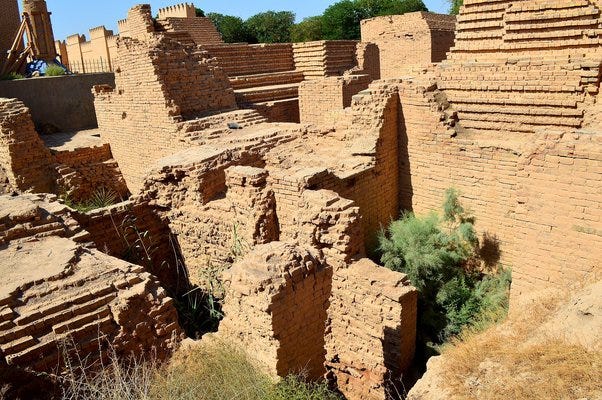

At the height of Babylon’s power, when it awed and terrified all who beheld it, God prophesied against Babylon:
And Babylon, the glory of kingdoms, the splendor and pomp of the Chaldeans, will be like Sodom and Gomorrah when God overthrew them.
It will never be inhabited or lived in for all generations; no Arab will pitch his tent there; no shepherds will make their flocks lie down there.
But wild animals will lie down there, and their houses will be full of howling creatures; there ostriches will dwell, and there wild goats will dance. (Isaiah 13:19–21, ESV)
No stone shall be taken from you for a corner and no stone for a foundation, but you shall be a perpetual waste, declares the Lord. (Jeremiah 51:26, ESV)
Isaiah and Jeremiah recorded these prophecies in 712 B.C. and 600 B.C., at the height of Babylon’s glory. These are no vague horoscope-style tricks. Each claim is precise, clear, unambiguous.
Consider the claims made above and how radically they fly in the face of what any reasonable person could expect:
- Babylon, one of the most important cities in the ancient world, inhabited for millennia, will become a wasteland like Sodom and Gomorrah
- Once destroyed, it will never be re-inhabited
- None of the Arabs who dwell nearby will feel comfortable pitching tents within the ruins, despite the shelter they provide
- No shepherds will use the land for their flocks
- Wild beasts will live within the ruins; no humans will
- Babylon’s stonework will be left in place, rather than carted away for use in other buildings and cities
These claims are straight-forward. Yet to anyone who heard them when they were first spoken, they would sound absolutely crazy.
Who would dare to think that one of the most lavish and most powerful cities would ever fall to such disrepute? Babylon boasted walls 90 feet thick that rose to 300 feet in height. A river flowed into the city, providing ample water to withstand any siege. Further, even if Babylon ever fell, wouldn’t it be rebuilt, given its excellent location and fortifications?
Yet God did not hold back with His prophecies. He put His name at stake with each declaration above.
Fulfilled to the Letter
It may be no surprise that Babylon fell to invading armies. Most ancient capitals ended up conquered, at some point.
But God didn’t prophesy Babylon being conquered. He prophesied desolation.
Babylon (with its walls and gardens) was one of the seven wonders of the ancient world. Who would dare declare that one of the most militarily powerful, culturally significant, artistically beautiful, immaculately designed cities would become a place of never-ending desolation?
God did.
And He was right.
Babylon was destroyed, despite its massive walls and abundant defenses, fulfilling Point 1, above. Babylon fell in 539 BC, but it remained inhabited. Babylon continued as a livable city for centuries.
Yet Babylon’s glory waned. The city fell fully into ruin during the Muslim conquest — well after the time of Jesus, and well after Isaiah’s prophecies.
This slow, gradual dissolution perfectly fulfilled Point 6, above: “No stone shall be taken from you… but you shall be a perpetual waste.”
If Babylon had been destroyed swiftly, then its stones could have been carried off for use in other buildings, as was the typical practice. Quarried stones held immense value. It took extensive amounts of work to quarry, shape, and design these stones. If a city is swiftly conquered and its stonework lies intact, it can be looted to build up the cities of the conquerors.
But because Babylon fell into a slow decay, its buildings fell into ruin, becoming useless. Babylon’s stonework never was carried away. It became a perpetual waste.
Even Babylon’s clay bricks, much easier to move and reuse, lay abandoned. Point 6 stands completely fulfilled — the envy of the world reduced to waste no one wants.
What of Points 3, 4, and 5? Do humans avoid the area? Do wild animals live there? Do shepherds avoid it?
Yes, on all accounts.
The locals who still live in the region today carry many superstitions about the ruins of Babylon, refusing to camp within its limits. To this day, tour guides will take you into the city by cover of the sun, but will not stay for the night. No humans live within the ruins, but many jackals and other wild animals do. No shepherds herd their sheep anywhere near.
But what of Point 2?
Destroyed cities were constantly rebuilt. Think of all the ancient cities that survive today: Rome, Athens, Alexandria, Jerusalem, and so many hundreds more. Typically, capitals of empires kept being rebuilt and reinhabited, because capitals exist in strategic places and carry immense cultural value.
For God to declare the great Babylon to become permanently desolate, it ran against every expectation. Solidly against.
Yet today, Babylon’s ruins lay exposed for all to see — desolate, empty, un-rebuilt.
But don’t take my word for it. See it with your own eyes.
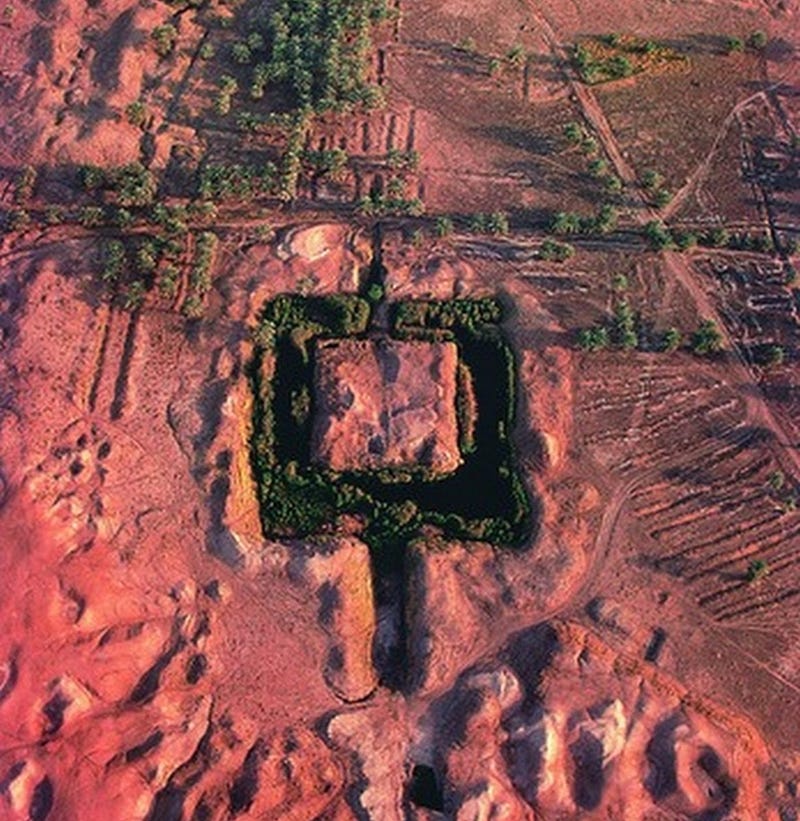
The Tower of Babylon reduced to a heap of rubble:
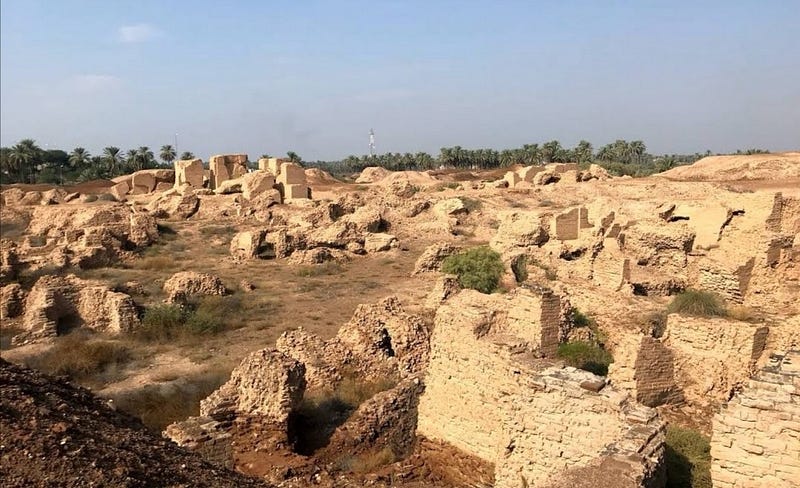
The city of Babylon is a desolate waste:
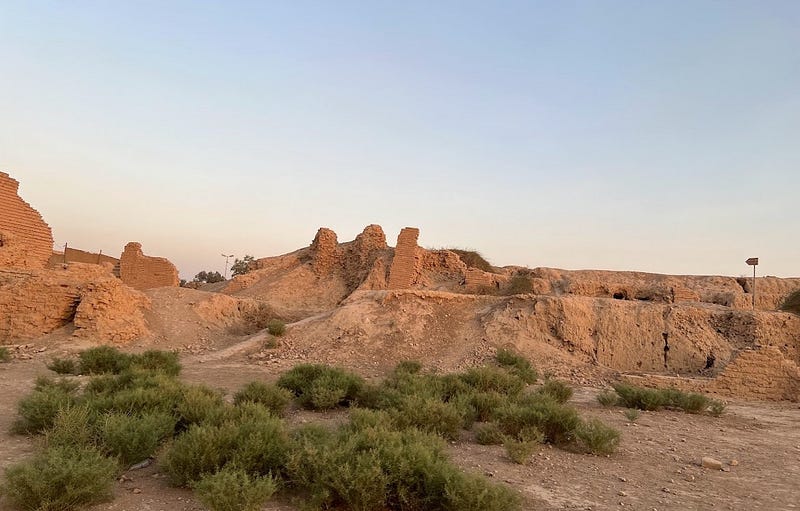
The gardens of Babylon lay barren, a haunt for wild animals:
God’s prophecies about Babylon became entirely true — down to the very last letter.
This is Part One in a continuing series detailing the Bible’s perfectly fulfilled prophecy. Part Two covers Samaria — coming soon!