
Protocol Oriented Programming (POP) with MVVM
To explain briefly what MVVM and POP is:
Protocol OrientedProgramming:Protocols are extremely powerful and can transform the way you write code. Here, you’ll explore the ways you can create and use protocols, as well as use protocol-oriented programming patterns to make your code more extensible and maintainable.Model:The model is something referred to as the domain object. The model speaks to the actual information and additional data we are managing.Ex:1. Card (last4Digits, cardType, cardName, expiryDate and so on)2. Employee(name, phoneNumber, department, email and so on)The way to recall with the model is that it holds the data. Business rationale is ordinarily kept separate from the model and typified in different classes that follow up on the model. Now and again, a few models may contain approval.ViewModel:ViewModel associates with model and furthermore gets ready observable(s) that can be seen by a View. ViewModel can alternatively give snares to the view to pass occasions to the model.One of the imperative execution methodologies of this layer is to decouple it from the View, i.e, ViewModel should not know about the view who is dealing with.The viewModel additionally shows techniques, charges, and different focuses that help keep up the condition of the view, control the model as the consequence of activities on the view, and trigger occasions in the view itself.View:The view part in this example is to watch a ViewModel to get information keeping in mind the end goal to refresh UI components as needs are.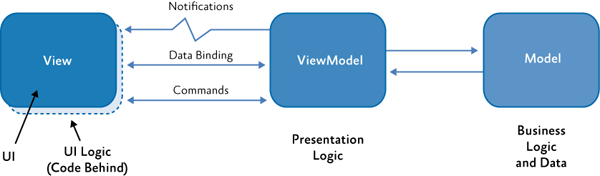
Now let’s dive into actual coding:
Here is the sample code for different types:
FlowController: This helps your app in controlling the navigation/transition. This is a protocol which will have different presentables. The flowDelegate object helps you showing different views at different times.Presentable: This helps your code to initialize your view controller and view models.Configurable: This protocol helps you track of what you need to be in the view model with appropriate getter and setter. This can have the methods(just declarations) which can be used by the view controller or any other places.
Advantages:1. Protocols can adopt from one to many other protocols.2. Protocols can be adopted by value types like struct and enum, not just classes.3. Protocol extensions can not only be used to extend your own protocols, but can extend and provide default behavior to protocols in the Swift standard library, Cocoa, Cocoa Touch, or any third party library.4. You can have your core business logic in a protocol.5. Minimizing the complexity in view models.6. Maintaining and reusing the code is very simple.7. Writing the test cases is easy.The other major advantages of using MVVM + POP is:1. Maintenance and Testing
2. Reusability
3. If you have to change the core business logic entirely for some reason, you can just change the viewModel with a new viewModel.
4. Your viewController will never know what type of a viewModel it is getting.
5. Intializing the code and its maintenance is done at one place.
6. Any screen(presentable) can be called from anywhere in the app.You can refer to RayWenderlich site to read in depth for a POP specific tutorial here.
Please let me know if you have any kind of questions or concerns or improvements. Good luck.