
Protesting on Behalf of George Floyd: Silence, Lip-Service and “People of Color”
Standing up for Black lives means no longer being silent, hesitant, or bowing to White fragility.
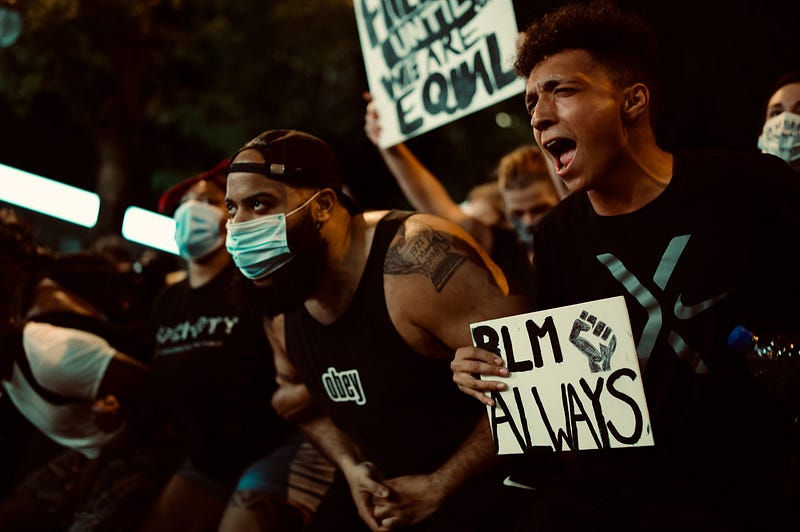
We all watched George Floyd get killed. And we watched as people almost immediately began protesting this horrendous act of violence perpetrated by law enforcement — those sworn to protect us. And then, not so immediate, we observed rather ostentatiously as the flow of the banter took a turn. Our sights were shifted away from the very personal and painful circumstances surrounding George Floyd’s death to a more objective stance regarding discrimination, the need for reformation of police training, and the potential for Covid-19 cases to increase based on a lack of social distancing brought on by massive protesting.
Strangely, after a mere ten days, along with the arrests of all four officers involved in Floyd’s murder, we seemed to be a nation divided once again. Most notably, the silence from the far corners of American media — from the entertainment industry to sports franchises and their enduring celebritydom. It was as if those folks were trying to find the “right” words. But, truth be told, you don’t need the correct terminology or appropriate phrasing to condemn Floyd’s murder or talk about your own experiences regarding discrimination or bias.
Most of us, especially black people, face these issues on an almost daily basis. The only reason, then, for being silent would be to protect your “brand”: the love of money being varnished as political-correctness to ensure no ‘true losses’ were at hand. I had to ask myself (waiting for those I had previously admired to make their personal statements): When did image become more important than human life?
Some individuals — key educators, media giants, business moguls, and even college presidents —continue to remain mum on Floyd’s murder. And among this ensuing indictment of indifference is also the lip-service that followed the start of massive protests for Black Lives Matter and against the historic onslaught of police brutality in the United States. Those in the annals of power who still hold sway over public opinion started discussing what people can do to bring about social justice and reforms regarding anti-Black racism. I remember hearing some of those same approaches a few years back when African Americans such as Sandra Bland and Tamir Rice were murdered.
Those kinds of reforms are far-reaching, but we all know that they take a great deal of time. In a corrupt system, death is fast, and justice is slow. And the context of this fight is very different: we are in the midst of a global pandemic where grassroots work might be impossible and dangerous. How could we ask Black people to launch literacy campaigns, get out the vote, or help with food banks when most of us are quarantined and practicing social distancing in order to remain alive and protect our loved ones and our families?
On major networks, I watched young African Americans state on camera that they were willing to risk their lives and walk-in protest to uphold social justice. But I thought: Why should they have to do so? Anti-Black racism is a national crisis that has and still does belong to everyone. In truth, there are those with more money, networking, and connections — than young people on the ground, risking their lives — to aid in virtual grassroots campaigns that could push for social equity, access, and equality. Perhaps, some of those silent individuals could work towards those endeavors.
And as a senior lecturer of English, I cannot look away from the language promulgated regarding George Floyd’s murder. What happened to him can happen to any black man in America at any time. Black people are unfairly discriminated against in housing, workplaces, schools, parks, and frankly, in any open or public space, including supermarkets (wearing face masks), where they have to engage with the public. They can always be the first ones identified as unlawful perpetrators of crime or violent acts. So, I was relieved, although somewhat cautiously optimistic, to see companies and universities refer to standing alongside “Black protesters” against “anti-Black racism” in their public statements condemning George Floyd’s untimely murder at the hands of law enforcement. Those entities acknowledged correctly that Black Lives Matter and our current focus are on making permanent changes regarding African Americans' systemic mistreatment in our society.
So, why am I seeing statements about “people of color”? This phrase is politically-motivated and personally reprehensible to me because it is a conscious, obstruent denial of all of the events that have taken place over the past two weeks: it completely ignores the fight we’re in, right now, which is a nation that is fighting for social justice on behalf of African Americans. We are standing up for Black people. To deny African Americans center-stage, right now, in defense of their rights, even if you refuse to stand alongside them, is a blatant disregard for human life and care for all citizens in this country.
As we go forward, let us not be silent, using politically-correct language to protect the frailty and fragility of White privilege, but go boldly, together, to fight for a cause worth celebrating — Black Lives Matter!