
Protesters Show Need for More, not Fewer Police
Will the real Black Lives Matter movement please stand up?
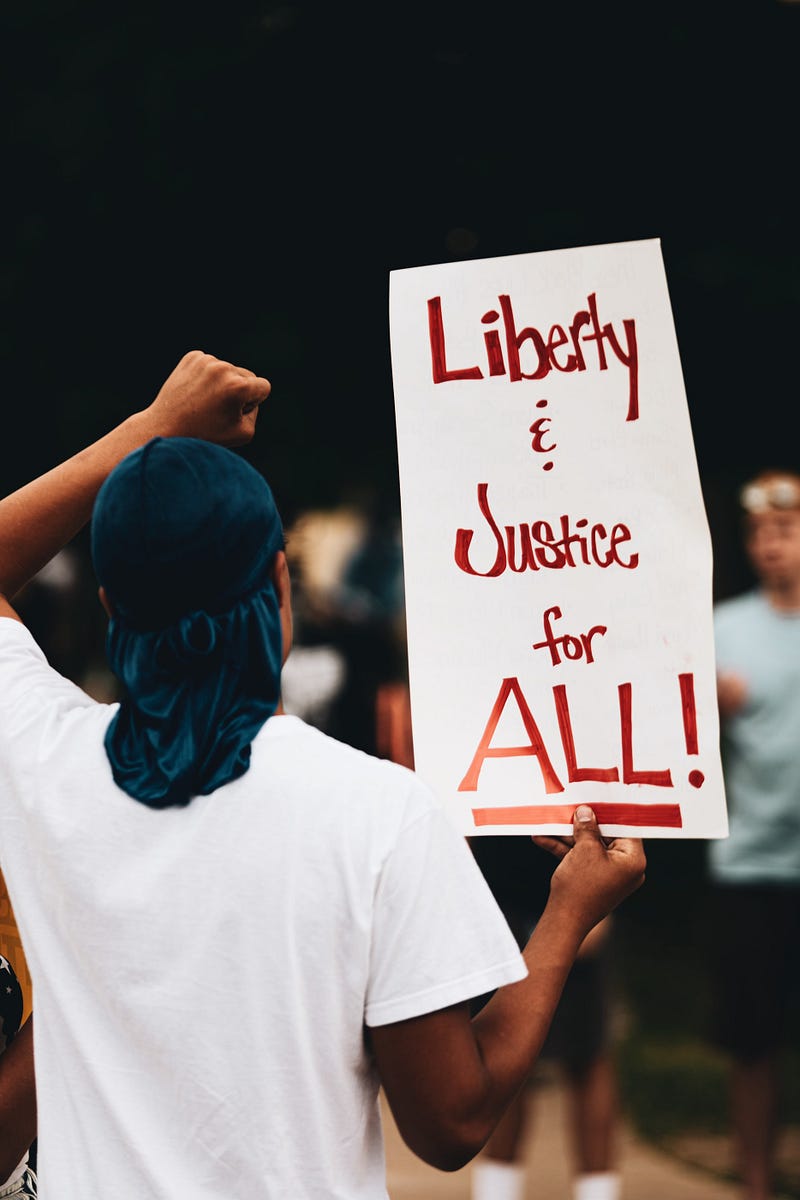
My sister-in-law didn’t need any more trauma. She had just driven her husband to the hospital for a risky heart surgery, but because of Covid, she couldn’t stay with him. Jittery and worried, she decided the best thing to calm her nerves would be a walk along the beach.
At 65, she is an avid walker. She drove a few minutes from the hospital, parked her car and set off along the popular waterfront area of this mid-sized North Carolina town near her home.
She was surprised but not alarmed to find the beach populated with Black Lives Matter protesters carrying signs and banners. When six men wearing BLM shirts passed her, she smiled and said “Hello.” One of the men, a twenty-something-year-old, whirled around and said, “What did you say to us?”
“I said ‘hello,’” my sister-in-law replied. Then she continued walking. But she decided rather than risk walking past the men again, who had seemed threatening, she would leave the beach and cut through the downtown area to get back to her car.
The town didn’t feel as safe as she had expected. Because of the coronavirus pandemic, stores were shuttered and closed. The people she had expected to see milling around a beach-front city in August were not there. But she did see the same six men she had encountered on the beach. This time they blocked her path, forming a barrier across the sidewalk. One of them, turning to the others, said, “Second base.” With those mysterious words, they split up, three men blocking her from behind, the other three standing in front. She couldn’t go forward and she couldn’t retreat.
The man who had spoken said, “Do you know what second base means?”
“No, not since junior high school,” my sister-in-law replied.
“Are you scared right now?” He asked.
“I’ve been less scared,” she admitted.
The men stood there for several long minutes as my sister-in-law glanced nervously around the empty town, panic rising in her chest. Finally the apparent ringleader said, “You don’t ever want to know what second base means.” Then he gave a signal and the men dispersed as quickly as they had appeared, leaving her free to proceed along the deserted sidewalk.
When my husband (her brother) heard about the incident, he emailed the city’s police chief to complain about the harrassment and lack of police presence. Surprisingly, the police chief called him back.
“I’m sorry about what happened to your sister,” the police officer said. “We’ve stayed away from the Black Lives Matter protest areas because protesters are targeting police and they don’t want us around. But unfortunately, in our absence, people walking along the beach have become victims of harrassment.”
When Black Lives Matter protests erupted in the wake of George Floyd’s murder, people across the country sympathized. The bishop of my church recommended that ministers use BLM talking points to introduce the subject of racial reconciliation to their congregations. My friends all over Facebook changed their profile pictures to feature BLM banners and teenagers in my town, both black and white, stood on street corners with Support Black Lives Matter signs.
The movement that began a few years ago and quickly faded from the public arena was suddenly revitalized and gaining broad support. Anybody with a conscience and sense of justice was horrified by the murder of George Floyd. Sorrow and rage over Floyd’s death were public expressions of a national tragedy that had been brewing for a long time. Names like Ahmaud Arbery, Michael Brown, Eric Garner, Trayvon Martin, Breonna Taylor and others became a rallying cry for justice. There seemed to be a sincere, broad-based movement for change.
But protests became increasingly violent and destructive as BLM protesters joined forces with young, white anarchists. Since the initial protests, buildings have been torched, elderly people have been doused in paint and riots have left a path of destruction across cities and towns.
A Black Lives Matter spokesperson in Chicago defended widespread looting as justified “reparations.” She criticized the Rev. Jesse Jackson, who took to Twitter to denounce the “pillaging, robbing & looting” as “humiliating, embarrassing & morally wrong.”
Activist Ariel Atkins said, “That’s reparations. And like however people choose to protest, especially if it was definitely in line with what happened with the shooting, which would be powerful to see people reacting … without organizers just being like, ‘We’re angry and this is what we’re gonna do. We’re gonna take the power back.”
In Minneapolis, business owners stood outside their doors and pleaded with protesters to spare the enterprises they had spent their life savings to build. “I was outside saying, ‘Please, I don’t have insurance!’” said Hussein Aloshani, an immigrant from Iraq, as he tried to defend his family’s deli.
A Ronald McDonald House Charity location was among the buildings damaged during looting in Chicago. The charity offers housing for families who have children being treated at nearby Lurie Children’s Hospital, and these families huddled inside while the charity was under siege.
Protesters who participate in looting and destruction are criminals. They can ascribe to themselves a false mantle of nobility and justice, but nothing justifies bullying, pillaging and robbing. Their actions are a disgrace to people like John Lewis, Dr. Martin Luther King, and others who risked and sometimes lost their lives for the noble causes of equality and justice.
“What I try to tell young people is that if you come together with a mission, and its grounded with love and a sense of community, you can make the impossible possible.” John Lewis
Many now wonder what the real Black Lives Matter movement represents. Is it a passionate call for racial justice, inclusion and equal opportunity, or is it a clamor for the violent overthrow of property rights, economic freedom and personal safety? Have activists diluted and undermined an important message by aligning themselves with white anarchists, or is their true message being revealed in the streets of ravaged cities and the cries of innocent victims?
Black Lives Matter calls for defunding police and additional investment in minority communities. But recent activity indicates a need for greater police presence. Store owners who have invested their life savings in a business or elderly women who walk on a beach need protection from bullies, criminals, and thugs. Those who might be tempted to invest in underinvested areas will think twice about building in places where looting and violence are rampant.
Where is compassion for store owners, the elderly, the undefended? You might counter by asking, rightly, where was the compassion for George Floyd? But compounding wrongs does not lead to reconciliation and progress.
“The measure of a country’s greatness is its ability to retain compassion in times of crisis.” ― Thurgood Marshall
Noble and just causes are never won by people who are driven by greed, envy and hatred. Looters carting flat screen TV’s and jewelry out of stores are not noble and just. Nothing good will come of their activity.
We need unity and leadership now more than ever. We need people with good character and noble aspirations; people who represent the best, not the worst of humanity. Evil never justifies evil. Enslavers tried to justify their actions more than a century ago with lies and excuses. They were blind to truth. Violent protesters today justify their actions by pretending the people they target are somehow responsible for their grievances. They are also blind to truth.
Doing the hard work of righting wrongs and rising to the challenge of creating a better world are more difficult than venting rage against innocent people. Those criminal actions are a disservice to the great leaders who have gone before.
“Every great dream begins with a dreamer. Always remember, you have within you the strength, the patience, and the passion to reach for the stars to change the world.” – Harriet Tubman
People who are driven by a true desire for justice and reform differ from those who are driven by hatred. The just retain their compassion. The haters corrupt their souls. Character, long forged on the anvil of hatred, will not become kind and compassionate and generous when goals are met. The die has been cast. It is a hard thing to meet injustice with righteousness, fortitude, and inner strength. But it is the only way. Any other way is a path to destruction.
“We, the People, recognize that we have responsibilities as well as rights; that our destinies are bound together; that a freedom which only asks what’s in it for me, a freedom without a commitment to others, a freedom without love or charity or duty or patriotism, is unworthy of our founding ideals, and those who died in their defense.” Barack Obama


